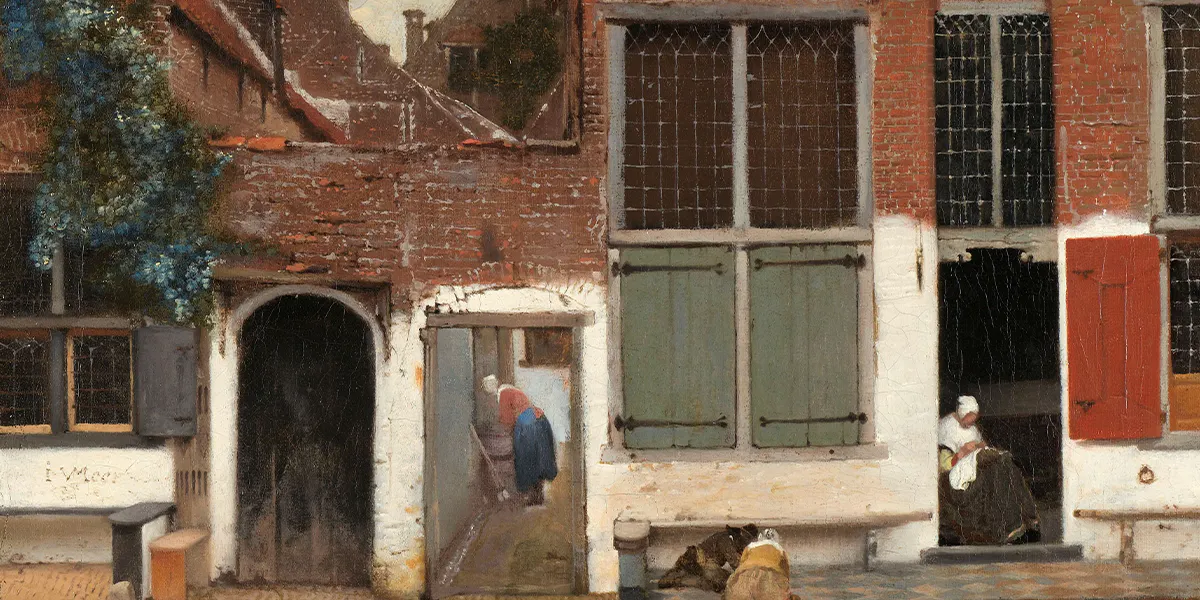
Among Vermeer’s few depictions of urban life, The Little Street holds a special place. Painted around 1658–59, it is one of only two city views in the artist’s known body of work, alongside View of Delft. The painting, which has been part of the Rijksmuseum’s collection for more than a century, shows a quiet street corner in Delft. At the centre is a modest brick house with a stepped gable. The setting is brought to life by four figures: a maid working in the courtyard, two children playing near the open front door, and a woman seated in the doorway, occupied with handwork.
See also: Jan Vermeer: The Mysterious Master of Light
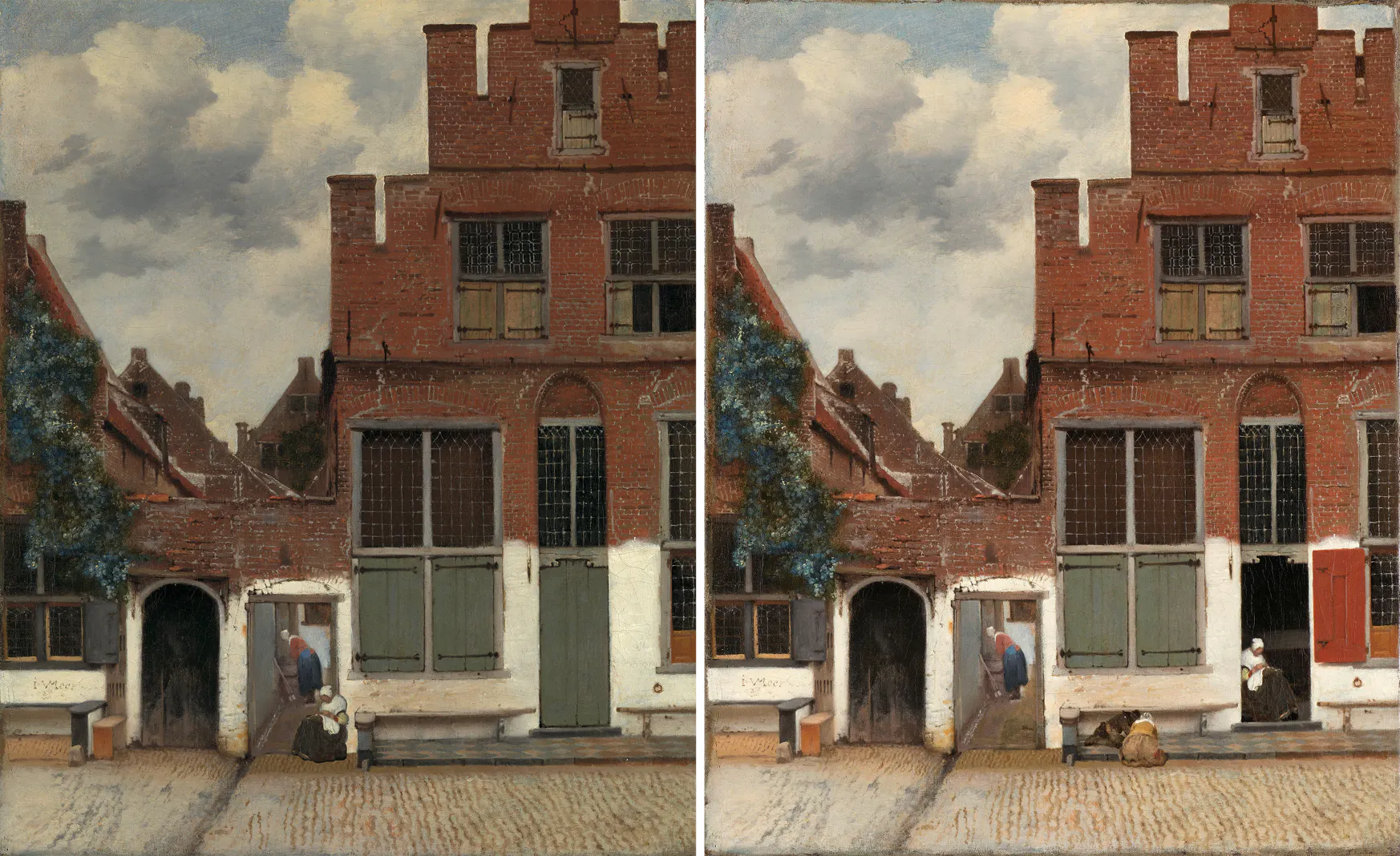
Ahead of the Rijksmuseum’s major Vermeer exhibition in 2023, which brought together 28 of the artist’s 37 known works, The Little Street underwent detailed re-examination. The research revealed that the scene once looked quite different. Vermeer had originally painted the front door shut, and placed the seated woman near the entrance to the backyard, rather than at the front of the house. These findings add to earlier discoveries that the red shutters and the two children were later additions.
See also: New Secrets Revealed About Girl with a Pearl Earring
Want more news like this straight to your inbox? Subscribe to our free newsletter!
The new insights emerged from a collaborative research project involving the Rijksmuseum and other institutions. Their findings are presented in Closer to Vermeer, a 400-page volume offering an in-depth look at the artist’s methods, materials, and revisions across several works.
Pieter Roelofs, Head of Fine Arts at the Rijksmuseum, said: “By literally opening the door, Vermeer makes the scene accessible to the viewer. These and many other new discoveries in the book paint a picture of a committed artist who constantly strived for perfection in his paintings.”
See also: Vermeer's Milkmaid Reveals Her Secrets
The publication also explores previously unknown details in other works, including The Soldier and the Laughing Girl (1658, Frick Collection, New York), Diana with her Companions (1655–56, Mauritshuis, The Hague), and Allegory of the Catholic Faith (1671–74, Metropolitan Museum of Art, New York). It also presents findings on Vermeer’s use of pigments and newly uncovered archival documents.
Vermeer remains one of the most closely studied painters in art history, with more still to discover beneath the surface of his work.