
If The Girl with a Pearl Earring, painted by Johannes Vermeer around 1665, had already revealed several of its secrets, technological advances now offer an even deeper knowledge of its history. 350 years after its creation and 25 years after its last technological analyses, this portrait still retains a great deal of mystery.
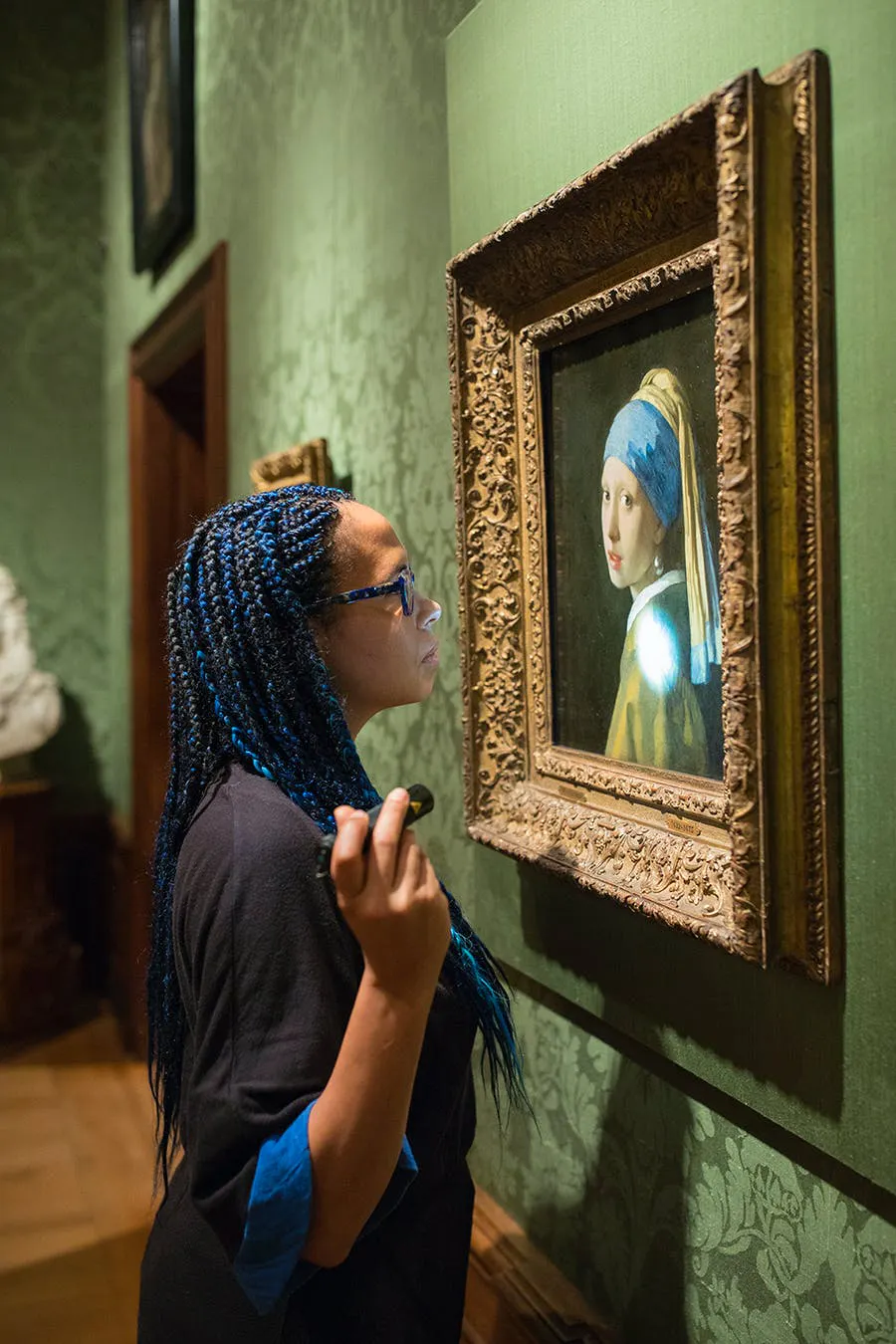
How did Vermeer create this painting? What is really hidden under its composition? What pigments were used? How has the painting changed since it left Vermeer's workshop? These are the questions that motivated the researchers of ‘The Girl in the Spotlight’ project, initiated in March 2018 and led by Abbie Vandivere, curator of Mauritshuis (Royal Cabinet of Paintings in The Hague).
See also: Artemisia Gentileschi: Passionate Feminist Artist
Scientific examinations have now brought new perspectives on the understanding of the work. The discoveries mainly concern Vermeer's brushwork, his use of pigments, and the way in which the portrait was ‘constructed’ in layers. According to the researchers, the results of non-invasive imaging and scanning techniques have revealed a painting much more personal than previously thought.
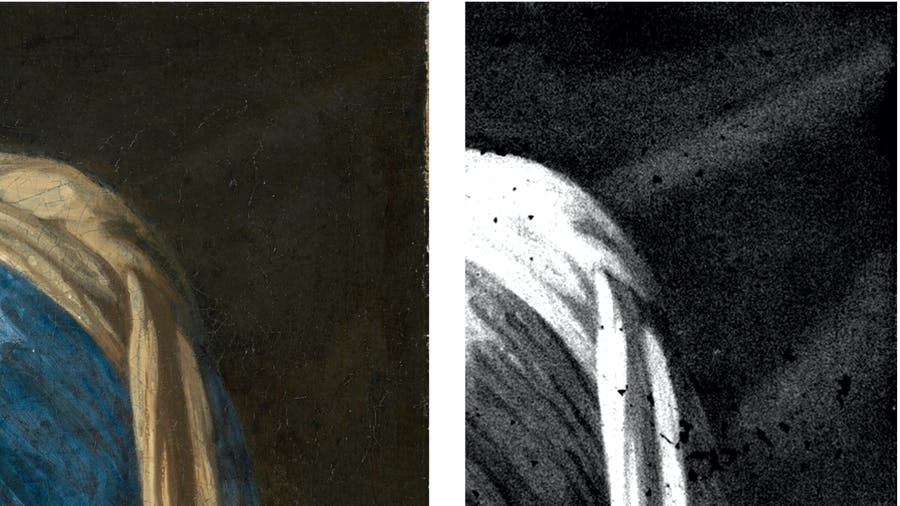
One of the most astonishing discoveries concerns the background of the portrait, long regarded as a dark space devoid of details. Vermeer actually painted his subject in front of a green curtain. The imaging techniques made it possible to discern diagonal lines and color variations suggesting a folded tissue in the upper right corner. The chemical changes in translucent green paint have done away with the curtain over the centuries.
See also: Museum Returns a $10 Million Picasso
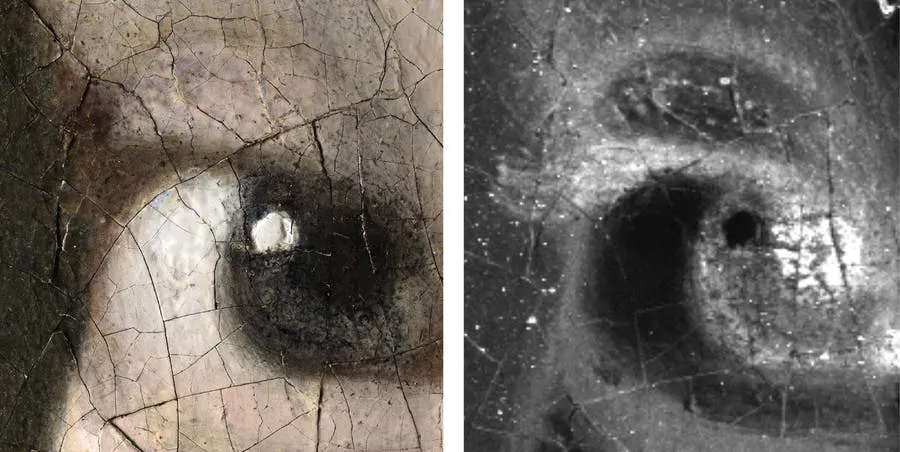
If until today, with the naked eye, the girl did not seem to have any eyelashes, research reveals that Vermeer painted tiny hairs around her eyelids, thus making her more ‘personal’, although the mystery around her identity remains.
On the technical side, Vermeer would started to build his painting in shades of brown and black. Large, vigorous brushstrokes are available in sub-layers, made visible by infrared imagery, while fine black lines outline the girl's silhouette. Research has also shown that Vermeer changed the composition of the work during the process: the position of the ear, the top of the scarf and the back of the neck were shifted.
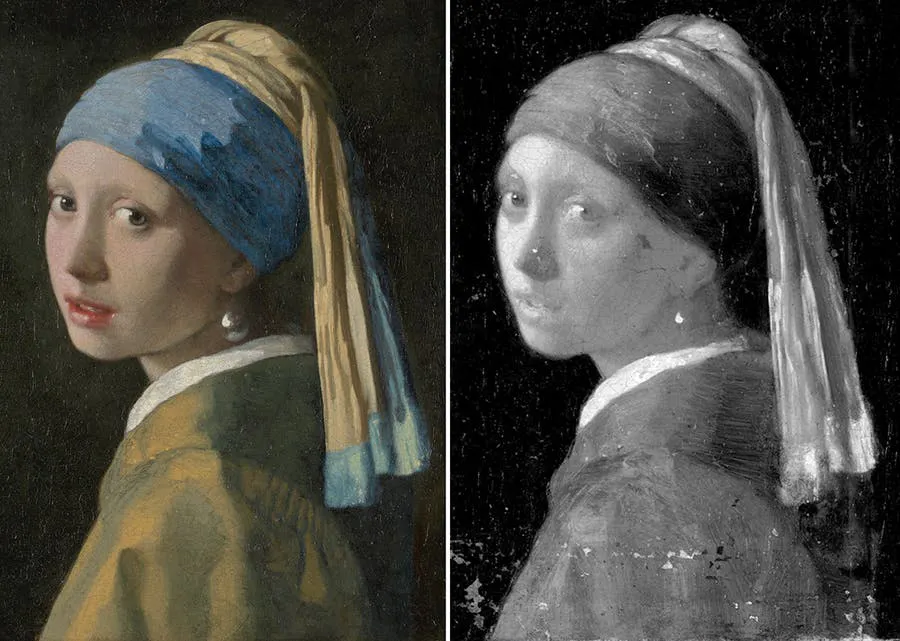
Vermeer systematically worked from background to foreground: after painting the greenish curtain and the skin of the subject's face, he successively added his yellow jacket, his white collar, his scarf and his ‘pearl’. The pearl was created like a trompe-l'oeil, with a few translucent and opaque touches of white paint placed under the lobe, which give the impression of a shimmering material. The hook on which to hang the ‘pearl’ on the girl's ear does not exist. Finally, Vermeer signed his work in the upper left corner with IVMeer.
See also: Albrecht Dürer: 5 Extraordinary Facts
The researchers also identified and mapped Vermeer's color palette for the first time: red, yellow, brown, blue, black and white are the main nuances of the work. Vermeer would have carefully selected two white lead pigments with different optical and technical properties in order to obtain a subtle transparency and a variation of diaphanous light on the girl's skin.
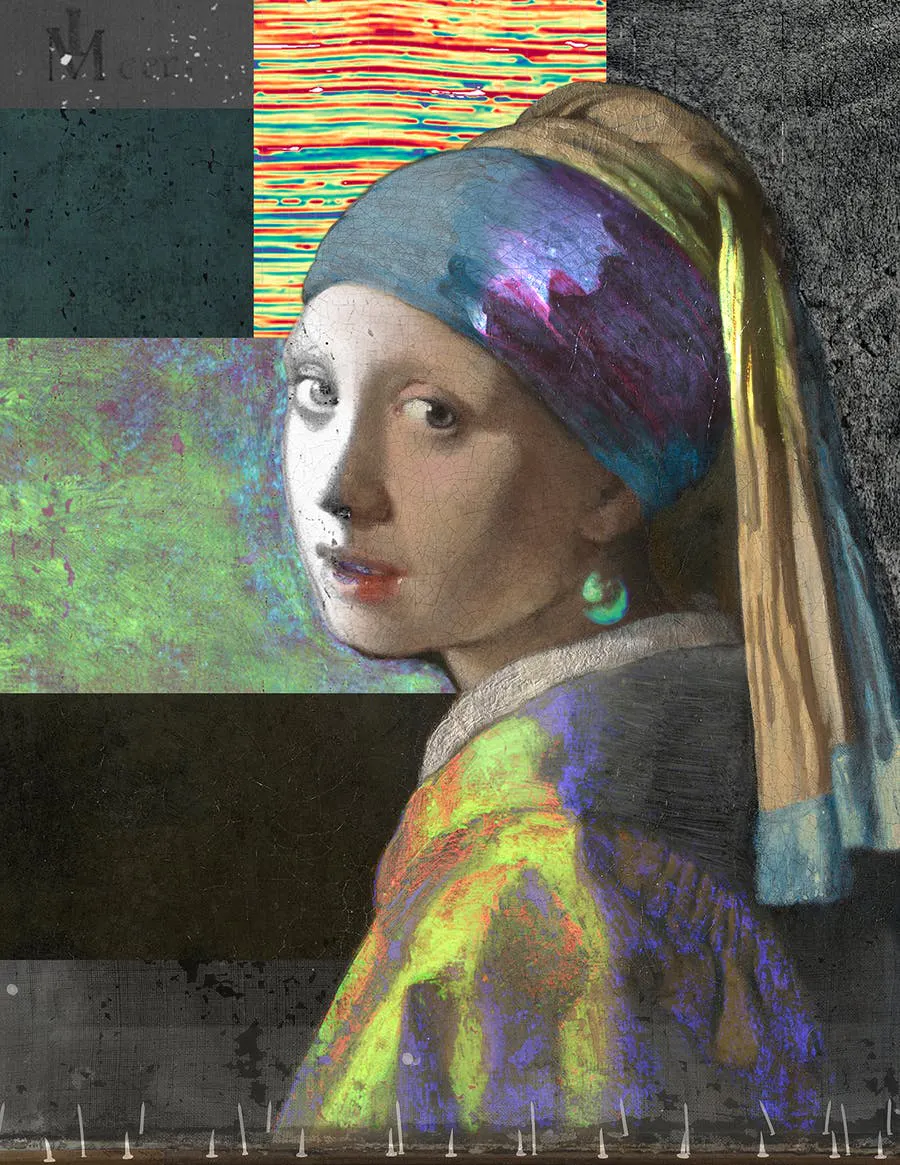
The used pigments came from all over the world, from the regions that today belong to Central America, England and Asia, via the Antilles. The use of a high quality ultramarine in the scarf and the jacket is striking. Made from lapis lazuli, the preparation of this natural pigment was long, expensive and laborious. In the 17th century, blue was more precious than gold, and was only used for subjects of great importance. If The Girl with the Pearl Earring really did exist, she was certainly not just anyone for Vermeer.