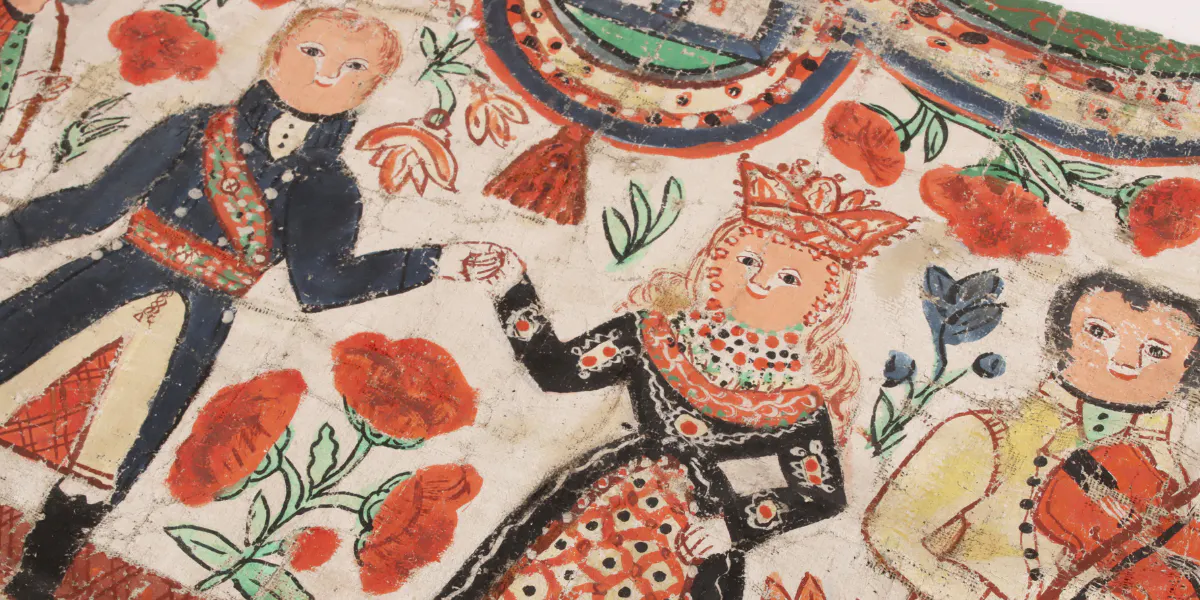
Rustic wooden furniture, handicrafts, and rose painting—once everyday items with traditional decorations—have now become highly sought after in the auction market.
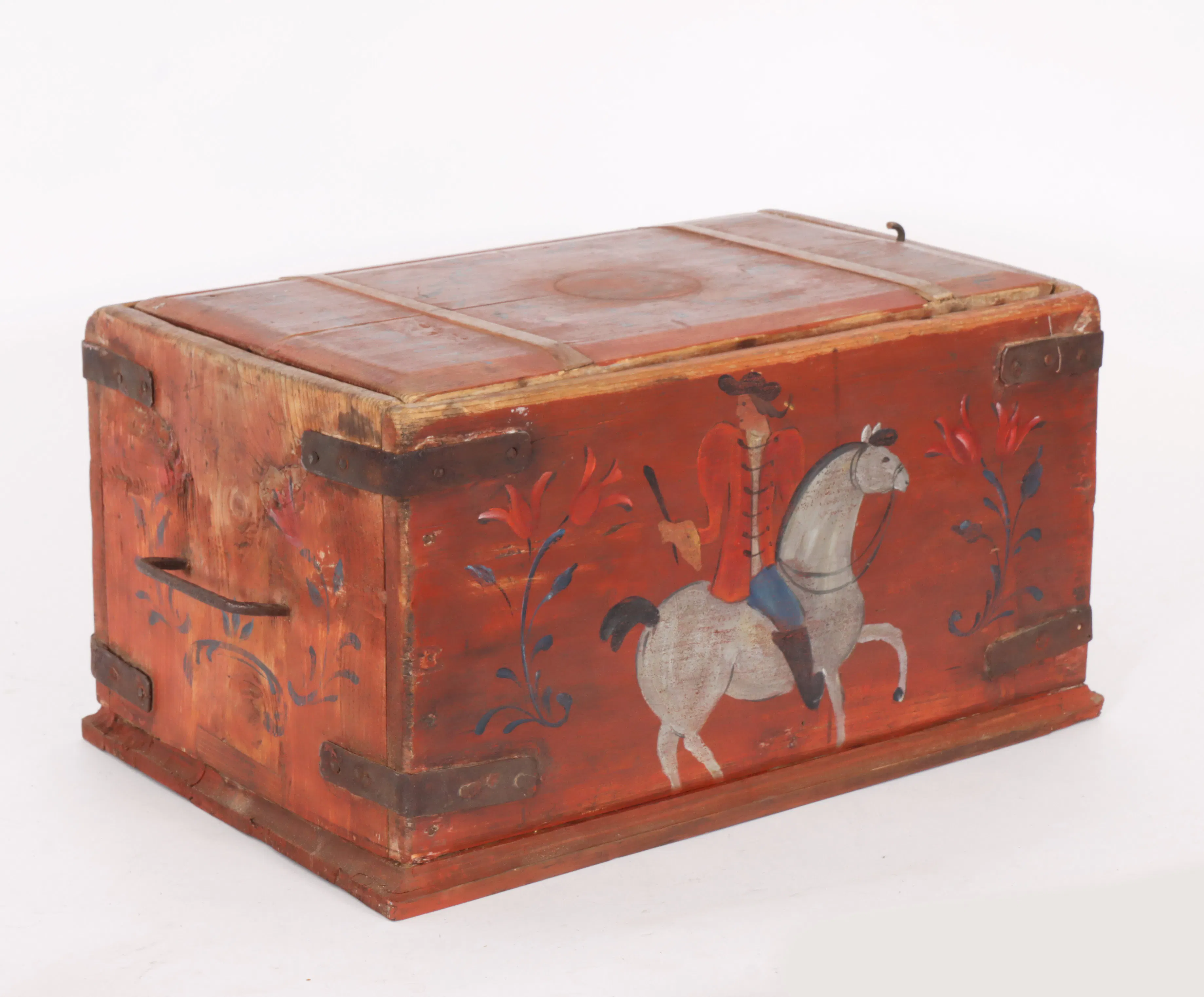
Derived from the Old Norse term 'all möghe,' meaning 'the people,' 'allmoge' was used to describe peasants and the landless in peasant society. In terms of style and aesthetics, allmoge refers to the rural and rustic style predominant in peasant society from the mid-1600s to the 1900s. Decorations on rustic wooden items were often done with paintings in various styles representing different regions of Sweden. Textile art featuring colors associated with a village, larger town, or landscape was also common in peasant society.
Want more articles like this straight to your inbox? Subscribe to our free newsletter!
Some of Sweden's most prominent designers were inspired by the allmoge style. Axel Einar Hjorth's sports cabin furniture from the 1930s and Carl Malmsten's Visingsö bench from 1953 both exhibit clear influences from allmoge, with their simple, pared-down designs crafted from pine.
See also: Axel Einar Hjorth: Modernism's Common Man
On Barnebys, you can always find folk art items for sale, ranging from sideboards and longcase clocks to troughs and jugs. Some pieces might be auctioned for a few hundred kronor, while others can fetch hundreds of thousands ($10 to $10,000). Dalarnas Auktionsbyrå is an auction house where folk art items frequently appear in the catalogues. We spoke with Marcus Gärdskog, appraiser and catalogue manager at Dalarnas Auktionsbyrå, to gain more insight into the folk art market at auctions.

How has the market for folk art items developed in recent years? Has interest increased or decreased?
Generally speaking, the demand for allmoge today is quite varied. However, it could be said that interest in many folk art items has somewhat cooled over the past two years, particularly for those that are simpler or more common.

Are there any items that are more sought-after in the auction market? What makes them particularly interesting?
Items in the simpler segments of the field, such as repainted sideboards, longcase clocks, and other basic utility items, currently have low demand and therefore lower prices. Five years ago, it was more common for smaller folk art items to achieve high prices at auction. Examples include Dala horses, Dala pigs, painted birds, needle cases, and painted bowls.
However, today furniture is more attractive to buyers, who are particularly interested in trestle tables or other folk tables, as well as high-quality Rococo or Gustavian-style cabinets (where painting is less crucial). Cabinets with excellent paintings still retain demand.
See also: Swedish Folk Art: Timeless Charm

What do you foresee for the future of collecting folk items? What should one look for at auctions?
I recommend looking for rare and genuine items, as collectors generally prefer pieces in their original, albeit worn, condition over those that have been renovated or supplemented.