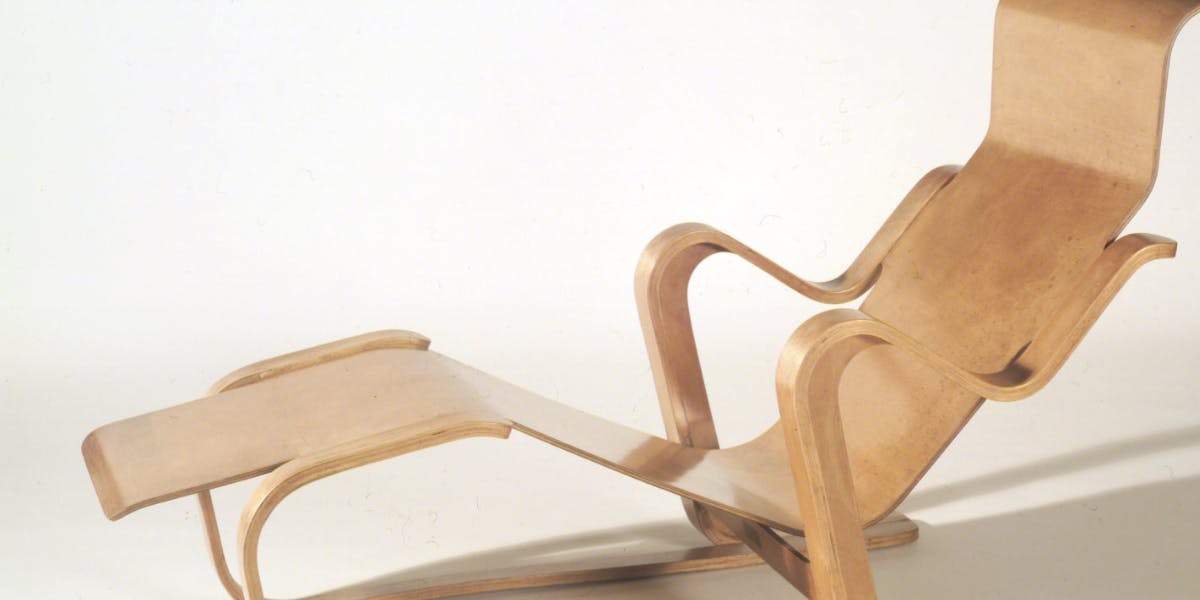
Breuer’s Isokon ‘Long Chair’ is a simple but brilliant design, using the practicality and inherent strength of plywood—a material often overlooked today as merely a second-rate building material. These chairs exemplify the modernist principles of efficiency and simplicity, reflecting Breuer's innovative approach to material and form.
See also: Bauhaus: A New Guild of Craftsmen
Marcel Breuer, born in Hungary in 1902, left his home country to attend the Weimar Bauhaus, a school of design that sought to integrate modern aesthetics into mass-produced everyday items.
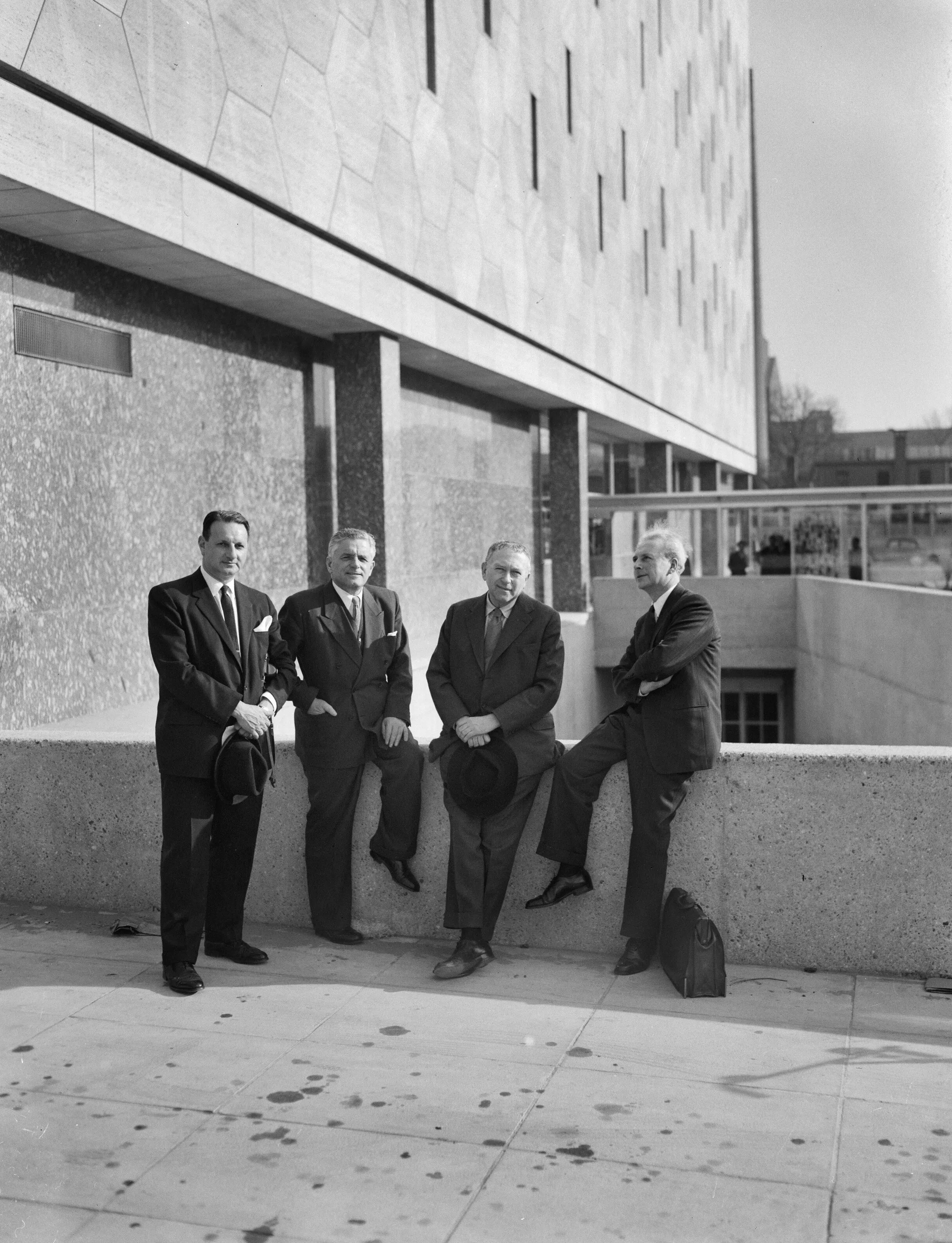
One of Breuer’s significant contributions to furniture design was his experimentation with materials. His early work with wooden lath-built furniture eventually led him to explore the potential of tubular steel, which became synonymous with modernist design. His 1926 design, the ‘Wassily Chair,’ is perhaps the most famous example, embodying the Bauhaus ethos of simplicity, functionality, and elegance.
See also: 10 Ingenious Chairs: Design Classics of the 20th Century
In the early 1930s, as the Nazi regime gained power, Breuer and his Bauhaus colleagues fled Germany. He eventually settled in Britain, where he collaborated with Jack Pritchard, co-owner of Isokon, a London-based company specialising in architectural design and furniture production.
Want to discover more designers like this? Subscribe to our free newsletter!
It was during this partnership that the ‘Long Chair’ was developed. Originally conceived in Switzerland in 1933, the initial design used an aluminum frame. In Britain, Breuer refined the chair, replacing the metal frame with steam-bent and laminated birch plywood—a readily available and efficient material.
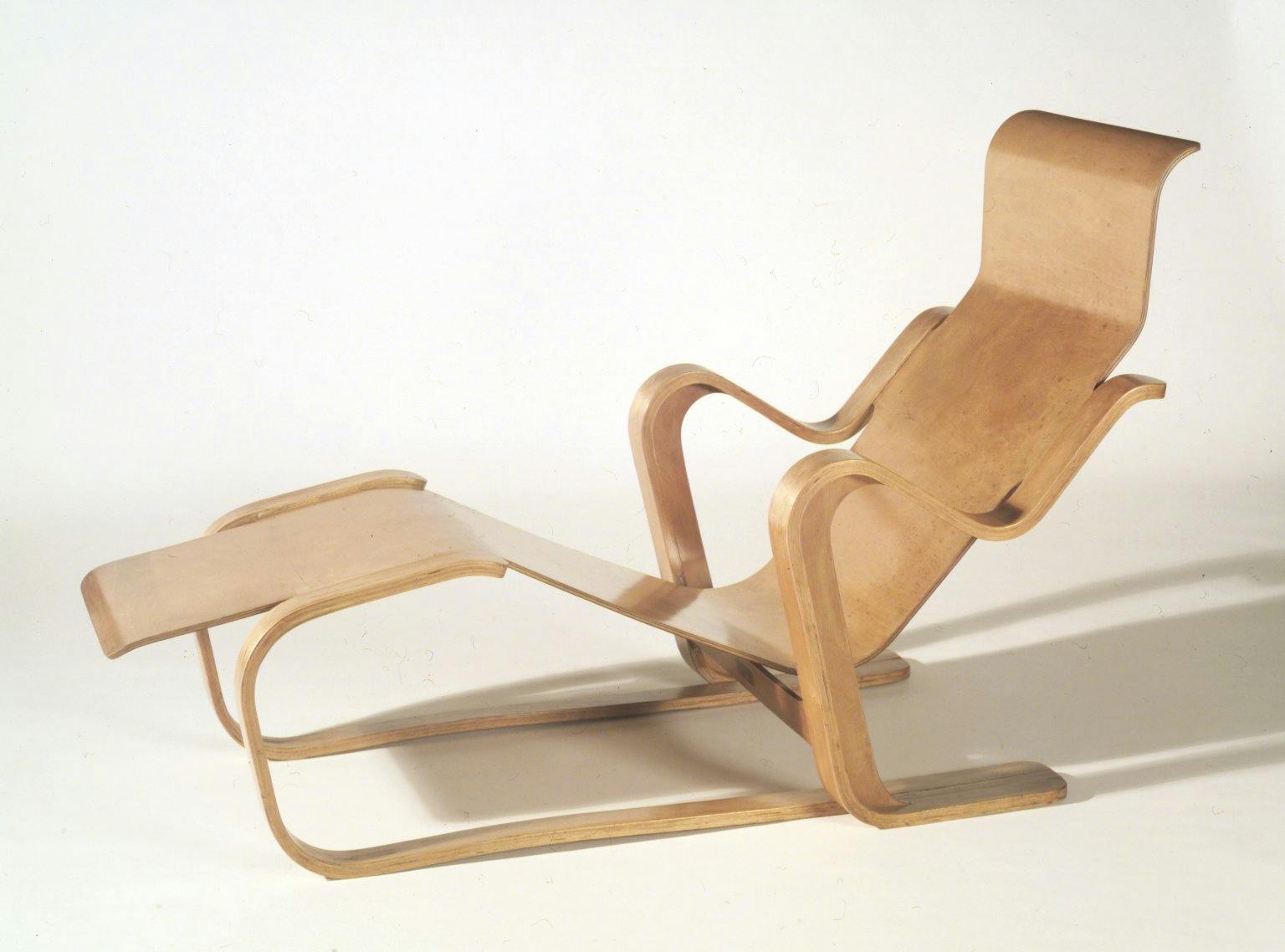
The ‘Long Chair’ combines the practicality and inherent strength of plywood, allowing the sitter to recline comfortably without the need for springs or other mechanisms. Breuer also designed a shorter variant, aptly named the ‘Short Chair.’ Like its longer counterpart, the ‘Short Chair’ leverages the tensile strength of laminated plywood to create a comfortable and supportive seating experience.
See also: 10 Reasons to Buy Vintage
Both the ‘Short’ and ‘Long’ chairs have earned a significant place in design history. Today, they are featured in major design museums around the world. While the chairs remain in production, original pieces from the 1930s are rare and highly sought after by collectors. Later models typically fetch between £400-600, but 1930s examples have sold for upwards of £5,000.