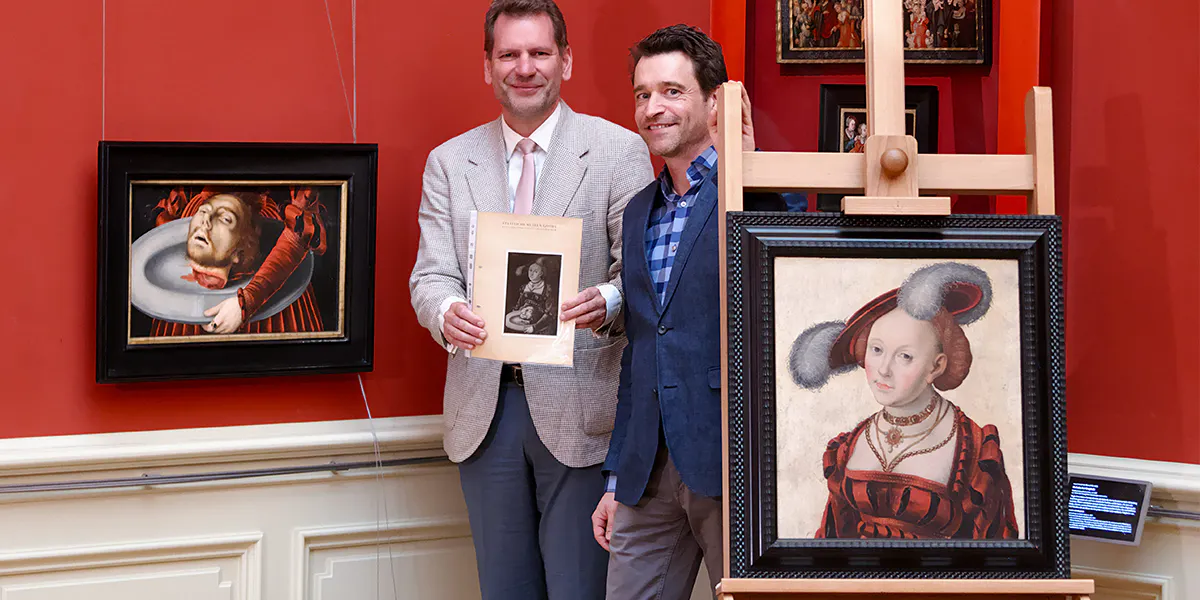
Around 1530, the work Salome with the Head of John the Baptist was painted in oil and tempera on fir wood, probably by a workshop assistant or successor of Lucas Cranach the Elder. Four centuries later, something remarkable happened: the painting was cut into two pieces. How did it come to this?
See also: A Flemish Family Portrait Reunited After 200 Years
The painting had belonged to the Dukes of Saxe-Gotha since 1644 and was kept at Friedenstein Castle in Gotha, their former residence. After the First World War, the collection was transferred to the Free State of Thuringia. As it included a large number of Cranach works, the decision was taken in 1936 to sell Salome with the Head of John the Baptist. The buyer, an art dealer, found the subject unsuitable “for sensitive people” and thought it would be hard to resell. To make the upper section more marketable as a portrait of an Ernestine princess, he sawed off the lower part showing John’s severed head and sent it back to the collection. That fragment was restored in 2015 and displayed in 2021 in the exhibition Back in Gotha! The Lost Masters.
Want more articles like this straight to your inbox? Subscribe to our free newsletter!
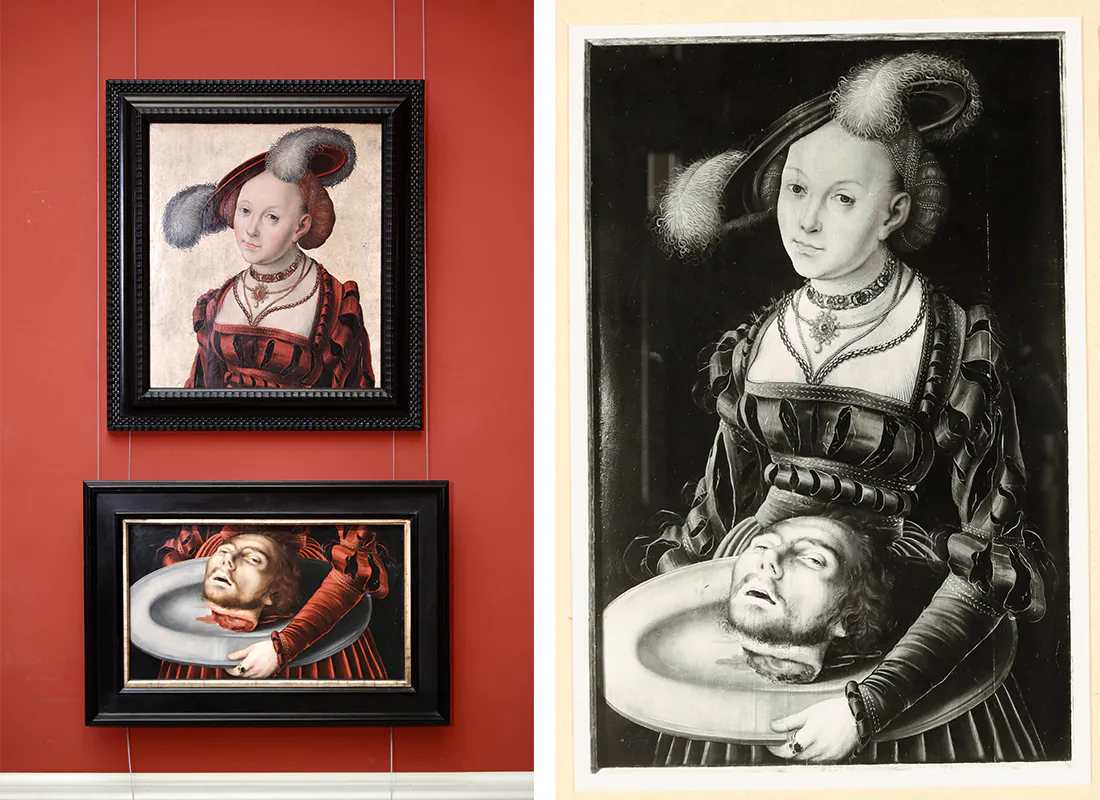
The upper section was auctioned at Christie’s in London in 2012, after which it disappeared from view for several years. It resurfaced on the art market last year and, with support from the Gotha Cultural Foundation, was bought back for the Friedenstein Castle collection, now overseen by the Friedenstein Foundation Gotha. Restoration is planned for 2026 in collaboration with the Institute for Restoration at the Technical University of Cologne. Further research is also planned to clarify the attribution of Salome with the Head of John the Baptist.