Jean-Michel Basquiat’s powerful forms of expression, full of symbolism, text and stick figures, are as relevant today as when the artist was at the peak of his career. He was born on December 22, 1960 in New York. Just before his birth, his older brother Max died, making Jean-Michel the oldest of the siblings. The family lived in Brooklyn where Basquiat's father, Gérard Basquiat worked as an accountant while Basquiat's mother, Matilde Basquiat, was deeply artistic. This interest was transferred to Jean-Michel, and together they visited New York's art museums, galleries, and cultural institutions.
Basquiat was a talented child who learned to read and write at just 4 years old. In addition, his parents' ancestry made the young Basquiat fluent in Spanish, French and English.
See also: Keith Haring: The Artist Who’s Everywhere
When he was seven, Basquiat was hit by a car, which led to a broken arm and a ruptured spleen. During the period that he was hospitalized, he occupied himself with Gray's Anatomy, an anatomy book for medical students. The macabre illustrations inspired the young Basquiat and influenced his later artistry. In addition, he used the title as his band name, ‘Gray’, which the artist formed with a couple of friends in the 1970s.
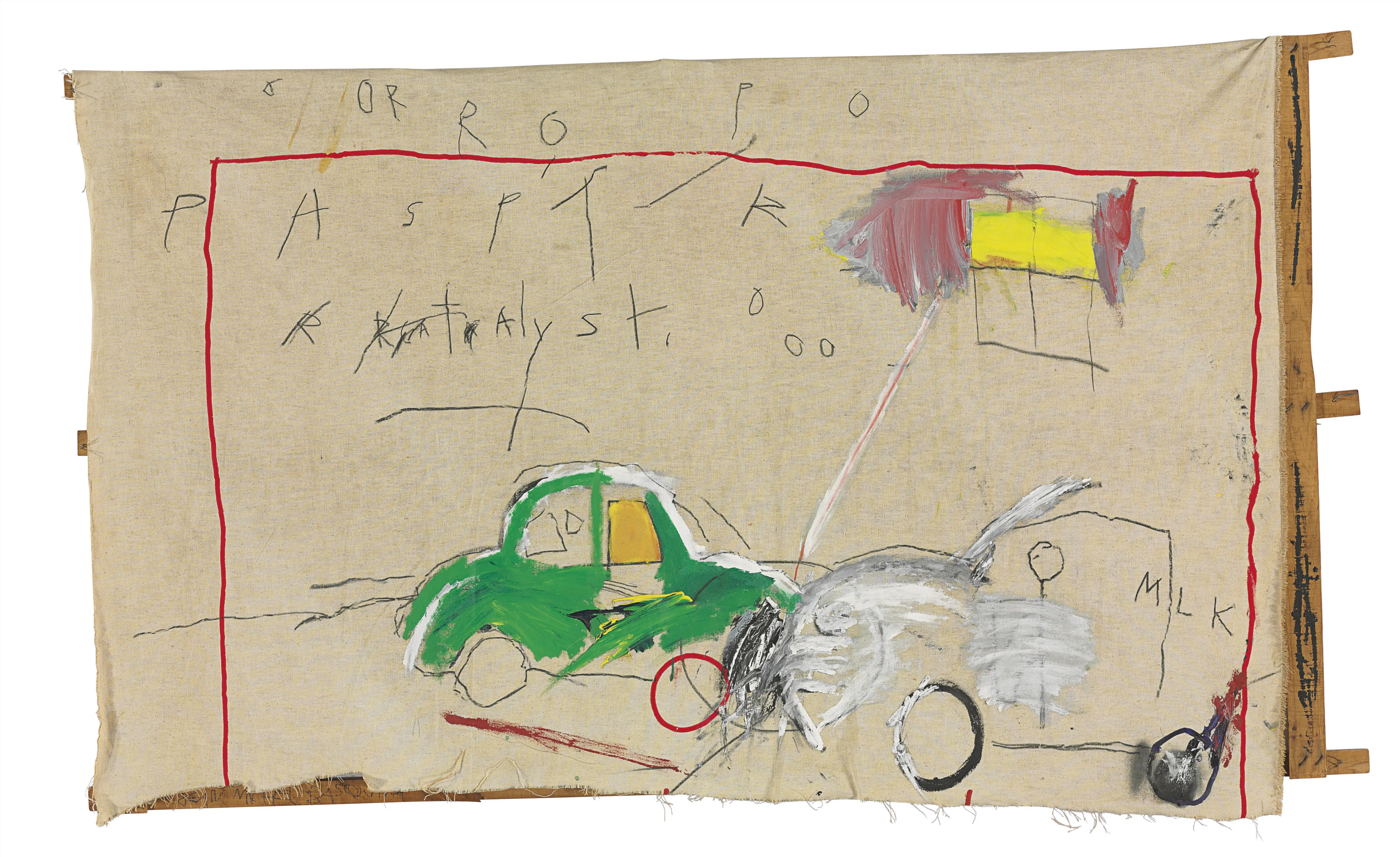
Although his family was relatively well-off and belonged to the middle class of Brooklyn, Basquiat's upbringing was turbulent. His mother suffered from mental illness and since Basquiat's thirteenth birthday, was often hospitalized at different institutions. The father was violent and Jean-Michel ran away from home on repeated occasions.
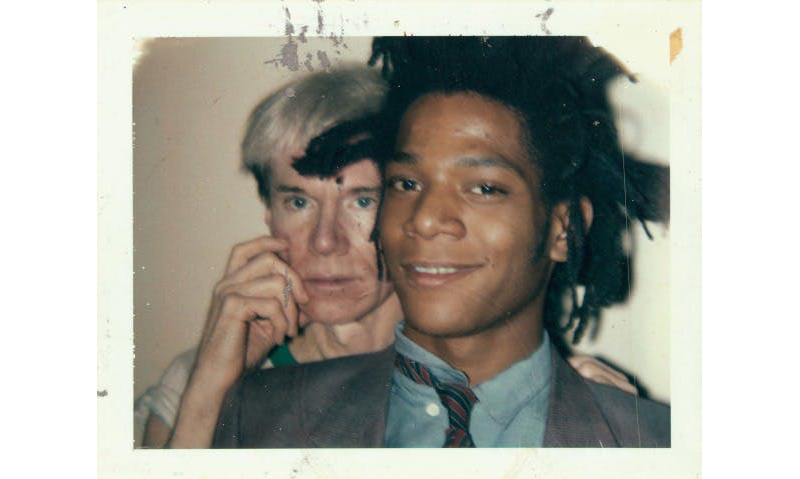
At the age of 17, Basquiat dropped out of school for good and left Brooklyn for Manhattan. There he lived from day to day, sleeping at friends’ and acquaintances’ houses and in parks, while devoting himself to selling homemade postcards and t-shirts. In 1979, Basquiat saw Andy Warhol, whom he greatly admired, walk into a restaurant. Basquiat followed him and offered Warhol a few postcards. The purchase formed the basis for the future friendship and partnership of both artists.
In the 1970s, New York was covered by a new graffiti tag, ‘SAMO’. The tag was usually accompanied by short, poetic sentences, some political and others surrealistically incomprehensible. The epigram stood for ‘Same Old Shit’, and behind it stood Basquiat and his friend Al Diaz. During the next three years, they worked on the epigram together until 1980, when they had a dispute and went their separate ways. Passers-by could then instead see the sentence ‘SAMO IS DEAD’ around Lower Manhattan.
Jean was a fine art painter, that’s how he saw himself.
By the 1980s, Basquiat had established himself as an artist. In 1980, he was part of an enormous art exhibition, the Time Square Show, in the middle of Manhattan, with artists such as Keith Haring, Kiki Smith, Jenny Holzer and Fab 5 Freddy. The exhibition included over a hundred artists, and Basquiat himself contributed a large mural.
In the early 1980s, Basquiat's career continued to progress. He had received several positive reviews after the exhibition at Times Square and in 1982 joined the gallerist Annina Nosei. In the following year, Basquiat’s work was included at the Whitney Biennial. The artist was then only 22 years old and thus the youngest ever represented at the prestigious show. Basquiat was officially an established artist in the New York as well as the American art scene.
However, Basquiat's race made life more complicated for him than for other artists. He repeatedly testified against the racism that affected him and other black Americans, which was also something that the artist incorporated in his work throughout his career.
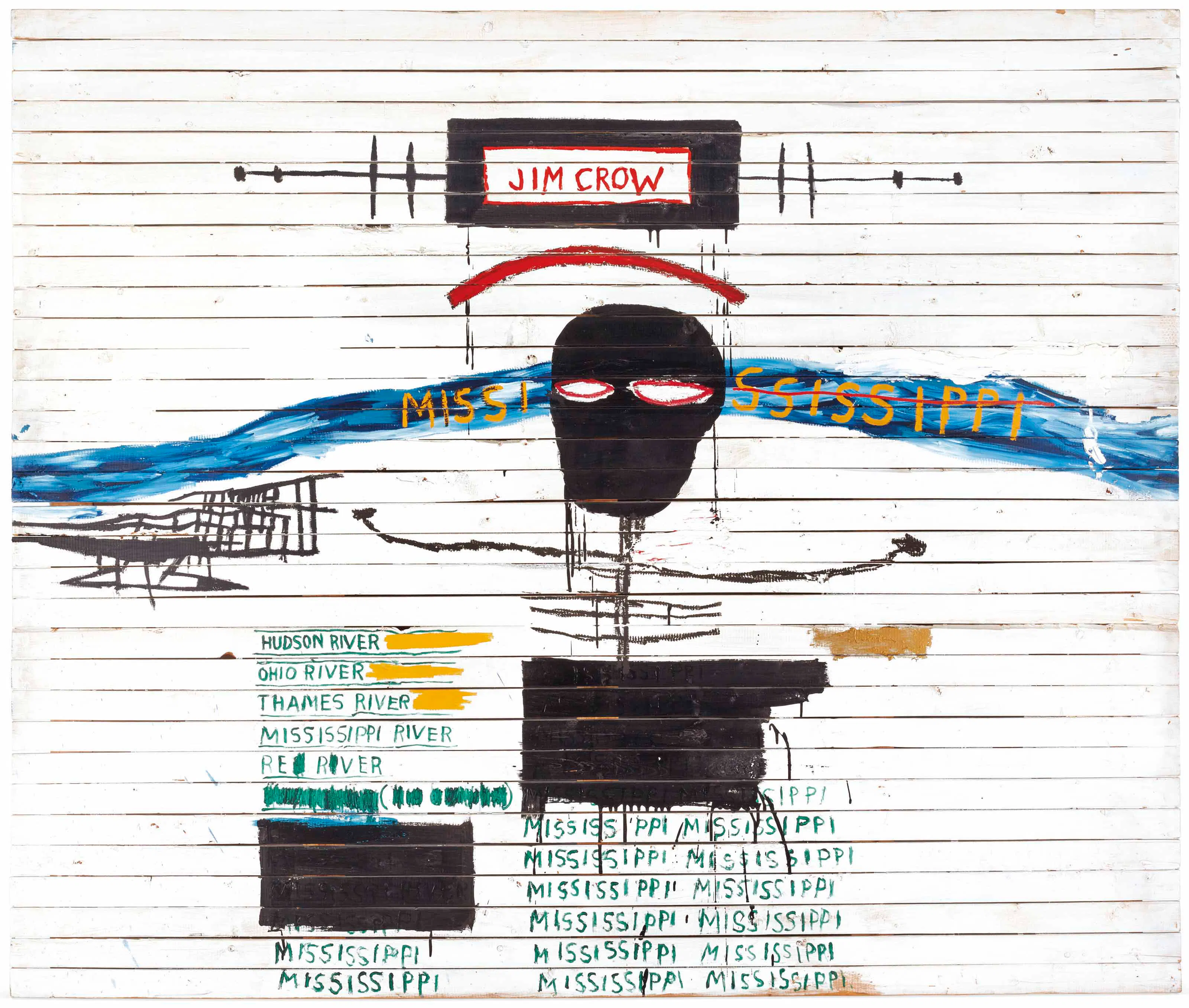
Basquiat often portrayed black Americans whom he admired, such as the boxers Muhammad Ali and Joe Luis, and the jazz musician Charlie Parker. Basquiat said that black citizens lost out because of their absence in art, which was a direct reflection of their marginalized position in society. By portraying black culture and heroes, often with crowns, Basquiat challenged Western history, historical writing and institutionalized racism.
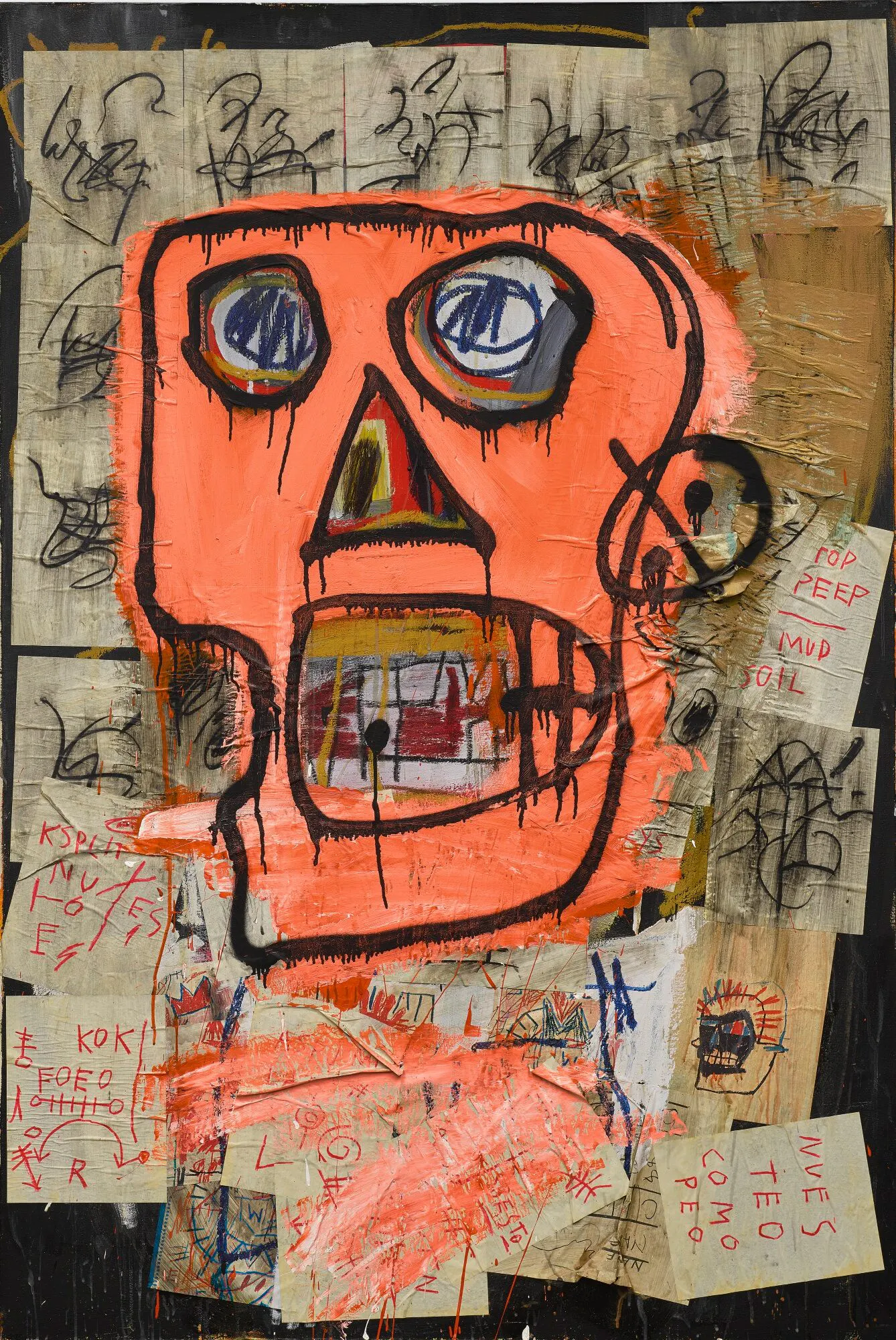
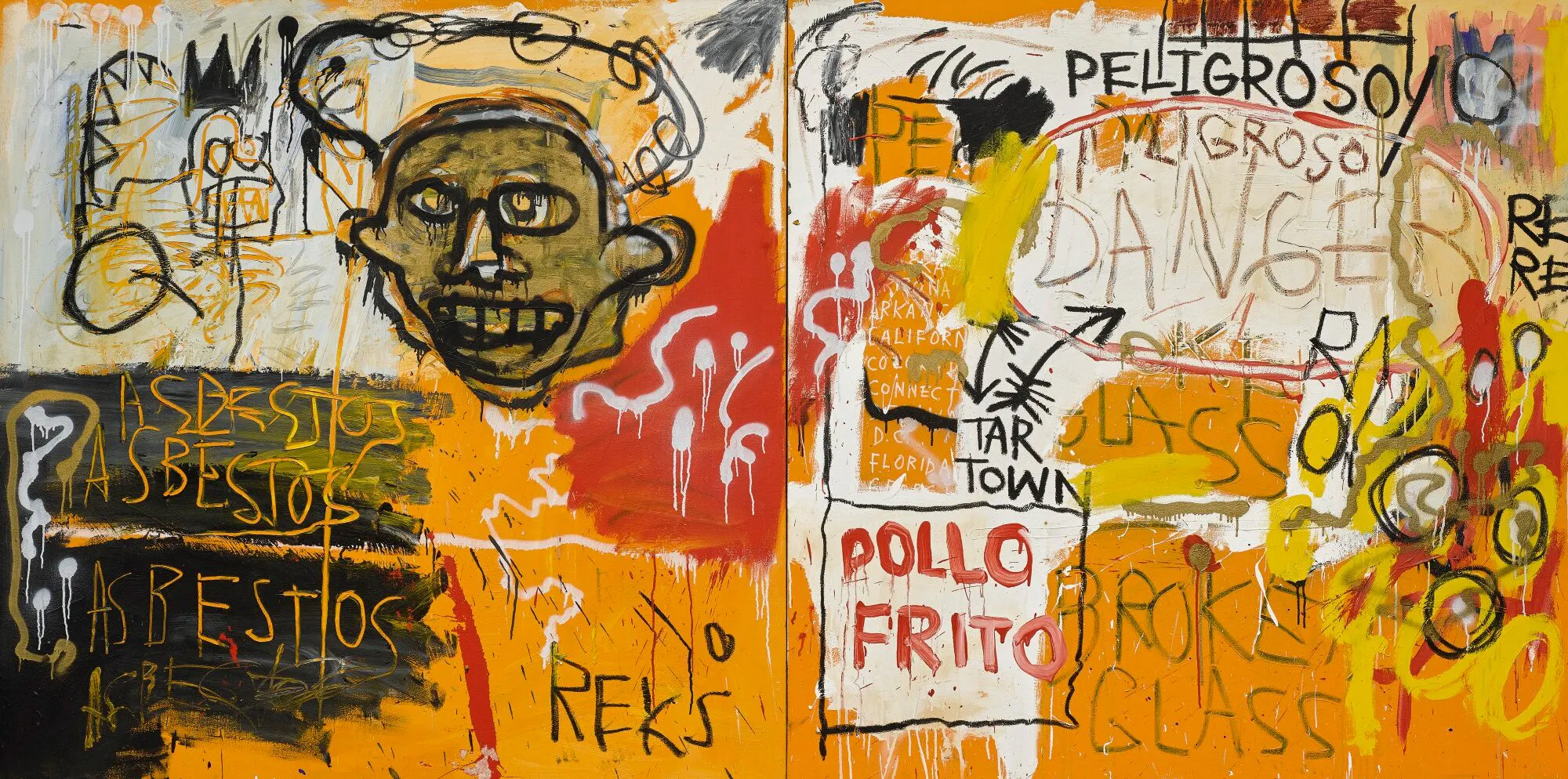
Basquiat's artistry is characterized by powerful, intense tones side by side with a more earthy palette. He was part of the figurative school, whose style broke against the 1960s dominant minimalism. His form of expression was through symbols, diagrams, stick figures and text, where the skull and the crown were constantly repeated as motifs.
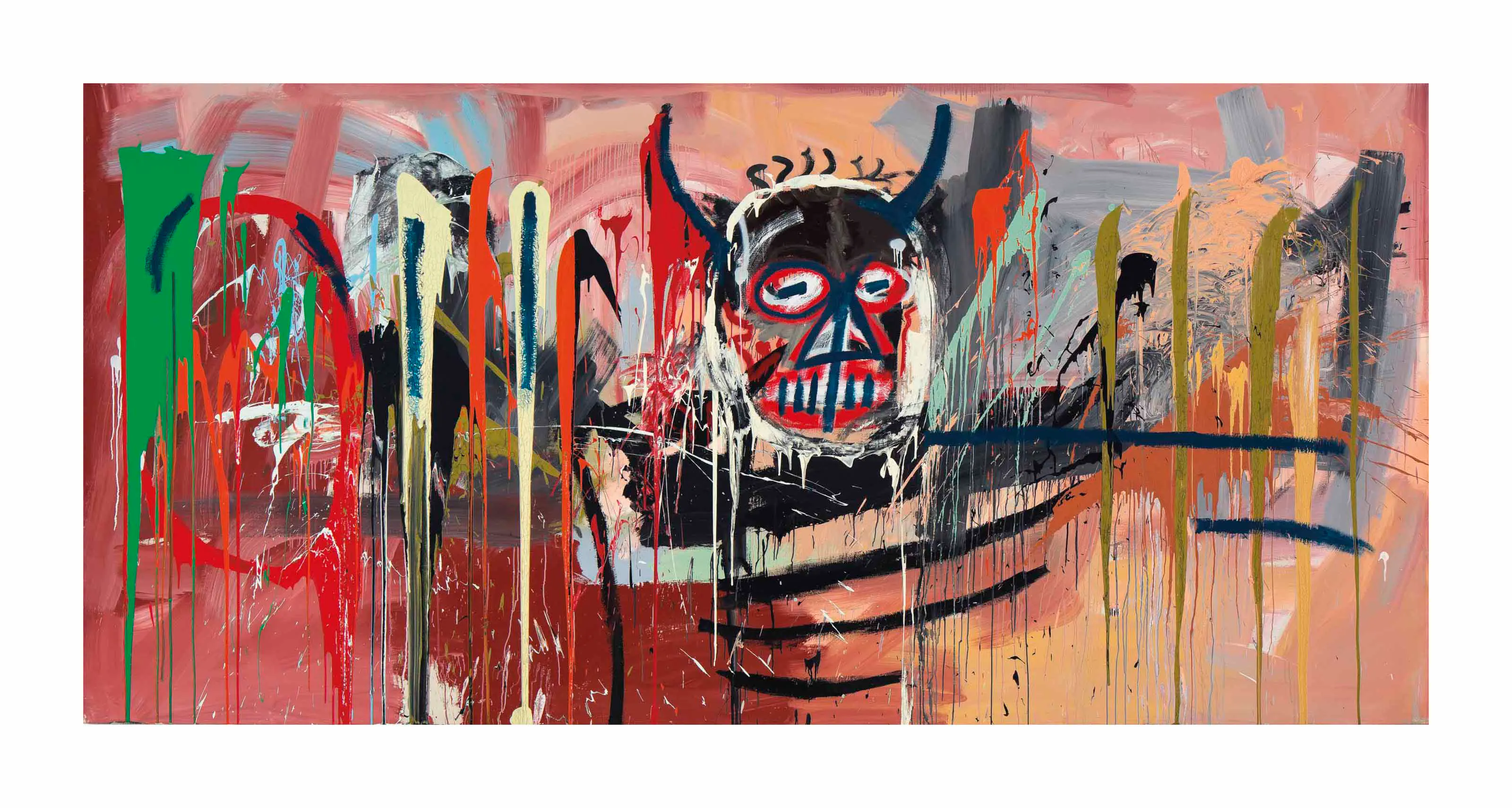
His raw, extreme and sometimes child-like style was perceived by some as untrained, which sometimes confused art experts and critics. Others perceived his art as the golden balance between visually appealing and intellectual elements. Basquiat repeatedly explored dualities, such as heritage and modernity, collectivity and property, and originality and inspiration, often driven by a tireless struggle to explore injustice.
Basquiat suffered from drug addiction during most of his adult life, which affected both his relationships and artistry. In fact, he stated in an interview that he could occasionally use up to 100 bags of heroin a day. The year before his death, Basquiat moved to Hawaii in an attempt to become drug-free, but when he returned to New York, he again resumed his abuse. On August 12, 1988, Basquiat was found dead in his apartment in NoHo.
See also: Banksy: A Variation on an Enigma
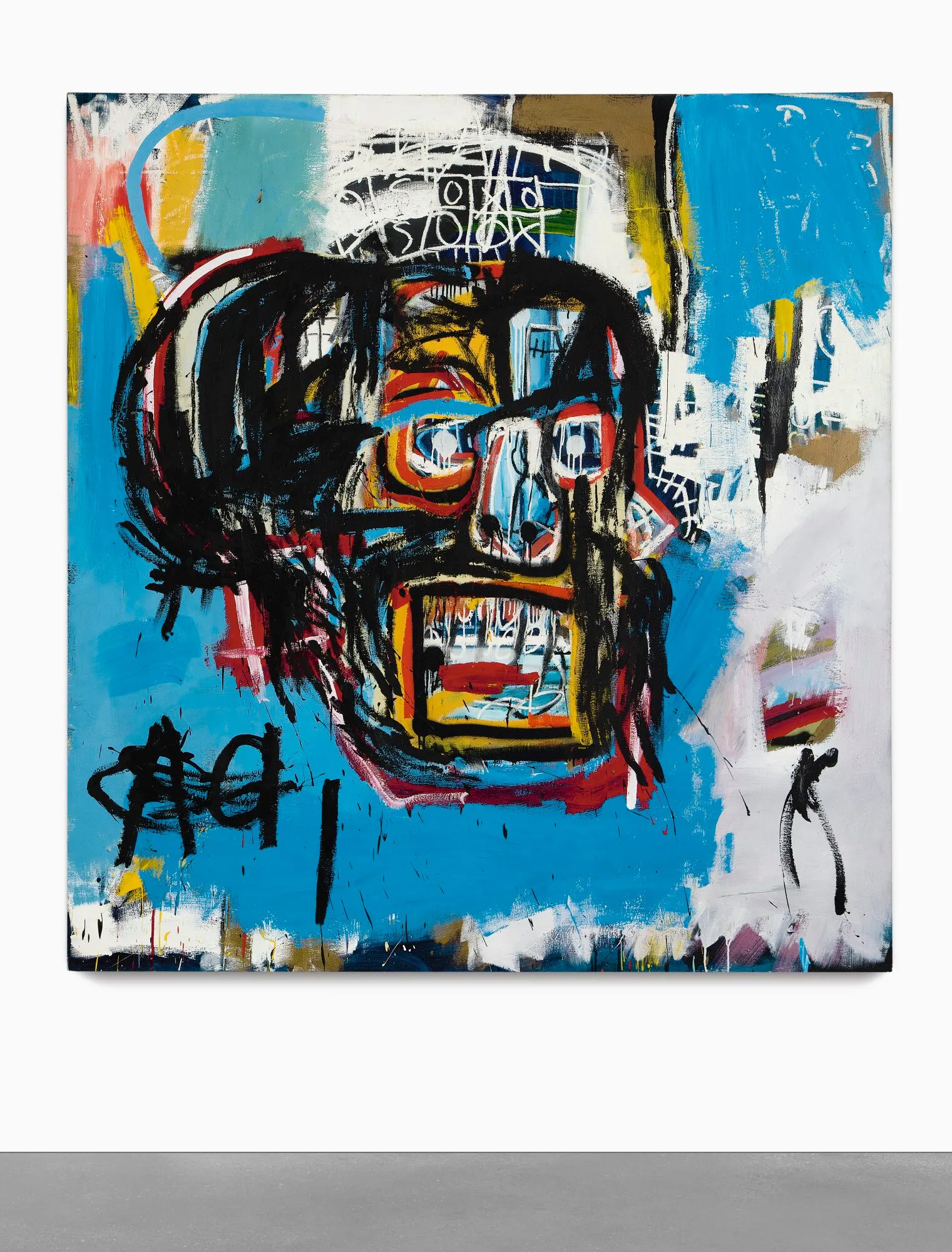
Despite his short career, Basquiat's artistry has strongly influenced the international art scene and has had a profound effect on the public throughout the decades that have elapsed since his death. Basquiat's art is as relevant today as it was in the 1980s and his popularity is bigger than ever. An example of this was when his work Untitled (1982) was sold at Sotheby’s in 2017 for a then record-setting $110.4 million. It was not just the world record for the American artist, but also the most expensive piece of art to be sold by a black artist.
Basquiat's mysterious character, in combination with his artistry, has generated tremendous attention in popular culture. There have been several films about the artist's life, both documentaries and feature, including Boom for Real: The Late Teenage Years of Jean-Michel Basquiat (2017) by Sara Driver, Jean-Michel Basquiat – The Radiant Child (2010) by Tamra Davis, and Basquiat (1996) by Julian Schnabel. His face and work have been used for the design of clothing and shoes, and the American cosmetics company Urban Decay created the collection ‘Urban Decay x Jean-Michel Basquiat’ in 2017.
See also: Jenny Saville: The Art of the Sculpted Nude on Canvas
However, companies that used Basquiat's art to market and sell their own products have not always encountered positive reactions – especially as Basquiat actively criticized the increasing commercialization of society.
Director Sara Driver, who was also a good friend of Basquiat in the 1980s, said in Interview Magazine:
“I think it must have been very heavy for him to be 27 and to have become a commodity. I think that weighed on him because that wasn’t who he was. I think he would’ve flipped out if he saw people walking around with T-shirts. He wasn’t Keith Haring, who was into mass-marketing his stuff. Jean was a fine art painter, that’s how he saw himself.”