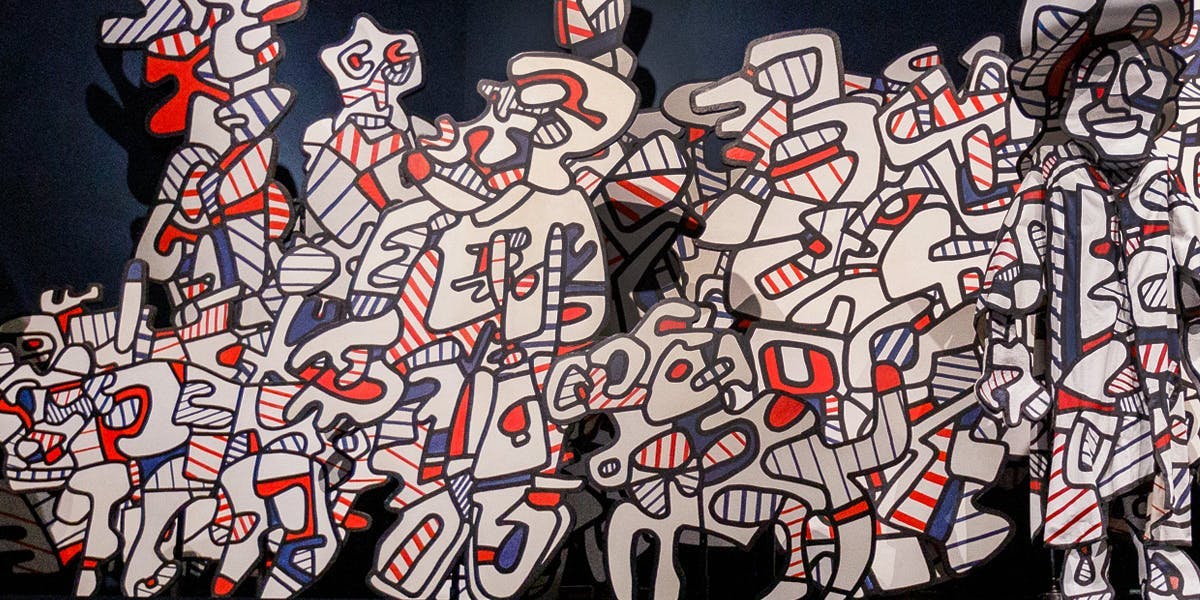
The concept of 'Art Brut' was introduced and theorized by the French painter and sculptor Jean Dubuffet in 1945. Later, in 1972, the term 'outsider art' was chosen by the art critic Roger Cardinal as the English equivalent. Influenced by reading the book Artistry of the Mentally Ill (1922) by psychiatrist Hans Prinzhorn and fascinated by the nomadic nature of certain African tribes, Dubuffet used the term 'art brut' to refer to the art produced by self-taught artists.
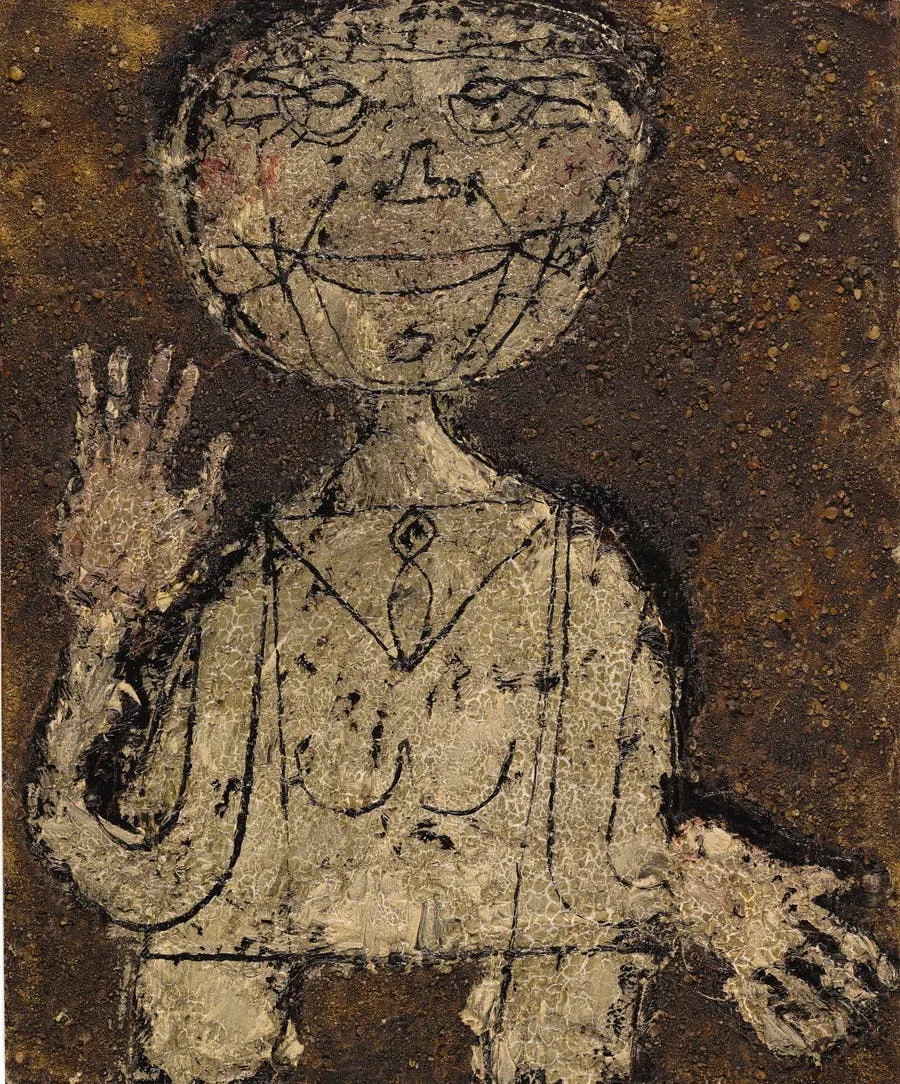
These "outsider" artists generally had little contact with the traditional art world or artistic institutions, and in many cases their works were not discovered until after their death. Psychiatric clinic patients and prisoners, for example, fall into this category. In this sense, the word "brut” also echoes the notions of authenticity and purity. Convinced that the expression of these individuals contained more poetry than academic art, Dubuffet created art free from intellectual influence, which sometimes appears primitive and childish.
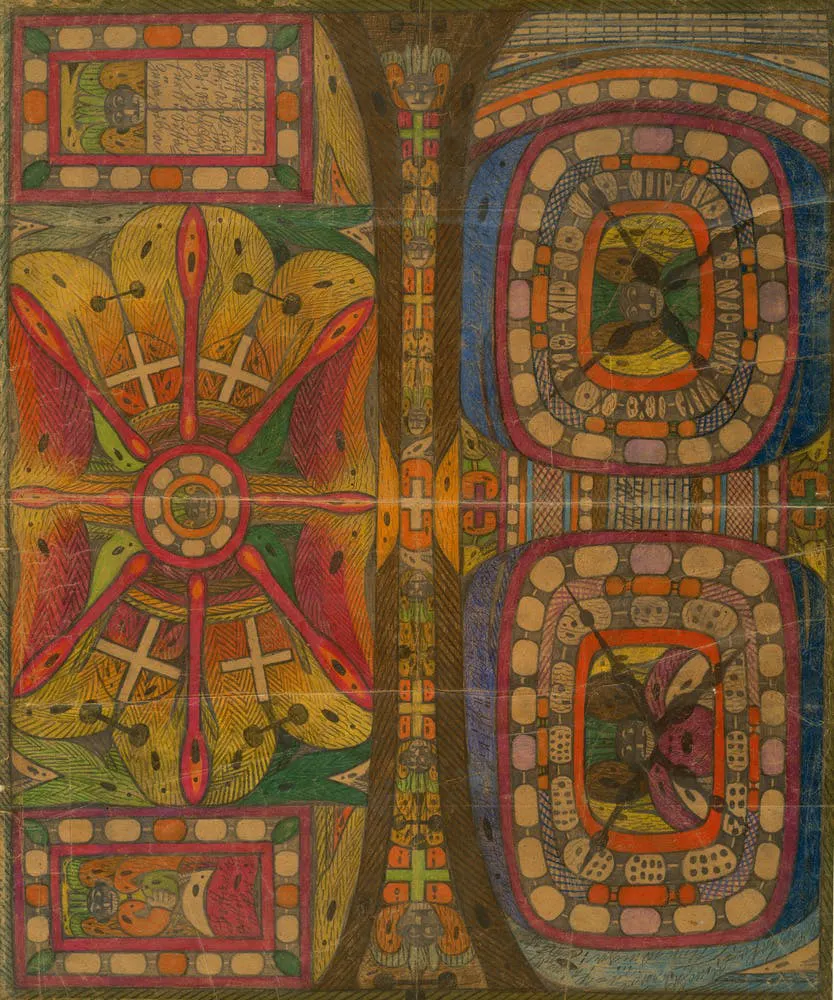
Jean Dubuffet is responsible for having rediscovered and included the Swiss Adolf Wölfli in the Art Brut canon. Raised in the countryside by an alcoholic and abusive father, Wölfli was declared schizophrenic and was locked up for life in a psychiatric hospital where he began to draw, write and compose music. His creations attracted the attention of psychiatrist Walter Morgenthaler, who wanted to encourage his artistic expression. His drawings, in which the obsessive repetitions of geometric elements stand out, seem to express a sort of horror vacui (in Latin, "the fear of the void", an expression which in the arts refers to the action of filling all spaces with details).
Related: 10 Artists Between Genius and Madness
Even in writing, Wölfli displayed an unusual talent and was able to create such elaborate puns that he was compared to Lewis Carroll. It also seems that the artist in a certain sense anticipated Andy Warhol, creating a work called Campbell's Tomato Soup several decades before Warhol. In 1945 Jean Dubuffet decided to include him among the exponents of Art Brut, in consideration of his self-taught creative spirit, disconnected from conventions and not conditioned by external influences.
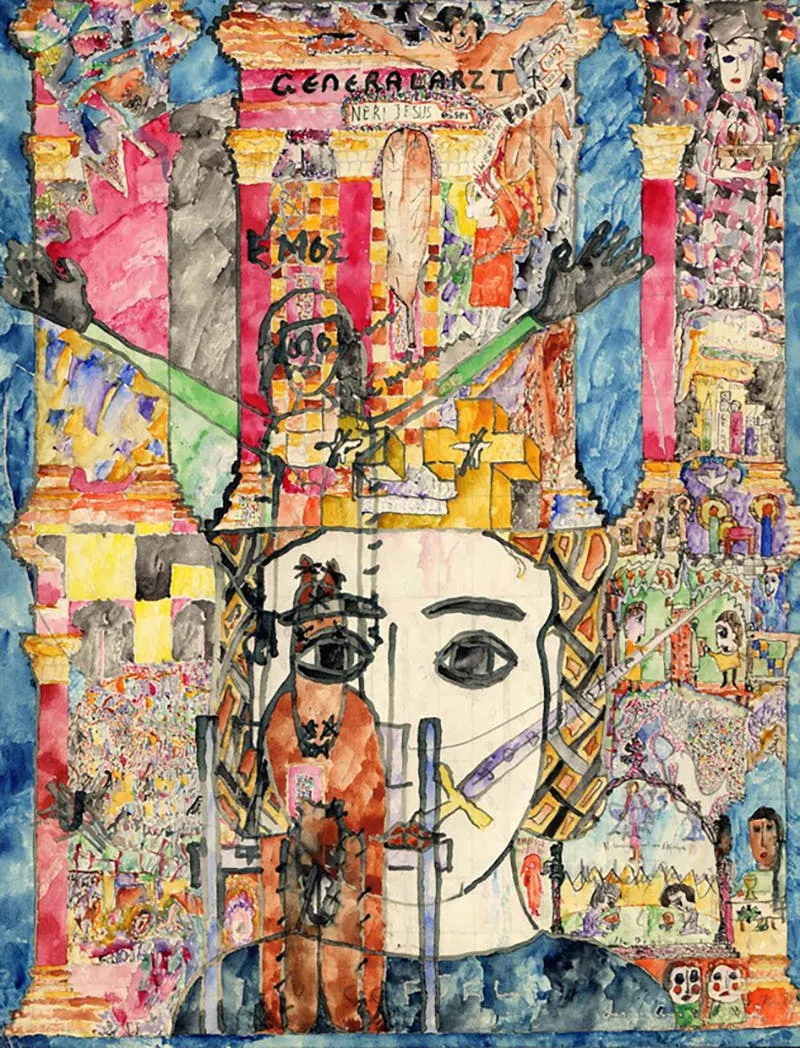
Of rather fragile mental and physical health and often a victim of psychotic episodes, the German artist Paul Gösch was considered a watercolor specialist. In 1917 he was hospitalized for schizophrenia in the psychiatric clinic in Göttingen where his brother-in-law, head of the institute, allowed him to continue working as an artist. Here, Gösch created many watercolors and drawings and painted on envelopes, posters, newspapers and any other materials he could find. He also composed poems and wrote and illustrated numerous fairy tales. In 1940 he was euthanized by the Nazis at a German prison. Since his death, his work has been viewed as an example of Art Brut.
Related: 5 Artists from Sickness to Success
The American writer and illustrator Henry Darger is also counted among the greatest exponents of Art Brut, by virtue of his solitary life. Locked up in an asylum at a very young age, he later managed to escape from it and live a very simple existence. He collected various kinds of objects on the street (balls of string, glasses, shoes) which he then exhibited together with his works of art in the own home-studio. At first glance, Darger's works don't seem much different from illustrations in children's books, but a closer look reveals much darker elements.
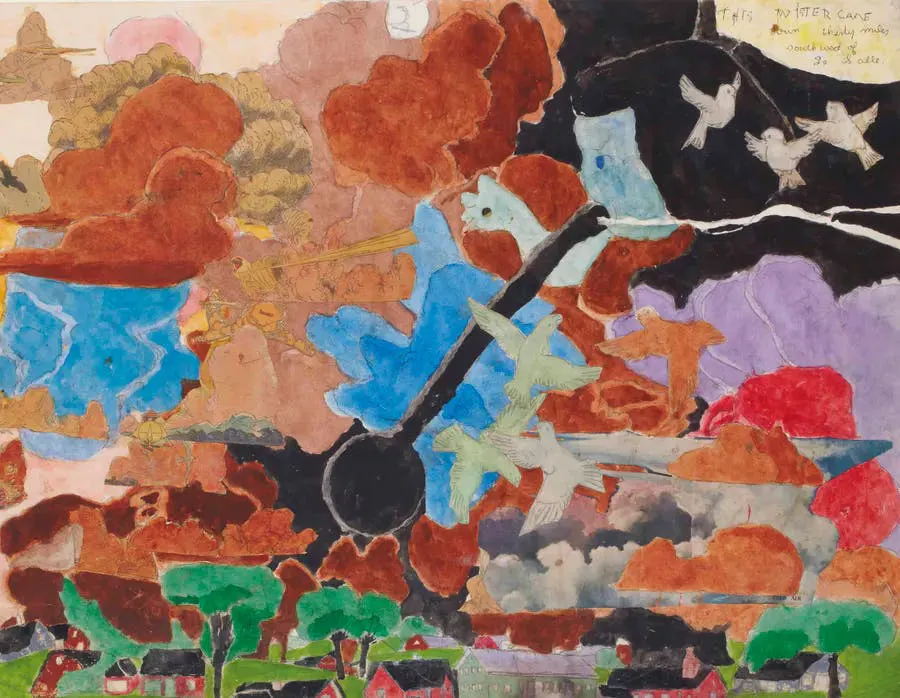
In 1930, Darger moved to the North Side of Chicago, where he created incessantly. Shortly before his death, the owners of his apartment discovered his work and, recognizing its value, decided to distribute it, thus contributing to the artist's posthumous success. Darger is now a household name in the field of "outsider art" and some of his works have been auctioned for high prices at the New York Outsider Art Fair.
Related: Corneille and the Radical Art of CoBrA
Among the female representatives of art brut, it is worth mentioning Anna Zemánková, a self-taught Czech painter, designer and pastellist. After the death of her eldest son in 1939, Zemánková sank into a long depression, throughout the 1950s. To help her fight her distress, her second son, a sculptor, suggested that she draw. At the age of 52, Zemankova began producing “swirling and luminous designs”, which then evolved into floral and abstract forms, arabesques, spirals and geometric shapes.
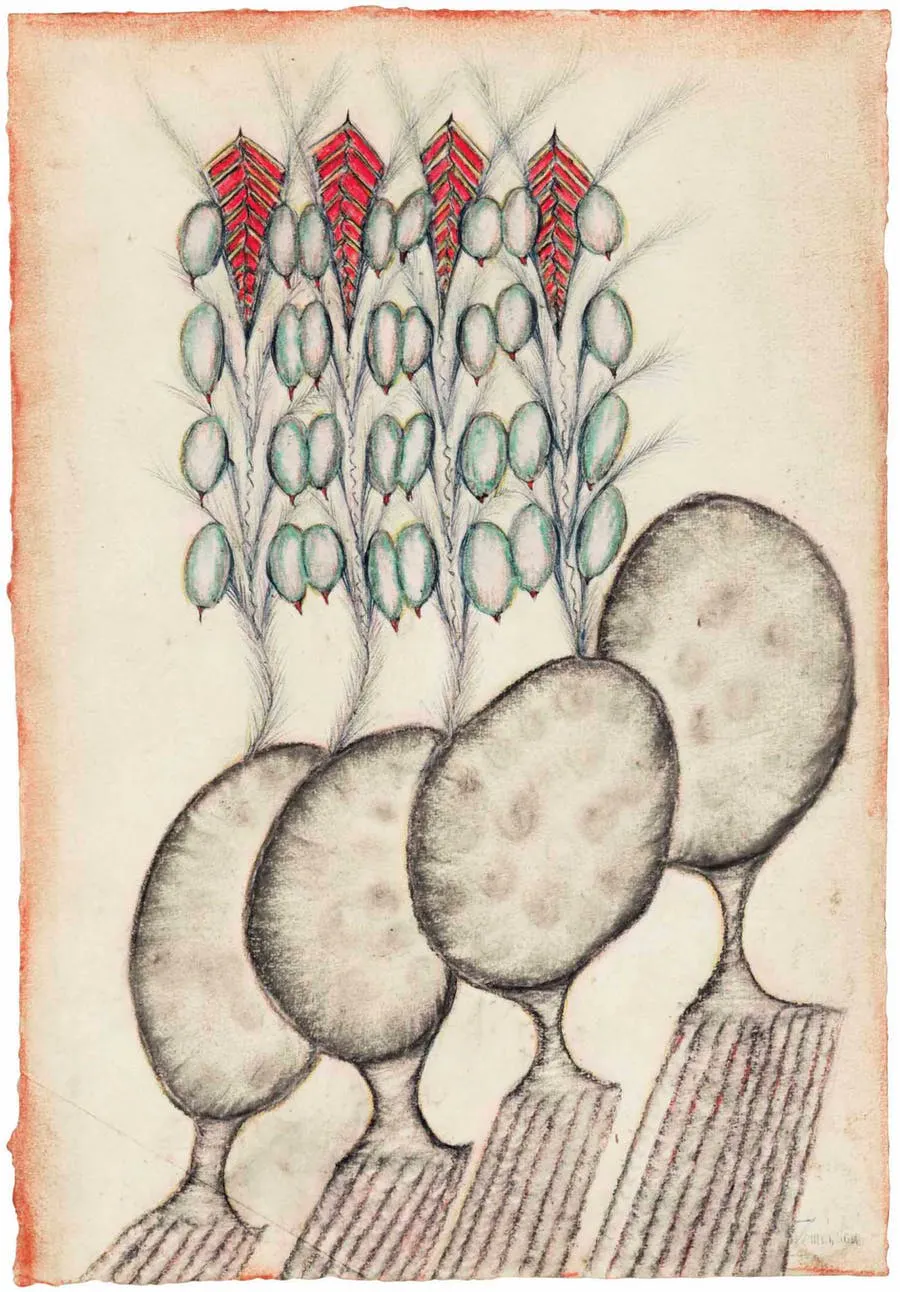
The artist worked in the early hours of the morning (4-7 a.m.) in what some have described as a trance state. Zemánková, for her part, defined her work as the result of a spontaneous process, never premeditated; it was as if the drawing was born of itself, without the need for reflection or erasure. It was in the early hours of the day that the artist accessed this part of herself which released her creativity. “I grow flowers that don't grow anywhere else,” she said.
Related: 12 Women Who Rocked the Art World
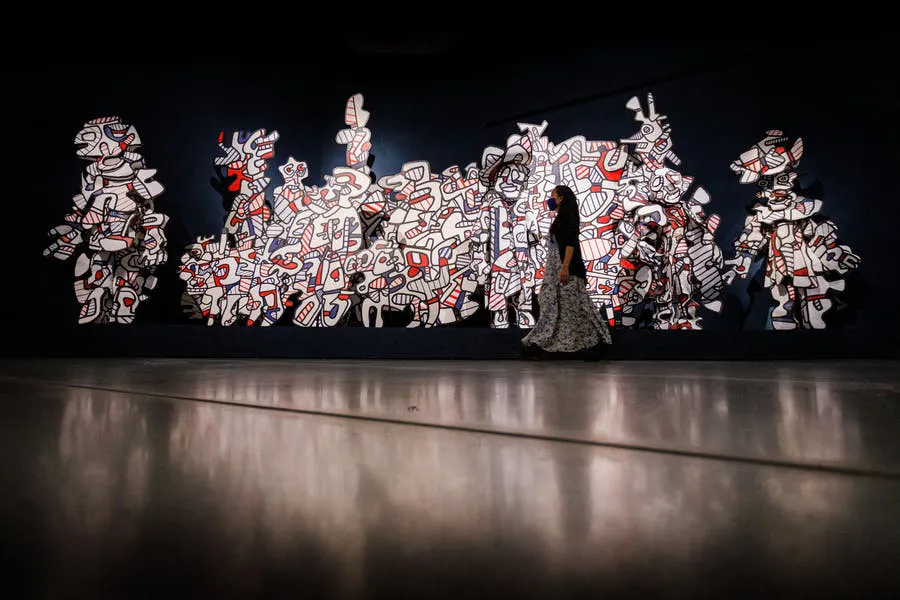
It is in this spontaneous and self-taught creative process, free from any constraint and resulting from emotional impulse, that the deep meaning of Art Brut/Outsider Art resides. This movement was made possible by the individuality and honest expression of artists marginalized by the outside world.