Stay up-to-date with the antiques world

By subscribing, you are agreeing to the privacy policy. Unsubscribe anytime.

Barnebys

Barnebys HQ

Brahegatan 10
BOX 5038
114 37 Stockholm

Company

  • About Us
  • Join Barnebys
  • Our partners
  • Press
  • Career

Explore More

  • Barnepedia
  • Buying/Selling at auction
  • Auction Houses / Dealers / Galleries

Support

  • FAQ
  • Terms of Use
  • Privacy and Cookies policy
  • Contact us
  • Barnebys Group AB
  • Barnebys.se
  • Barnebys.com
  • Barnebys.co.uk
  • Barnebys.de
  • Barnebys.fr
  • Barnebys.es
  • Barnebys.it
  • Barnebys.hk
  • All auction items
  • Categories
  • Auction results
  • Magazine
  • Ancient Art
  • Arts & Graphics
  • Asian Art
  • Books, Maps & Manuscripts
  • Carpets, Rugs & Textile
  • Coins & Banknotes
  • Contemporary Art
  • Ethnographic
  • Fashion & Vintage
  • Folk Art
  • Furniture, Design & Mirrors
  • Glass
  • Jewelry & Gems
  • Lighting
  • Medals, Arms & Armor
  • Miscellaneous
  • Music & Musical Instruments
  • Nautica, Technica & Optic
  • Photographs
  • Porcelain & Pottery
  • Postcards & Stamps
  • Sculptures
  • Silver & Gold
  • Sports & Leisure
  • Tin & Metals
  • Toys & Collectibles
  • Vehicles
  • Watches & Clocks
  • Wine & Spirits
  • Works of art
  • All auction items
  • Auction results
  • Magazine
  • Get an appraisal
  • Auction system

Barnebys Magazine

LatestEditor's picksTopics
Magazine/Books, Maps & Manuscripts/Archaeologists Discover the World's Oldest Illustrated Book

Archaeologists Discover the World's Oldest Illustrated Book

Discovered in an Egyptian burial site, the illustrated work was intended to help the deceased travel to the afterworld.

January 21, 2020Laurianne Simonin
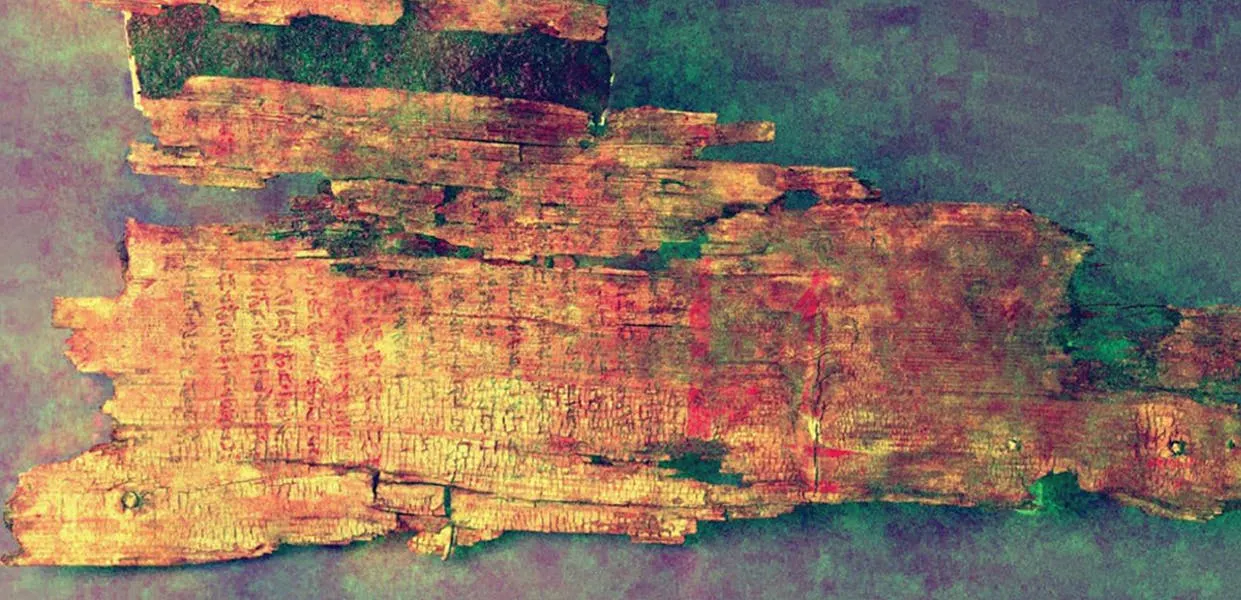
Digitised image (detail) of the coffin fragments with the first known version of the 'Book of Two Ways', an ancient Egyptian text considered to be the first illustrated book in the world, image © Harco Willems

Digitised image (detail) of the coffin fragments with the first known version of the 'Book of Two Ways', an ancient Egyptian text considered to be the first illustrated book in the world, image © Harco Willems

Archaeologists have confirmed the discovery of the oldest illustrated book in the world during excavations in an Egyptian burial ground. The work is said to be a copy of the Book of the Two Ways, a guide allowing the deceased to find their way in the afterworld, which is considered as a precursor to the Book of the Dead. The writings precede the already known versions by around forty years.

Unlike modern books, these ancient texts were not inscribed on bound pages, but directly on the walls of the sarcophagi. Thus, they helped the dead to embark on the perilous journey to hell, where demons and fire awaited them. With the right spells, the book claims that the deceased could escape unscathed and achieve immortality.
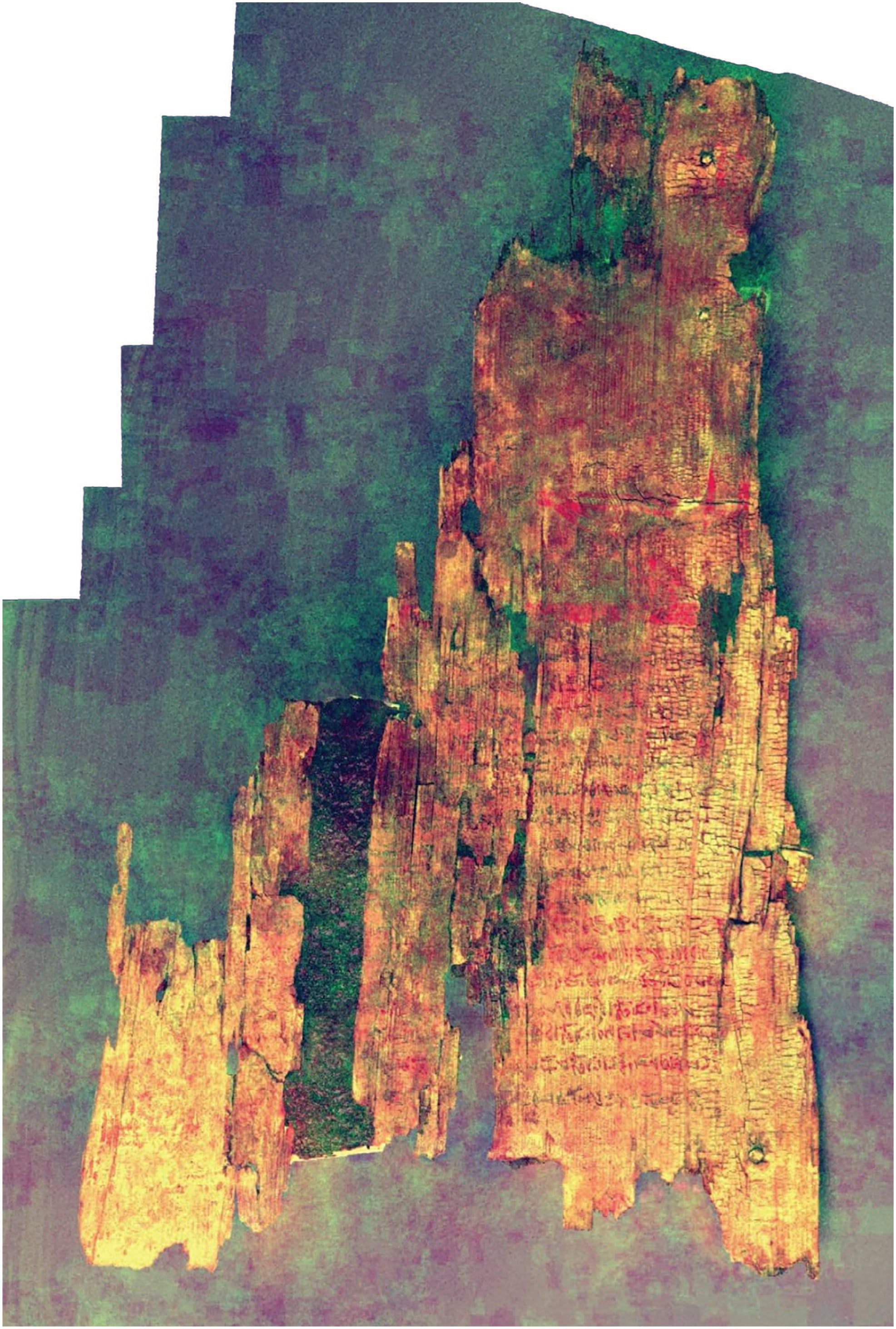
Digitised image of the coffin fragments with the first known version of the ‘Book of Two Ways’, an ancient Egyptian text considered to be the first illustrated book in the world, image © Harco Willems

The discovery was first mentioned in September 2019 by Harco Willems, professor at the University of Louvain in Belgium, in The Journal of Egyptian Archeology. Since 2001, Willems has supervised the excavations of the funeral complex of Deir el-Bahri, located on the left bank of the Nile facing the city of Luxor and the temples of Karnak. The site was used as a cemetery during the period of the Middle Empire, from about 2055 to 1650 BC. The fragile state of the discovered artefacts in the tombs, which had been repeatedly ransacked by looters, prevented their analysis until now.

See also: Trove of Norman Coins Worth $5.5 Million Found in Somerset

… the way you will survive in hell is expressed only in male terms.

Though the inscriptions discovered on the plate of the sarcophagus refer to an Egyptian governor named Djehutynakht, Willems' research revealed that the coffin actually contained the remains of a woman named Ankh, designated in the text of the book by the pronoun "he”. This statement is consistent with Egyptian mythology, where rebirth was the responsibility of male deities, and deceased women adopted male pronouns to be closer to Osiris, the god of death.

"For me, the funny thing is that the way you will survive in hell is expressed only in male terms," Willems told the New York Times.
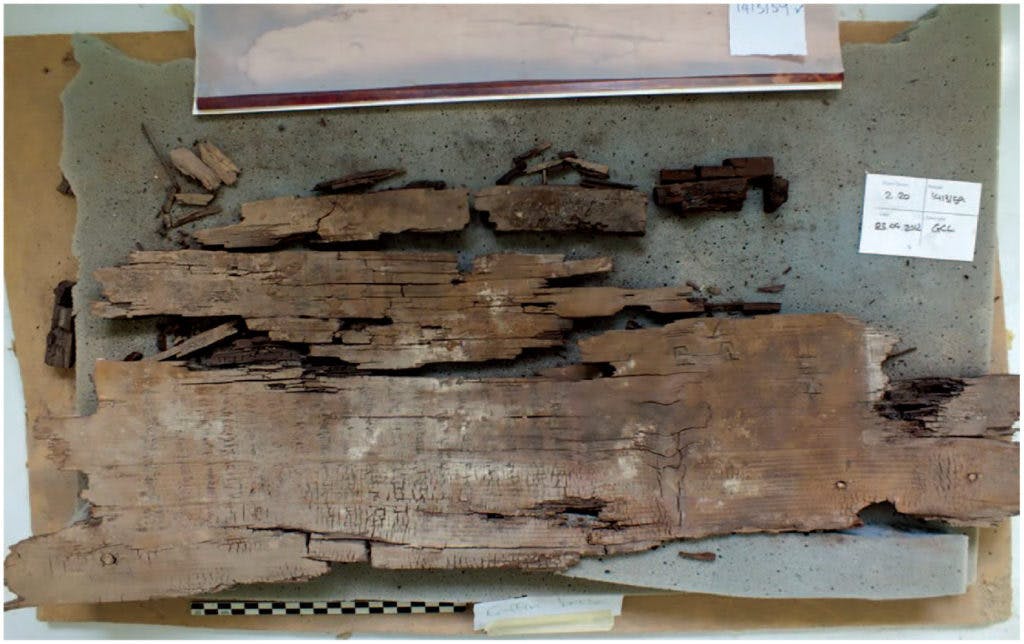
Fragments of the coffin with the first known version of the ‘Book of Two Ways’, image © Harco Willems

The wooden boards bear carved and inked inscriptions intended to ensure a successful passage to Rostau, the kingdom of Osiris. The text is called the Book of Two Ways because it contains instructions for travelling by land or sea. The pigments, however, have greatly faded over time, and the pale marks are only visible through high resolution imagery provided by software. 

See also: Globes: All Around the World

Each book was written differently, depending on the wealth and status of the deceased, Willems told the New York Times. "The latter begins with a text surrounded by a red circle, designated as the ring of fire," he said. "The text describes the sun god (Ra) passing through this protective ring to reach Osiris."

There are only 24 copies of the Book of Two Ways in the world, and experts say that this one, 4,000 years old, is now the oldest. 

Find more rare books on Barnebys

ancient egyptianrare booksdiscovery

Join 200,000+ collectors reading Barnebys Magazine

By subscribing, you are agreeing to the privacy policy. Unsubscribe anytime.

About the author

Laurianne Simonin

Laurianne Simonin is the Managing Editor at Barnebys Magazine. She has been writing for Barnebys French Magazine since 2018. After studying arts and photography, she worked in various cultural enterprises, both in galleries and in the museum sector. With a penchant for discoveries and objects with singular stories, Laurianne has written on a wide range of subjects ranging from archeology to cinema, but is particularly fond of writing in-depth articles on ceramics, Art Deco and Japanese art. Laurianne is now Editor-in-Chief and oversees the editorial strategy of Barnebys' six language platforms.

Read more from this author
Laurianne Simonin

Explore related articles

Zanele Muholi, ‘ZaVa, Amsterdam’, 2014, gelatin print, flush mounted, 37.8 x 48.6 cmsigned in ink, printed title, date and number 6/8 on a gallery label accompanying the work (detail). Photo ©️ Phillips
Photography

Zanele Muholi: Activist Artist

Bring your auction to collectors worldwide!