
Alexander Calder was born in 1898 in Pennsylvania, the first child of the artists Alexander Stirling Calder and Nanette Lederer Calder. Even Calder's grandfather worked as a sculptor and the art-focused home life made an early impression on the young Alexander.
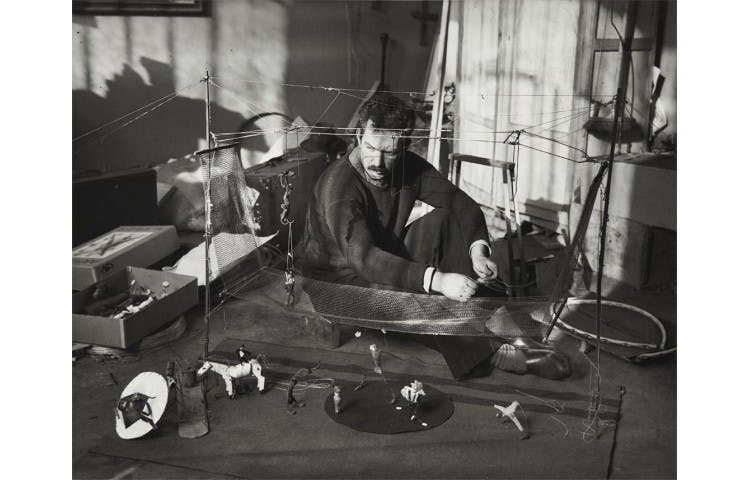
Calder's parents encouraged their son to acquire an education in a lucrative field. They knew all too well how challenging an artistic career could be, with long hours and scarce finances, and Alexander consequently studied to be an engineer. However, that career didn't fire much interest in him and he instead enrolled at the Art Students League in New York. In 1926, he moved to Paris where he began to experiment with metal wire.
These works not only lay the foundation for the hanging sculptures Calder went on to create – which over time made him internationally known as the brain behind the mobile – but his technique and skill with metal wire were also applicable with jewelry making.
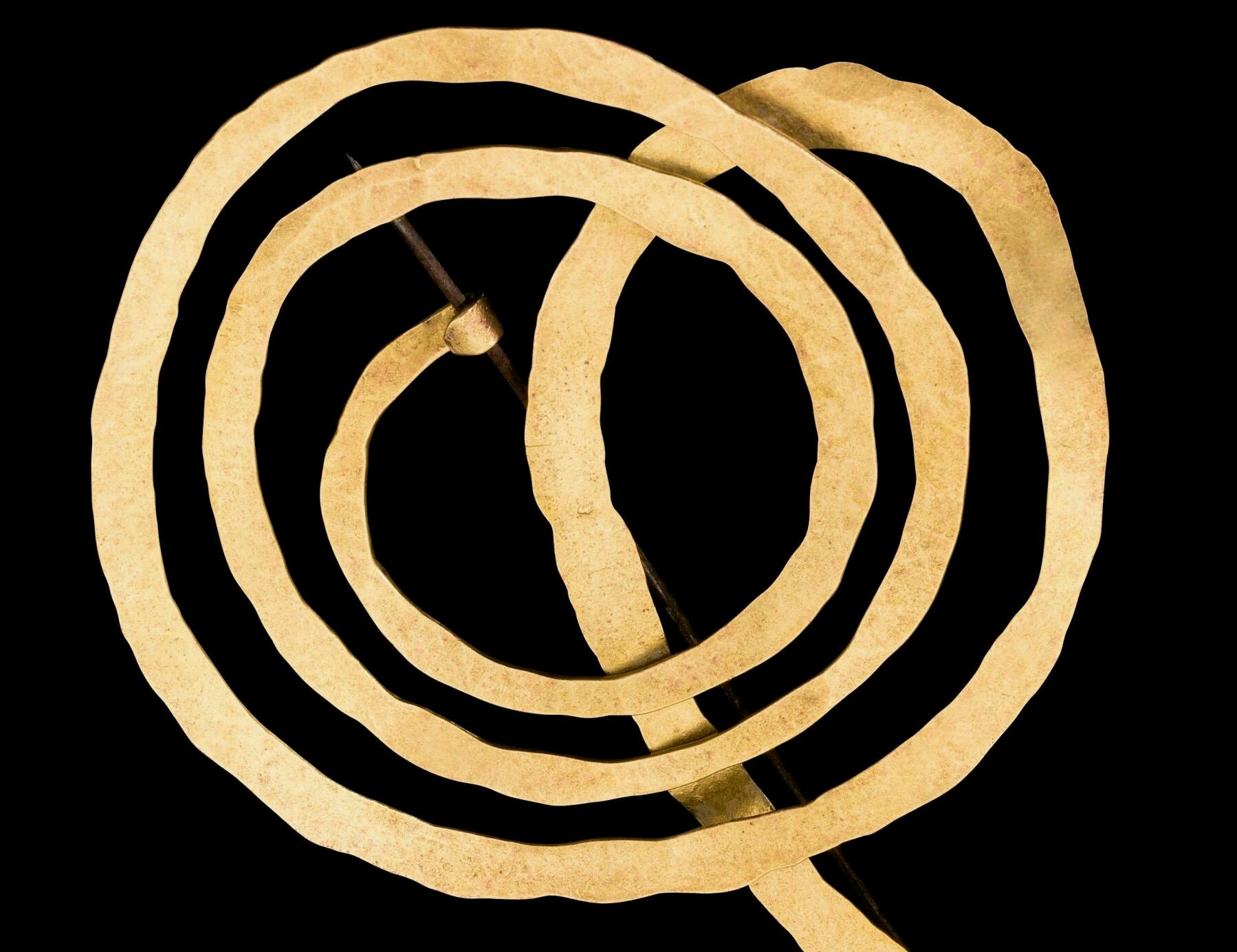
In 1930, Calder made a simple, spiral-shaped ring for his future wife Louisa James. In the coming decades, he made lots of brooches, necklaces and rings for his wife, who remained his muse for the rest of his life.
See also: The Ten Most Valuable Sculptures Sold at Auction
As a child, Calder had created several miniature pieces of jewelry for his younger sister's dolls, which he made from copper wire and beads that he found around the city. During the 1930s, when Calder was in adulthood, this interest arose again and in the next three decades, the artist made more than 1,800 pieces of jewelry.
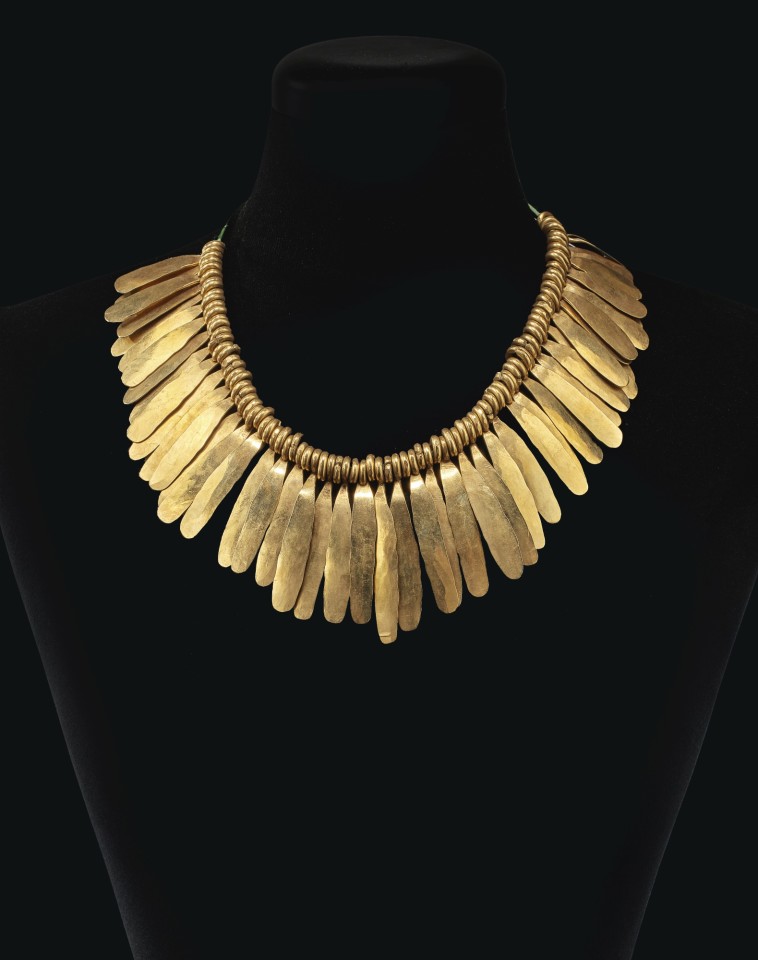
If the ring Calder initially made for Louisa was relatively modest, his forthcoming pieces of jewelry were anything but simple. Calder worked mostly in brass, which was easy to obtain during the war years, which he decorated with bits of broken porcelain, glass and wood. He had the same attitude towards jewelry production that he had with his mobiles. His imaginative mind and playfulness resulted in innovative necklaces, brooches and rings that were bold statements of curlicues, arabesques and geometric shapes.
See also: The Surprising Inspiration Behind the Cartier Love Bracelet
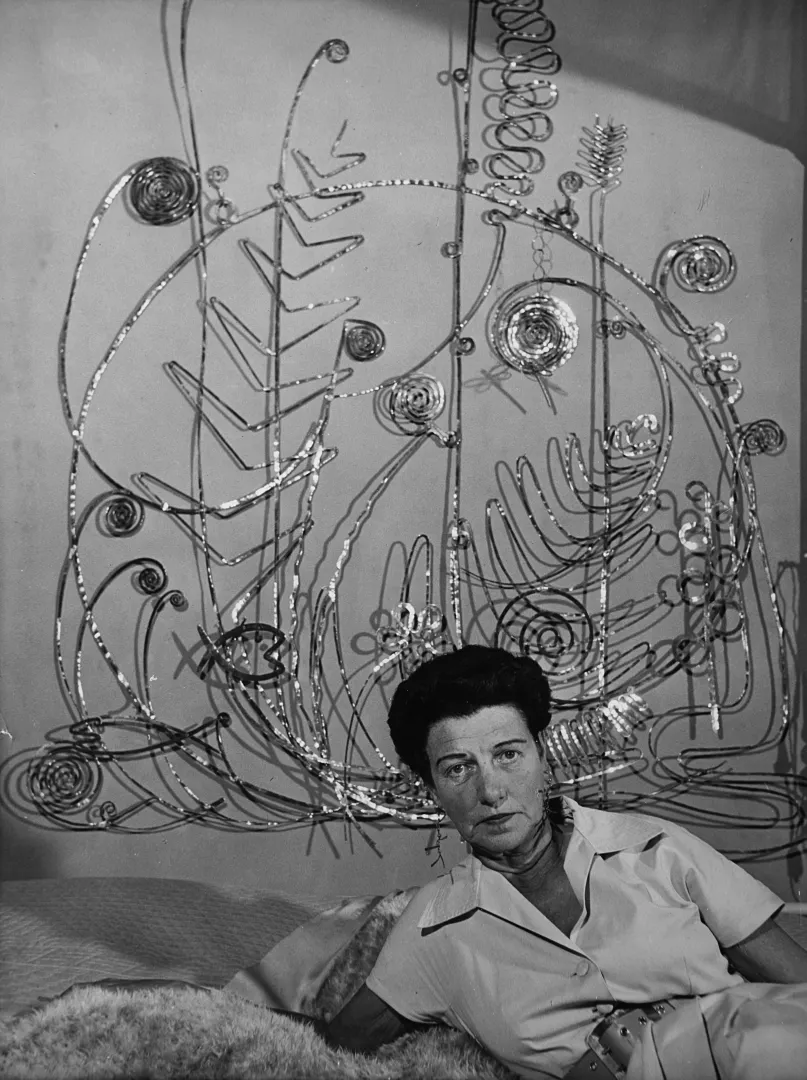
His extravagant jewelry was soon noticed by famous personalities who donned the imaginative works. One example was Georgia O'Keeffe, who often appeared with his iconic Calder brooch. Other celebrities who were fans of his jewelry include Peggy Guggenheim, Simone de Beauvoir, Anjelica Huston, Brooke Shields, and Joan Miró.
Calder often made the jewelry with a specific person in mind and occasionally embossed the jewelry in question with the wearer's name or initials. Both his necklaces and brooches were oversized and sometimes a little hard to wear. Mary Rockefeller, a prominent figure in New York's society, said that the necklace she received from Calder required some extra “elbow room".
See also: Tony Cragg: Sculptor of Energy
Although Calder started to manufacture his jewelry to earn money, the pieces themselves were not particularly expensive. During the 1930s, Calder priced his brooches at $25 (about $265-300), which, like all his jewelry, were made by hand by the artist himself. Over the years, Calder got several offers to mass-produce the jewellery, though he declined every time.
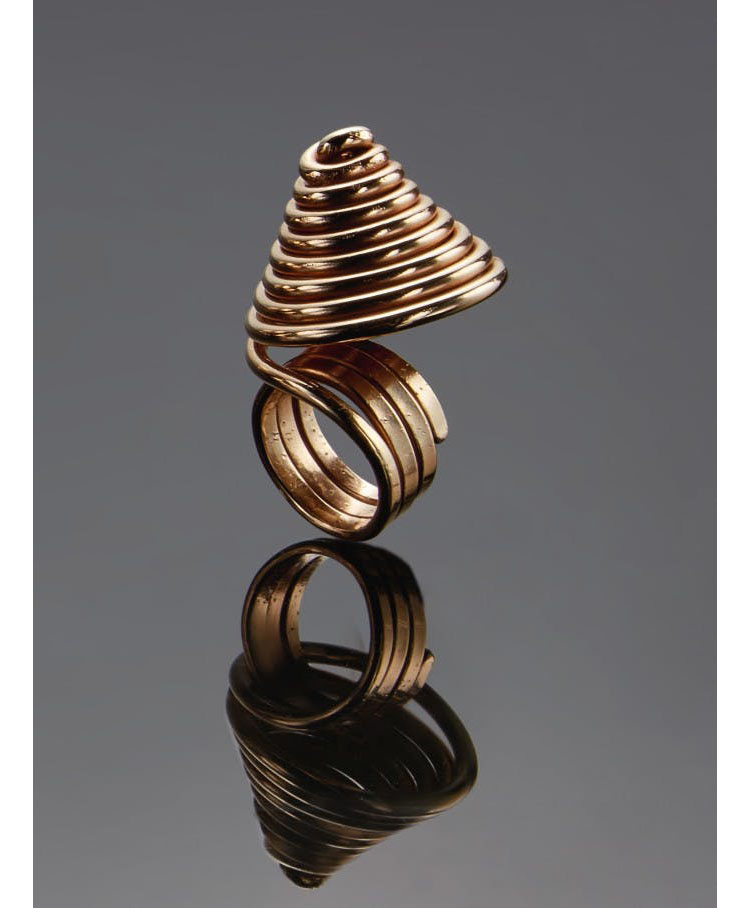
Today, Calder’s jewelry is much more expensive. In 2018, Christie's held a themed auction of his creations, where several pieces were sold for hundreds of thousands of dollars.