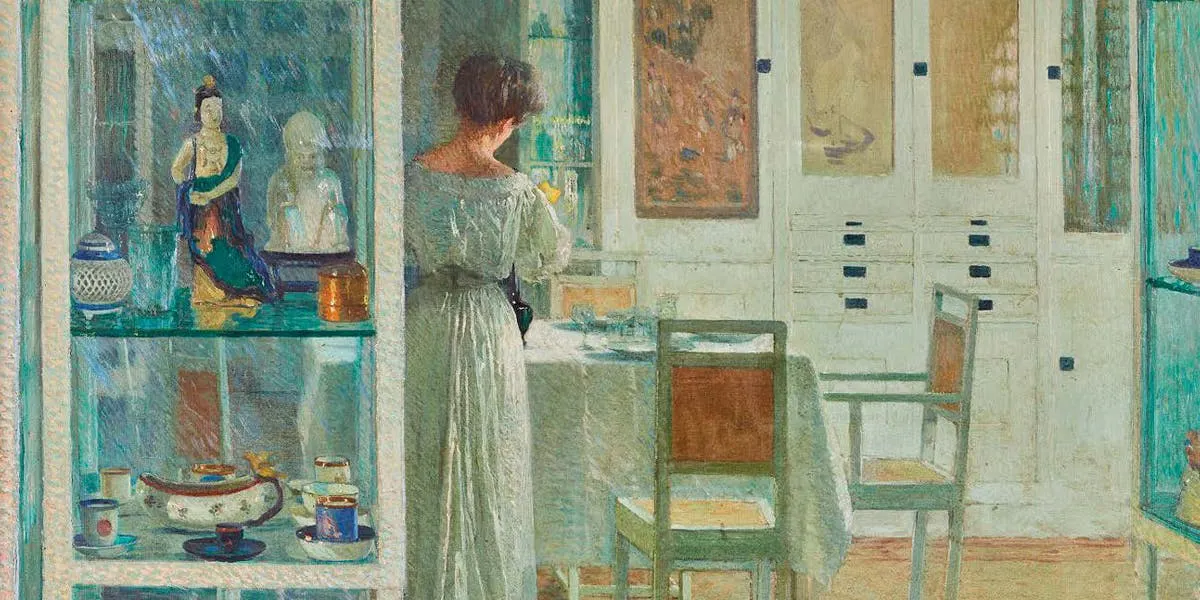
On February 23, Freeman's auction house in Philadelphia presented a painting by Carl Moll that set a record not only for the Austrian painter, but also for America's oldest auction house.
Weissen Interieur (White Interior) was completed in 1905 by Carl Moll (1861-1945), one of the co-founders of the Viennese Secession with Gustav Klimt. The Secession, founded in 1897, eschewed the art standards of the Vienna Academy of the Arts and sought to promote the decorative and graphic arts in a new modern way.
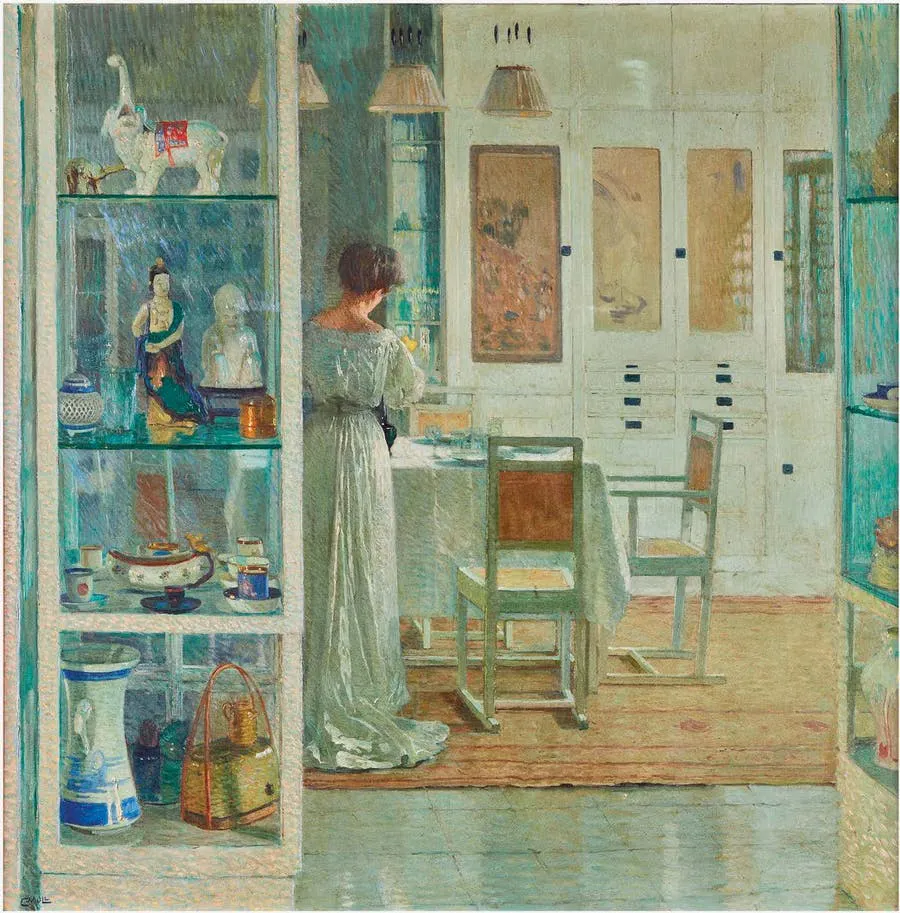
This oil on a canvas measuring approximately 3.2 x 3.2 feet has a simple title for a subject which, on the surface, is equally so. But this painting's details and composition reveal much about the period it was created in.
Related: On and Off the Canvas: Art's Most Famous Muses
With this painting, Moll takes the viewer into one of the most modern salons in Vienna at the time: the home of Berta Zuckerkandl-Szeps, an influential hostess, journalist, art critic and fervent defender of the avant-garde.
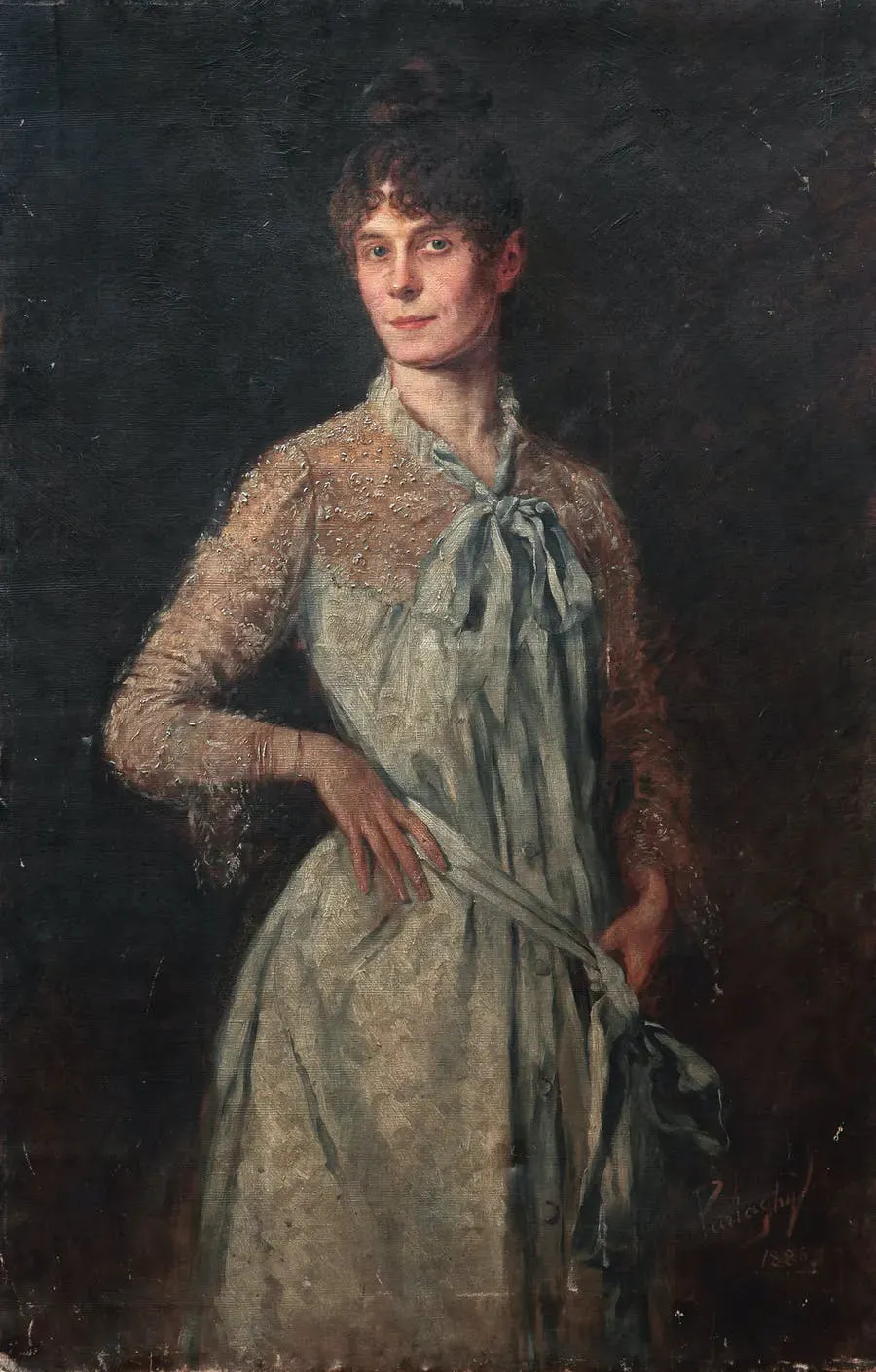
Daughter of newspaper editor Moritz Szeps, Berta, from her youth, established relationships with all classes of society. After her marriage to the eminent Hungarian anatomist Emil Zuckerkandl, she set up a salon where personalities from the political, medical, musical, literary and artistic worlds such as Gustav Klimt, Otto Wagner and Josef Hoffmann came to meet.
It is the architect and designer Josef Hoffmann, a main figure of the Viennese Secession, who designed the room represented in the canvas. A perfect example of the abandonment of the ornate style that had prevailed at the end of the 19th century, this interior presents the clean lines of the Art Nouveau and is depicted with a white tone that resonates with its simplicity.
Related: Abstract Art: From Genre to Movement
The composition of the painting and the fact that the hostess, arranging a bouquet of flowers in a vase, turns her back to the viewer, give an intimate and slightly indiscreet dimension to the scene.
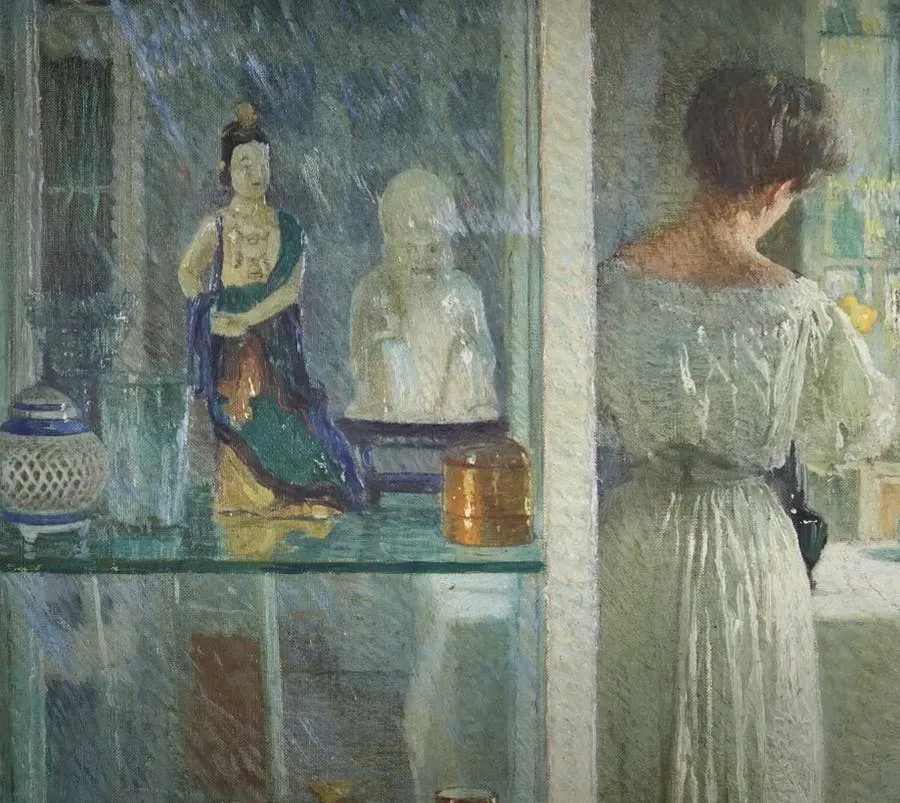
Besides the interior designed by Hofmann, Carl Moll represented, in the foreground, objects of Asian art from the famous collection of Berta and Emil Zuckerkandl, once again identifying the place and the identity of the subject with precision. As Europe was fascinated by Japonism beginning in the second half of the 19th century, a trend which had a great influence on modernism, Asian art was very popular at the time.
Weissen Interieur was presented at the second exhibition of the Deutscher Künstlerbund (the German Association of Artists) in Berlin the year of its creation (1905) before being part of the exhibition "Wiener Werkstätte" (Vienna Workshop) at the Museum Folkwang in Germany in 1906. Seen one last time at the art show Kunstschau Wien in 1908, along with Klimt's famous The Kiss, the painting then disappeared from public view.
Related: The 10 Most Famous Works of Art and Where to Find Them
Around 1920, the painting came into the possession of a family in Frankfurt, whose descendants, who have lived in California since the 1970s, decided to auction it off at Freeman's. Offered with an estimate of $300,000-500,000, it attracted 12 buyers from Austria, Germany and the United States. The bidding battle, which ended up between buyers from Austria and the United States, resulted in an auction result of $4.75 million (including fees) and sold to an American collector. This sale price set not only a new artist's record for Carl Moll, but also for Freeman's auction house, which is America's oldest auction house, founded in 1805.
Weissen Interieur will now be loaned and exhibited at the Neue Galerie in New York, home to Klimt's Portrait of Adele Bloch-Bauer I.