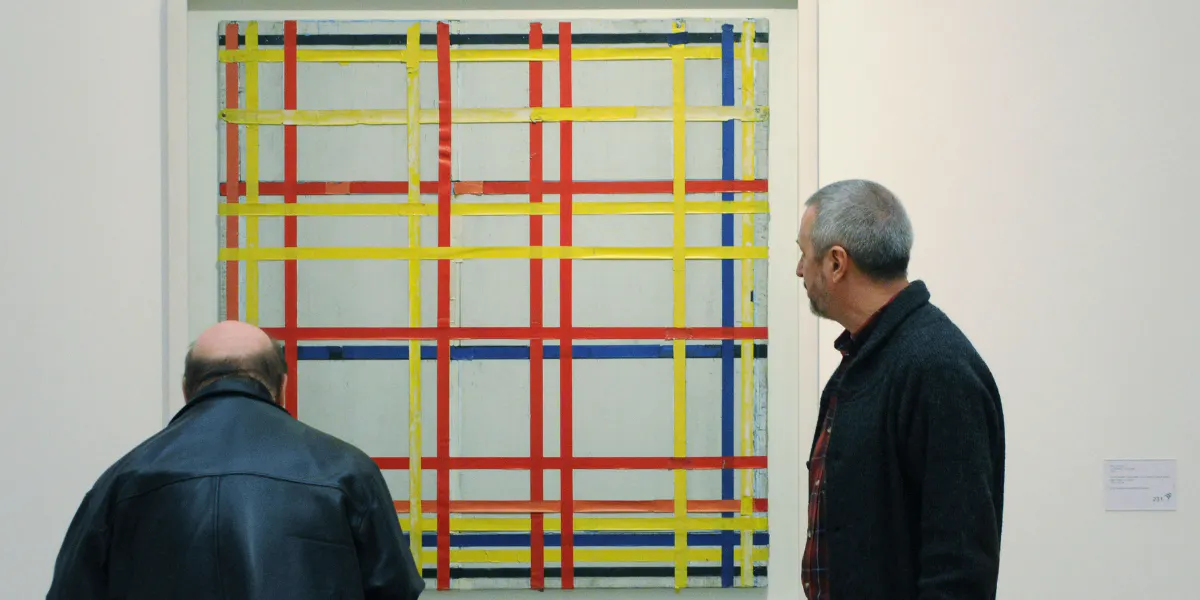
On the evening before the opening of the ‘Mondrian: Evolution’ exhibition at Düsseldorf’s K20, the art historian and curator Susanne Meyer-Büser noticed that one of the highlight pieces by Piet Mondrian, New York City 1, from 1941, was displayed upside down. The picture had first been exhibited at New York’s MoMA in 1945 but spent the past forty years in Düsseldorf. Meyer-Büser referenced a photograph of Mondrian’s studio from 1944 in which the painting was rotated by 180 degrees. To her, the picture made of red, yellow, black and blue adhesive tapes was obviously the wrong way around. As she told the Guardian, “the thickening of the grid should be at the top, like a dark sky.” And it turns out that someone else had actually flagged their doubts a year ago: the Italian artist Francesco Visalli, who had been researching Mondrian and had written to the museum to let them know that he had "the distinct feeling that it [the painting] needs to be rotated 180 degrees".
Related: Rare Mondrian Masterpiece Could Fetch $50 Million
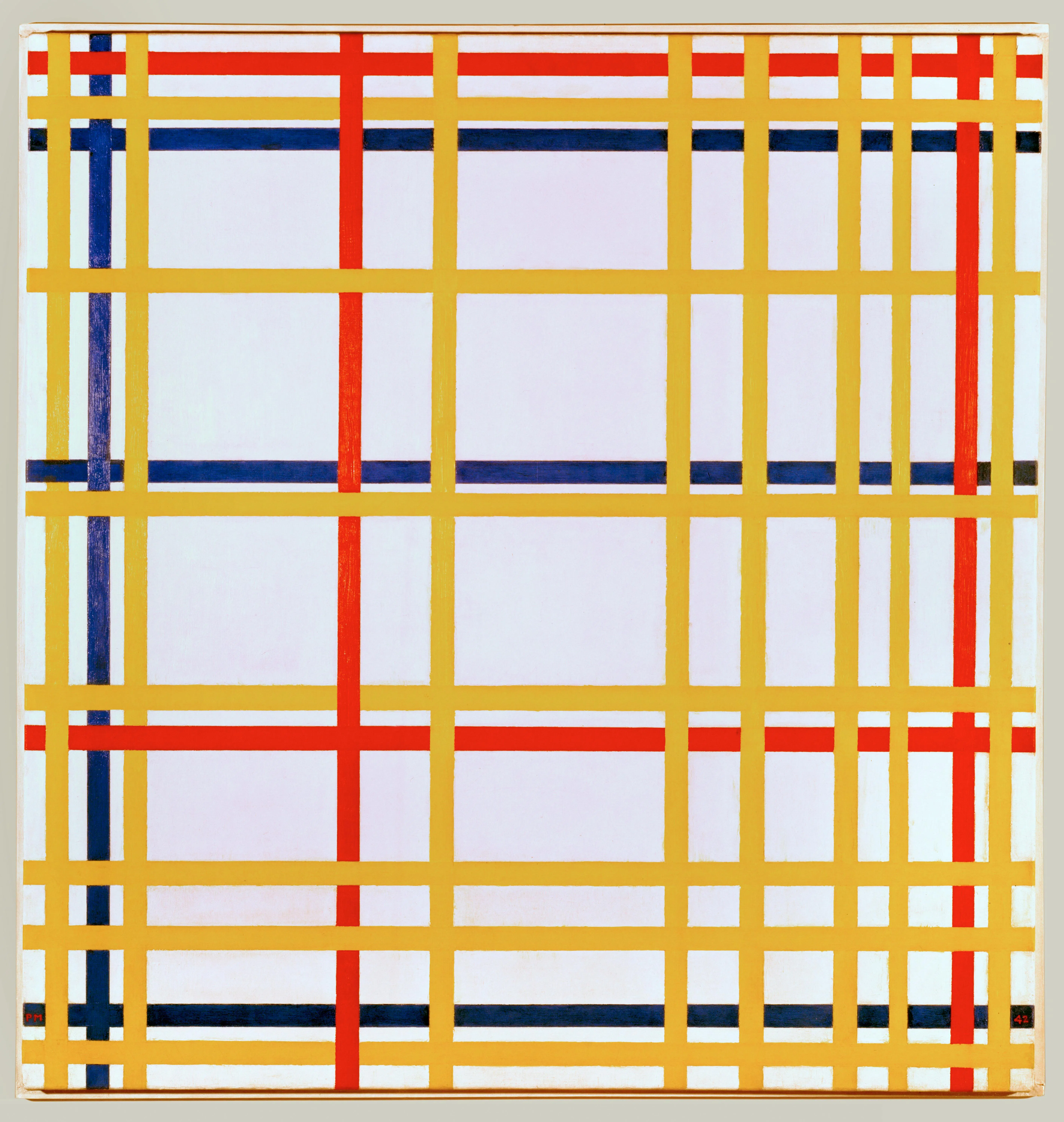
The revelation prompted a storm of headlines about the nature of 20th-century abstract art. It mattered little to say that Mondrian saw New York through his own minimal language, that he intentionally reduced figuration to nothing but the three primary colors organized at right angles – and that there was indeed an organizing principle. From the artist’s studio, New York was an abstract net, to be built backwards, starting from a blank canvas engineered into a geometric expression. But to the skeptics of Modernism, the curatorial mistake added fuel to the fire: see, not even curators understand abstract art!
Related: Piet Mondrian: Abstract Geometry on Canvas
Yet to the trained eye, every Mondrian contains equilibrium and tension in perfect stability. Peter Schjeldahl, the great American art critic who passed away just recently, invited us to “look hard”, because “that’s how to love Mondrian”. Specifically, he urged us to “observe how it is hung: as Mondrian dictated, with the midpoint below eye level. This involves you physically.” [From Schjeldahl’s column in Village Voice, October 17, 1995]. Would Schjeldahl have noticed?
Want more articles like this delivered straight to your inbox? Subscribe to our free newsletter!
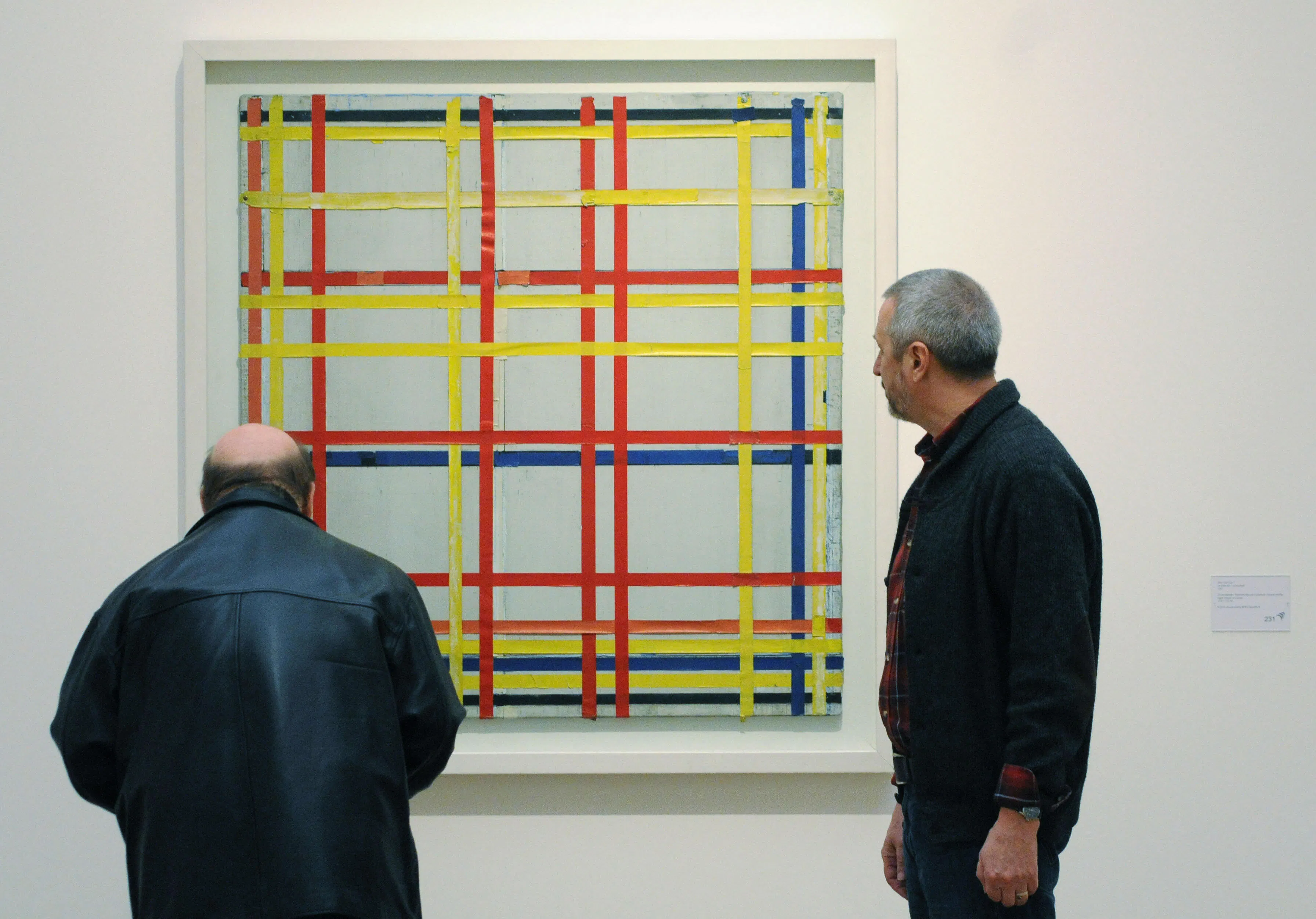
The debate is not settled. Spokespeople of the museum have not confirmed whether the painting is definitely hanging upside down, and despite quite the controversy, the painting will remain hung as it is. The adhesive tapes are already loose and turning it now would disintegrate the painting. The curator of the Mondrian exhibition told Metropol that “maybe there is no right or wrong orientation at all?”. Without a doubt, the question will be interrogated for many years to come.