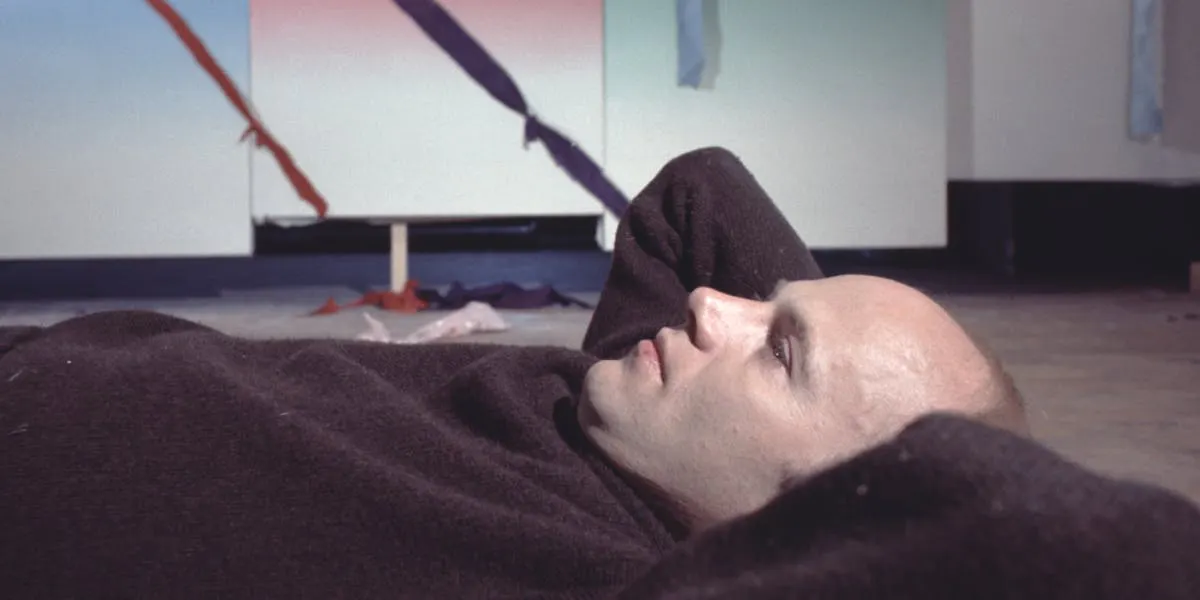
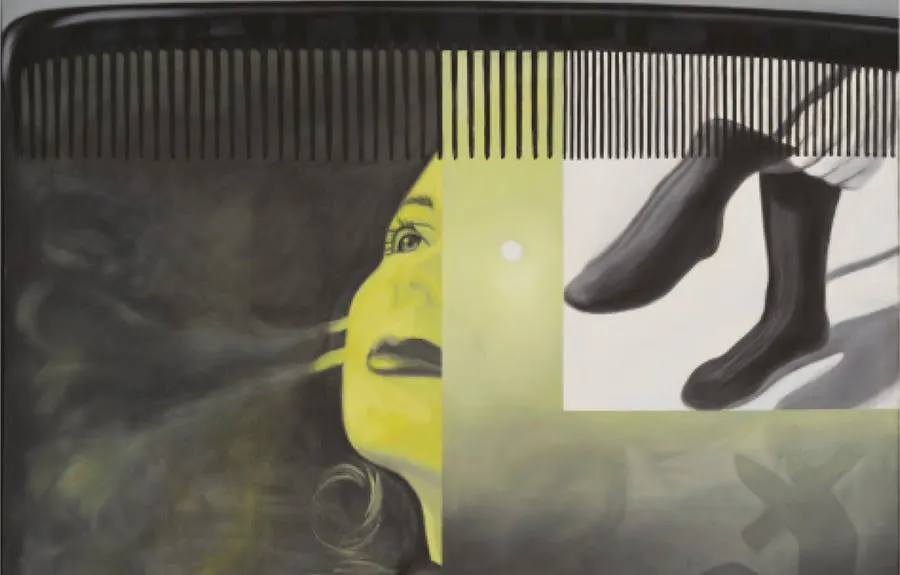
A car, a cake, light bulbs, spaghetti, a child with a hairdryer...everyday motifs were a recurring theme in James Rosenquist's paintings. Inspired by popular culture and the advertising world, Rosenquist came to take over the art world with his colorful and bold compositions.
Read more: Andy Warhol, the Pope of Pop
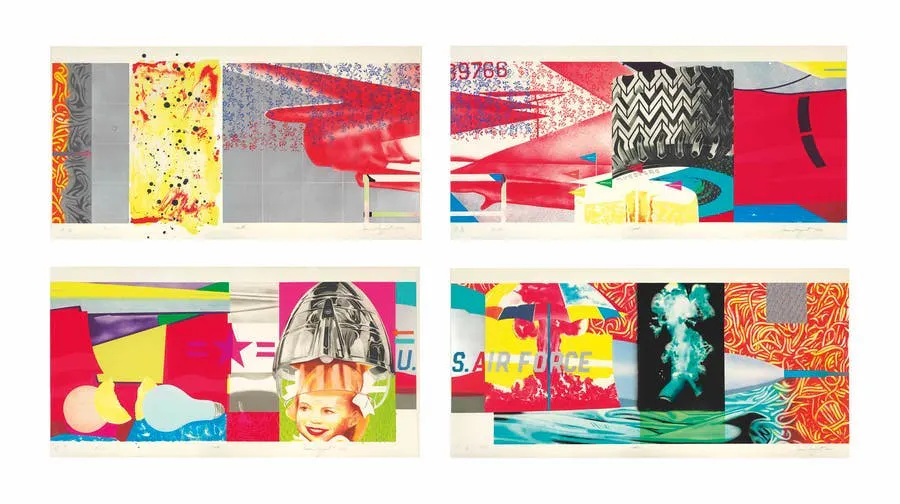
F-111 (1964-65) is one of the largest and most lavish works that the American pop artist painted during his career. The painting, which is just over 85 feet long, was created during the Vietnam War and depicts the war through commercial images from the advertising world.
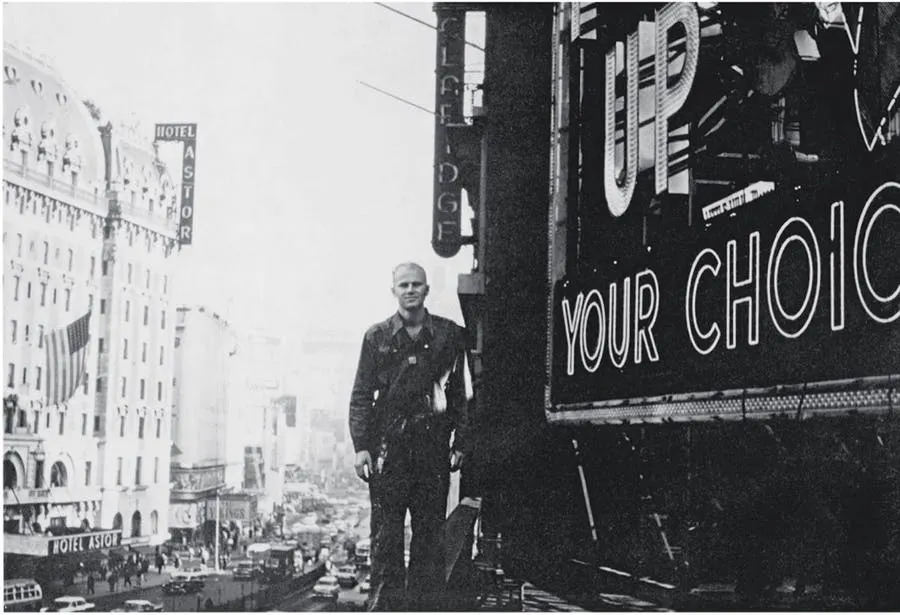
Rosenquist was born in 1933, and his fascination for the advertising world began when, at the age of 20, he painted posters at Times Square in New York City. He did so until 1960 when his friend died falling from scaffolding. After the tragedy, Rosenquist decided to focus on his own projects.
Read more: The Pop Art Phenomenon Roy Lichtenstein

His background in commercial art had a major impact on his future career and would change the American art scene. Like Roy Lichtenstein, Claes Oldenburg and Andy Warhol , Rosenquist found his own distinct style, however, there were often common traits among pop artists: the use of commercial art techniques and the depiction of popular culture and everyday objects.
Rosenquist picked fragments from commercials, photographs and magazines and combined them to create mysterious and bold compositions. Using the visual language used in advertising, described by American curator Walter Hopps as "visual poetry," Rosenquist's work addressed issues from economics, romance and ecology to science, space and existentialism. For five decades he constantly created new works and did so in a variety of media: painting, collage, drawing and print.
Read more: Yayoi Kusama: The Queen of Cool
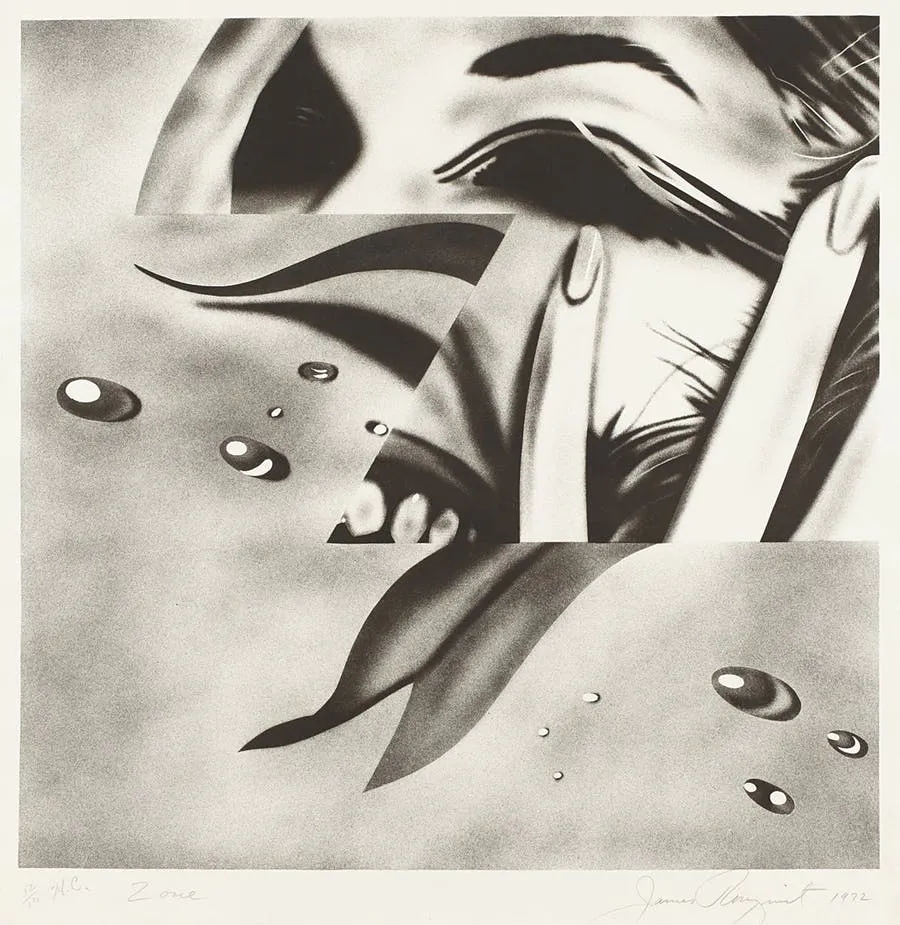
Zone (1960 - 1961) became an important work in Rosenquist's development of his own artist style. It was the first work he created on such a monumental scale. The oil painting is a clear example of the beginning of pop art when Rosenquist took pictures from commercials and combined two pictures: a tomato and a clip from an advertisement for hand cream.
Rosenquist's style was realistic and depicted American everyday life. He used motifs such as John F. Kennedy and the American dream, depicting the Vietnam War, mass consumption, segregation and technological innovation. Innovative and experimental techniques were used that pushed the boundaries of his medium during an era that redefined the prevailing art scene.
Read more: The 10 Most Expensive Artworks of 2019
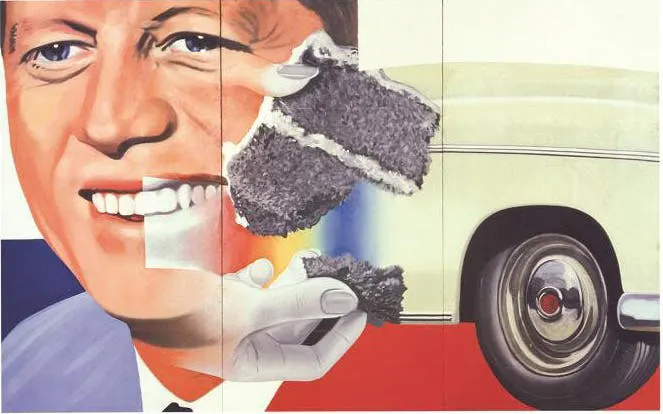
President Elect was completed the same year as Zone and is one of Rosenquist's most famous works. He represented John F. Kennedy, as well as a hand holding a cake and part of a Chevrolet. Unlike the president and the car, the hand and cake are depicted in a grayscale. Rosenquist used icons from popular culture to explore fame and the relationship between advertising and the consumer, but also the exploration of fame that was associated with American politics.
James Rosenquist explained that:
I want people who look at my paintings to be able to pass through the illusory surface of the canvas and enter a space where the ideas in my head collide with theirs.
James Rosenquist passed away in March 2017 after years of failing health. During his 83 years he married twice and had two children. Rosenquist's works can be found in large public and private institutions and have been exhibited at the Guggenheim, Whitney Museum and MoMA.
Read more: Keith Haring: The Artist Who's Everywhere
Pop art has not gone unnoticed by art critics. In 2003, Peter Schjeldahl questioned Rosenquist's, but also Warhol's and Lichtenstein's, artistry. He believed that the way pop artists used ready-made prints was a so-called "cheap trick" that was impersonal and was just time-efficient for the artists.
Read more: Jeff Koons: The King of Kitsch
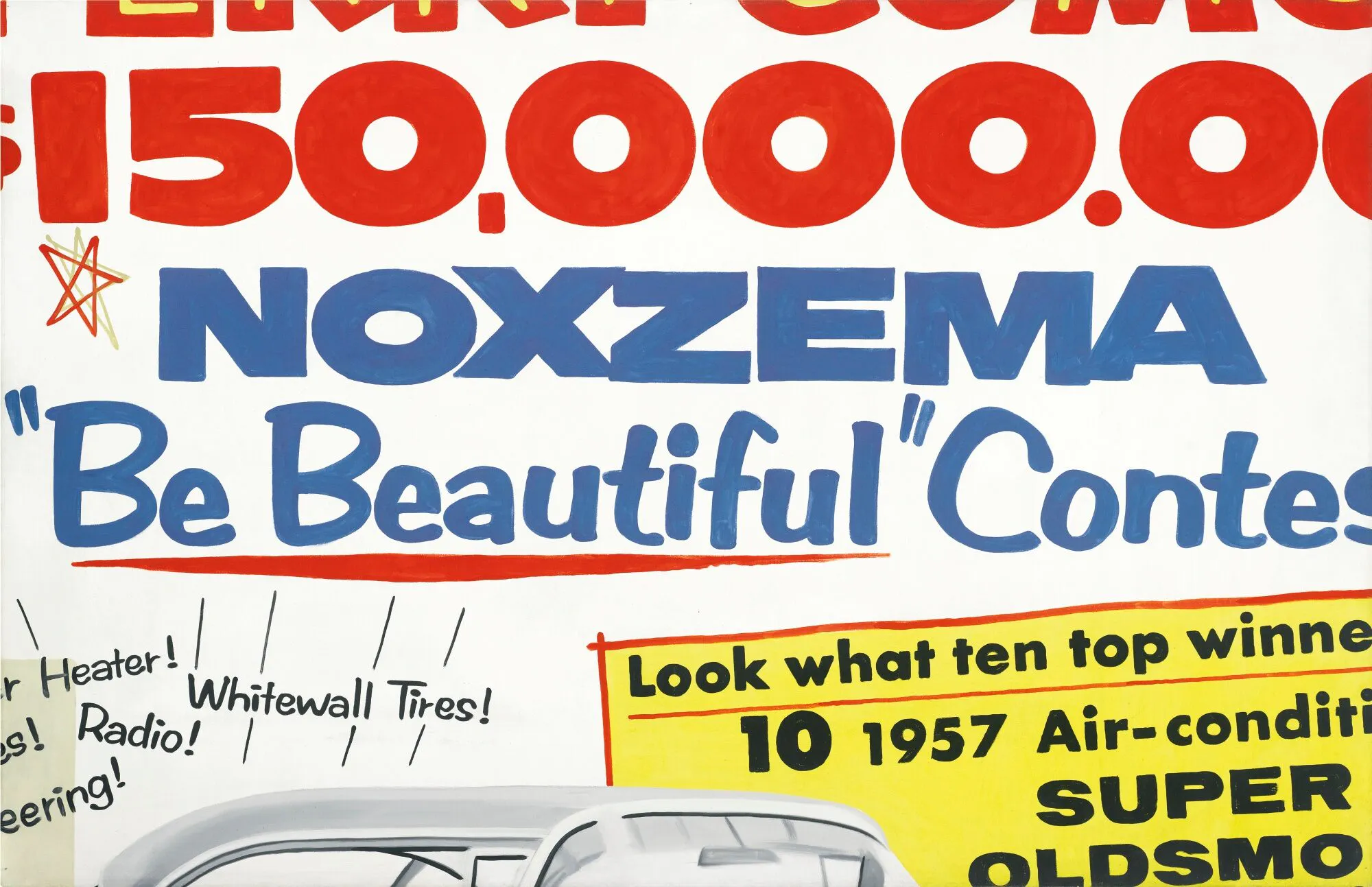
Regardless of what has been said of Rosenquist and pop art as a movement, his artwork has been very successful in the auction market. Over the years, thousands of works by the pop artist have been sold at auction, ranging from lithographs for a few thousand dollars to large-scale oil paintings for several millions. The most expensive artwork sold at auction is Be Beautiful (1964), which was auctioned at Sotheby's in 2014 for $3.3 million.