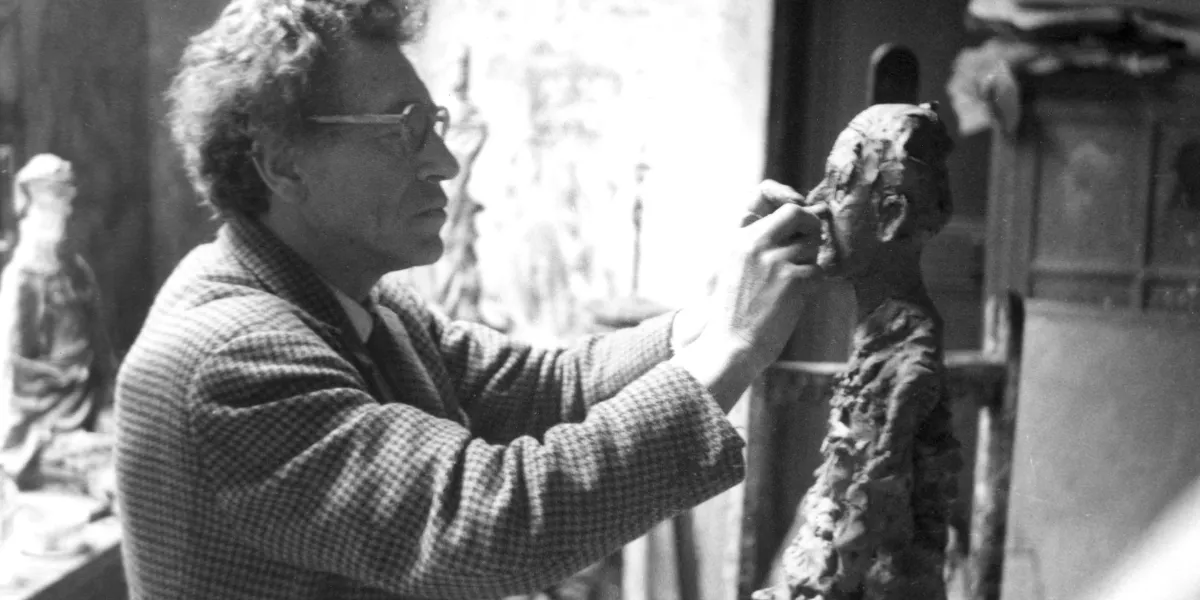
In the late 1920s, Alberto Giacometti and his brother Diego had a go at creating decorative objects. The artist received commissions and soon began collaborating with one of the leading designers of the Art Deco movement in Paris, Jean-Michel Frank. His creations, as well as the more modest commissions he carried out for financial necessity, contributed to the artist's growing reputation in the Parisian surrealist avant-garde. Not bending to the ideals of functionalism, Giacometti conceived his utilitarian objects as genuine works of art, each piece playing a vital role.
At that time, there was no difference between what I called a sculpture and what was, in fact, an object.
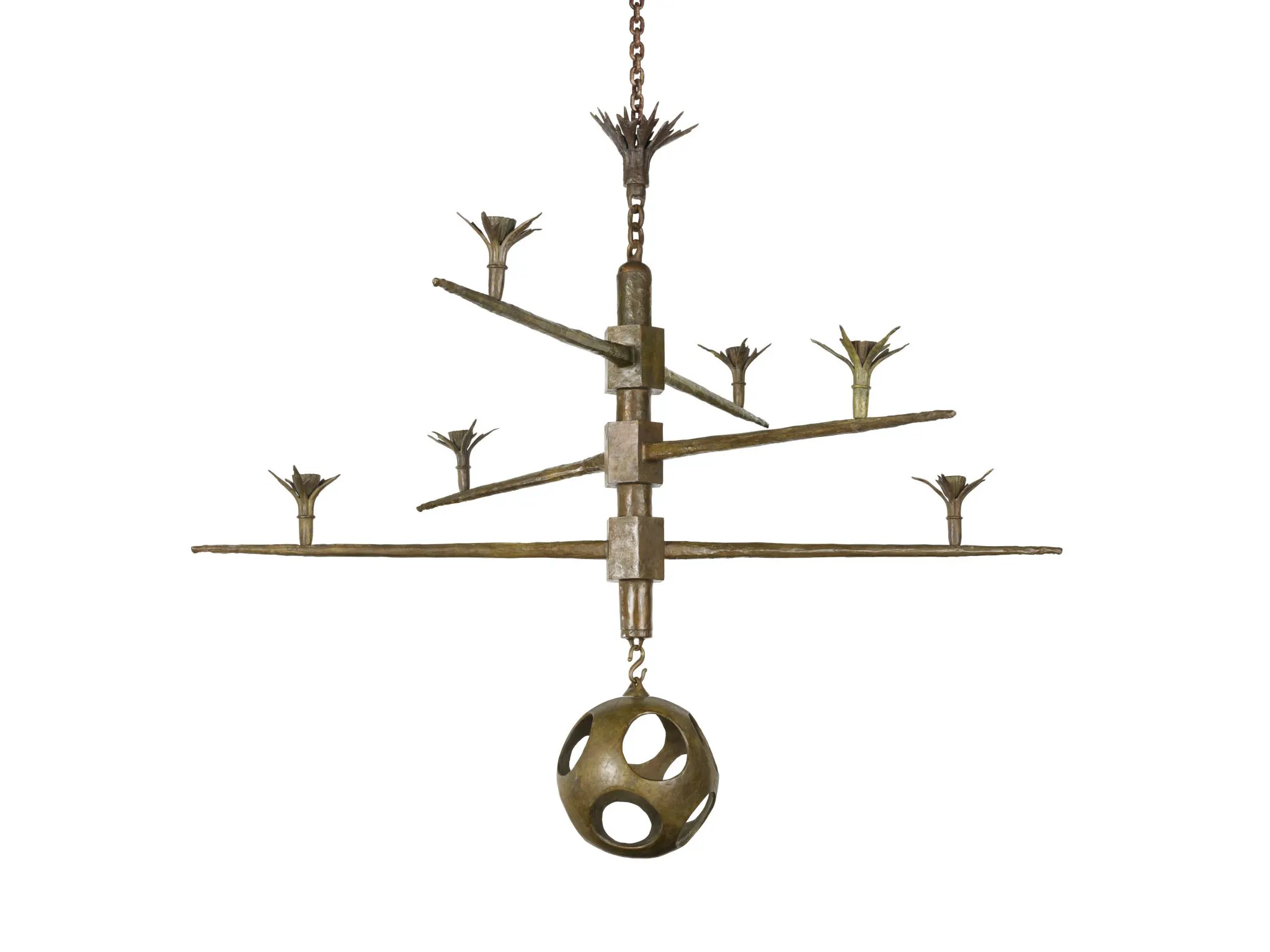
In 1946-47, the British collector Peter Watson, a great admirer of the Surrealist movement, commissioned a chandelier from Alberto Giacometti. The piece in question blended geometric lines with organic forms in an almost poetic manner, unique to the Swiss sculptor. The object was also similar to the sculpture Suspended Ball (1931), currently on display at the Giacometti Foundation in Paris.
Related: Alberto Giacometti: The Unbearable Lightness
The chandelier hung in the lobby of the Bloomsbury office of Horizon Magazine from 1949, but was removed a year later. Mysteriously, it later reappeared in the antique shop 'Dentons' on Marylebone Road, London. In the 1960s, the English painter John Craxton made what one might call a very good deal. Uncertain, but following a hunch that the chandelier might be a Giacometti, he bought the piece for £250 ($300) and installed it in his property in Hampstead, England. The chandelier hung there for half a century. When the painter died, his descendants took an inventory of his possessions and a long process of authenticating the chandelier began. In 2021, Aston Lark, an insurance broker, sent the chandelier back to the Giacometti Foundation to be valued. The foundation determined it was authentic. Art valuer James Glennie, of Art & Antiques Appraisals, told The Guardian: "Alberto only created about half-a-dozen chandeliers, but none of them have such a backstory, and so the Chandelier for Peter Watson should be thought of more as a sculpture than a light."
Want more articles like this delivered straight to your inbox? Subscribe to our free newsletter!
Related: The 10 Most Expensive Sculptures Sold at Auction
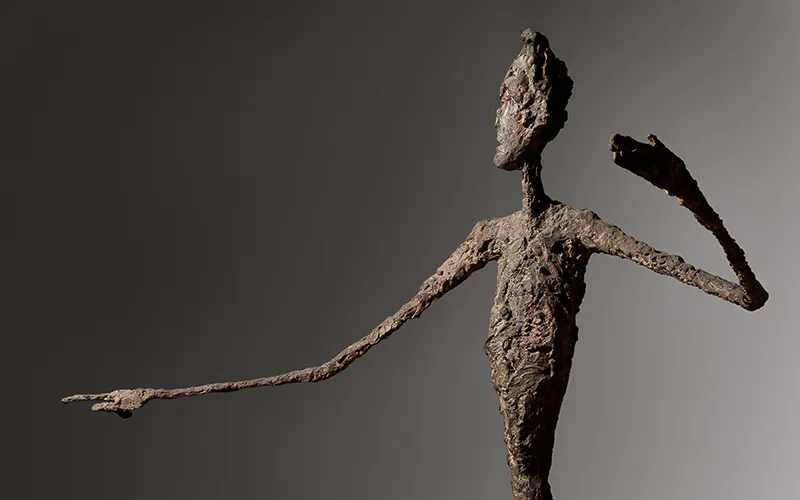
It is hard to believe that the famous sculptor would ever have created utilitarian objects for financial reasons, as his value has soared in recent years. He died in 1966 and is one of the most expensive artists on the market. In the same year that Giacometti designed this chandelier, he created the bronze sculpture L'homme au doigt, which sold for $141.3 million at Christie's in 2015 – the most expensive sculpture ever sold at auction. Lately, in 2018 a chandelier by Giacometti also reached the six-figure mark, sold at Sotheby's London for £7.6 million. It estimated that this chandelier will fetch between £1.5m – £2.5m ($1.8-3 million), although Michelle McMullan, from Christie’s, told The Guardian that the estimate was conservative, and that the rarity of the piece will likely command a higher premium.