London has some of the world’s best art museums and galleries: visitors flock from all over to view the art hung on the walls of this great city. But the city itself has also played the subject of many works of art. From Monet to Canaletto, lots of the world’s most famous artists came here to paint, draw and be inspired. Read on to discover seven works of art which depict this thriving city.
7. Stephen Lowry, Piccadilly Circus, London
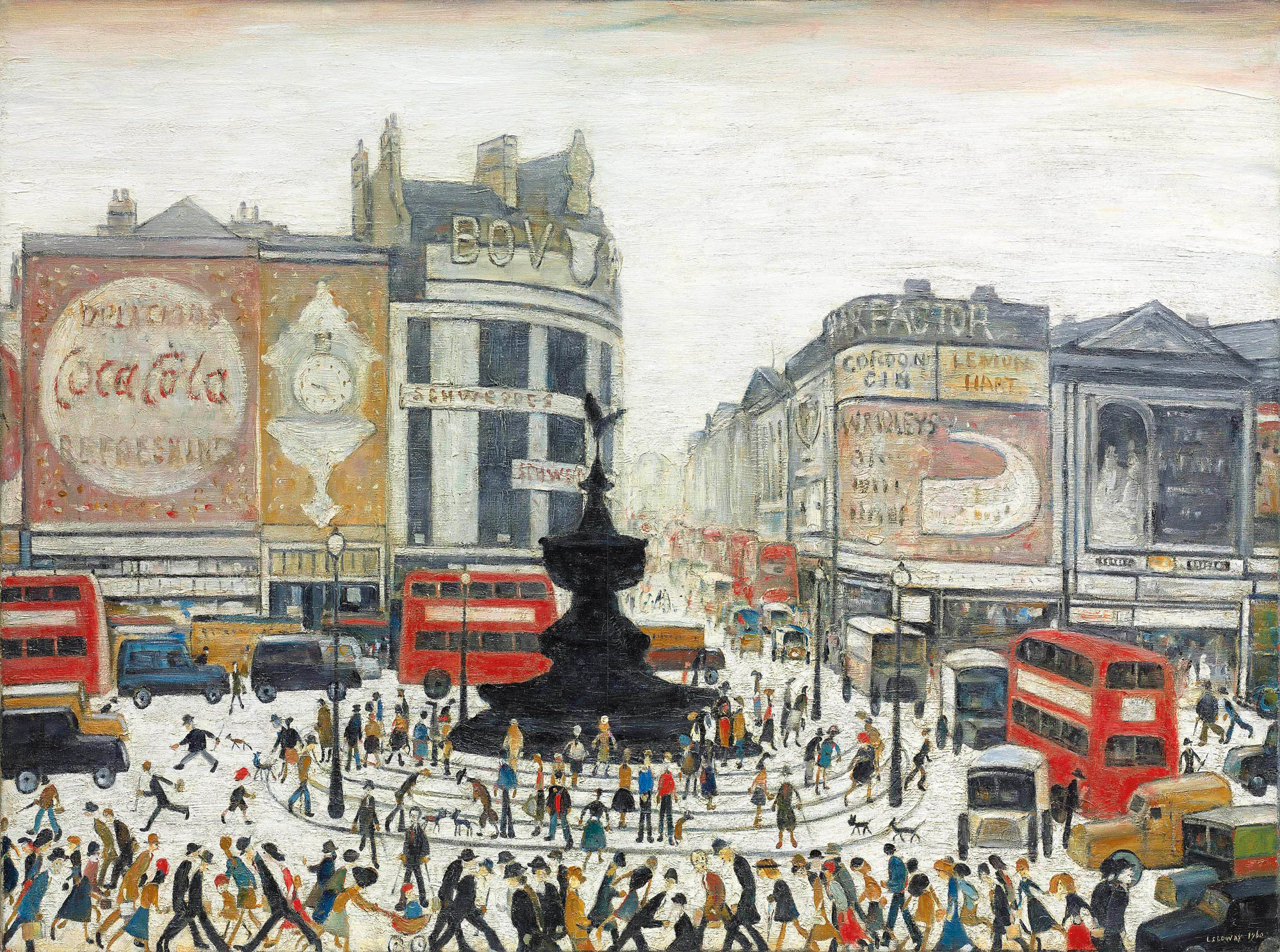
Piccadilly Circus, London is one of the most famous contemporary representations of the city. In it, Stephen Lowry captures the hustle and bustle of the modern city, with advertising billboards and frustrating traffic jams. It’s Lowry’s little touches which make this painting special and full of unique charm, from the dogs on their daily walks to the pedestrians weaving between the vehicles.
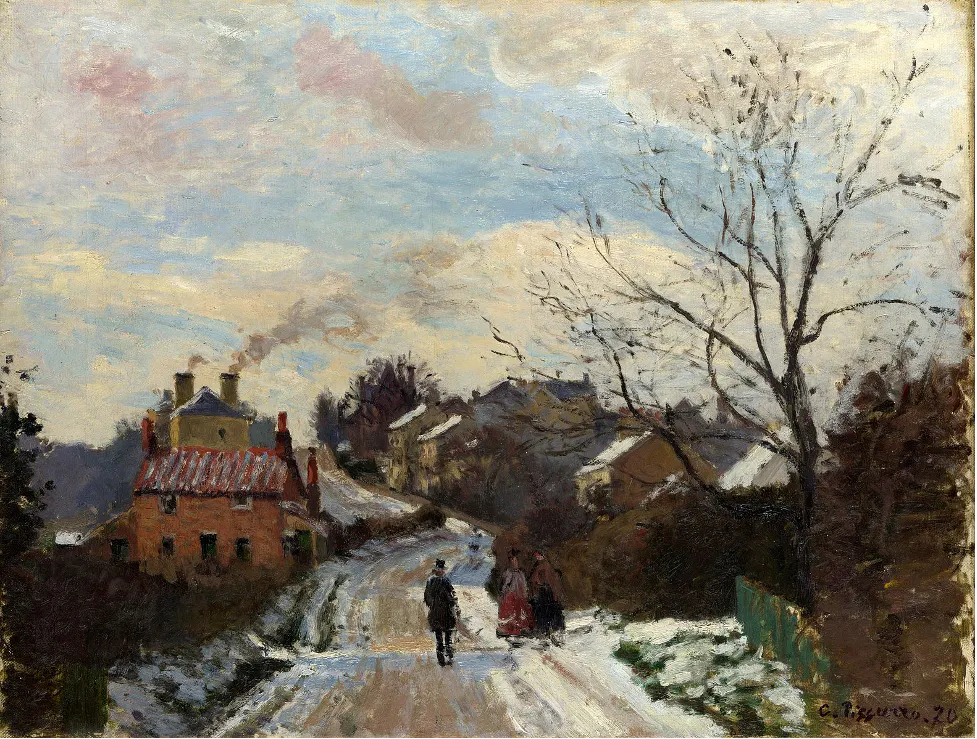
6. Camille Pissaro, Fox Hill, Upper Norwood
Related: 10 Snow Inspired Artworks
Camille Pissarro arrived in London in 1870 after fleeing the Franco-Prussian war. This beautiful painting of the leafy – and frosty – London suburb of Hampstead was possibly the first work he painted upon his arrival. The artwork was likely painted en plein air (completed outdoors), and it is still possible to identify and visit the exact site where Pissarro made this painting today.
5. John Constable, View of the City of London from Sir Richard Steele’s Cottage, Hampstead
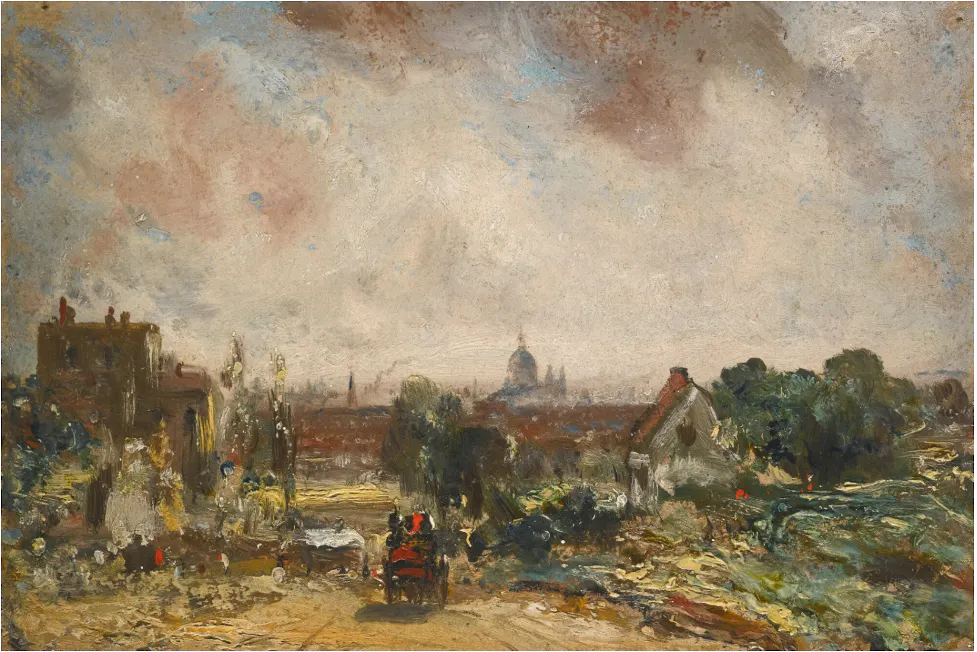
In this artwork, famed artist John Constable shows the view from Haverstock Hill in Hampstead. A coach moves along Eton Road, while the dome of St Paul’s Cathedral is just visible in the distance. Constable was enamored by the neighborhood, and rented a number of cottages in the area before permanently settling in No. 6 Well Walk. His family enjoyed the clean, fresh air while the artist found inspiration in the views of the City of London.
4. Canaletto, The Thames and the City
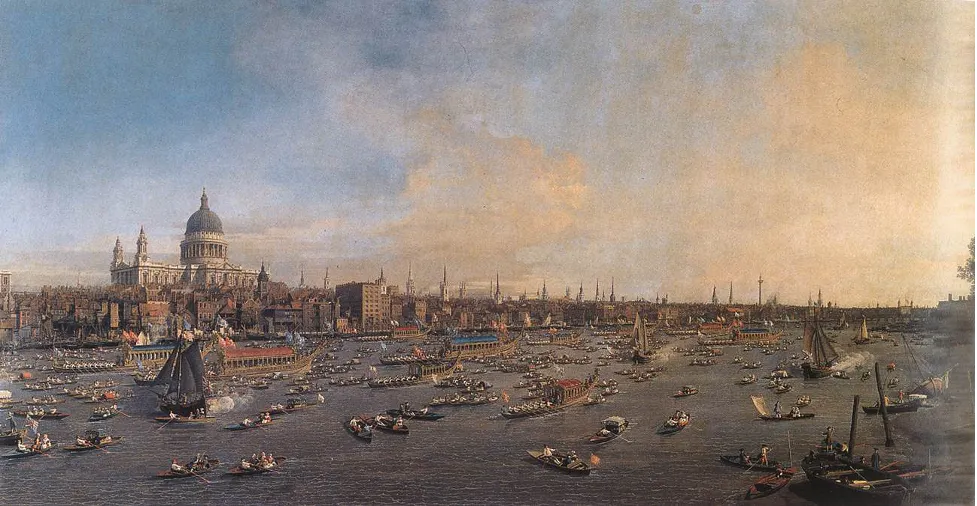
Canaletto arrived in London in 1746 and stayed in the city to paint for close to a decade. The artist’s artworks during this period were mostly executed on a Venetian canvases, with light grey ground (Canaletto was said to import all of his canvases to England from Venice, which was extraordinarily expensive. Apparently, the canvases were smoother and the paint applied differently). In this 1746-47 work of London, Canaletto adjusted the composition to create an incredible sense of grandeur. The great river Thames dominates the scene, with Christopher Wrens’ St Paul's Cathedral visible on the opposite bank. Canaletto’s works served as inspiration and were often copied over the next two centuries.
3. Claude Monet, The Houses of Parliament
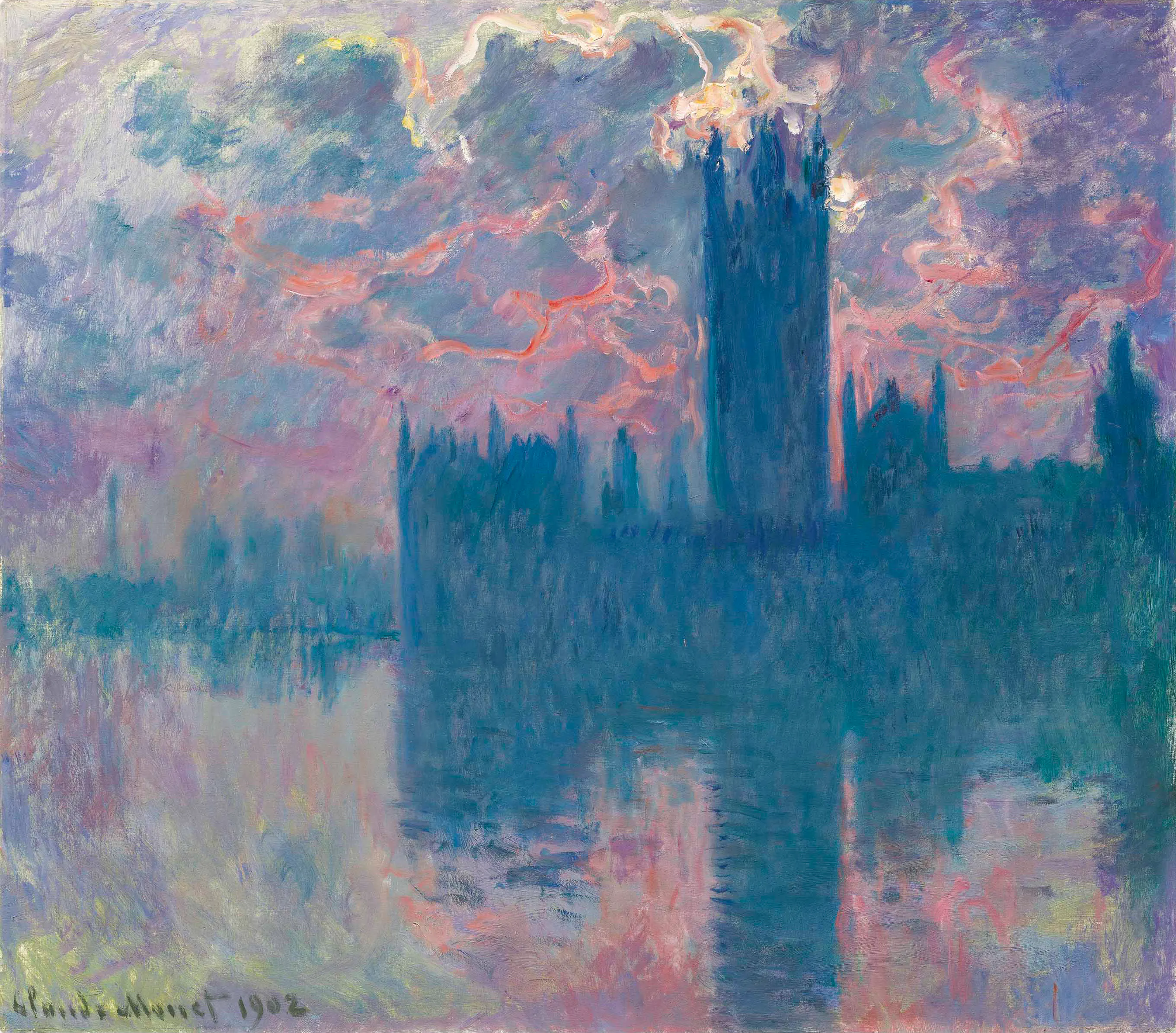
Depicting a beautiful sunset over the Houses of Parliament, this painting belongs to Claude Monet's famous set of 19 known paintings of Houses of Parliament. Today, the vast majority of the works in the series are kept in the world’s leading museums: the Metropolitan Museum of Art in New York, The Musée d’Orsay in Paris and the Pushkin Museum in Moscow. In this painting, the artist found inspiration in the beauty of the atmospheric light effects of an English nightfall. Monet’s Impressionist series is undoubtedly one of the most beautiful and famous works to depict the city.
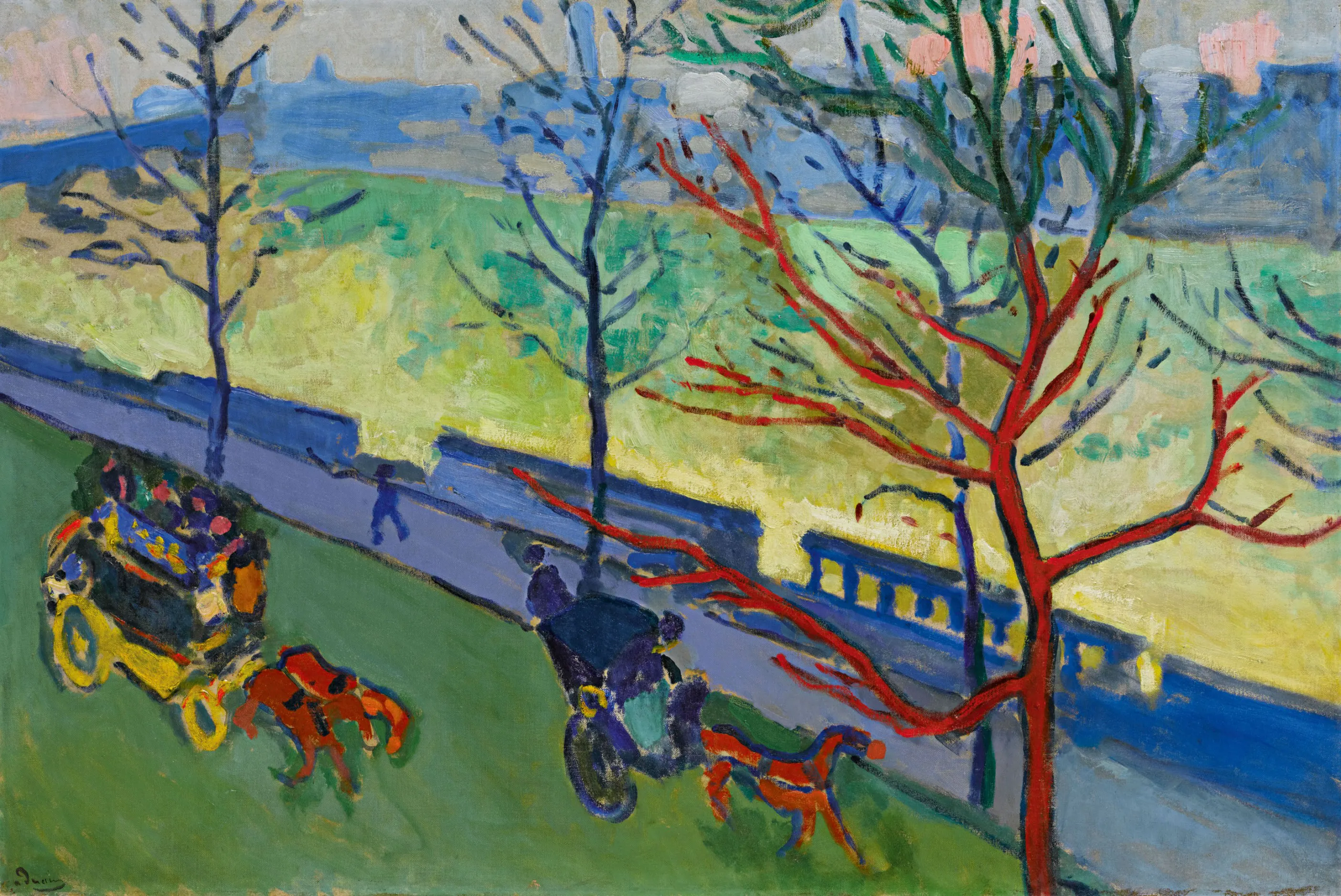
2. André Derain, Londres: Le Quai Victoria
Related: Travel the World Through Art
This artwork was painted in London during the height of the Fauve movement. With Monet’s scenes of London in mind, André Derain came to the city to paint his own works and develop as an artist. Intended to rival Monet’s paintings, these London works helped define Derain as one of the most brilliant painters of his generation. Many of the works correspond directly with Monet’s chosen views. This painting overlooks the river close to Temple Palace and Somerset House, and in the upper right corner the piers of Blackfriars Bridge are visible. It is possible Derain chose this perspective to indicate London was a remarkably modern city for its time.
1. William Turner, The Burning of the Houses of Lords and Commons

In this artwork, William Turner paints the fire that broke out at the Houses of Parliament on the evening of 16 October 1834. Along with thousands of other Londoners, Turner watched the buildings burn from the safety of the South Bank of the River Thames, opposite Westminster. In the foreground of the painting, spectators can be seen admiring the flames. Turner made sketches using pencil and watercolor, then spent many hours working and reworking the oil on canvas painting before unveiling it for public display at the British Institution (which was founded 1805 and disbanded 1867).
Find more top-list articles with Barnebys Magazine
Article by Amanda Andrade