Stay up-to-date with the antiques world

By subscribing, you are agreeing to the privacy policy. Unsubscribe anytime.

Barnebys

Barnebys HQ

Brahegatan 10
BOX 5038
114 37 Stockholm

Company

  • About Us
  • Join Barnebys
  • Our partners
  • Press
  • Career

Explore More

  • Barnepedia
  • Buying/Selling at auction
  • Auction Houses / Dealers / Galleries

Support

  • FAQ
  • Terms of Use
  • Privacy and Cookies policy
  • Contact us
  • Barnebys Group AB
  • Barnebys.se
  • Barnebys.com
  • Barnebys.co.uk
  • Barnebys.de
  • Barnebys.fr
  • Barnebys.es
  • Barnebys.it
  • Barnebys.hk
  • All auction items
  • Categories
  • Auction results
  • Magazine
  • Ancient Art
  • Arts & Graphics
  • Asian Art
  • Books, Maps & Manuscripts
  • Carpets, Rugs & Textile
  • Coins & Banknotes
  • Contemporary Art
  • Ethnographic
  • Fashion & Vintage
  • Folk Art
  • Furniture, Design & Mirrors
  • Glass
  • Jewelry & Gems
  • Lighting
  • Medals, Arms & Armor
  • Miscellaneous
  • Music & Musical Instruments
  • Nautica, Technica & Optic
  • Photographs
  • Porcelain & Pottery
  • Postcards & Stamps
  • Sculptures
  • Silver & Gold
  • Sports & Leisure
  • Tin & Metals
  • Toys & Collectibles
  • Vehicles
  • Watches & Clocks
  • Wine & Spirits
  • Works of art
  • All auction items
  • Auction results
  • Magazine
  • Get an appraisal
  • Auction system

Barnebys Magazine

LatestEditor's picksTopics
Magazine/Ceramics/5 Facts to Know About Korean Celadon

5 Facts to Know About Korean Celadon

Though celadon is often associated with China, the green-glazed ceramics from the Korean peninsula are some of the most precious pieces on the market.

August 2, 2023Giulia Zileri Dal Verme
A Korean slip-inlaid celadon-glazed ‘cranes’ oil bottle. The compressed jarlet is inlaid with white, red, and black clays with cranes with open wings in flight amongst clouds. Photo © Oriental Art Auctions (detail)

A Korean slip-inlaid celadon-glazed ‘cranes’ oil bottle. The compressed jarlet is inlaid with white, red, and black clays with cranes with open wings in flight amongst clouds. Photo © Oriental Art Auctions (detail)

Korean celadon ceramics, also known as Goryeo cheong-ja, are celebrated for their exquisite craftsmanship and distinctive jade-green glaze. Korean celadons were created in the Korean peninsula during the Goryeo Dynasty (918-1392) and are admired for their delicate designs, elegant forms, and unique patterns. They are considered one of Korea's greatest contributions to the world of ceramics and can be incredibly valuable at auction. Here are 5 things to know about them:

1. Origin

Although the art of celadon originated in China during the Song-dynasty (960–1279), Korean potters adapted and refined Chinese techniques, creating some of the most precious celadon ceramics sought after and collected by Korean, Japanese and Chinese elites alike. Many of the most treasured celadons, now housed in museums around the world, were taken from tombs and royal palaces across Asia.

Related: A Timeline of Chinese Porcelain: Neolithic to Modern
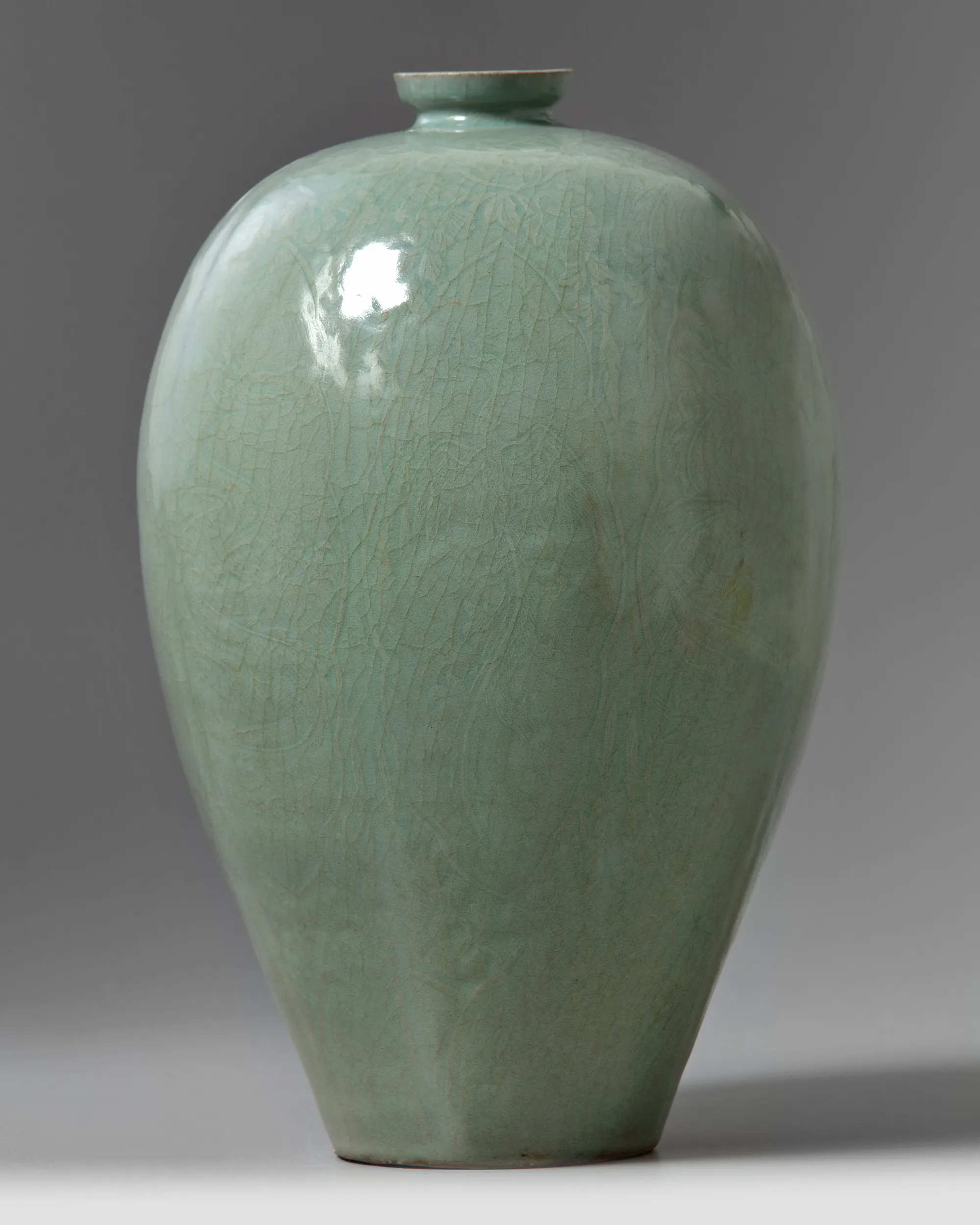
A large Korean celadon-glazed ‘dragon and phoenix’ maebyeong. The vase is lightly lobed and finely decorated with carved design of foliate petals enclosing alternating dragons and phoenixes, surrounded by flower scrolls, all below a ruyi-head to the rim and lappets to the foot. The vase is covered in a translucent bluish-celadon glaze with some fine glaze crackles. Photo © Oriental Art Auctions

2. Etymology

The term 'celadon' indicates the typical pale jade green glaze of the ceramics, but is derived from 17th-century France. Celadon indeed has nothing to do with either the Chinese or Korean language, but refers to a shepherd named 'Celadon' in a French pastoral comedy, whose pale green robe evoked the distinctive green of the ceramics in the minds of Europeans.

Related: 5 Things You Didn't Know About Ceramics
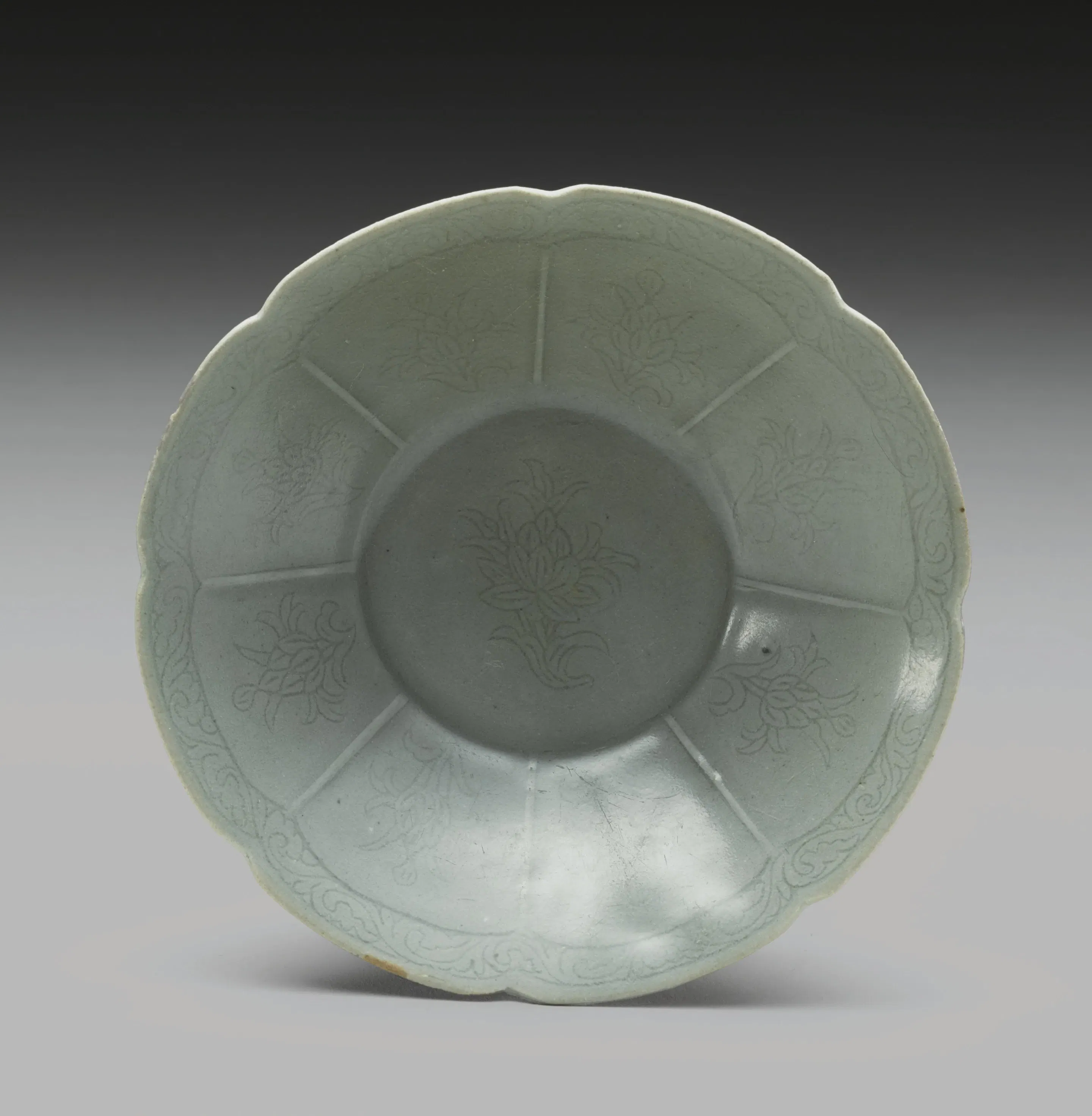
A Korean celadon foliate rim dish, Goryeo Dynasty, 12th century. Ceramic with straight flaring sides rising to the notched rim, the interior divided into eight panels, each incised with a stylized lotus spray, beneath a foliate scroll at the rim, the well incised with a larger lotus spray, the incised sprays repeated on the exterior and base, all covered with a gray-green glaze, the base with three spur marks. Photo © Sotheby’s

3. Distinctive Glaze

In Goryeo celadons, the gray-green hue of the glaze is owed to the presence of iron in the clay and iron oxide, manganese oxide, and quartz particles in the glaze. Chinese celadons were fired in brick kilns, but Korean artisans opted for traditional mud kilns, firing the ceramics at around 1000ºC, and reducing the oxygen to prevent oxidizing, thus giving the pots a brilliant and uniform pale green. The changes in oxygen flow in the brick kilns of Chinese celadons gave them a warmer olive-green glaze, and with time, the brighter glaze of the Korean celadons became the gold standard.

Related: Jade: A Coveted Asian Talisman
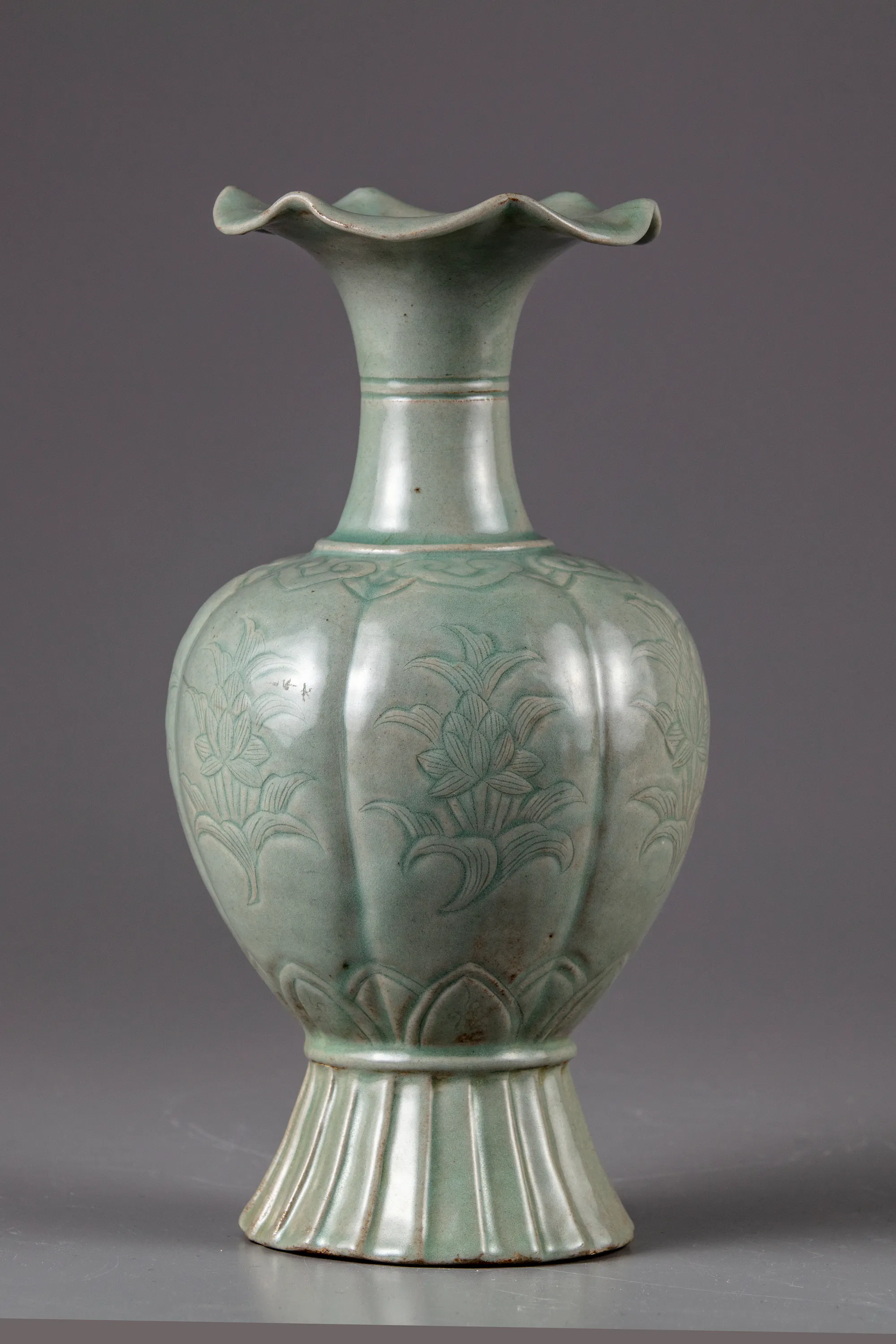
A Korean celadon glazed vase, melon-shaped, featuring the eight-petal flower mouth and incised parallel lines on the neck. The lobed sides are decorated with flower sprays, below a band of ruyi heads and plantain leaves to the base. All covered with a grey-green glaze. Photo © Oriental Art Auctions

4. Inlay Technique

The most prized Korean celadons are inlaid through the delicate technique of sanggam, which involves etching the motifs on the dry clay vessel and filling the incisions with either black or white slip. The result is vibrant designs in white, black and green.

Related: Kintsugi: The Beauty of ‘Golden Scars’
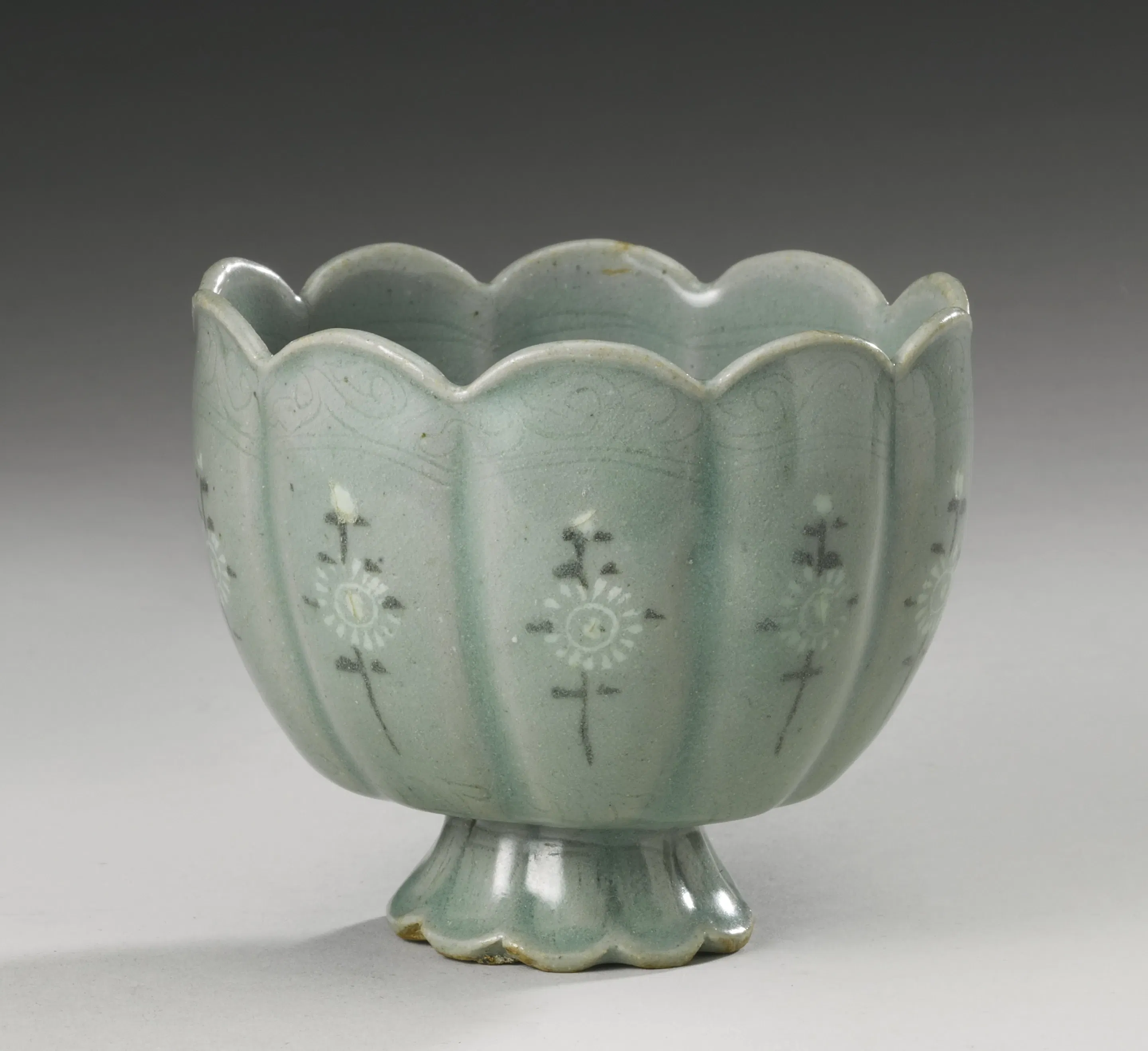
A Korean slip-inlaid celadon stoneware cup, Goryeo Dynasty, 13th century. Ceramic with a foliate rim and ten lobes, supported on a flared stem foot, each lobe inlaid with white and black slip with a chrysanthemum spray between incised foliate scrolls and waves, the interior with an incised floral medallion. Photo © Sotheby’s

5. Nature-Inspired Motifs

The inlaid patterns in Korean celadons are varied but are most often inspired by nature. They usually represent flowers, birds, or clouds, particularly lotuses, peonies, waterfowls, cranes and parrots.

Related: Mystic or Real: A Guide to Animals in Chinese Art
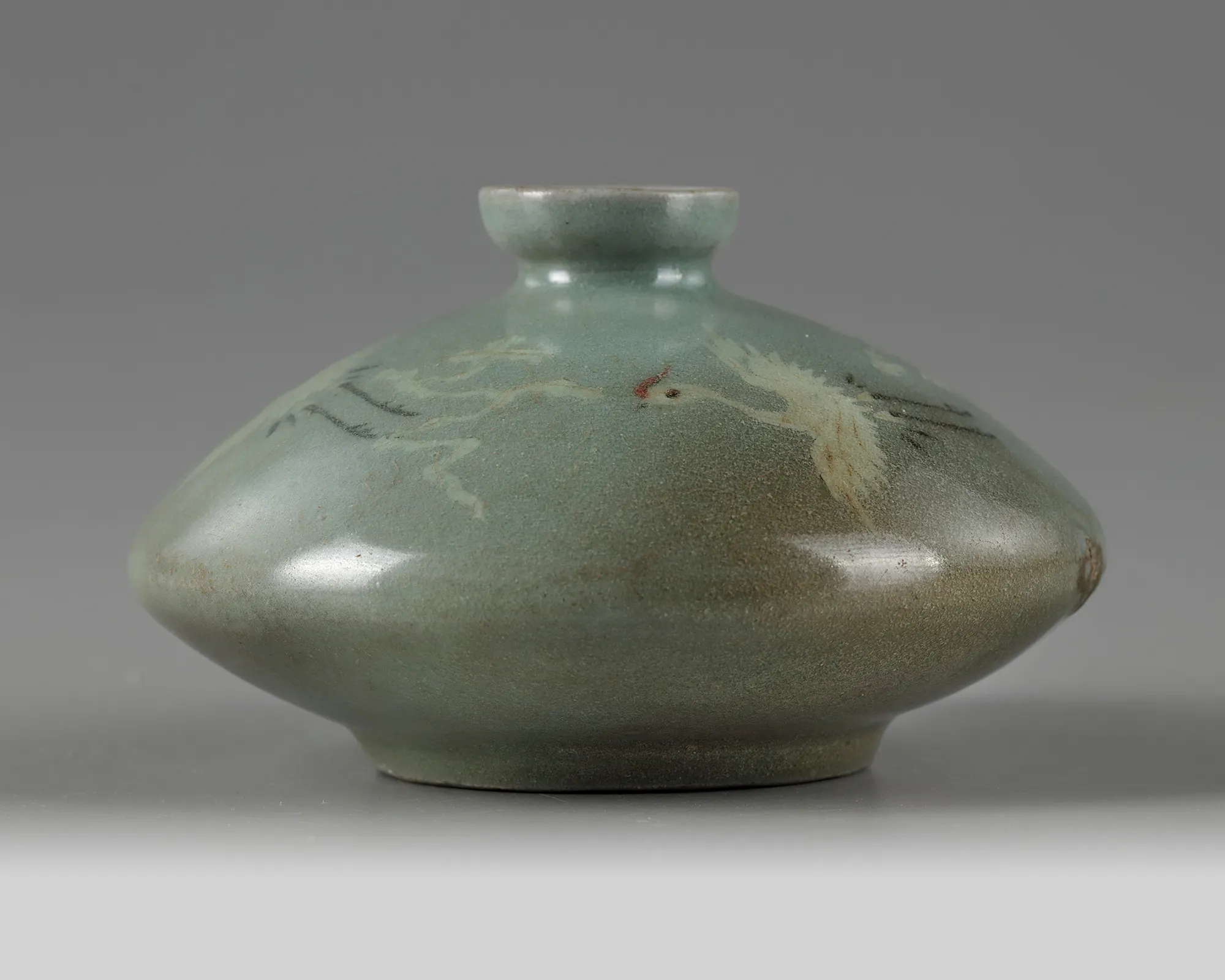
A Korean slip-inlaid celadon-glazed ‘cranes’ oil bottle. The compressed jarlet is inlaid with white, red, and black clays with cranes with open wings in flight amongst clouds. Photo © Oriental Art Auctions

At auction, Korean celadons can go for as low as a few hundred dollars for a poorly preserved bowl to upwards of six figures for the most rare specimens. The quality of details in the inlay and the uniformity of the color of the glaze greatly affect the price, and the estimates also depend on the shape of the ceramic – bowls are quite common and therefore not as unique and sought after, while one-of-a-kind pieces such as sculpted incense burners or water droppers may command higher estimates.

Find more articles in Barnebys Magazine

celadonkorean celadonasian artceramics

Join 200,000+ collectors reading Barnebys Magazine

By subscribing, you are agreeing to the privacy policy. Unsubscribe anytime.

About the author

Giulia Zileri Dal Verme

Giulia Zileri Dal Verme is the Global Senior Editor at Barnebys Magazine. She read Classics at Oxford University and studied Art Business at Sotheby’s Institute of Art. Her research focuses on the intersection between cultural practices and visual art, with a keen interest towards the ancient world. She is engaged in the auction market and particularly fascinated by London’s thriving art scene.

Read more from this author
Giulia Zileri Dal Verme

Discover similar items at auction

A Chinese Longquan celadon 'bamboo' vase

A Chinese Longquan celadon 'bamboo' vase

GB
Roseberys
Details
A Chinese celadon glazed 'phoenix medallions' vase...

A Chinese celadon glazed 'phoenix medallions' vase...

GB
Roseberys
Details
A Chinese celadon jade archaistic 'chilong and phoenix'...

A Chinese celadon jade archaistic 'chilong and phoenix'...

GB
Roseberys
Details
A Chinese carved Longquan celadon glazed 'lotus' bowl...

A Chinese carved Longquan celadon glazed 'lotus' bowl...

GB
Roseberys
Details
Wedgwood embossed celadon blue Queens ware part tea/dinner set to

Wedgwood embossed celadon blue Queens ware part tea/dinner set to

GB
Potteries Auctions
Details
A large Chinese celadon and grey jade incense burner

A large Chinese celadon and grey jade incense burner

GB
Roseberys
Details

Bring your auction to collectors worldwide!