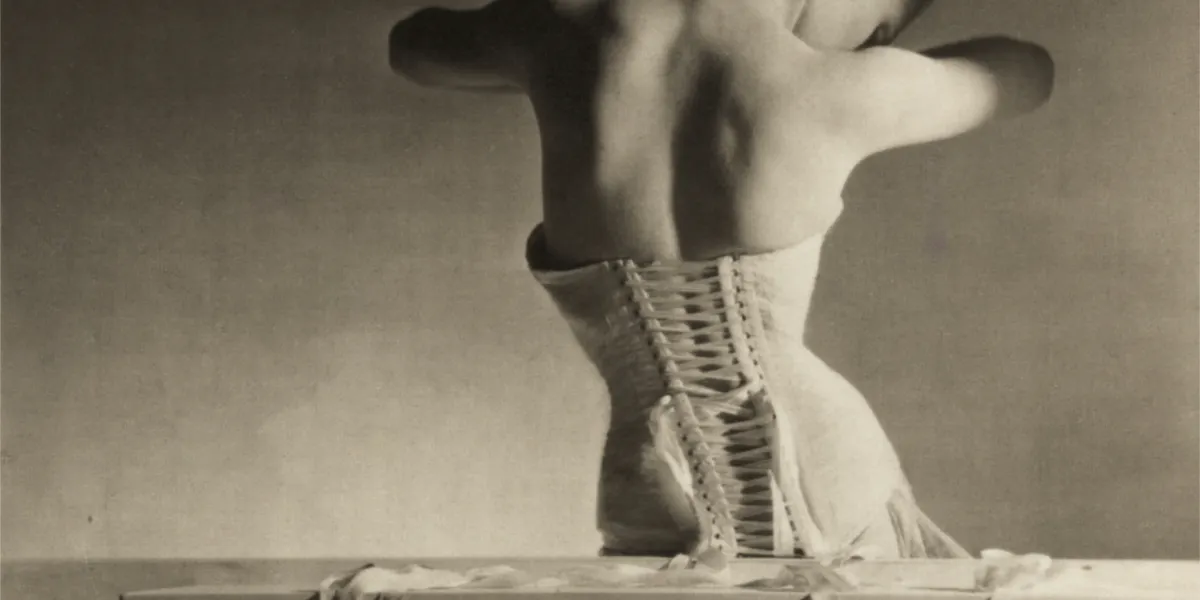
Mainbocher Corset by Horst P. Horst is considered one of the great icons of 20th-century photography. Here are three important facts to know about this indelible image.
1. It was Horst's last photo taken in Paris
In 1939, the German-born Horst P. Horst (born Horst Paul Albert Bohrmann, 1906-1999) had been the chief photographer of French Vogue for four years – a position he had taken over from his mentor and former partner, George Hoyningen-Huene, after the latter moved to New York. Horst's work captivated with its blend of classical art, subtle eroticism, and above all, masterful lighting, which made each photograph appear as a unique staged scene. With his revolutionary techniques, he significantly influenced modern fashion photography. In August of 1939, he was tasked with taking an advertising photograph for a corset made by the fashion house Mainbocher. The result was Mainbocher Corset, which shows the model known only as Mrs. Bernon from behind. Mrs. Bernon, wearing the loosely laced corset, leans against a balustrade, her face barely visible due to her bowed head and raised arms.
See also: 'The Fashion Bible’: A History of Vogue Magazine
The photo shoot scheduled for August 11, 1939, at the Vogue studio in Paris lasted until 4:00 a.m. the following day. Afterward, Horst P. Horst went home, but this was only a brief stop. Instead of going to bed, he set off for Le Havre, where he boarded the luxury liner Normandie, famous for its elegant Art Deco interiors, and left Europe for America. The threat of war was on the horizon, which was confirmed when World War II began a few weeks later.
2. It foreshadowed a (fashion) world in flux
Mainbocher Corset is a symbol of the end of an era—both for Horst P. Horst personally and for the glamour of the interwar years. Furthermore, it offers a glimpse into the future of fashion after World War II. While looser silhouettes had dominated the 1920s and 1930s, the wasp waist, which had been discarded just a few decades earlier along with the corsets responsible for it, returned after hte war. This was the era of Christian Dior's New Look, which would come to define the 1950s, with its narrow waist, emphasized bust, and flared skirts. The term "The New Look" was coined by the editor-in-chief of Harper's Bazaar after she saw Dior's Spring/Summer 1947 collection called "La Ligne Corolle."
See also: Christian Dior: A Flash of Brilliance
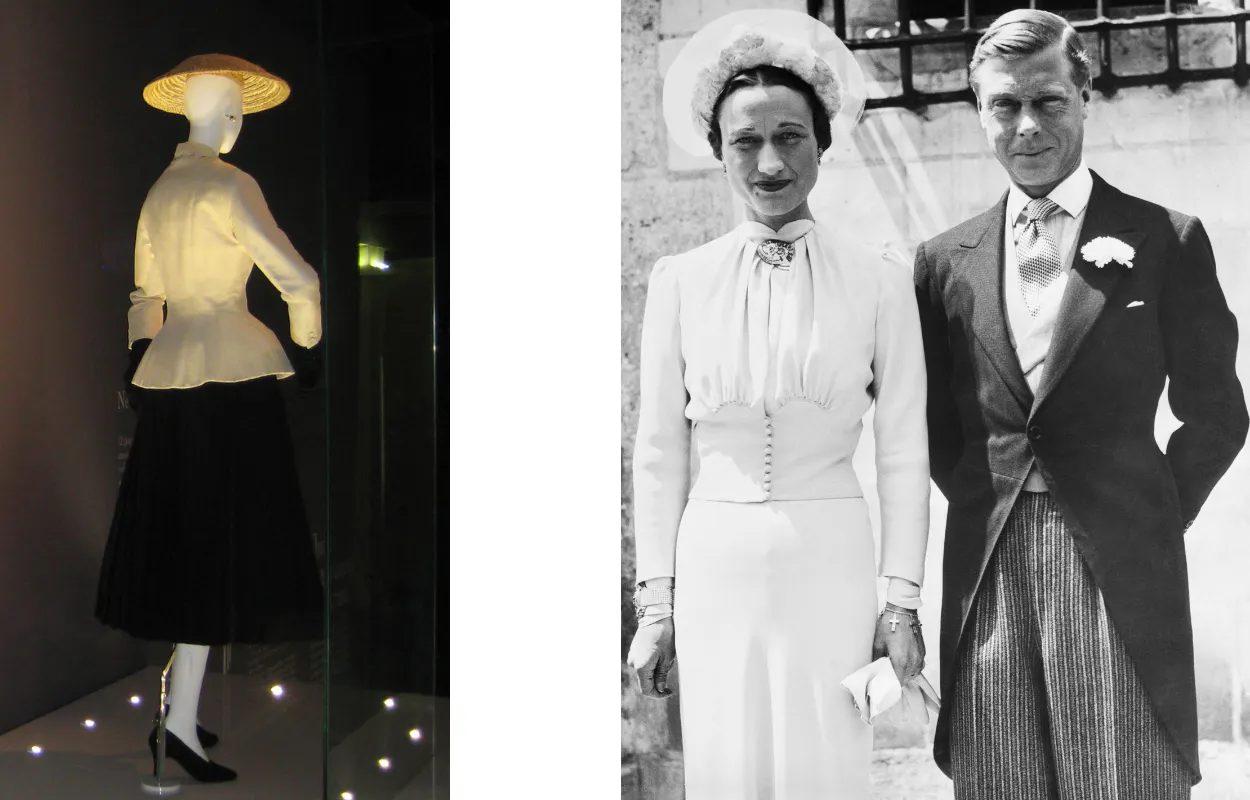
Founded in Paris in 1929 by the American-born Main Rousseau Bocher (1890-1976), the haute couture house Mainbocher was a pioneering force in the development of the New Look. Mainbocher primarily produced evening wear from the finest materials and presented the first strapless evening gown in 1934. The desired silhouette was figure-hugging and elegant – a look perfectly embodied by Wallis Simpson, Duchess of Windsor, who was one of the house's most valued clients. Before founding his fashion house, Main Rousseau Bocher had served for two years as editor-in-chief of French Vogue and had significantly influenced the magazine's visual layout, notably through his support of George Hoyningen-Huene.
3. Vogue retouched the original photo
The advertisement for the Mainbocher corset was originally intended for the October issue of French Vogue, but due to the outbreak of World War II, neither the October nor the November issue was published. The photograph was finally published in December, albeit smaller than originally planned. Meanwhile, it had already been published in September in American Vogue, where Horst P. Horst was then working in New York.
See also: The 11 Most Expensive Photographers
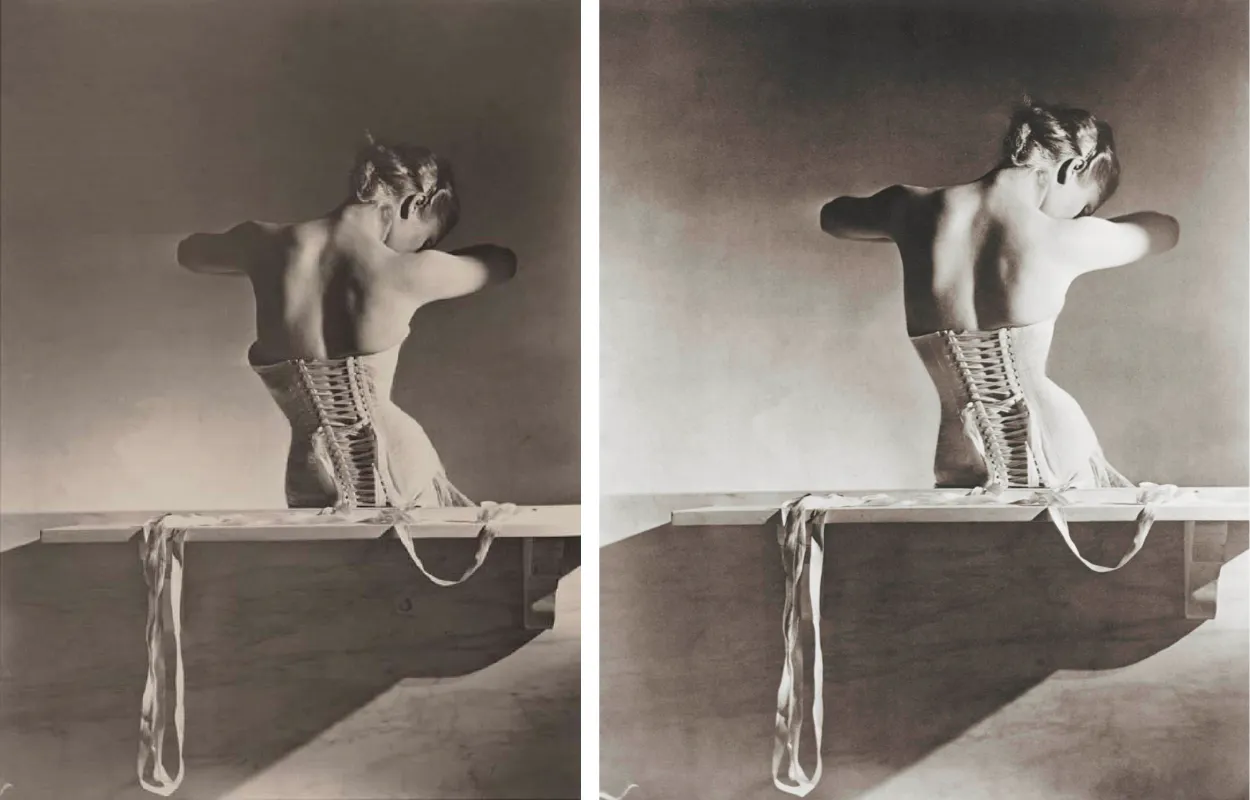
Vogue wasn't entirely satisfied with Horst's work, however. They were bothered by the gap created by the loosely laced corset on the model's left side. The photo was quickly retouched so that the corset now appeared to fit snugly. Such retouching was common practice at the time; even the occasional imperfection on a model's face was simply removed in the darkroom. Horst P. Horst, however, always preferred his original vision with the corset sticking out, which he felt conveyed more tension, sensuality, and vibrancy.
Horst P. Horst's Mainbocher Corset from 1939 is a multifaceted icon of 20th-century photography and is repeatedly referenced and reinterpreted. Perhaps the most famous reference to the image is the multi-award-winning 1990 music video for Madonna's song "Vogue," in which she is filmed from behind wearing a similar corset.