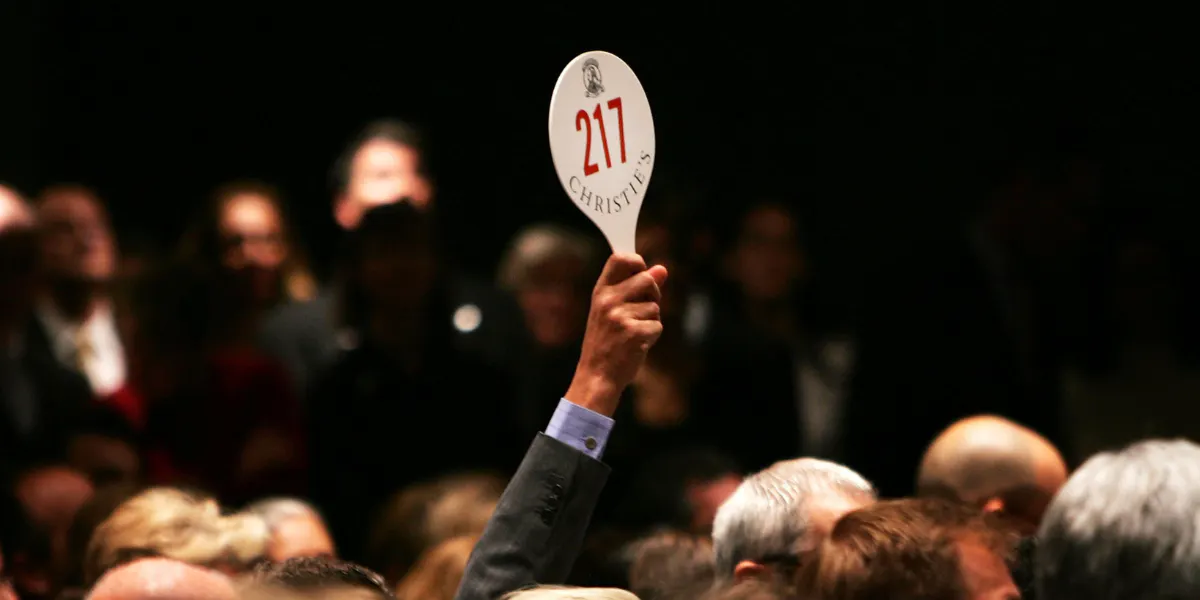
Americana Week is an annual celebration of American history, culture, and craftsmanship, marked by a series of auctions held at Christie's and Sotheby's in New York. These auctions focus on American art, historical objects, and collectibles, offering a unique opportunity for collectors, curators, and enthusiasts to engage with pieces that reflect the nation's rich heritage.
Americana Week draws collectors from around the world who are keen to acquire rare items that embody American history, craftsmanship, and artistic achievement. It’s a highly anticipated event in the art world, attracting attention from museums, private collectors, and historians alike.
Christie’s will host three sales: Outsider Art on Wednesday, January 22; American Paintings on Thursday, January 23; and Furniture, Folk Art, Silver, and Books & Manuscripts on Friday, January 24.
Sotheby’s will present a major Americana sale on Saturday, January 25, starting at noon with around 150 lots available in a live auction. An additional 250 lots will be offered exclusively online, beginning at 2 p.m.
Here are 10 of this season's most exciting lots on offer:
1. Ammi Phillips, A Rare Double-side Portrait
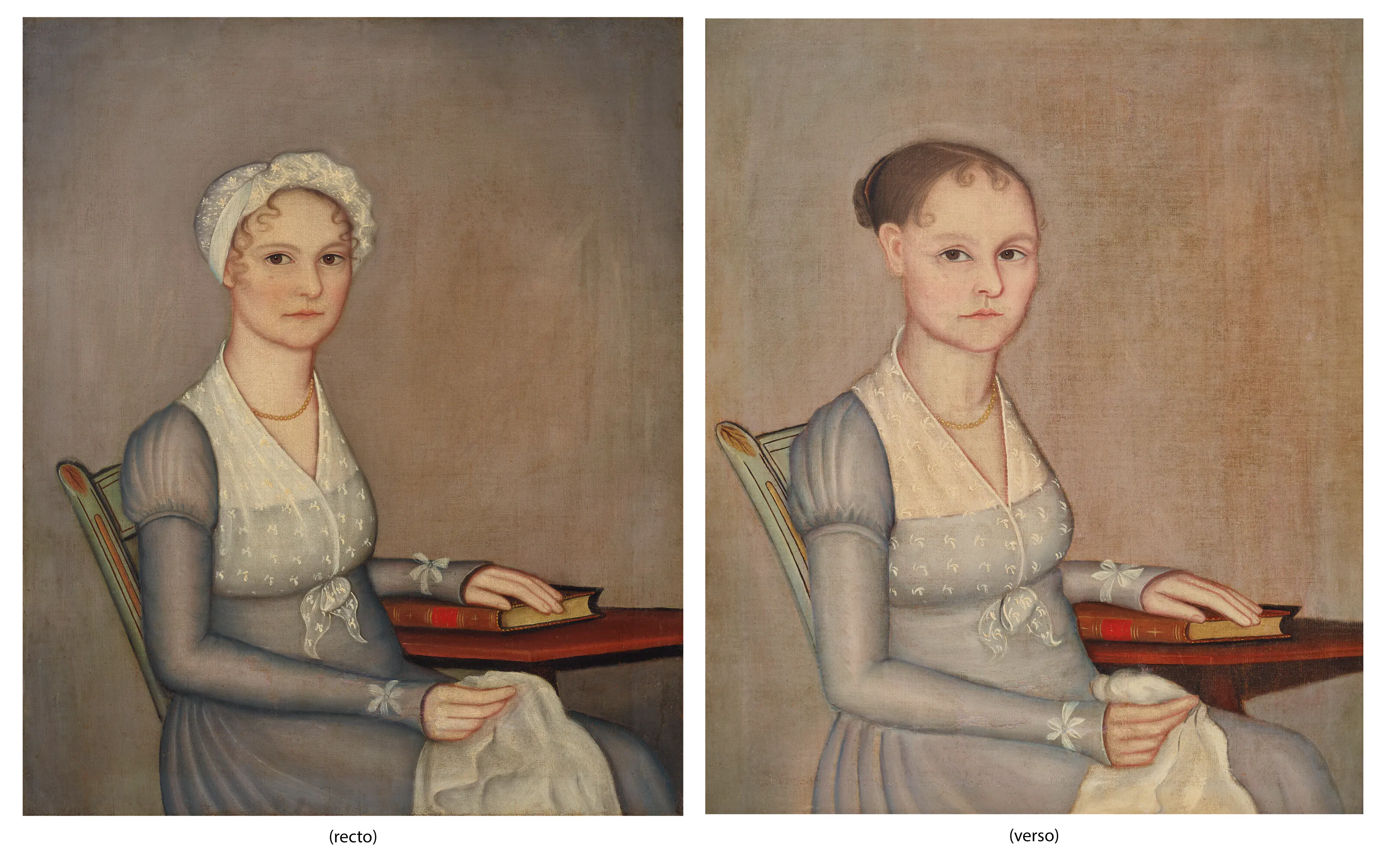
This previously unseen double-sided portrait is a remarkable example of the work of itinerant American portraitist Ammi Phillips (1788-1865). Painted on both sides, this format is unprecedented in Phillips’ known oeuvre, making its discovery all the more significant. The portrait invites a host of questions, particularly regarding the identities of the sitters and the rationale behind painting both sides. A careful examination of the details on each side opens up various theories, offering potential clues that might help answer these intriguing questions.
2. Queen Anne carved walnut armchair
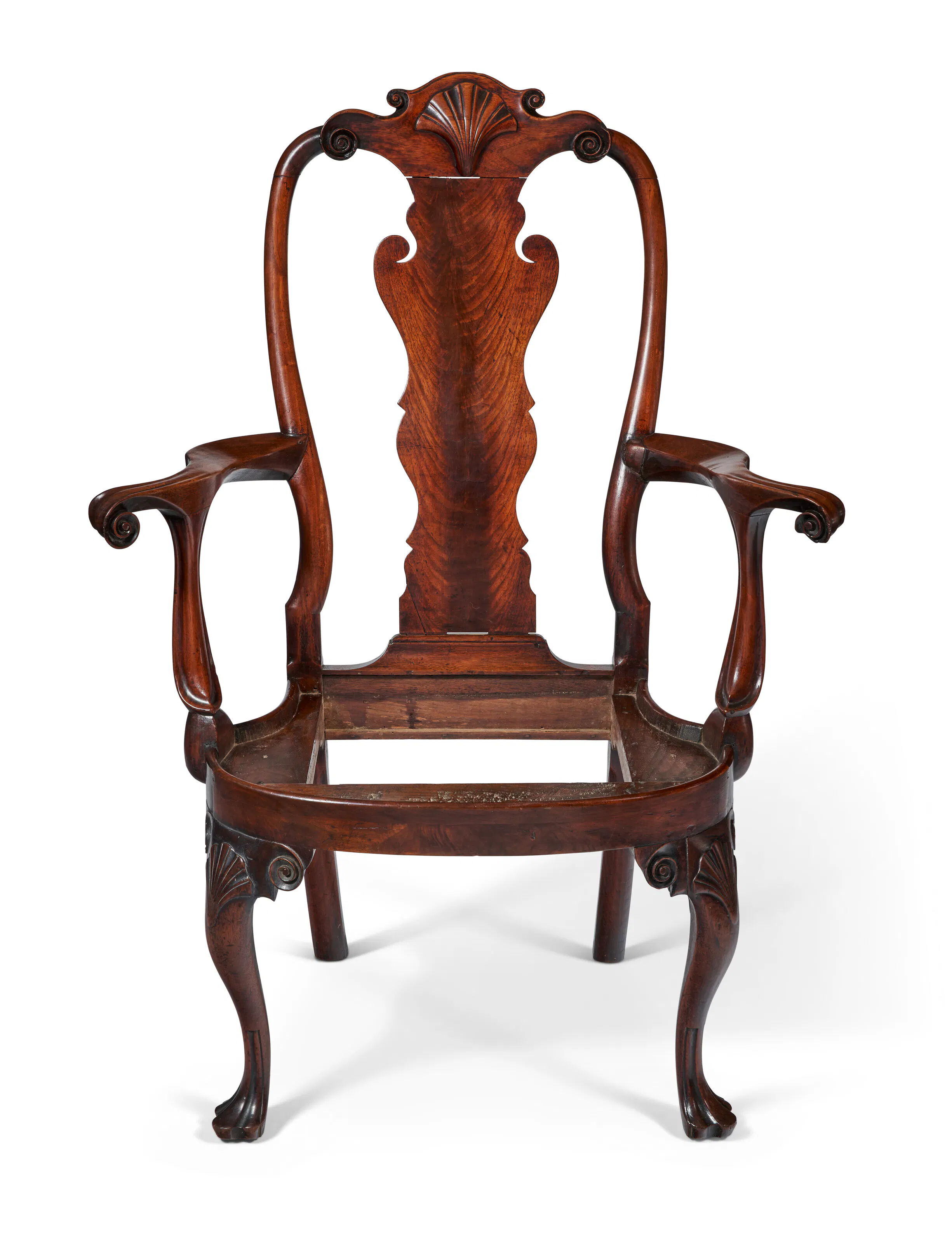
A masterful example of curvilinear design, this armchair is the seventh newly discovered piece from one of the most celebrated and mysterious seating sets of mid-eighteenth-century Philadelphia—the only known American armchair set in the Queen Anne style. These chairs are distinctly taller than typical examples, measuring about three inches higher, which suggests they were custom-made for a specific, yet undetermined, purpose. The exceptional number and quality of these chairs would have made them a significant investment, likely used in a space designed for small gatherings among Philadelphia's more affluent citizens. With each chair equally impressive in stature, the set would have fostered a sense of unity, free from any hierarchical distinctions.
3. The Jabez Bowen Chippendale bureau table
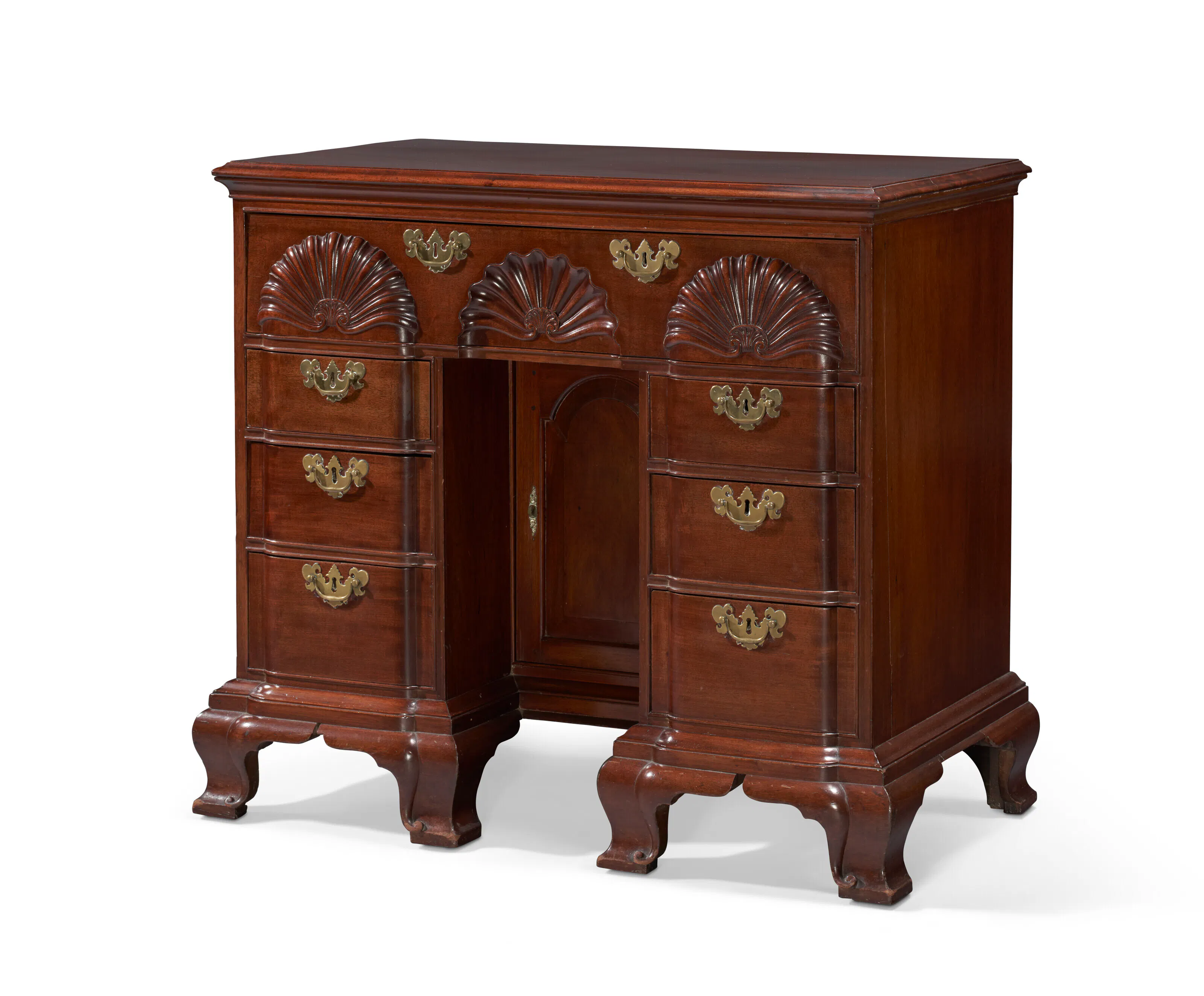
A testament to the pinnacle of colonial craftsmanship and a silent witness to the nation’s fight for independence, this bureau table stands as an American masterpiece of both artistic and historical significance. This previously unknown example of Newport block-and-shell furniture is distinguished by its intricate carving and construction details, all of which, along with documentary evidence and family history, point to its creation in 1763 by renowned cabinetmaker John Goddard (1724-1785) for one of his most notable clients, Deputy Governor Jabez Bowen (1739-1815).
A prominent figure in Providence and a fervent patriot, Bowen played a key role in Rhode Island’s Revolutionary War efforts. The bureau table would have been a centerpiece in Bowen’s residence on Main (now North Main) Street, where, in 1776, the Declaration of Independence was read from the balcony, and where, in 1780-1781, it hosted distinguished figures such as the Comte de Rochambeau and General George Washington. For over two centuries, the table has remained in the care of Bowen’s descendants, cherished as a family heirloom. Its sale at auction marks the first opportunity to reveal its extraordinary story to the world.
4. The Jones Declaration of Independence
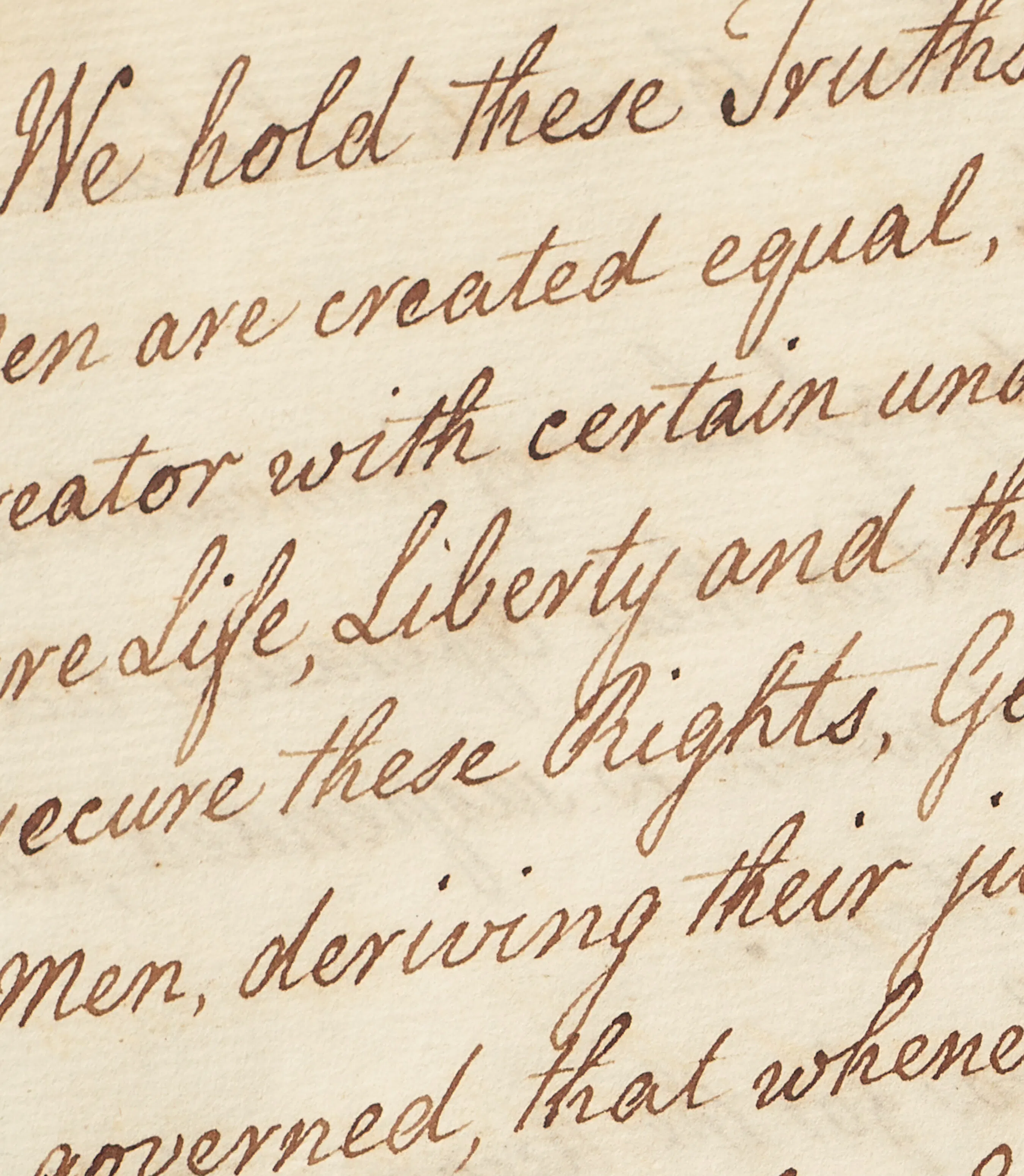
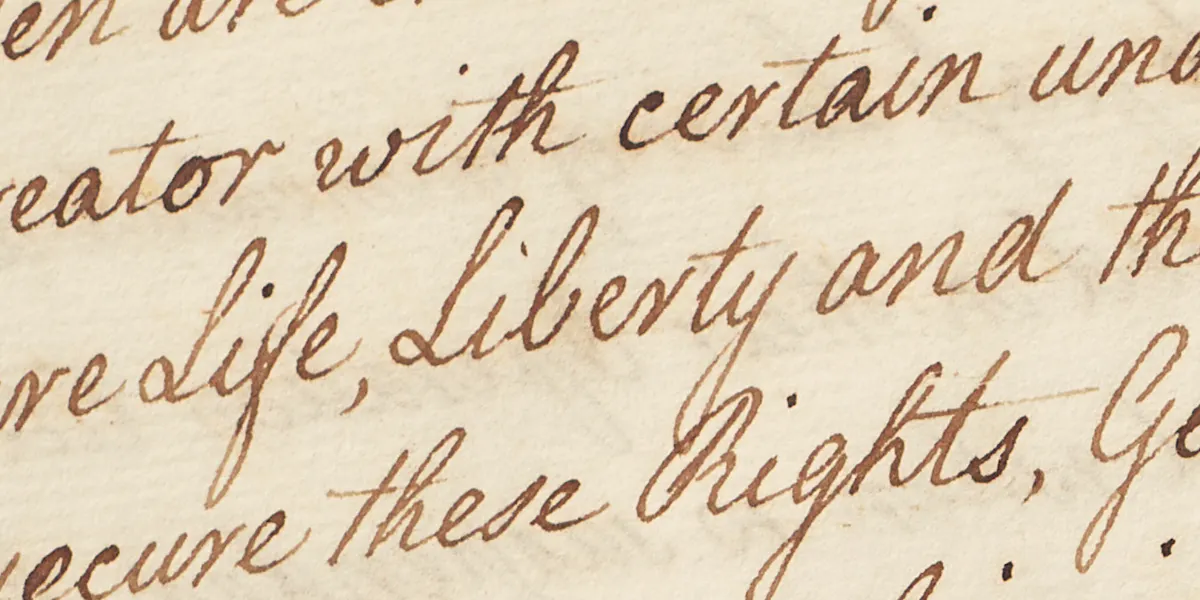
This newly discovered manuscript of the Declaration of Independence is written in the hand of Samuel Jones of New York, who is credited with securing New York’s ratification of the United States Constitution by breaking the deadlock over the inclusion of a Bill of Rights.
This is the first manuscript version of the Declaration, penned by a key figure in the nation’s founding, to ever appear at auction—and the only one known to be privately held.
Jones transcribed the Declaration as it appears within the earliest complete manuscript of the 1777 New York State Constitution, the only state constitution to include the full text of the Declaration.
Likely written in 1788 for the New York Ratification Convention, this manuscript may have served a similar purpose to the recently discovered Sussex Declaration, further cementing its significance in the nation’s formative years.
5. An American Presentation 14k Gold Railroad Spike
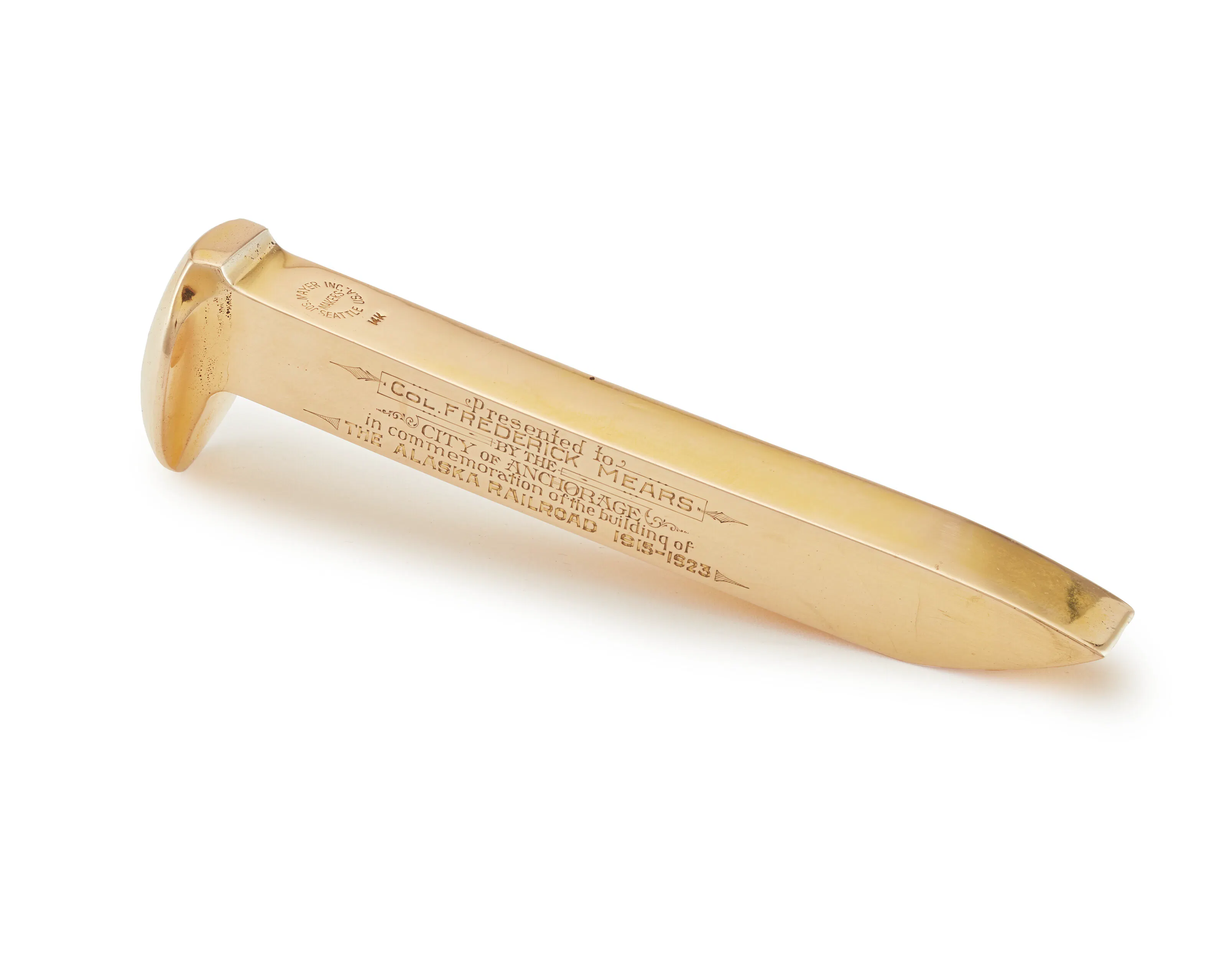
After the U.S. purchased Alaska in 1867 and the Klondike gold rush, Congress and President Woodrow Wilson pushed for a railroad to access the region’s resources. The route would connect Seward, Anchorage, Fairbanks, and key resource areas. To oversee the project, the Alaskan Engineering Commission was formed, led by Colonel Frederick Mears.
Mears was tasked with building the central section, starting at Anchorage, which was essential for connecting existing railroads and accessing resources. Upon arriving in 1915, Mears quickly surveyed land for what would become Anchorage, the first of many railroad towns.
By September 1918, the Seward-to-Anchorage section was complete, and by January 1919, the track reached south of Nenana. The final 122 miles to Fairbanks took four more years, delayed by complex bridge construction, including the 918-foot Hurricane Gulch bridge. The railroad was finished in summer 1923 in time for now President Warren G. Harding’s visit to The Last Frontier.
As the railroad neared completion, Frederick Mears was sent to Seattle in March 1923 after the merger of the Alaska Engineering and Road Commissions. In recognition of his efforts, Anchorage presented him with a solid gold railroad spike, which he loaned to Governor Bone for the ceremonial completion on July 15th with President Harding.
Want more articles like this straight to your inbox? Subscribe to our free newsletter!
6. The Declaration of Independence: The July 1776 Exeter Broadside
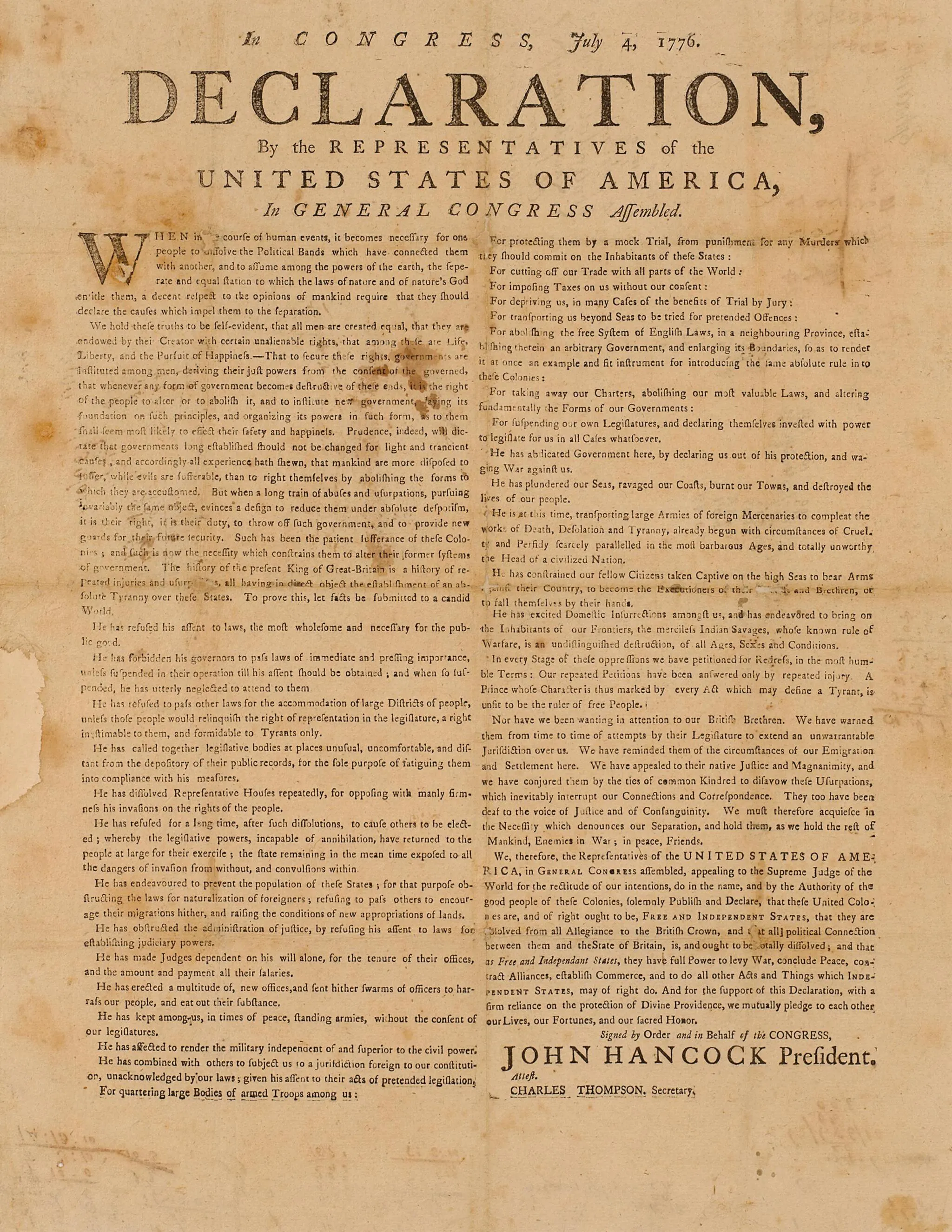
This exceedingly rare July 1776 printing of the Declaration of Independence includes the prestigious Goodspeed’s-Sang-Streeter copy of Robert Luist Fowle’s Exeter broadside. Issued in Essex, this printing is one of only thirteen contemporary broadsides of the Declaration, with just ten known copies in existence, two of which are from the first state. Remarkably, this is one of only two copies of this particular printing to have appeared at auction in over a century.
7. An American Silver Coffee Pot, Paul Revere II
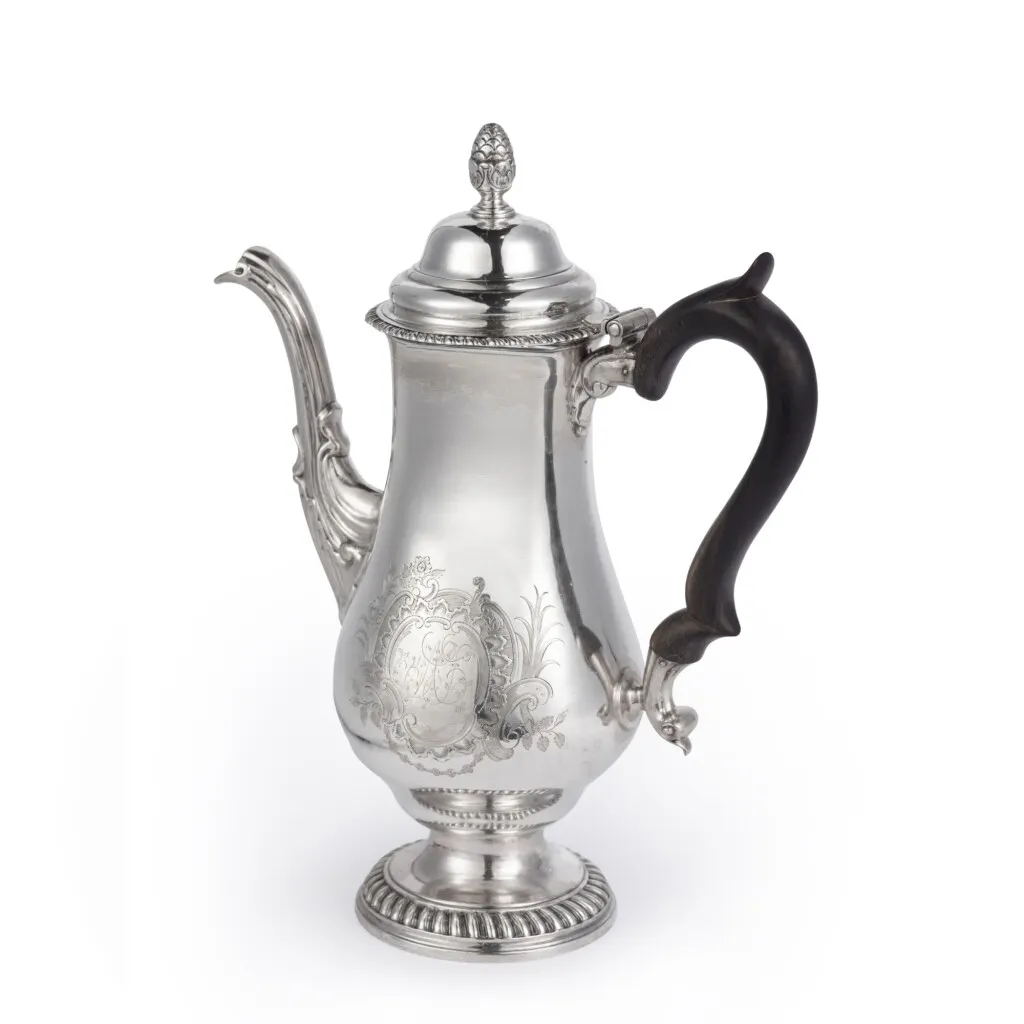
This silver coffee pot was originally owned by Dr. Micajah Sawyer (1737–1815), a renowned physician in Newburyport. The son of Enoch Sawyer and Sarah Pierpont of Newbury, he graduated from Harvard in 1756. In 1766, he married Sibyl Farnham, the daughter of Newburyport lawyer Daniel Farnham and Sibyl Angier. Together, they had eight children, though only four survived to adulthood.
Their son, William, attended Dummer Academy and graduated from Harvard in 1788. After initially practicing medicine alongside his father, William transitioned to a successful career as a merchant. In 1816, he purchased 87 Mount Vernon Street in Boston, a Charles Bulfinch-designed townhouse that now serves as the headquarters of the Colonial Society of Massachusetts.
8. Edward Hicks, Washington Passing the Delaware
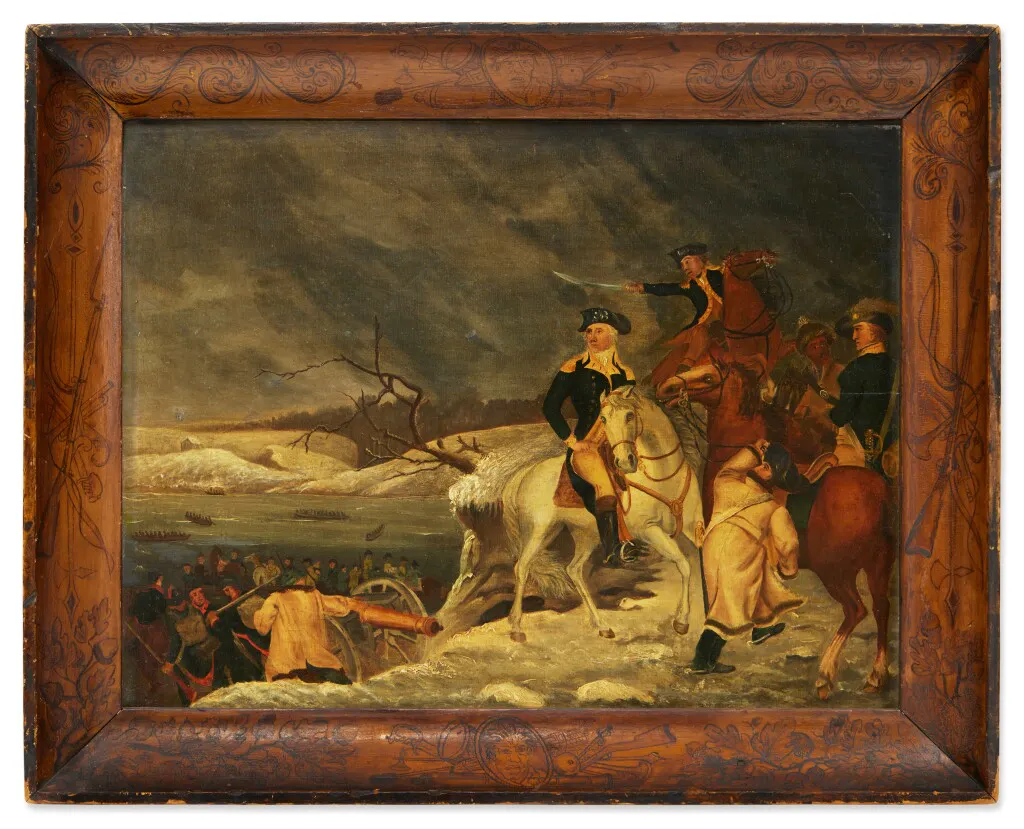
This exceptional painting by Edward Hicks is one of the few surviving depictions of the legendary nighttime crossing of the Delaware River. In the fall of 1776, after retreating from Fort Lee, George Washington and the Continental Army camped in New Hope, Pennsylvania, to block the British from advancing on Philadelphia. The British, pursuing Washington, set up camp across the river in Trenton. After a string of defeats and low morale, Washington planned a surprise attack on the Hessians in Trenton on December 26. The attack required crossing the icy Delaware River in the middle of the night with 2,400 men, horses, and 18 cannons. Many soldiers, lacking proper footwear, suffered frostbite and left bloody footprints in the snow. Despite a storm and extreme conditions, Washington's forces took the Hessian garrison by surprise, securing a crucial victory that lifted morale and strengthened support for the cause.
9. Ann Stockton, Needlework Sampler

Only seven known pictorial needleworks are associated with this piece by Ann Stockton, all created by young girls from Burlington County, New Jersey. These include Ann Stockton, Sarah Gaskill, and Lydia Stockton from Upper Springfield, Nancy Platt and Ann Folwill from Mansfield, Mary Bowker from Northampton (now Mount Holly), and Mary Antrim from Burlington City. In 1804, there were only two Quaker schools in the county: Upper Springfield Friends School and Burlington City School. It is likely all seven girls attended the former, as six lived in or near Upper Springfield, Mansfield, and Mount Holly. Though Mary Antrim was from Burlington City and not a Quaker, her father was a weaver, and she had relatives in Upper Springfield who could have housed her while she learned needlework at the Upper Springfield Friends School. The similarities in the motifs and composition suggest these girls studied under the same instructress in 1804. All needleworks are dated 1804, except for Mary Antrim's, which features a calligraphic drawing from 1807, though 1804 was the only year “fancy” work was taught at the school.
10. The Bush-Snader Family Queen Anne Dressing Table

The Bush-Snader Family dressing table is a stunning example of eighteenth-century American craftsmanship. Its detailed shells and trifid feet closely resemble those found on a marble-top pier table attributed to the cabinetmaking shop of Henry Clifton (c. 1725-1771) and Thomas Carteret (active 1753-1765).
Text by Emily Shwajlyk.