The Dutch artist Floris Gerritsz van Schooten's painting Kitchen Utensils, Meat and Vegetables was restored prior to the exhibition Feast & Fast, the Art of Food in Europe 1500-1800 at the Fitzwilliam Museum in Cambridge. The still life was painted around 1620, which meant that it had nearly four centuries of accumulated grime and was due for a proper cleaning.
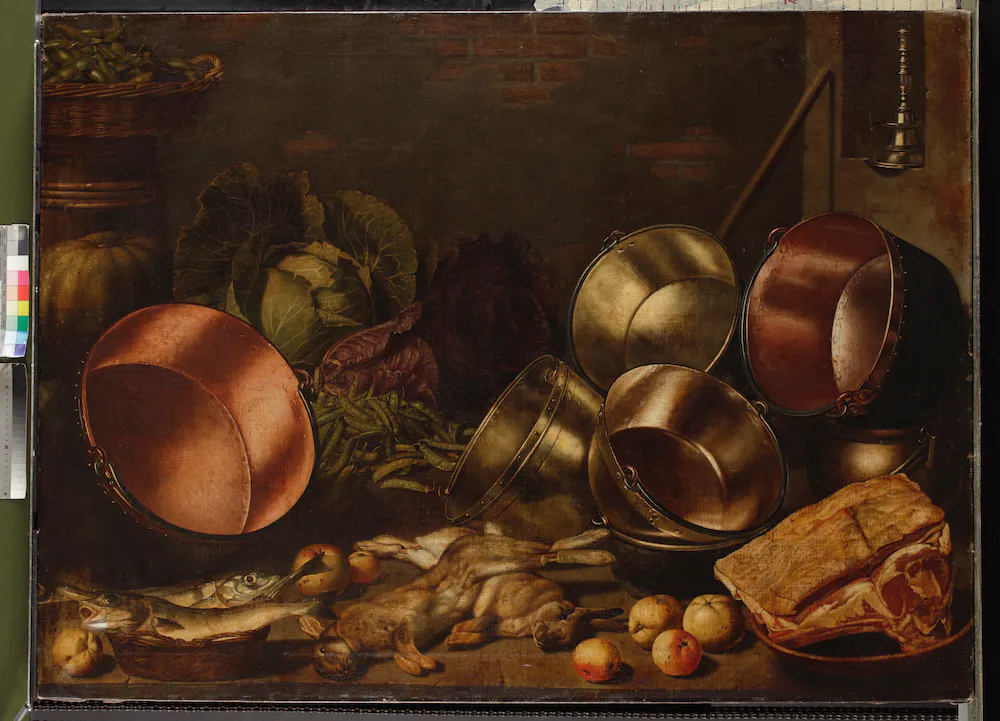
The varnish on the painting had been discoloured and the details became increasingly difficult to make out, but after the conservators removed the old paint, the still life got a new look and a new meaning. It turned out that the pots Van Schooten portrayed were not dirty at all but shining clean, and the fresh ingredients were of the highest quality, ready to be cooked.
See also: Monet's Water Lilies Discovered Underneath A Wisteria Painting
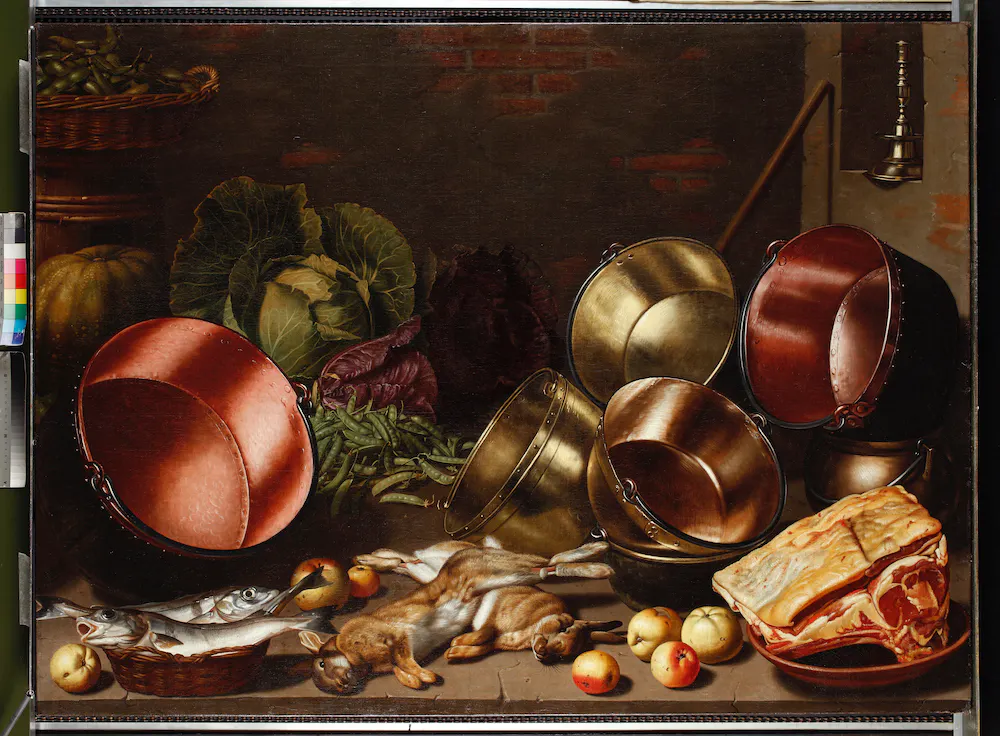
According to conservator Victoria Avery, the team gained a better understanding of 16th-century Dutch cooking techniques. For example, the copper and brass pots had different uses: the pots that are black on the outside were used to cook meat and vegetables over an open fire, while the glossy ones were used to preserve food. This was done over burning coal, when it was easier to regulate the temperature. The reason the saucepans are shiny on both the inside and the outside is because burning coal releases carbon monoxide which cleans the copper surface.
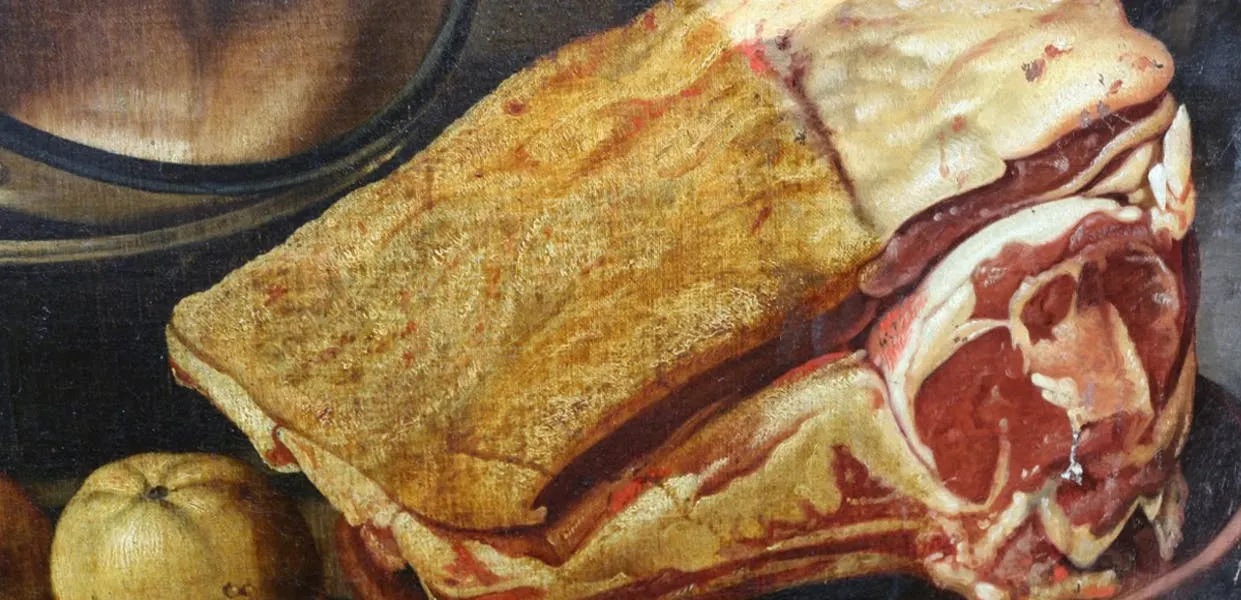
The biggest surprise was the large steak in the lower right, which was previously thought to be cooked but turned out to be raw.
See also: Top Ten Rediscovered Masterpieces, According to Barnebys
The restoration of the work has opened up new interpretations and the rediscovered details have added layers of meaning to the piece. According to the conservators, the process has been surprising and unfortunately photographs do not do the painting justice. However, if you find yourself in Cambridge, be sure to have a look: the Fitzwilliam Museum has hung up Van Schooten's freshly-restored still life for all to enjoy.