Drive into 2024 in style at Gooding & Company's Geared Online | December auction, which includes a trio of rare Porsches, art dealer Adam Lindemann's motorcycle collection, and other unique vehicle, motorcycle, and automobilia lots offered with and without reserve. Bidding starts Monday, December 4 and ends Friday, December 8.
Learn more about the auction here and view the online catalog here.
Register here to bid.
Here are the top highlights not to miss:
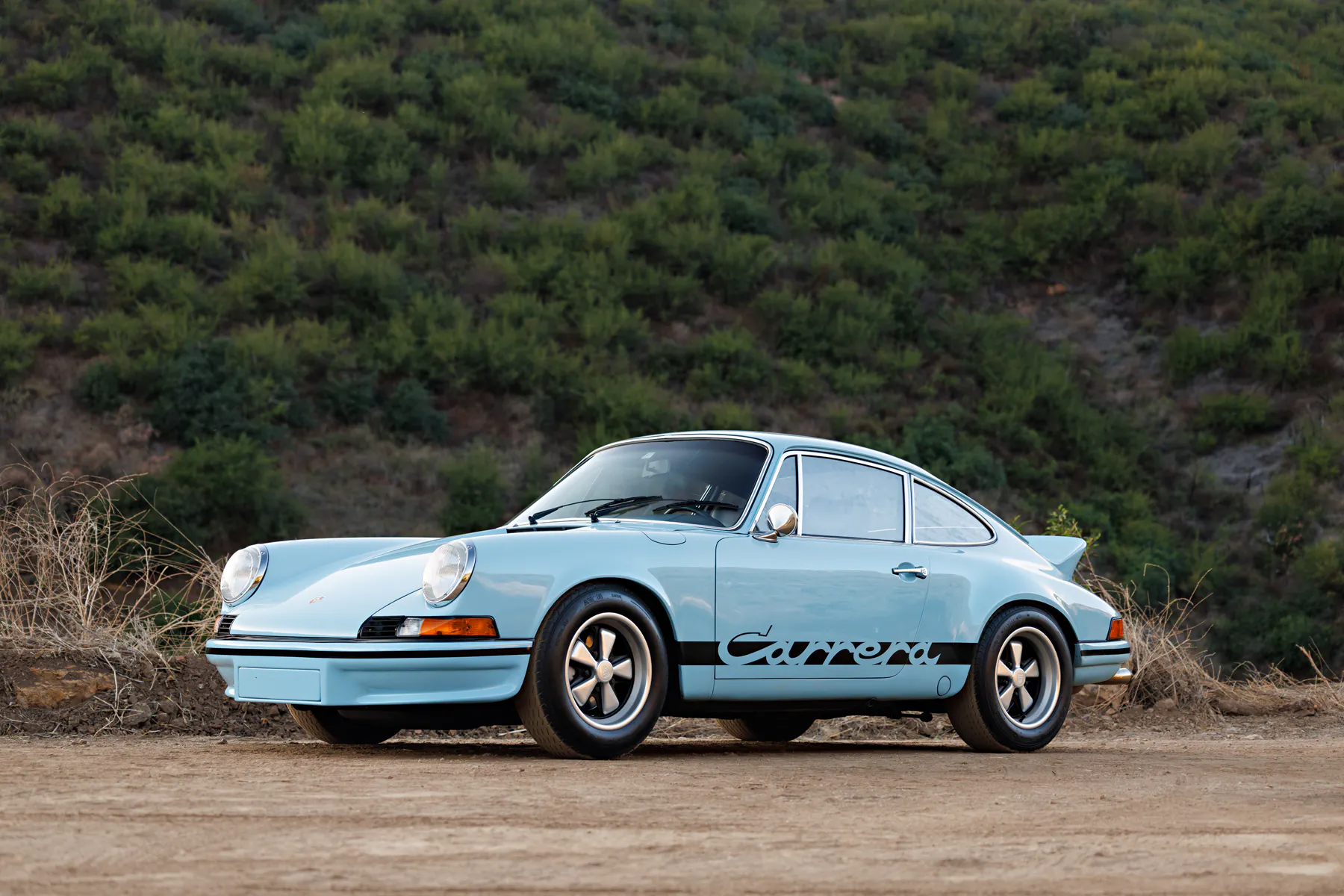
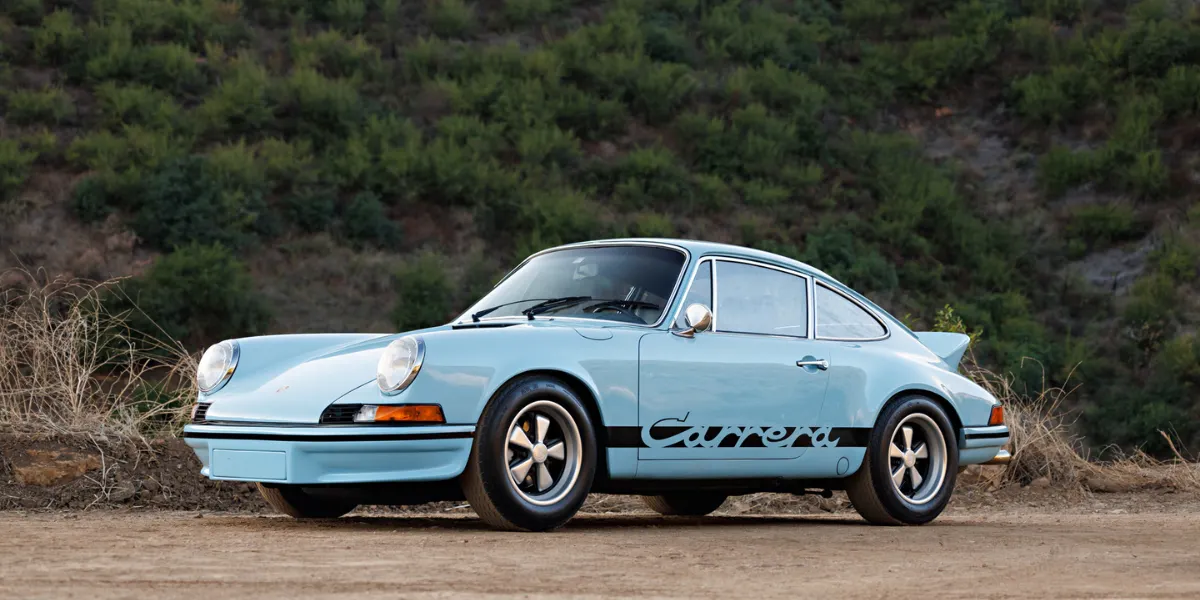
In the early 1970s, Porsche created an unrivaled sports car utilizing innovative aerodynamic and weight-saving features. A total of just 1,580 examples of the Porsche 911 Carrera 2.7 RS were built, of which a mere 200 were completed in race-oriented M471 Sport or Lightweight specification. This desirable first-series M471 Lightweight, chassis 9113600269, was built in late 1972. It was one of just four RS 2.7 Lightweights finished in the legendary Porsche racing color of Gulf Blue, and also came optioned from new with a limited-slip differential and left and right headrests. This 1973 Porsche 911 Carrera RS 2.7 Lightweight comes to auction as a well-documented and ideally specified Porsche from one of the marque’s most glorious periods.
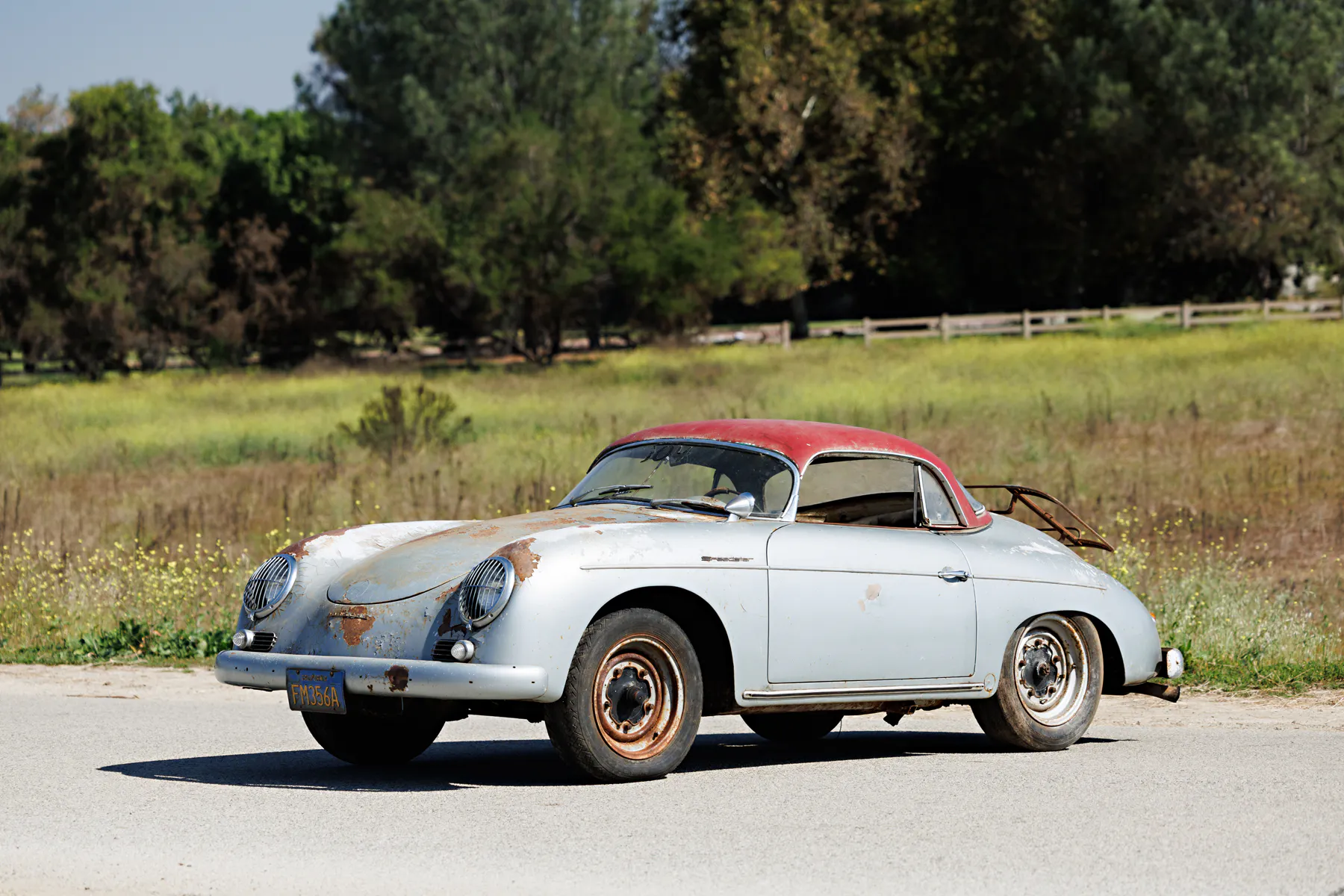
Introduced in late 1954, the Porsche 356 Speedster was a true dual-purpose sports car, proving capable as both daily transportation, and with minor modifications, a successful weekend race car. This 1957 Porsche 356 A Speedster, chassis 83955, was completed in October 1957 according to the accompanying copy of its Porsche Kardex. Originally finished in Elfenbein (Ivory, Code 704) and equipped with US-specification equipment, 83955 was delivered new to Hoffman Motors of New York, the official North American distributor of Porsches. Recently discovered in long-term, single family ownership, this highly sought-after 356 A Speedster presents today in as-found, unrestored condition, having been parked in static storage for decades.
The following four motorcycles come from the exceptional collection of 13 vintage motorcycles owned by New York-based art gallerist and collector Adam Lindemann.
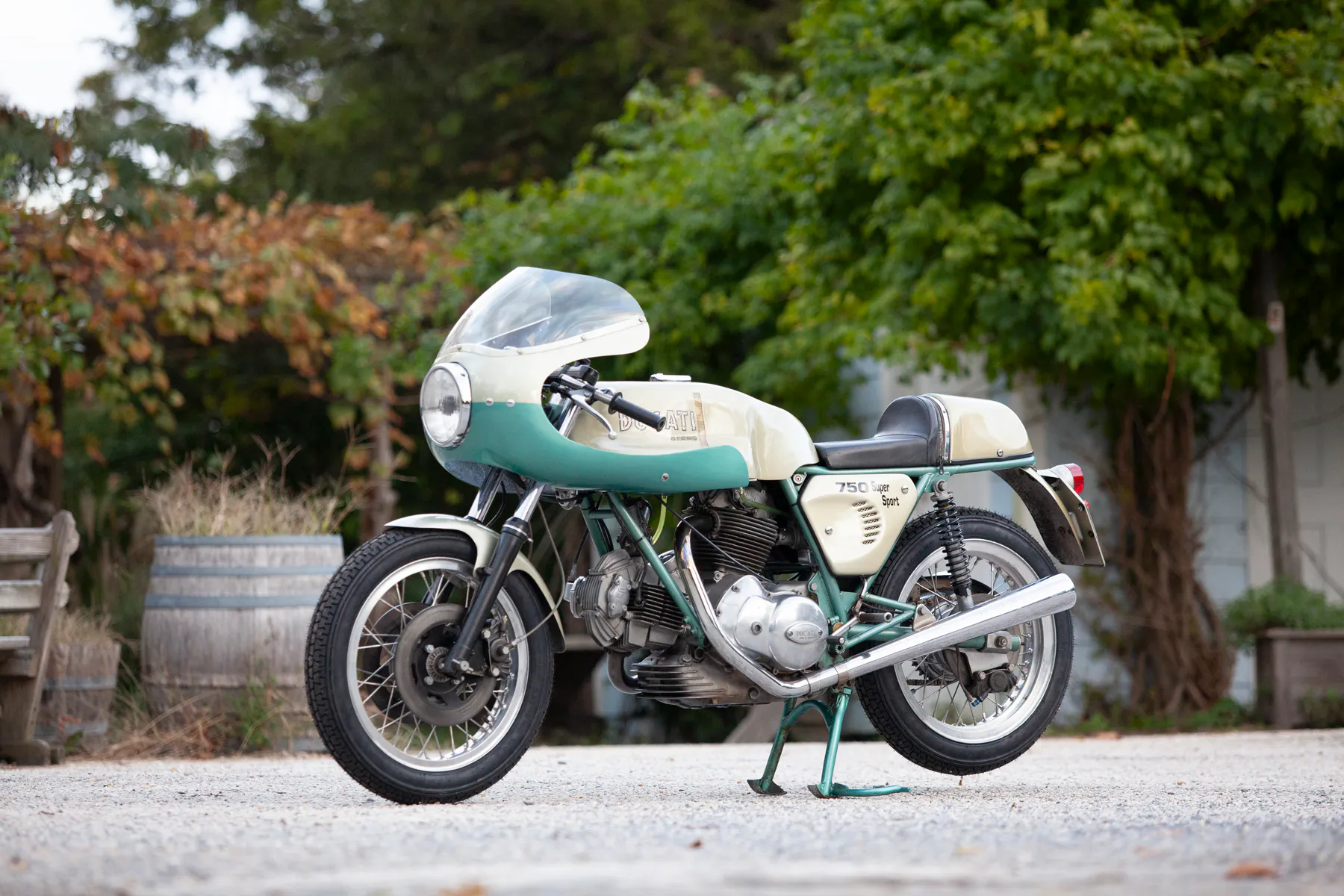
The Guy Webster Ducati 750 SS is Adam Lindemann's all time favorite motorcycle. After the inaugural Imola 200 race in 1972 when Ducati riders Paul Smart and Bruno Spaggiario defeated the dominant Giacomo Agostini on his MV Agusta, Ducati produced 401 homologation specials called the 750 Super Sport, which were road-going versions of the Imola 200 winner. They have since become one of the most collectible and sought-after motorcycles of all time. In 1985 this model was sold to legendary rock and roll photographer and noted motorcycle collector Guy Webster. Webster eventually amassed one of the finest Italian motorcycle collections in the world and his bikes were displayed at prestigious events for years, including at the Guggenheim Museum. This Super Sport displays a fascinating patina along with countless hallmarks of originality, making it an especially desirable and unique example. The bike also retains its desirable period upgrades for rideability, including its wider rear rim and Lockheed front brakes. With incredible power and torque from low revs, an intoxicating exhaust note, and confidence-inspiring handling, these bikes provide one of the most unforgettable and impressive riding experiences in all of motorcycling.
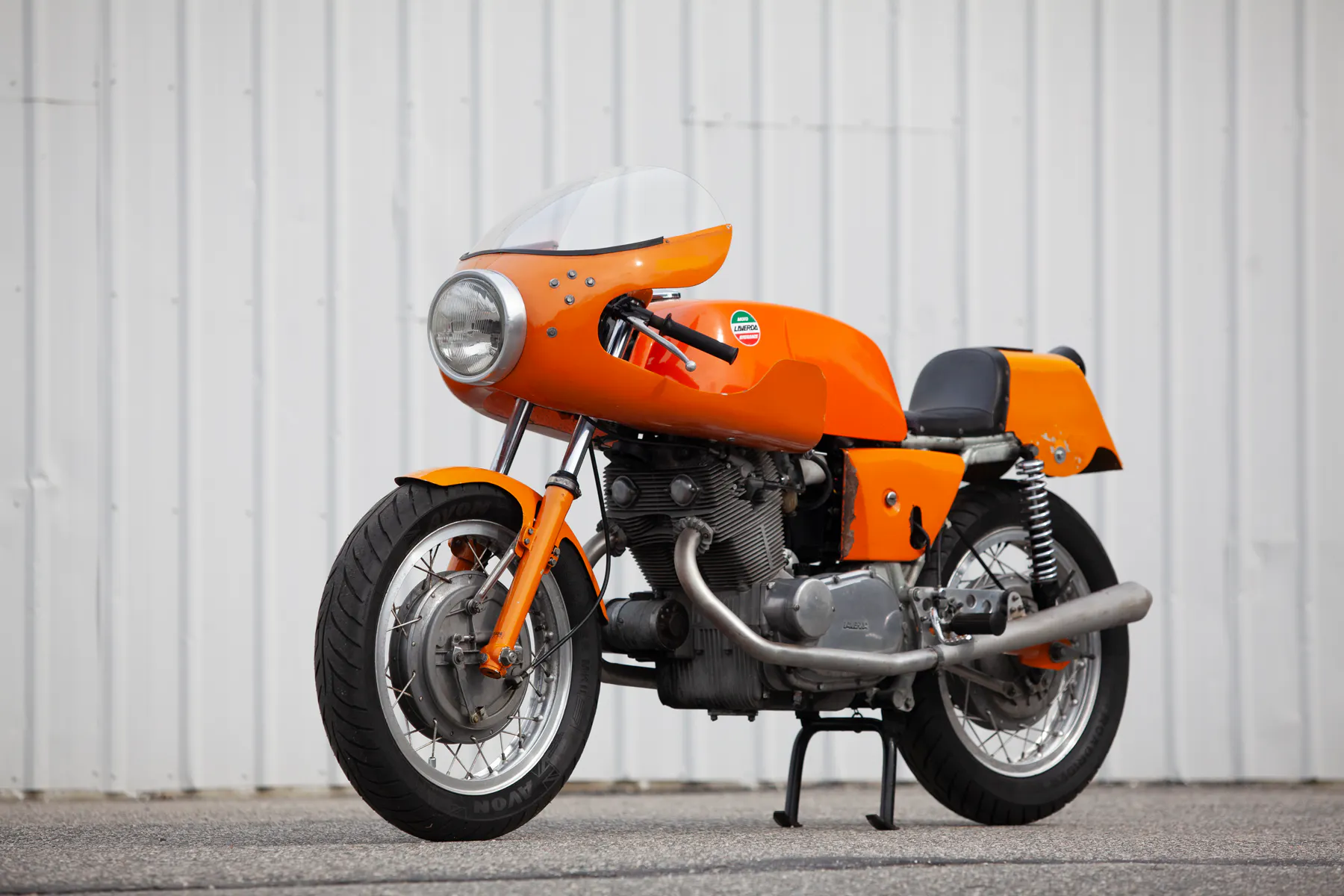
Encouraged by the racing success of its 750 S and 750 SF during 1969 and 1970, Laverda created the 750 SFC (C for Competizione) for 1971. This model has since become one of the most coveted and highly acclaimed motorcycles of all time, and the success of the SFC in endurance racing cemented Laverda’s reputation as one of the all-time great manufacturers. The first 750 SFCs were the 5000 series, which began life as 750 SFs but were extensively modified by the competition department. Only around 20 were built. With the model’s immediate racing success, another batch, called the 8000 series, was built towards the end of 1971. Approximately 80 were built, including the example offered here. The 8000 series was more consistent in specification, and finished to a higher standard. These bikes featured new Mondial pistons, a polished crankshaft, larger valves, and a close-ratio gearbox, among many other improvements. This example is one of very few 8000-series bikes that has survived intact, and retains its original matching-numbers engine, seat covering, controls, exhaust system with its original finish, and rare Amal carburetors in original condition.
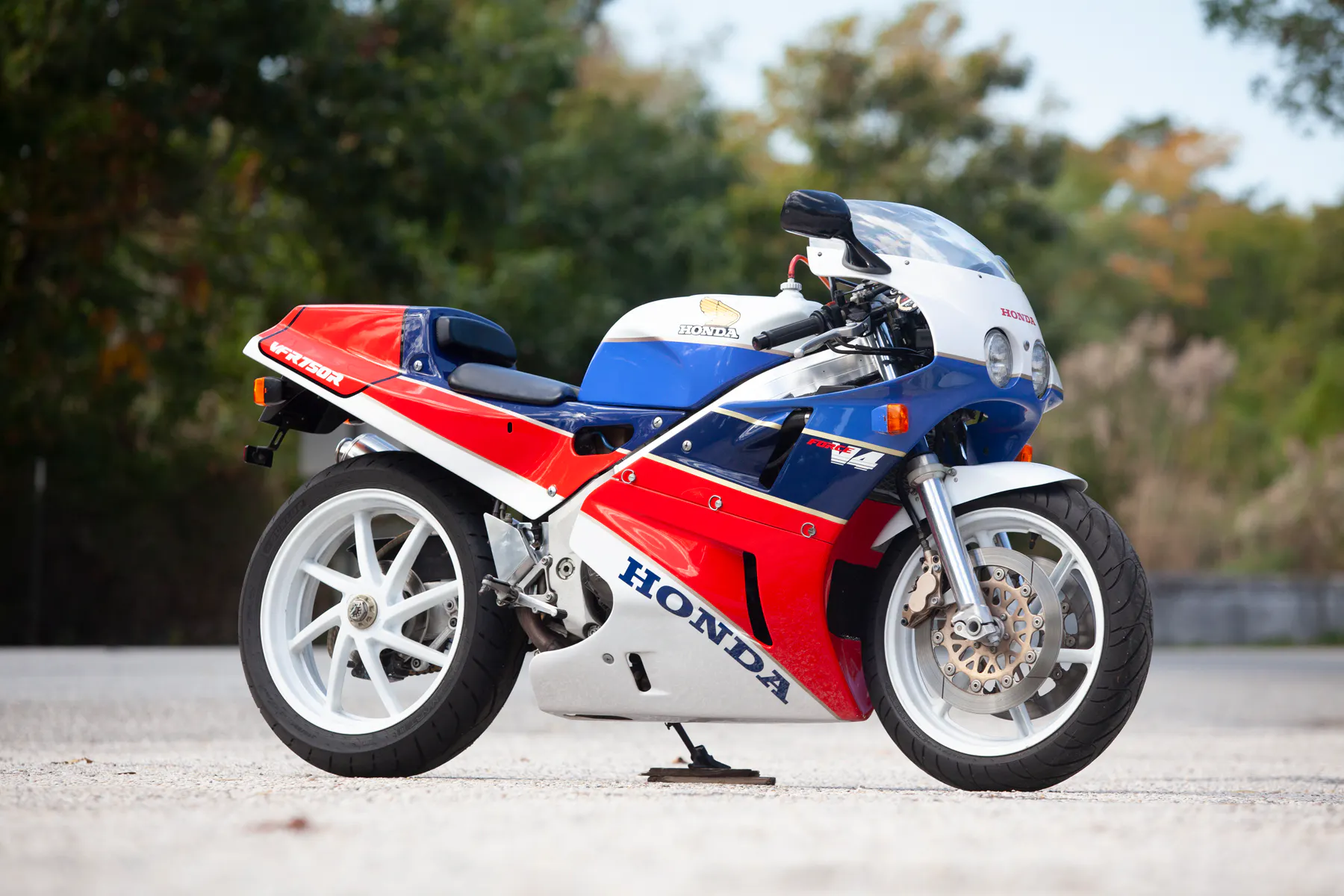
Built from 1987 to 1990, just 4,782 examples of the Honda VFR750R, better known by its internal designation of RC30, were produced, all fitted with one of Honda’s most memorable engines. Each engine was built by hand to the exacting standards of a race bike, before being fitted to the RC30’s aluminum twin-spar frame. Perhaps the RC30’s most notable feature is a single-sided rear swing arm and rear wheel that is attached with a single nut, offering easy wheel changes in endurance racing conditions. The VFR750R was put to good use on the race track, and Fred Merkel won the Superbike World Championship in 1988 and 1989 aboard an RC30. However, it is the road-going version that has become legendary, offering the kind of transcendent riding experience that only a homologation special can provide. The Honda RC30 exhibits all the qualities collectors look for in a blue-chip collectible – rarity in numbers, technical innovation, historic significance, and timeless aesthetics.
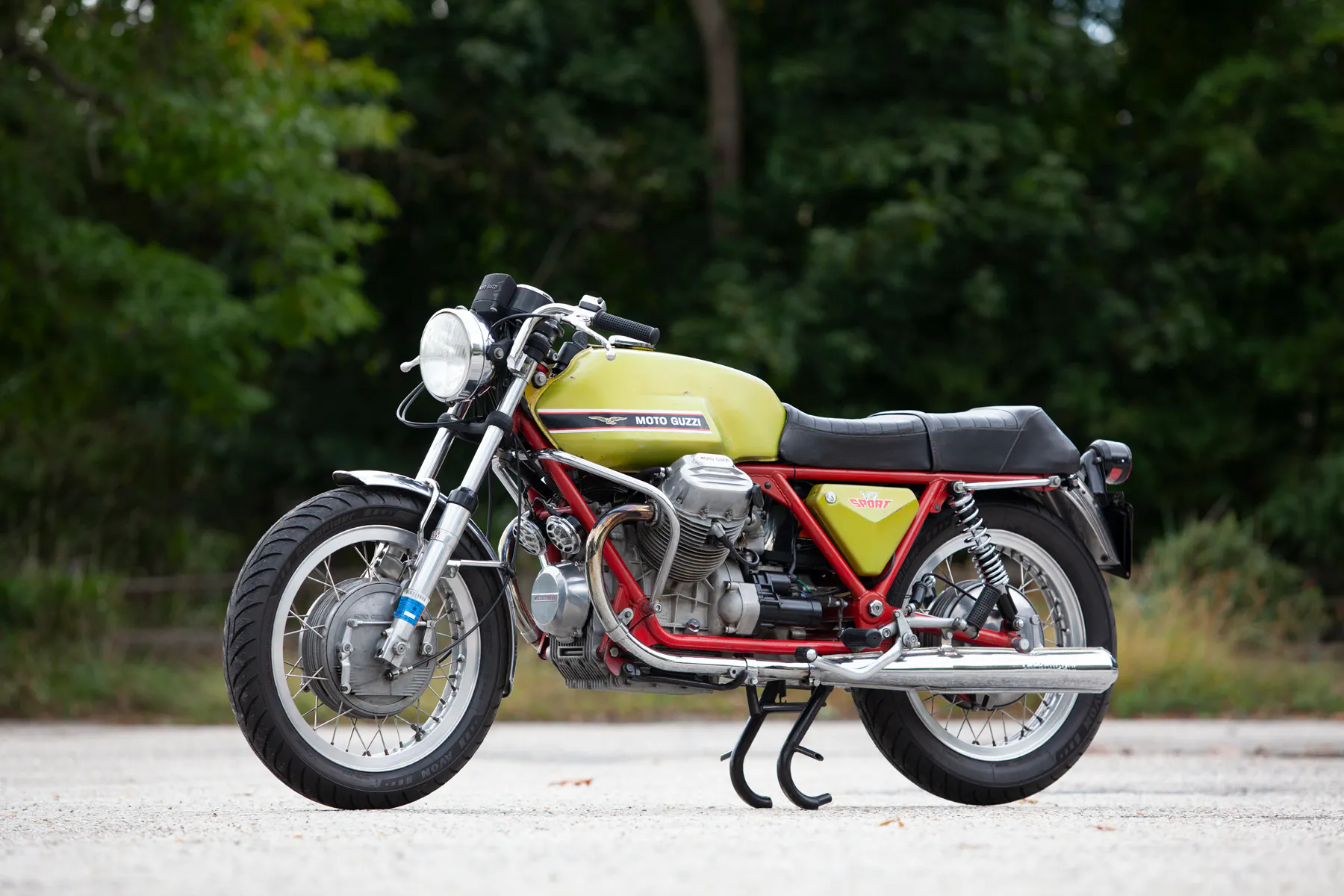
Developed by Giulio Cesare Carcano and debuted in 1966, the all-new V-Twin-powered V7 represented the beginning of a new golden age for Moto Guzzi, the storied Italian manufacturer renowned for cutting-edge engineering and outstanding build quality. Originally designed for comfortable, long-distance touring, the V7 was further evolved under Lino Tonti, whose influence resulted in the V7 Sport, which would become one of the most famous high-performance motorcycles of the 1970s. Built on a special frame that was fabricated from thin-wall chrome-molybdenum tubing, the first V7 Sports were desirably equipped with sand cast engine cases, polished internals, and a special five-speed gearbox with unique ratios. Each bike was fitted with impressive four-leading-shoe front brakes, Borrani alloy-rimmed wire wheels, and rear KONI shock absorbers. The Sport’s striking lime green and red livery was inspired by a Milan design institute and earned the model its nickname “Telaio Rosso” or Red Frame. Boasting 72 hp and unmatched build quality, the V7 Sport “Telaio Rosso” was among the finest, high-performance European machines of its day, with a top speed of 200 km/h.