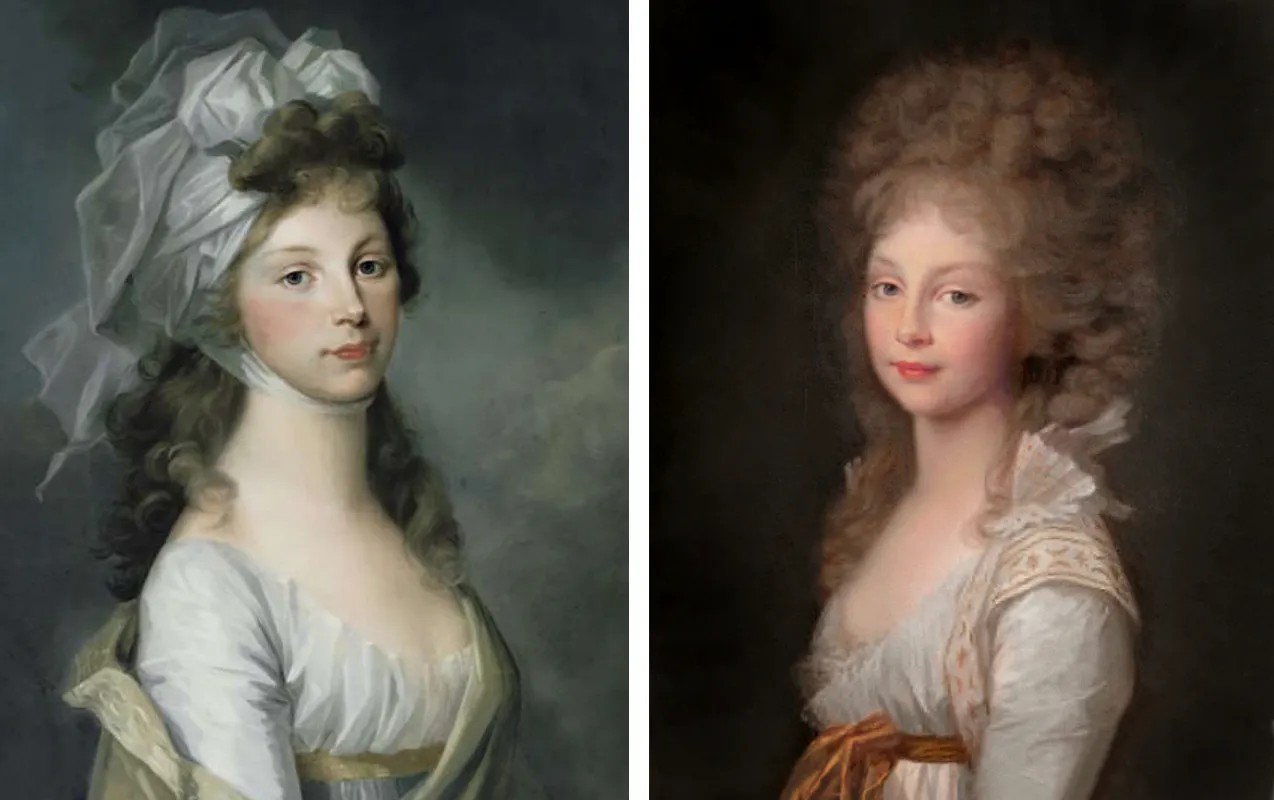
On December 22, 1793, Berlin was aflutter when two beautiful princesses of Mecklenburg-Strelitz, Louise (1776-1810) and Frederica (1778-1841), made their ceremonial entry to celebrate their weddings a few days later. The 17-year-old Louise married the Prussian Crown Prince Friedrich Wilhelm and 15-year-old Frederica wed his younger brother Prince Louis Charles of Prussia. While the marriage of Louise and Friedrich Wilhelm, who became king in 1797, was a happy one, that of Frederica and Louis was the exact opposite.
Louis treated his wife dismissively and preferred to be with his mistress until his death in 1796. Afterwards Frederica stayed in Berlin close to her beloved sister Louise - until scandal broke out. In 1798 Frederica was revealed to be pregnant. It was not known by whom, but the dashing Prince Louis Ferdinand, an uncle of the late Louis, suggested that he was Frederica's lover. In order to save her honor, Frederica married Prince Friedrich Wilhelm of Solms-Braunfels immediately. She planned to divorce him, which would have been another scandal, but Friedrich Wilhelm died of a stroke in 1814. Frederica then became engaged to Ernst August, Duke of Cumberland, a son of the English King George III and Queen Charlotte, an aunt of Frederica, who refused to receive her scandalous niece at her court. In 1837, Frederica finally became Queen of Hanover for the last four years of her life.
Related: 5 Portraits of Women in Pink
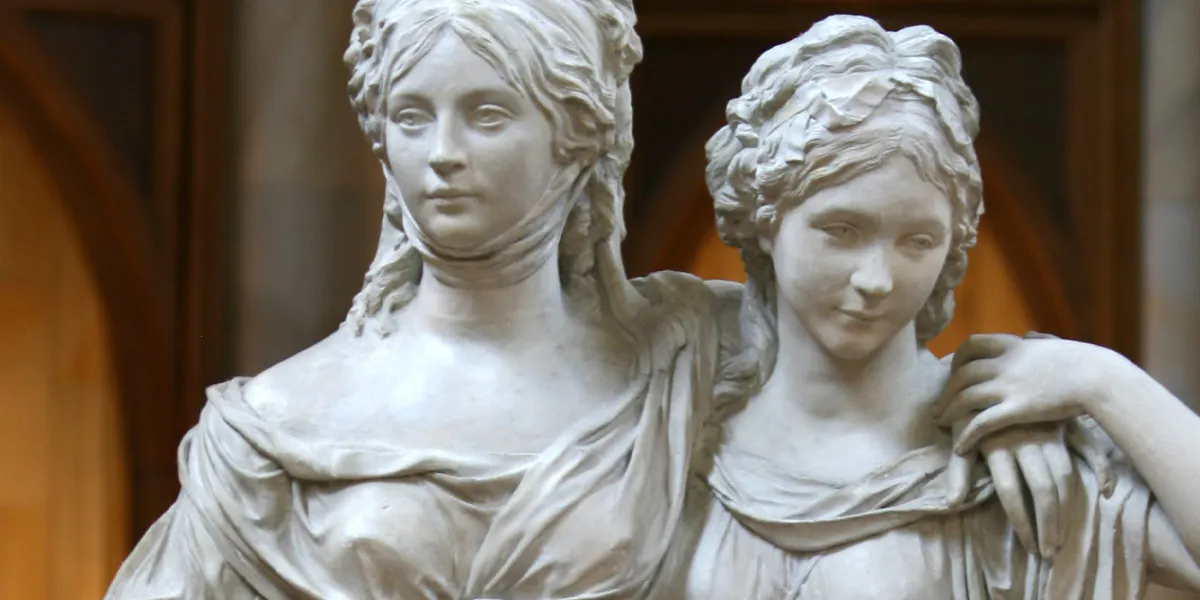
But back to Berlin in the 1790s, where everyone (apart from Prince Louis) was very enthusiastic about the two new princesses - especially their father-in-law, King Friedrich Wilhelm II. That's why he immediately agreed when his minister Friedrich Anton von Heynitz suggested that the sculptor Johann Gottfried Schadow, who had just designed the quadriga for the new Brandenburg Gate, should portray Louise and Frederica in two busts. After its completion, it was expanded into a life-size double statue, which was also intended to serve as a template for small figures made of bisque porcelain from the KPM Berlin. The first version made of plaster was on display at the Academy Exhibition in September 1795, where it received much acclaim. Schadow had managed to capture not only the youthfulness and beauty of the two princesses, but also the classical Greek ideals that were in fashion.
Related: KPM Berlin: The Royal Porcelain Pioneer
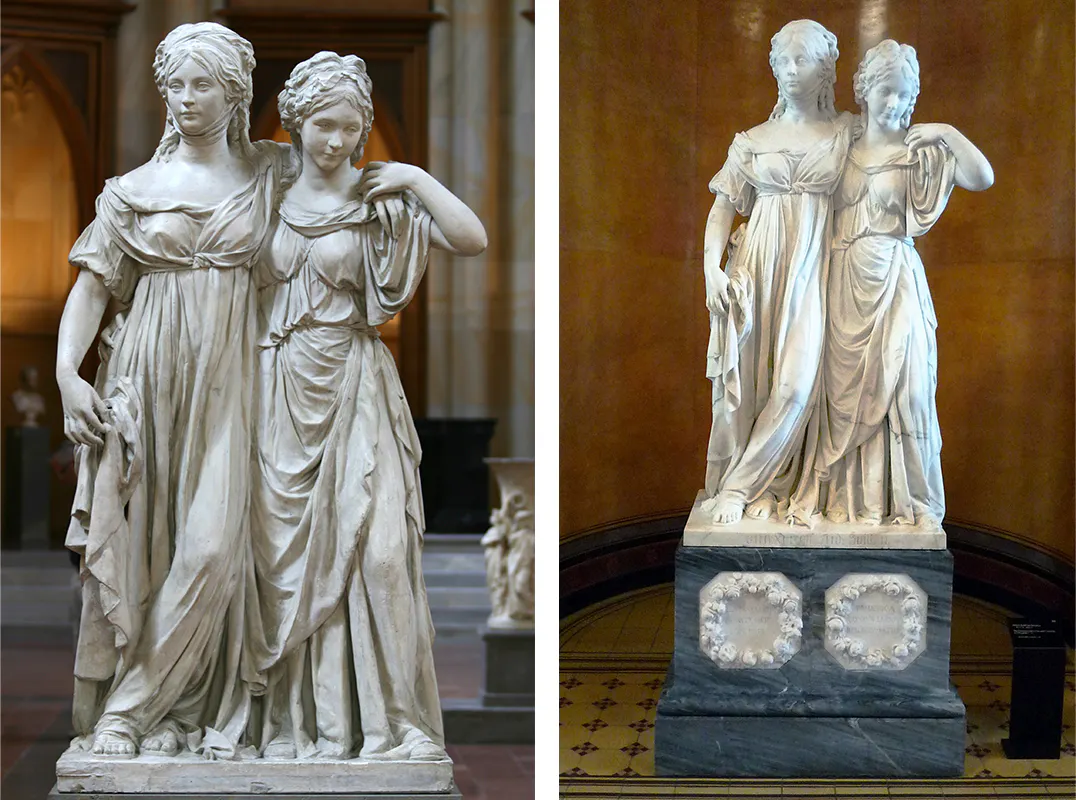
The marble version was then shown at the Academy Exhibition of 1797. However, when King Friedrich Wilhelm II died before the end of the year, his son and successor Friedrich Wilhelm III thought this youthful sculpture of the now Queen of Prussia was inappropriate. He had the sculpture placed in an inconspicuous place in the Berlin City Palace so that it disappeared from public view for the next 90 years. It was only in the late 19th century that the princesses were remembered again. Today the marble version of the Princesses Monument is exhibited at the Alte Nationalgalerie in Berlin.
Want to discover articles like this straight to your inbox? Then sign up for our free newsletter today!
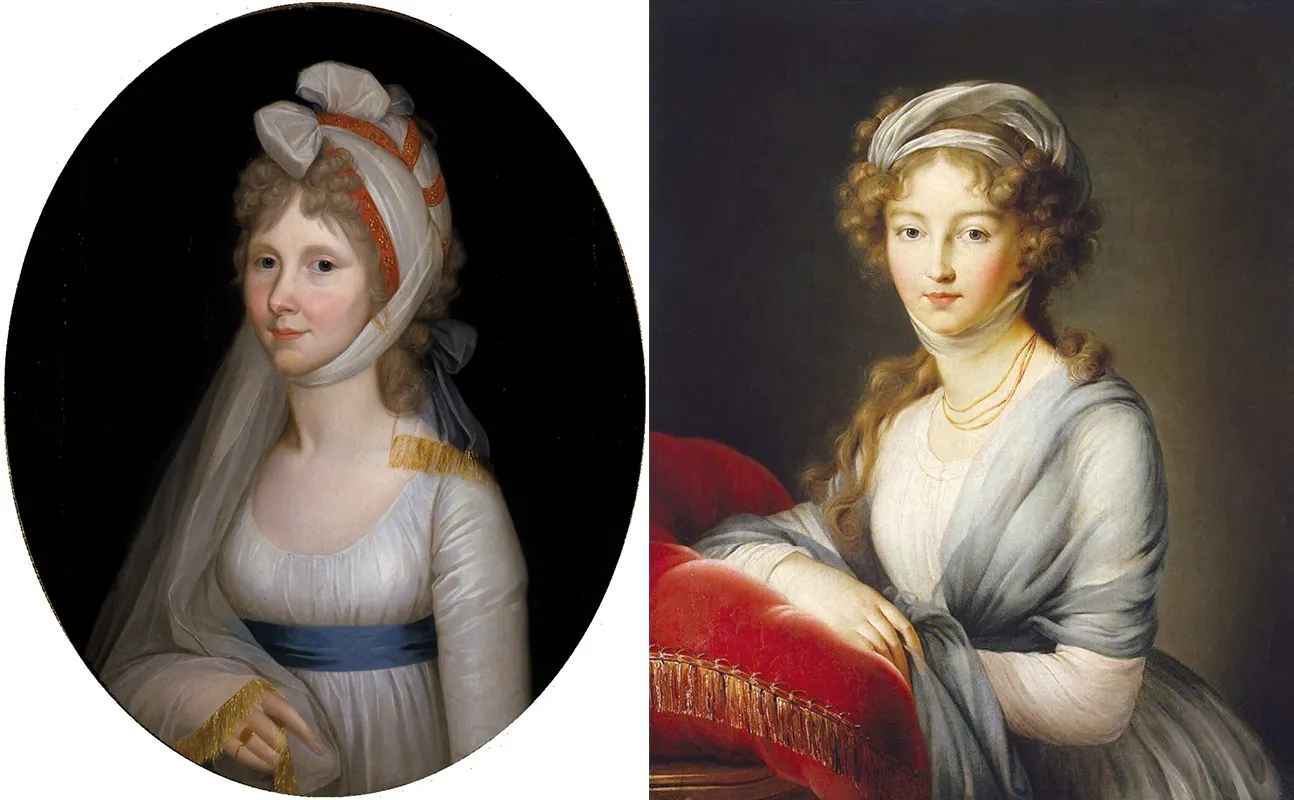
The most striking detail of the Princesses Monument can be found on Louise: a neck scarf which is depicted in many of the portraits of the Prussian queen. Schadow himself wrote that the reason for the neck scarf was that Louise suffered from swelling in her neck during the sessions for her sculpture. These types of neck scarves were fashionable at the time, though it is thought that perhaps Louise started this trend in the first place.
Like many other works of art, the Princesses Monument does not reveal all of its secrets, which only makes this enchanting sculpture of German classicism even more fascinating.