With an extremely rich production of 160 textile patterns, Josef Frank is considered one of Sweden's most famous designers of all time, his works constantly in demand at auction. Let’s take a look at the background of some of his most popular textile works, in all their bright colors and whimsical patterns with plant decorations.
Celotocaulis

Watch Barneby's video about Josef Frank
Josef Frank's designs are often described as something bordering between fantasy and realism and often consist of exotic plants depicted in strong colors. The pattern Celotocaulis was drawn around 1930 and differs somewhat from his other patterns in that the motif is monochromatic. The Latin word 'celotocaulis' is a summary of two words meaning ‘flower stalk’ and ‘Asian flower genus’.
Primavera

Related: Spring in Art: 10 Works of the Season
A pattern that was drawn in the early 1920s was Primavera, which means ‘spring’ in Italian. It depicts flower beds with flowers from the Swedish flora, including tulips, hyacinths, violets and forget-me-nots.
Manhattan

Related: William Morris: Unravelling the Legacy
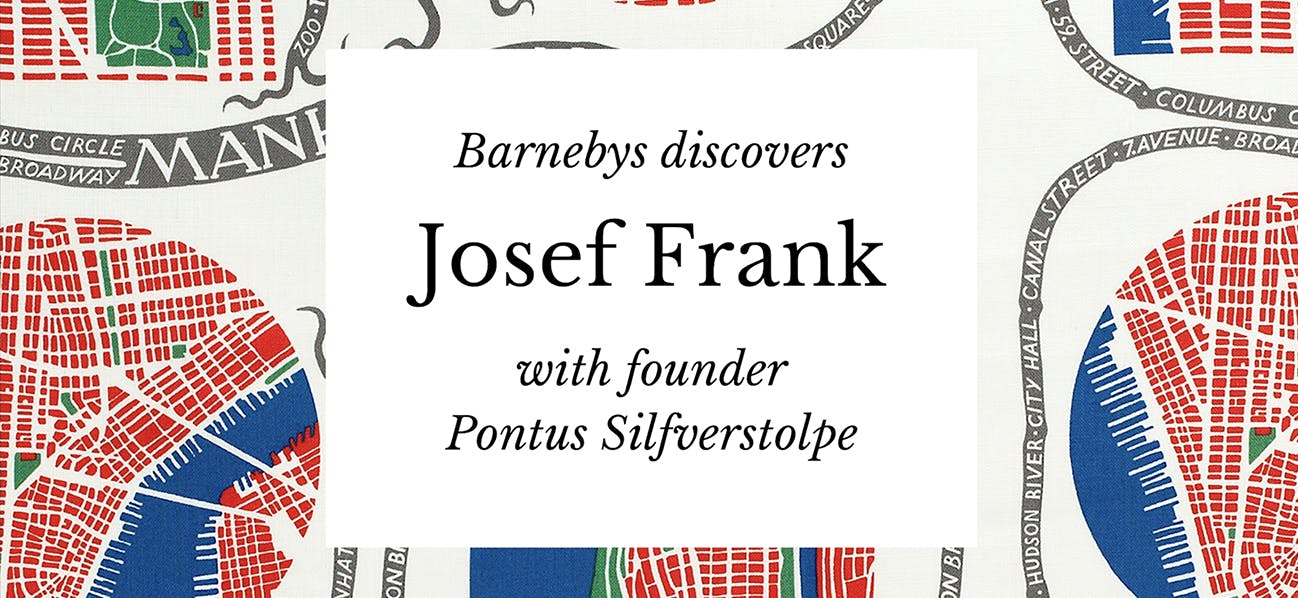
During the war years 1942–46, Josef Frank lived in exile in New York, where he worked as a guest lecturer at the New School for Social Research. During these years, he created about 50 patterns that he sent as a birthday present to Svenskt Tenn's founder Estrid Ericson on her 50th birthday. One of these patterns was Manhattan, which came from an idea he got after becoming fascinated with the city's simplified architectural landscape.
Drinks

Related: The Cocktails that Inspired History’s Creatives
The time in America also inspired Josef Frank’s pattern Drinks, whose motifs were taken from the new flora and fauna that the United States offered. The pattern depicts naturalistic motifs of tea, coffee and cocoa against black separate foregrounds which in turn are placed against a white background.
Hawai

Related: The Woman Behind One of the World’s Most Famous Patterns
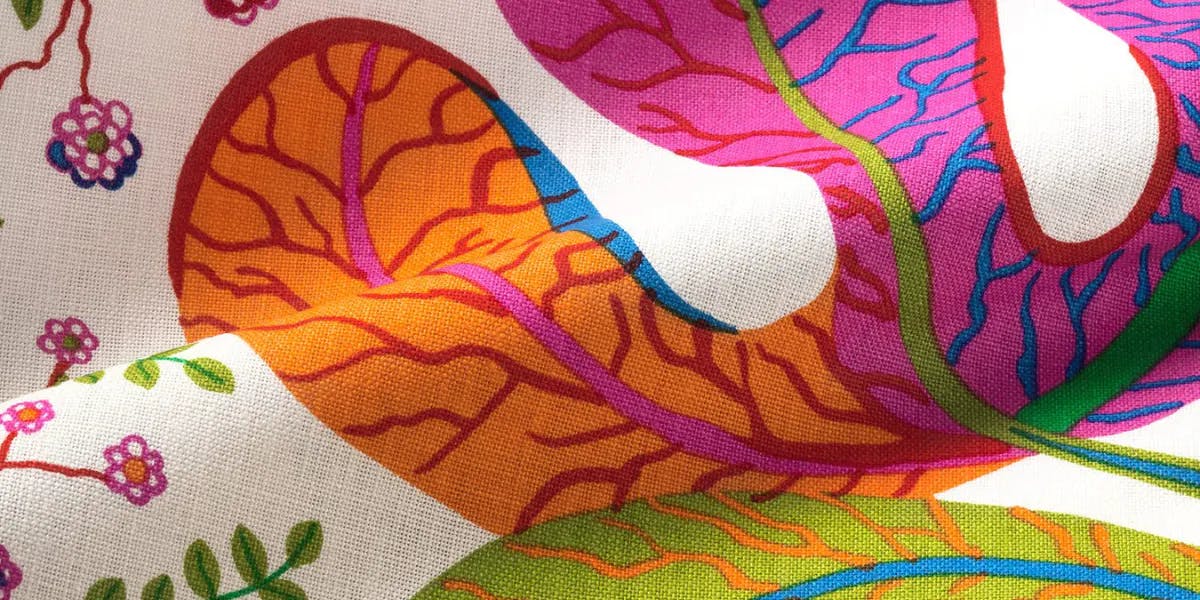
Many of Josef Frank's textiles had exotic motifs, including the Hawaiian fabric, which represents the rainforest depicted in strong colors. These patterns were also created in 1943-45 when Frank was in New York, inspired by the Metropolitan Museum of Art where a collection of life tree palamporas from the northern part of the Indian Peninsula was displayed.
Terrazzo

Want more articles like this straight to your inbox? Subscribe to our free newsletter
Of all Frank's designs, only two have inorganic motifs, one of which is Terrazzo, gifted by Frank to Estrid Ericson on her 50th birthday in 1944. The inspiration for Terrazzo comes from stone and mosaic tiles and this motif was actually something he used on his rugs.
Tehran

Speaking of rugs, the Tehran pattern is an echo of traditional Persian rugs, with their small brightly colored flowers. Although the fabric was designed in the early 1940s, it was not until 1991 that it was printed for the first time.