
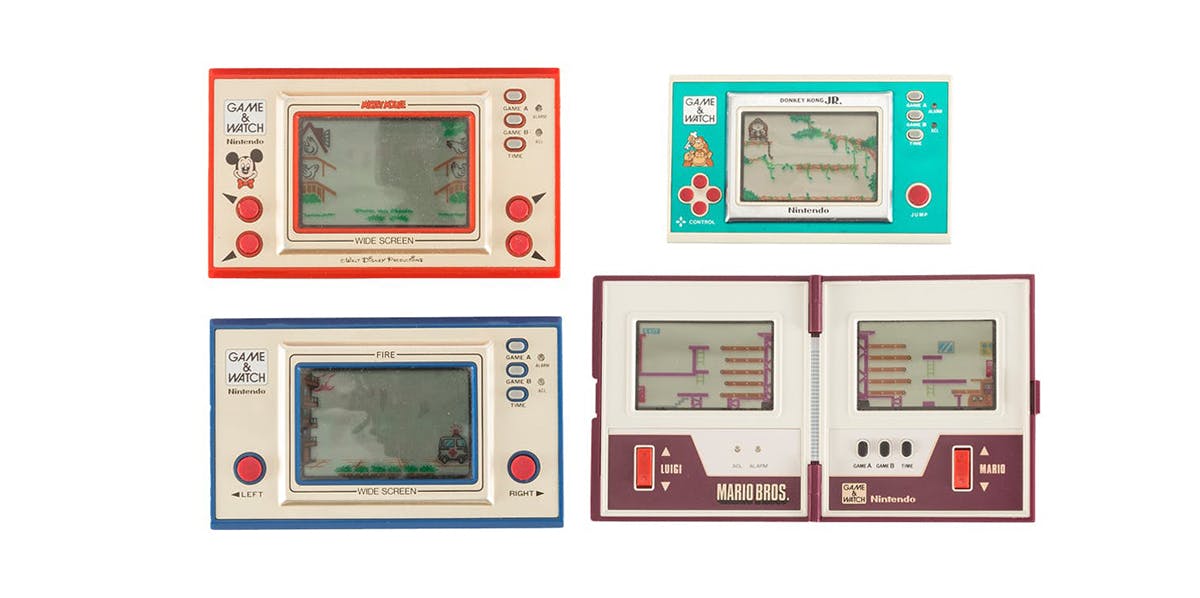
One of the world’s most eclectic companies is Nintendo. It’s been around since 1889, and is responsible for generations of children's memories of fantastic video game experiences. One of the leading Nintendo men during the pivotal 1980s and ‘90s was Gunpei Yokoi, most famous for inventing the first handheld gaming system Game & Watch, and, subsequently, the legendary Game Boy.
It’s an interesting thought that without Gunpei Yokoi, we wouldn’t be playing video games like we do today. The Game & Watch was the first handheld gaming system, and the cross-shaped control pad, known as the D-Pad and invented by Yokoi, has been utilized by pretty much every video game by Nintendo since.

“We all know that the D-Pad was a crucial invention for the evolution of electronic devices in general, as we can still find them on almost every game controller, remote control or mobile phone,” says Ursin Lutz, a 38-year old Swiss scientific redactor for the Romansh encyclopaedic dictionary Dicziunari Rumantsch Grischun, who has been collecting Game & Watch series for seven years.
See also: Price of the Rare Nintendo Playstation Explodes
It all began in 1965, when 24-year old Gunpei Yokoi graduated with a degree in electronics and was hired by Nintendo to be the company’s machine maintenance man. His first assignment was to oversee the assembly-line machines that were making Nintendo’s Hanafuda cards, Japanese ‘flower cards’ used to play a number of different games. One day, Nintendo president Hiroshi Yamauchi came to visit the factory where Yokoi worked. Yamauchi noticed a small toy Yokoi had made in-between maintaining the machines, an extending arm with a criss-cross design utilizing lazy tongs to pick up small items. Yamauchi loved it and ordered Yokoi to produce a proper version of his toy, since December was soon arriving and the Nintendo president saw it fit for the Christmas rush. The Ultra Hand sold more than one million units and became Nintendo’s first best-selling toy. It was also the first of several different tactile and wonderful toys and gadgets Gunpei Yokoi would design for the Japanese company during the 1960s and early ‘70s.
In 1974, Nintendo started making video games, which Yokoi was assigned to design. He was the second-ever video game designer for the company (after Genyo Takeda, who was actually hired by Yokoi some years prior). One day, Yokoi noticed a bored business man fiddling with his calculator, pressing its buttons, on a commuter train. He thought to himself that it seemed quite unnecessary to be bored during long transportations, like the commuters of Kyoto, and he started brainstorming, creating sketches and finally coming up with what was to be known as the Game & Watch, the world’s first handheld gaming system. It was released in Japan in 1980, but soon spread across the world.
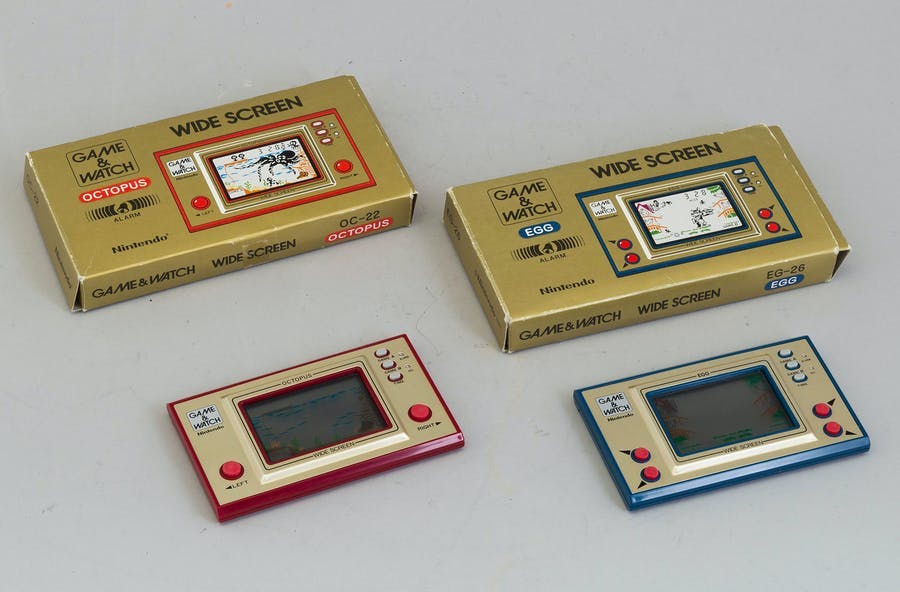
From 28 April and all throughout 1980, a total of five different Game & Watch consoles were released in what is known as the Silver series, named after the silver-shell of the games. The Gold series arrived in late January 1981, something that has made Game & Watch’s five Silver series highly sought after among collectors. The following Widescreen series is, to this day, much more widespread, and sold in far higher quantities. It is also where Nintendo found its true voice.
See also: 1976 Apple-1 Computer Gets Over $450k at Auction
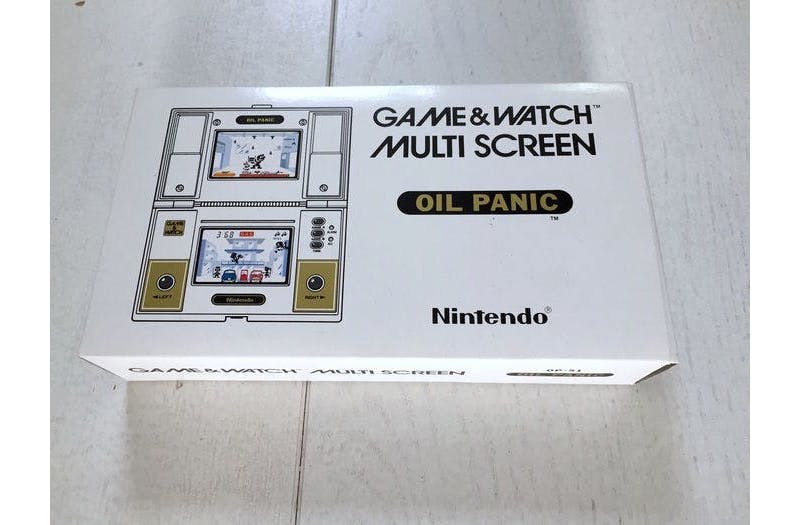
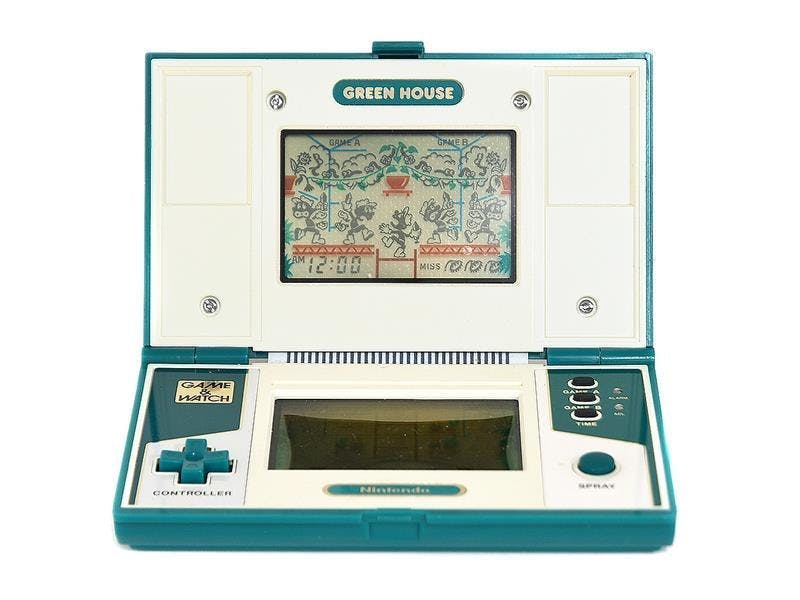
In May 1982, Gunpei Yokoi realized that something was missing from the Silver, Gold, and Widescreen series. In May of 1982 the Multiscreen was introduced, equipped with the game Oil Panic. But it’s the second game in the Multiscreen series that people really remember, the legendary orange handheld console with two screens – Donkey Kong.
“That was the very first electronic game to feature a D-Pad,” says Ursin Lutz.
In the late 1980s, Lutz was approaching his teens and received two or three games as a birthday gift. He played them, but soon forgot all about them.
See also: The World’s Most Expensive Pokémon Card Has Sold
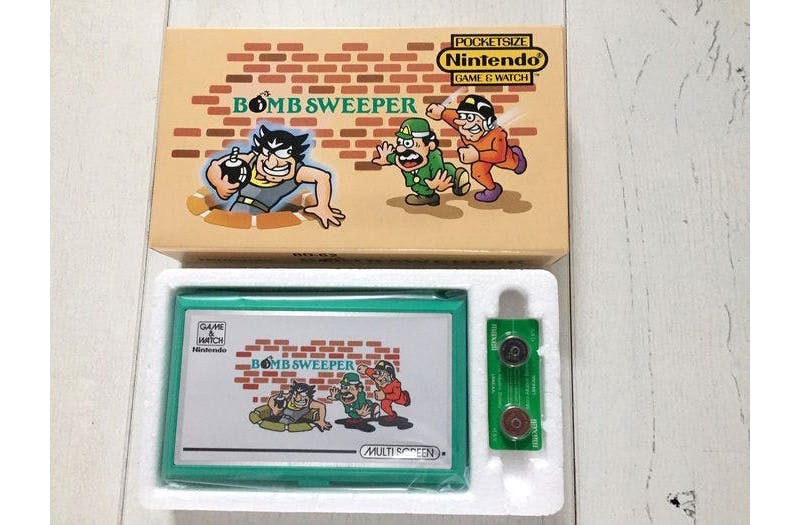
“It was not until much later, when I was looking through my parent’s attic, that I found them again. This is probably where my collecting madness started,” says Lutz, who reminisces about the game’s initial attractiveness. “I remember the shiny look of them, the sound and the very entertaining, yet challenging gameplay some of the games had. I’m referring in particular to Mickey & Donald, Lifeboat, and Bomb Sweeper. Back then, these games were the best portable electronic games you could get.”
Another collector, Kestrel Lee, who’s been collecting for sixteen years, says that, “for collectors, Game & Watch collecting is also a way to uncover hidden secrets to how Nintendo swept across the world in the 1980s. Recent discoveries for country-specific editions like Korean Game & Watch, and French limited edition promo Game & Watch, have ignited new interest among collectors.”
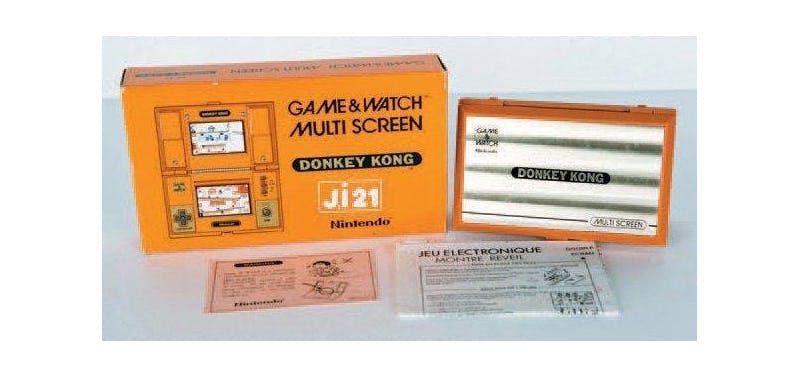
Throughout the ‘80s, Gunpei Yokoi excelled at Nintendo, creating game after game for the Game & Watch series while it grew in popularity. Characters like Donkey Kong and Mario were born during this era, and, forty years later, are still around. Yokoi is also responsible for games like Kid Icarus and Metroid, but his last console for Nintendo, the Virtual Boy, was a commercial failure and according to some, only released to the public because Nintendo wanted to focus on developing what would become the most revolutionary video game console to date – the Nintendo 64.
See also: Celebrating 35 Years of Garbage Pail Kids
Gunpei Yokoi left Nintendo in mid-1996 after being a devoted employee for 31 years. One year after his retirement from Nintendo, Yokoi was riding in a car that rear-ended a truck on the Hokuriku Expressway. When Yokoi and his driver, associate Etsuo Kiso, got out of the car to inspect the extent of the damages, Yokoi was hit by two passing cars, sustaining injuries so bad that he was confirmed dead two hours later.
We will never know what would have happened without the genius of Gunpei Yokoi. Maybe we would still be playing board games and using landline phones.
“It’s actually quite remarkable what Yokoi managed to achieve in his short life: the Game & Watch series, the Game Boy, the characters of Donkey Kong and Mario Bros., and the game series Metroid and Kid Icarus. One can only speculate what could have been if not for that traffic accident. Everyone knows Yokoi’s last project for Nintendo was the Virtual Boy, which ended up an economic disaster. After leaving Nintendo, he formed a new company and worked on the Bandai WonderSwan, conceived as an improved version of the Game Boy. Having said that, I personally think that he was pursuing personal projects rather than seeking new achievements,” says Lutz.
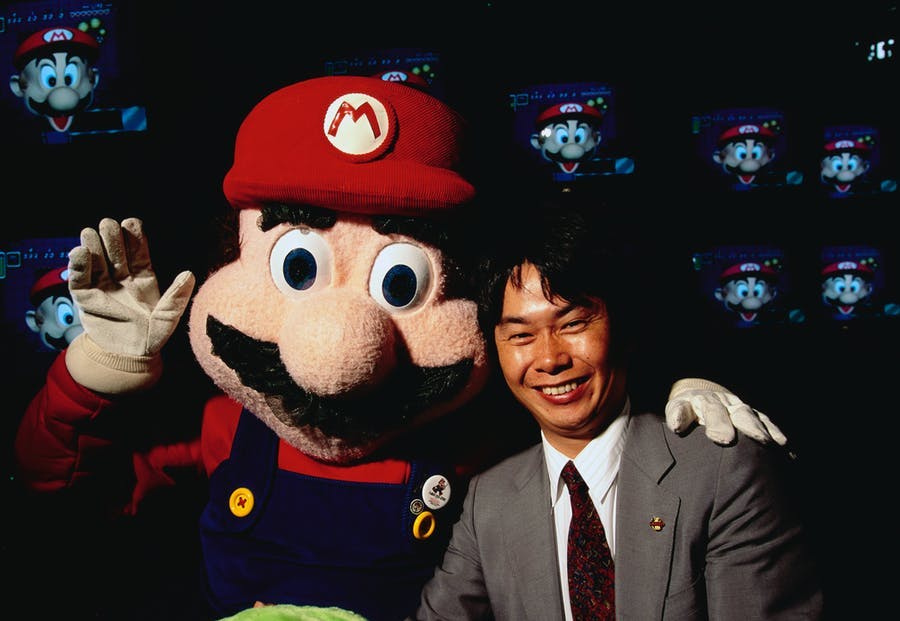
Regarding the legacy of Gunpei Yokoi, Lutz says, besides the fact that he revolutionised how we play video games, the CEO of Nintendo from 2002 to 2015, Satoru Iwata, “claims that Yokoi’s philosophy has always been part of Nintendo as it has been passed on to his disciples, such as Miyamoto [Shigeru Miyamoto, creator of Donkey Kong and Mario Bros, ed note], clearly reflected in more recent projects like the Nintendo DS, the Nintendo Wii, and, of course, the Nintendo Switch.”
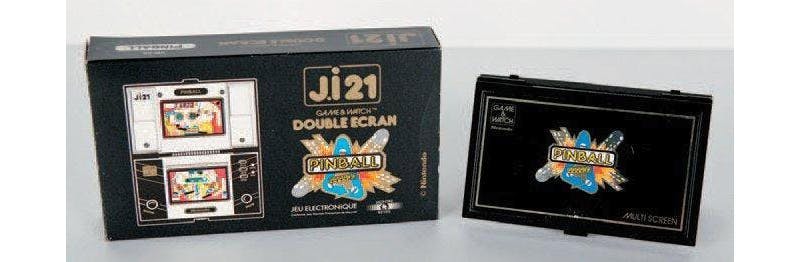
Lutz tells me that collecting Game & Watch has become increasingly popular during the last decade. “A large number of games are stashed away in man caves, cabinets or storage boxes all over the world. This way it’s becoming increasingly difficult to find boxed consoles in very good and complete or even in NOS (new old stock) condition. Collecting for folks like me is all about chasing the items which are the most difficult ones to find, meaning that any Game & Watch console in NOS quality is highly sought after,” Lutz says about the state of old Game & Watch consoles. There’s also a huge market for local varieties of the Game & Watch games, which has become more popular in recent years. “Among them are the French series from J.i21 with French boxes, instruction booklets and even with French button labelling, the Australian games from Future Tronics, or the British games from CGL, branded with their respective logos, the Italian games imported by Giochi Preziosi or OTO with their colorful seals on the boxes and the Italian manuals, with translated titles, for instance ‘La fuga di benzina’ for ‘Oil Panic’.”
See also: The Emerging Category of Rare Sneakers
As with any collectables, it goes deep and nerdy pretty fast. There’s a huge amount of limited series released in different parts of the world, and even though Lutz’ personal collection is, according to him, “pretty exhaustive already”, he’s been trying to complete his Pocketsize collection. “There are only three titles missing: Oil Panic, Punch-Out!!, and Donkey Kong Hockey. Of course, I am always on the lookout for NOS games in order to upgrade single titles in my standard set.”
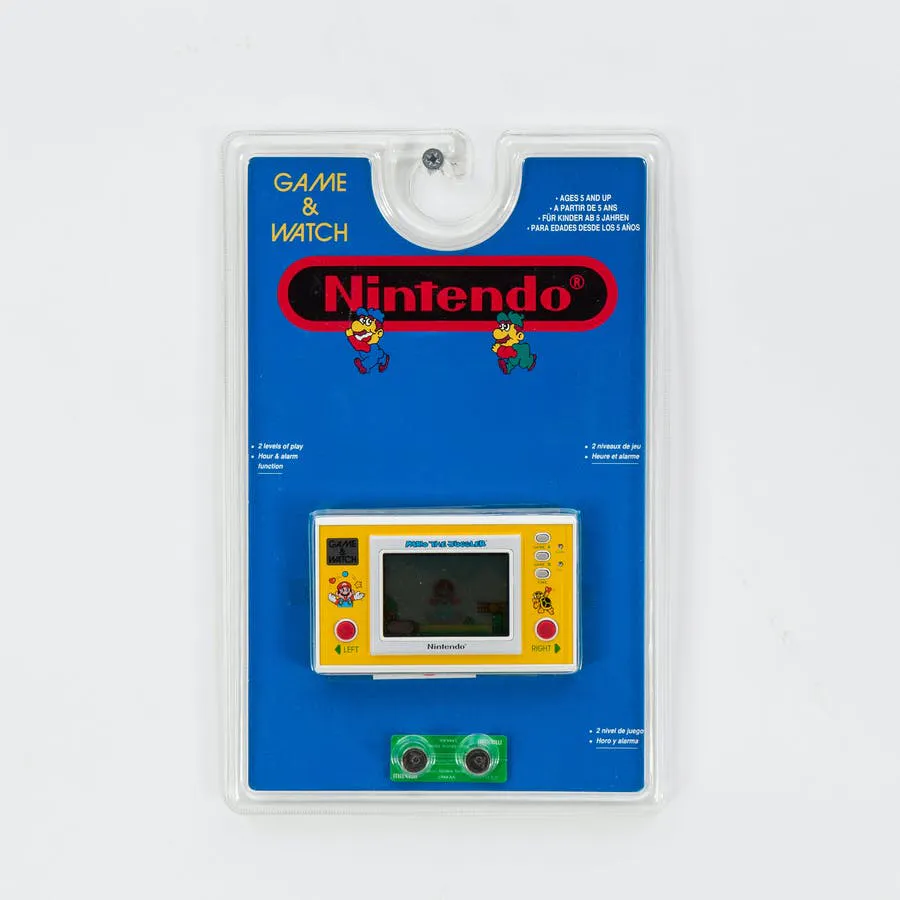
Barnebys: What are the most valuable, either emotional or monetary, pieces in your collection?
Lutz: Amongst the most valuable pieces I have in my collection are Octopus Pocketsize, Mario the Juggler in a sealed blister pack from the Swedish importer Bergsala, and an empty shipper box which used to hold ten units of Crystal Climber. I am also always very happy when I find any parts, either boxes or games, or even receipts, that indicate a Swiss element to it.
It’s actually quite cool to consider that the first Game & Watch is pretty much the forefather to our modern smartphone. What do you think would have happened if Yokoi hadn’t started designing video games for Nintendo?
I am pretty sure that several Japanese companies were close to developing electronic video games in the early 1980s, like Sharp and Sony. But we will never know what would have happened without the genius of Gunpei Yokoi. Maybe we would still be playing board games and using landline phones.”
![A smartphone displays the start screen of 'Super Mario Run' a side-scrolling adventure game featuring Nintendo Co.'s Mario popular Italian mascot on December 16, 2016 in Paris, France [detail]. Photo: Chesnot/Getty Images](https://images.prismic.io/barnebys/942bddbc-f0cd-4037-9fe0-5740c2823f32_Cover.jpg?auto=compress,format)