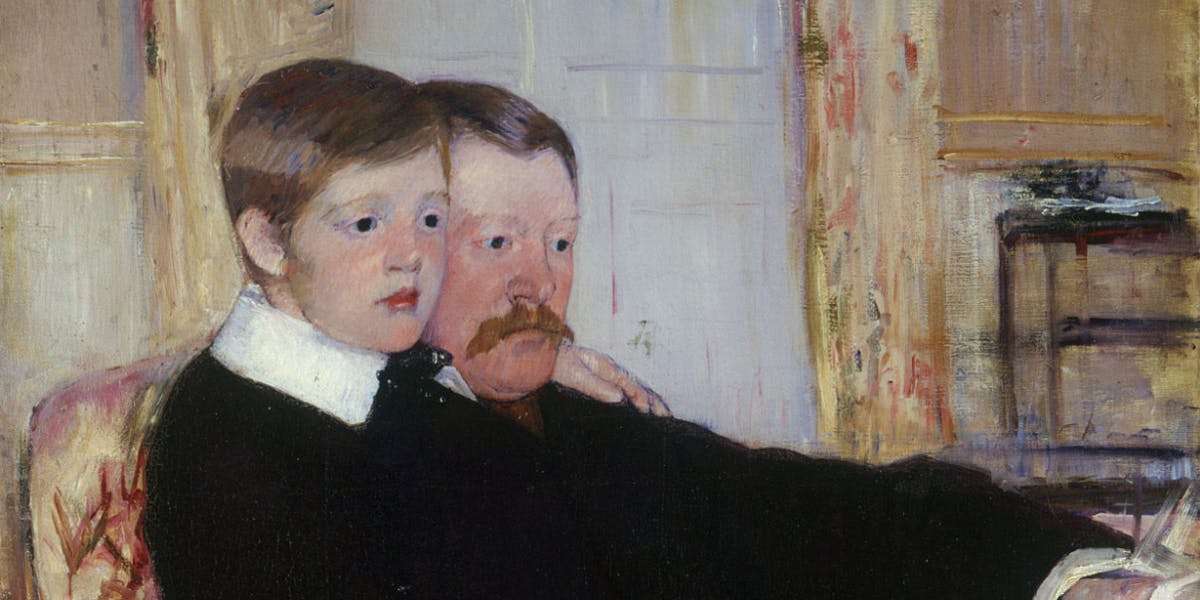
This Sunday marks Father's Day, the day we celebrate our fathers and father figures in our lives. Throughout history, artists have honored their fathers and their own paternity, as well as famous fathers of history, in their art. Here are six paintings to know:
The Creation of Adam, Michelangelo
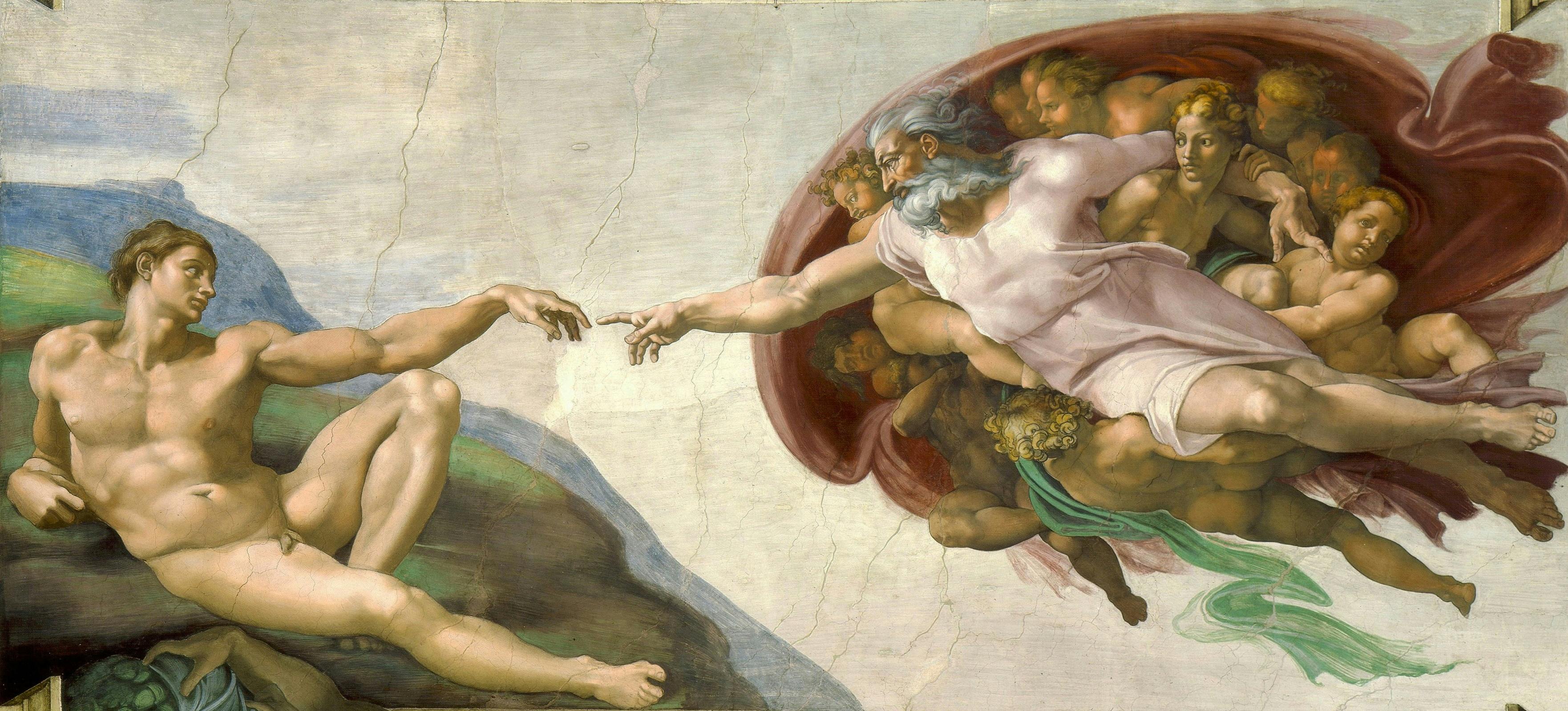
Possibly the most famous depiction of God in art history is Michelangelo's The Creation of Adam, which decorates the ceiling of Rome's Sistine Chapel and illustrates the beginning of humanity. God, father of the world, surges toward Adam, lying listlessly with his hand outstretched, to bless him with the spark of life.
Related: The 10 Most Famous Works of Art and Where to Find Them
The Return of the Prodigal Son, Rembrandt
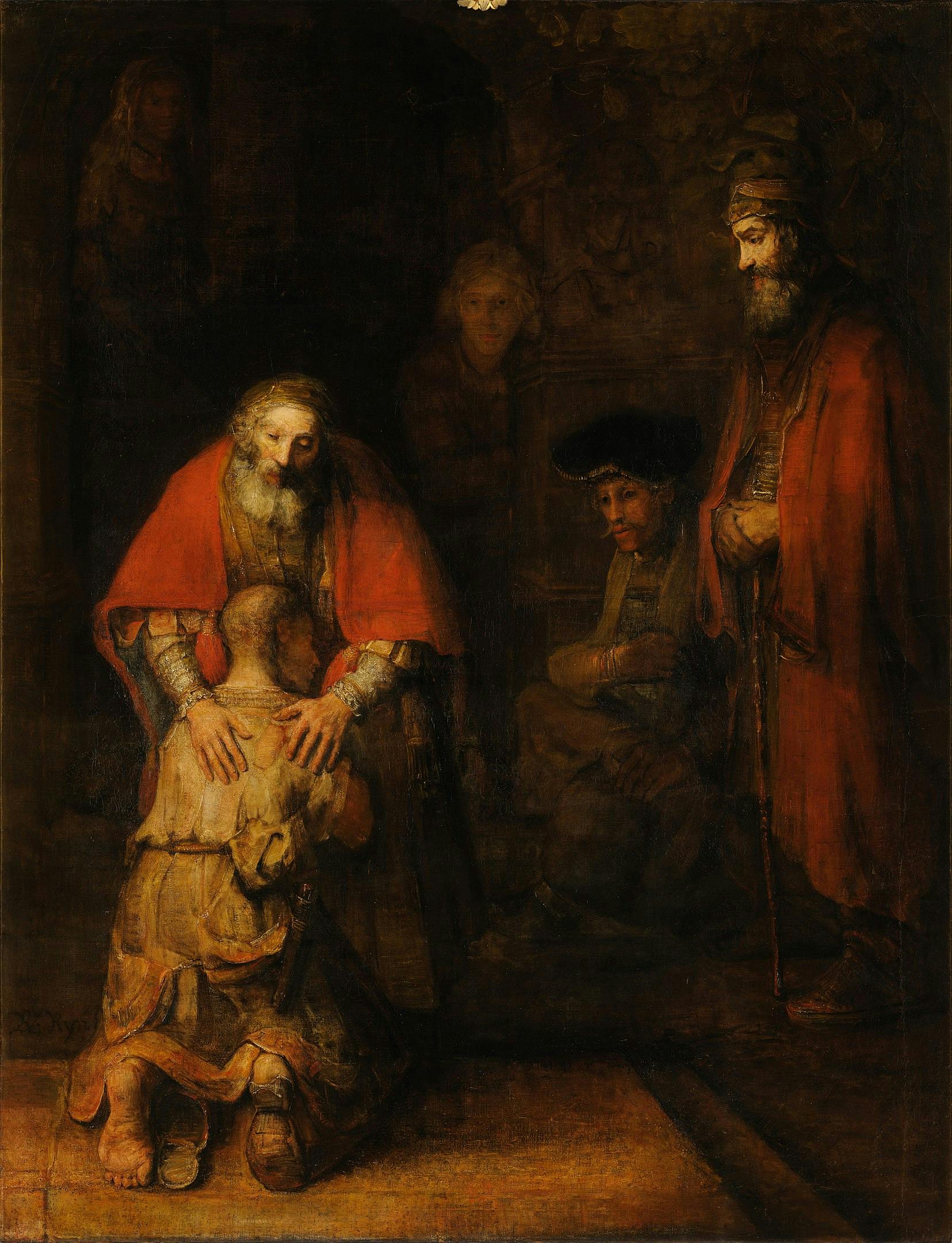
Rembrandt depicts the famous moment in the Biblical parable when the prodigal son returns to his father begging for forgiveness and is welcomed with open arms. This allegory for God's paternal love was one of Rembrandt's favorite motifs, which he explored through many mediums. This particular painting was likely painted a few years before the artist's death in 1669. It is considered one of Rembrandt's masterpieces and hangs at the Hermitage Museum in St. Petersburg.
The Artist's Father, Reading L'Événement, Paul Cezanne

Paul Cézanne's father was a wealthy French banker and wanted his son to become a lawyer. Obeying his father, Cézanne entered law school at the University of Aix, but continued art lessons on the side. In 1861, he moved to Paris to pursue art full time. Although his father was disappointed, he gave Cézanne a sizable inheritance that would support the artist for the rest of his life. In 1866, Cézanne painted his father reading, which was the first work of his that was accepted to the Paris Salon after years of failed attempts. It is now at the National Gallery of Art.
Portrait of Alexander J. Cassatt and His Son, Robert Kelso Cassatt, Mary Cassatt
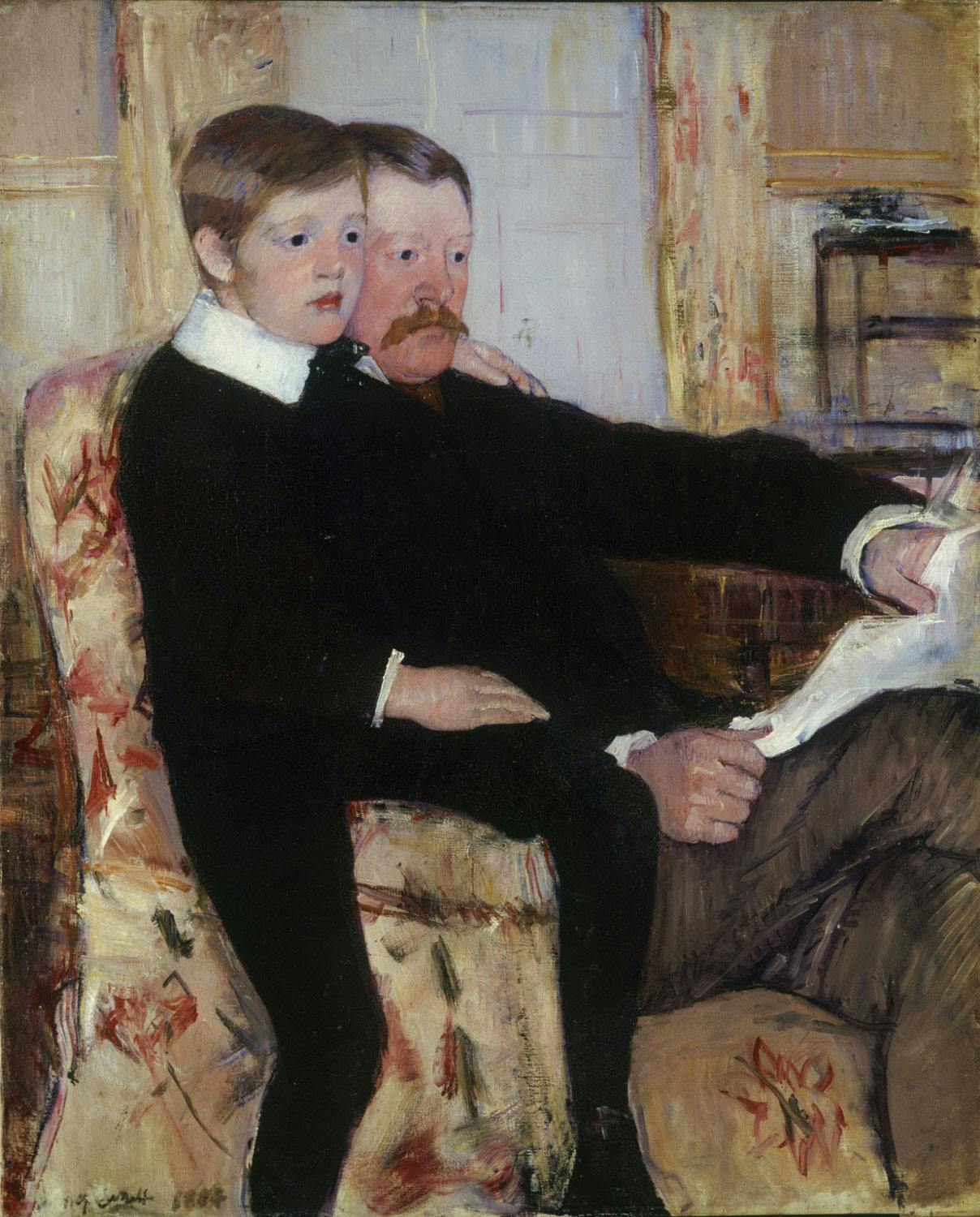
Although Mary Cassatt is best known for her depictions of mothers with their children, she also painted several portraits of her brother, Alexander Cassatt, the president of the Philadelphia Railroad and an art collector. This tender double-portrait of her brother with his son, Robert, was painted while they were visiting the artist in Paris in 1884. Today, it is part of the collection of the Philadelphia Museum of Art.
Related: The Art of Motherhood
First Steps, after Millet, Vincent Van Gogh
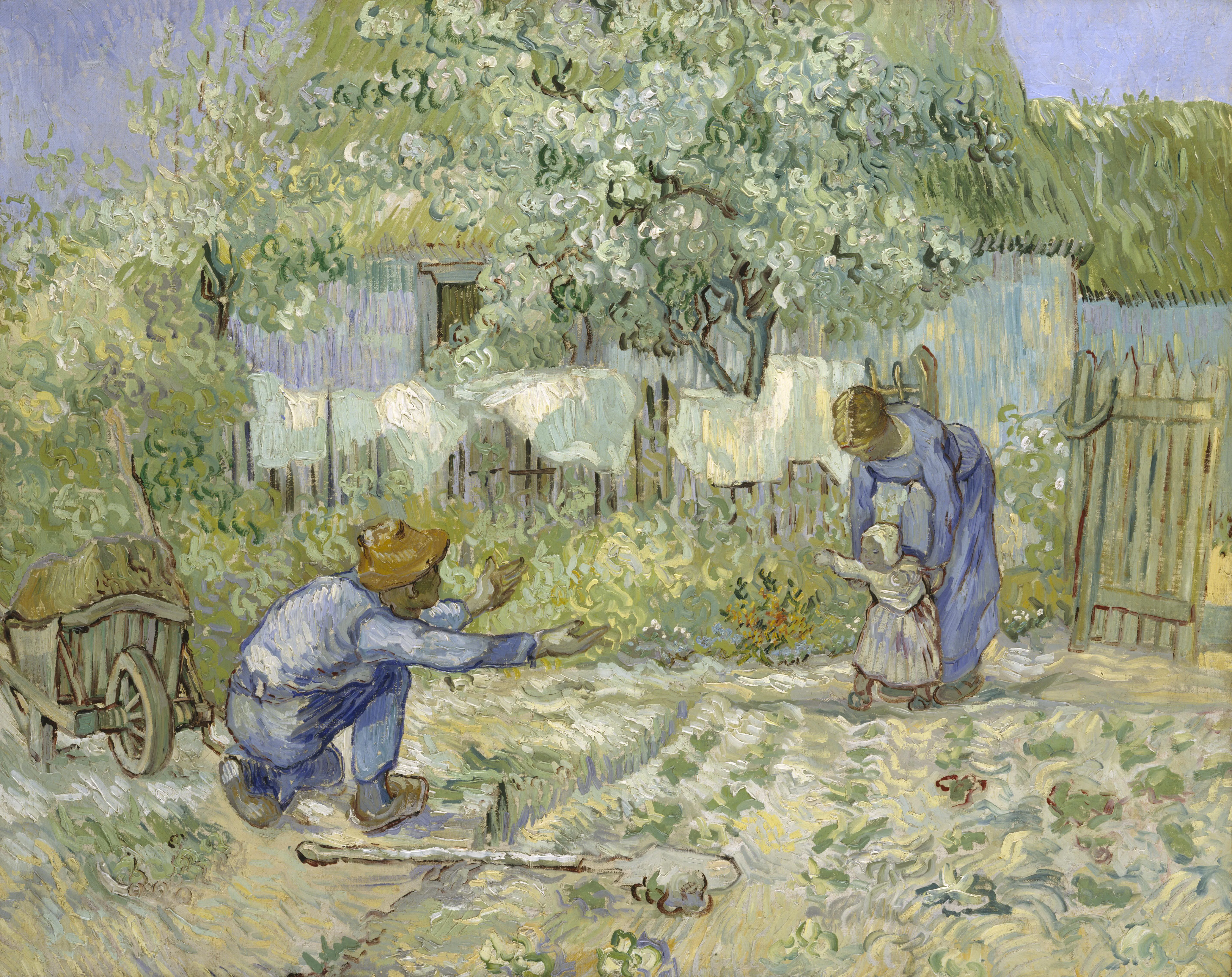
This 1890 oil painting shows a farmer father with his arms outstretched towards his young child, taking their first steps accompanied by their mother. From 1887-1890, when Vincent Van Gogh was institutionalized in an asylum, he copied other artists' work. This painting was a copy of Jean-Francois Millet's chalk and pastel work of the same name from 1858, which Van Gogh duplicated from a photograph. Today, van Gogh's copy, done in his characteristic style and soft pastel tones, is at the Metropolitan Museum of Art.
Related: 8 Paintings that Vincent Van Gogh Copied
Brita and I, Carl Larsson
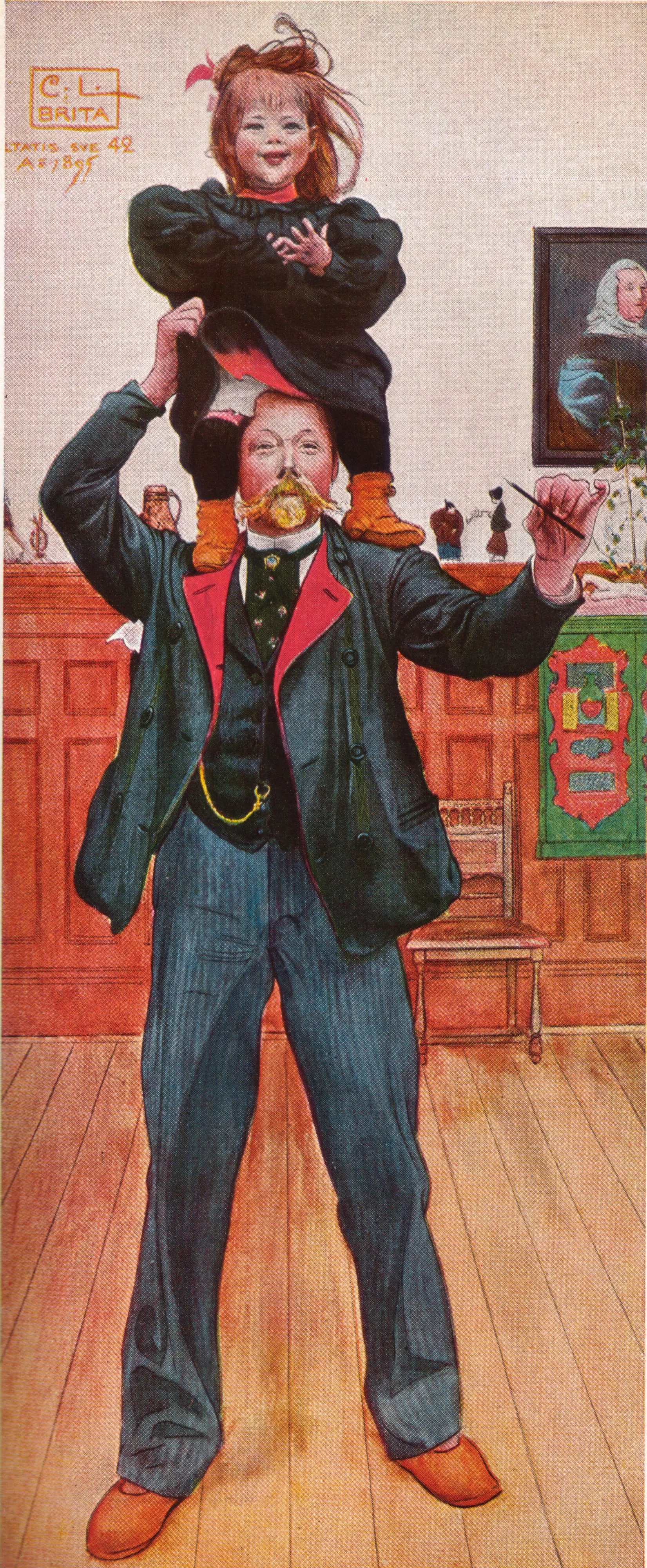
Swedish artist Carl Larsson had an unhappy childhood in Stockholm and a contentious relationship with his own father, who once told him "I curse the day you were born." After spending years studying plein-air painting in France, he moved back to Sweden in 1888 with his wife and family, which would grow to eight children. His artworks often captured sweet moments of family love, which Larsson had so desperately craved as a child. This watercolor self-portrait was painted in 1895 with his two-year-old daughter Brita and is now at the Nationalmuseum in Stockholm.
Read more articles on Barnebys Magazine
This is an updated version of the article originally published on June 19, 2020.