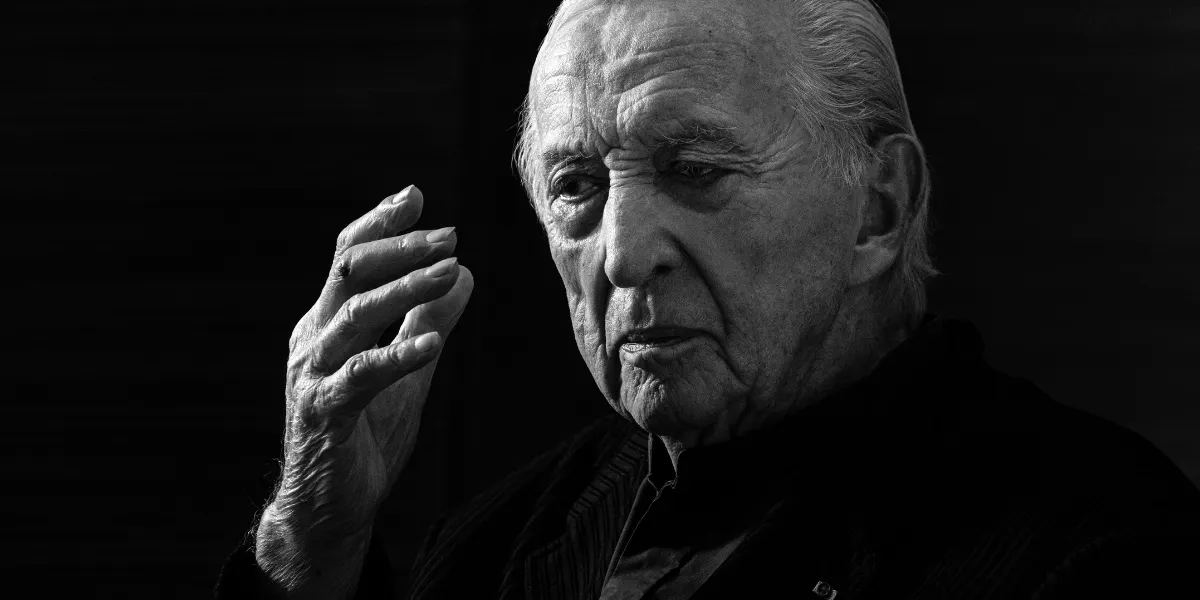
A tar stain on the wall of the hospital facing the window of his childhood room, a school visit to the Abbey of Sainte-Foy in Conques, the landscapes of the Causses near his hometown, the fascination for archaeological discoveries and menhirs: all these moments shaped Pierre Soulages' passion for art and his determination to dedicate his life to painting. Having grown up in Rodez, France, he moved to Paris at the age of 18 in 1936 to enter the fine arts world. When the war broke out, he posed as a farm laborer to escape military service. Mobilized in 1941, he went to Montpellier, where he met his alter-ego, Colette Laurens, the woman who he ended up spending his life with. There he also met the poet Joseph Delteil, who moved in surrealist circles and brought Soulages closer to artists such as Salvador Dalí and Max Ernst.
Related: Abstract Art: From Genre to Movement
Shortly after the war and without a penny in their pocket, Pierre and Colette landed in Paris with a single goal: to paint. Not being allowed to exhibit at the Salon d'Automne, Soulages turned to the Salon des Surindépendants, where he exhibited alongside Fabra, Fin and Javier Vilató, Picasso's nephew. His dark brushstrokes stood out and caught the attention of Hans Hartung and Francis Picabia, who even said to him: “with the age you have and with what you do, you will soon make a lot of enemies!".
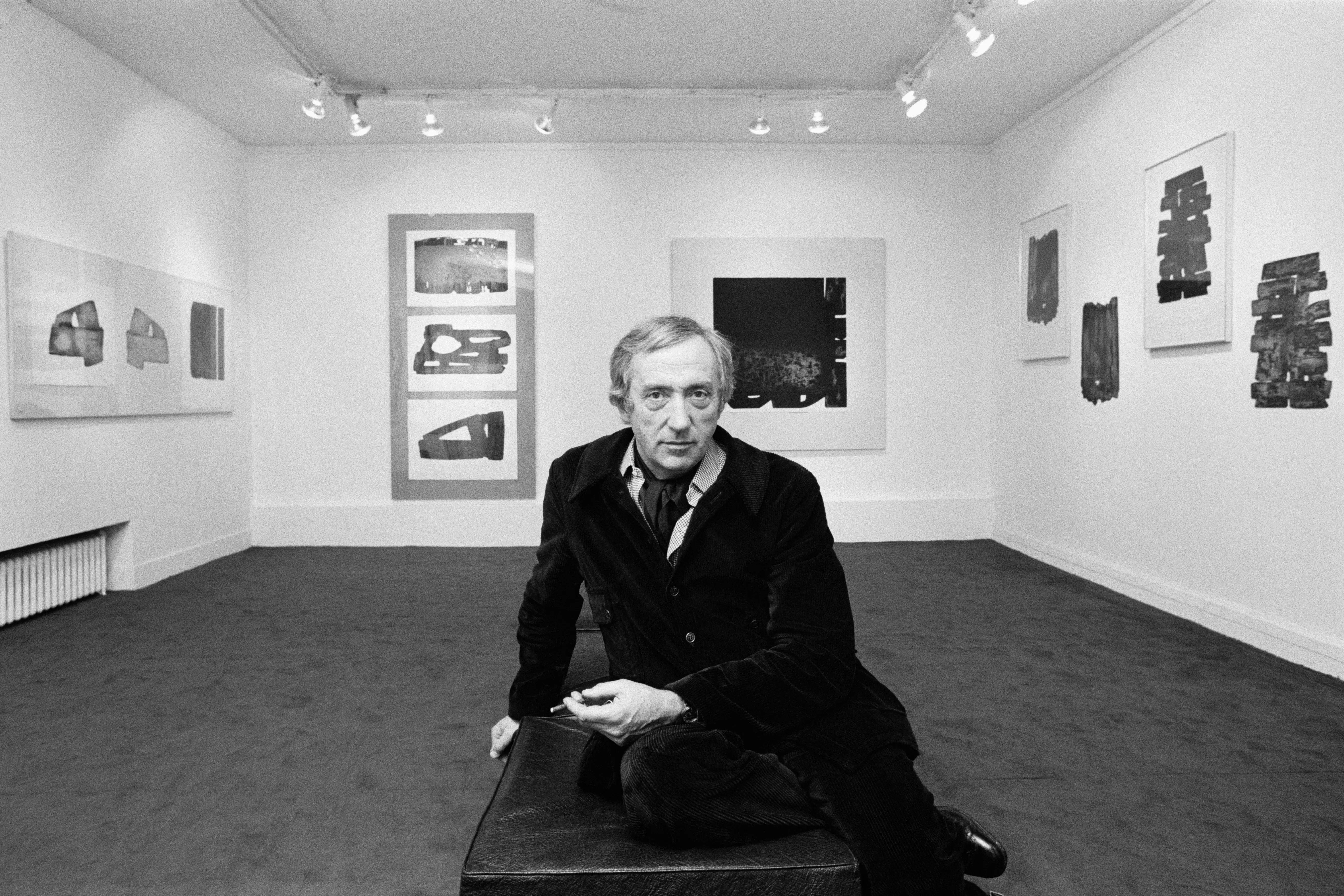
From 1947 he exhibited alongside well-known names in Modern Art – Del Marle, Kupka, Herbin, Schneider – which enabled him to become acquainted with the Club of American Artists (Robert Motherwell and Franz Kline). Galerie Conti was the first to exhibit his Walnut Shells in Paris, and international recognition soon followed. In the USA, he was compared to Willem de Kooning, Barnett Newman and Franz Kline. From the early 1950s, he was represented by the Kootz Gallery and in 1952 MoMa acquired one of his paintings. On the European side, Documenta I, II and III in Kassel established his reputation on the old continent. In 1967 he exhibited for the first time at the Museum of Modern Art in Paris (MAM), and in 1979 at the newly opened Center Pompidou. In 1996 again at the MAM, and in 2009 the Center Pompidou finally dedicated a retrospective to him. Ten years later, there was an exhibition in the Louvre for the 100th birthday of the artist. "I believe only Matisse and Picasso deserve a retrospective in this prestigious venue," said Soulages with modesty.
Pierre Soulages also caused a sensation with his abstract works in Asia, Russia and South America. In 2001, he was the first French painter to be exhibited in Mao's China and the first living foreign artist to enter the Hermitage Museum in Saint Petersburg. He was also revered in South Korea, in Japan, where he traveled very often, and in Brazil.
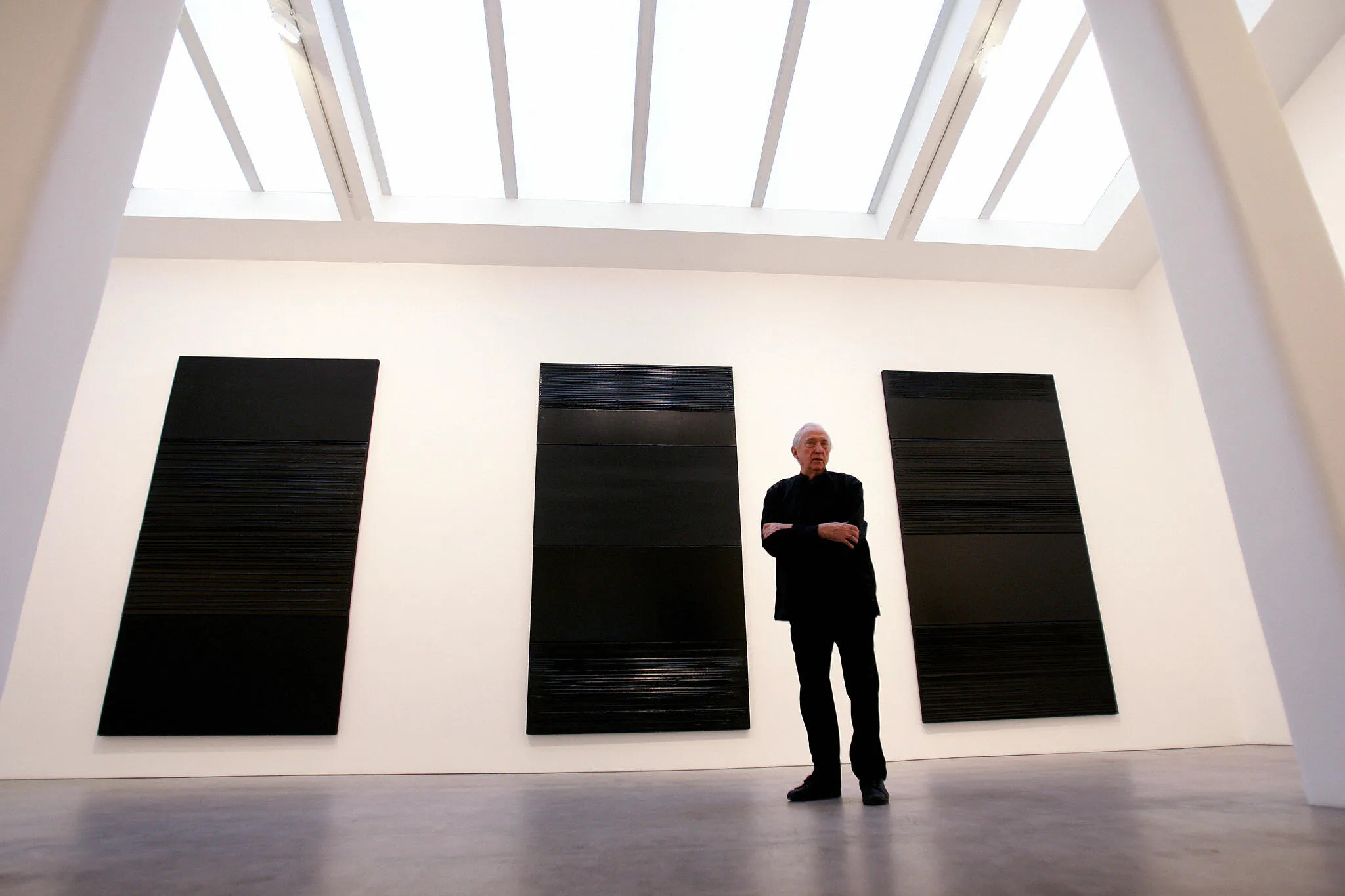
“When I first saw a painting by Pierre Soulages, it was a shock, like a punch in the stomach. This is exactly how I felt when I first saw a Dan mask. Soulages' frescoes remind me of African paintings, which grip the viewer with the same disdain for all vain elegance and the same naturalness as the roots of life," wrote Léopold Sedar Senghor in 1958.
Related: Art Brut: Art Outside the Box
All of Soulages' work is rooted in the idea of origin. “Black is before the light. Before light, the world and things were in utter darkness. Colors are born with light. Black precedes them. Also for each of us, before we are born, before we see the light of day," he explained in an interview with Le Monde. Painting was the artist's way of finding out where he is going: he never planned a project. "The canvas I'm working on right now is always my favorite," he once said.
Sometimes smooth, sometimes striated, geological reliefs, linear wanderings, changes in thickness and darkness – Soulages' approach has had a major influence on architects such as Jean Nouvel and Rudy Ricciotti; the first for his designs for the courthouse of Nantes and the Philharmonie de Paris, the latter for the design of the Musée des Civilizations de l'Europe et de la Méditerranée (MuCEM) in Marseille.
Related: When Art is... Curvy
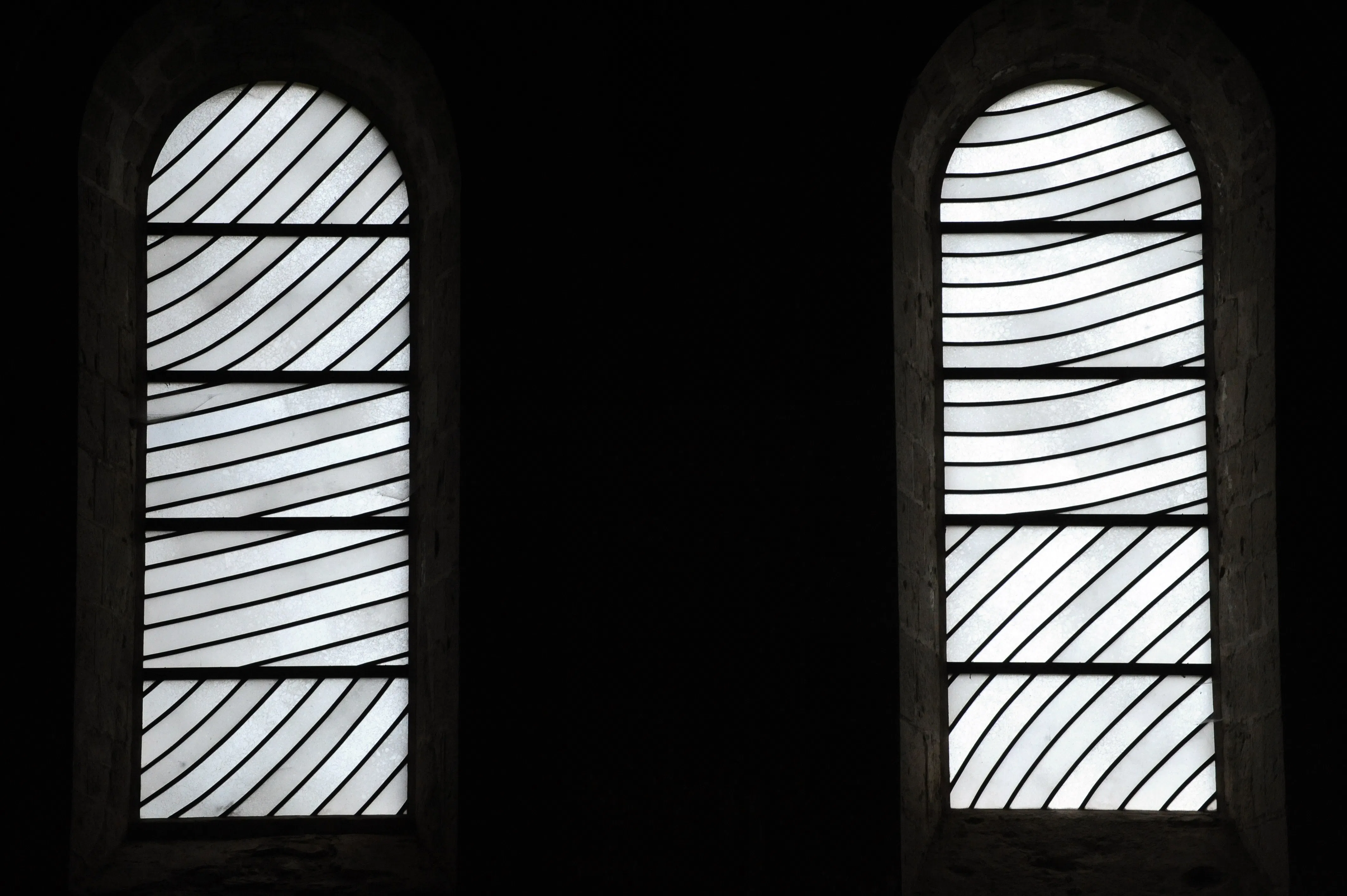
The retrospectives on his work have contributed to the image of Pierre Soulages as a figurehead of contemporary French art, although often presenting a one-sided view of his work. Lesser known but equally worthy examples of his work are the 104 stained glass windows he made in 1987 and 1994, in Jean-Dominique Fleury's Toulouse studio for the Abbey of Sainte-Foy de Conques. Also in 2012 and 2013, during the exhibition 'Soulages XXIe siècle' at the Musée des Beaux-Arts in Lyon and at the Villa Medici in Rome, unexpected works were unveiled: cut-outs, collages, works completely in white, among others.
Want more articles like this delivered straight to your inbox? Subscribe to our free newsletter!
The painter, who showed incredible vitality up to the age of 102, did not put down his brush until the end. Anyone interested in the work of Pierre Soulages should definitely visit the museum dedicated to him in his hometown of Rodez. Opened in the early 2000s, the institution houses the world's largest collection of the artist's work, including the sketches for the 104 stained glass windows he designed for the Abbey of Sainte-Foy de Conques.