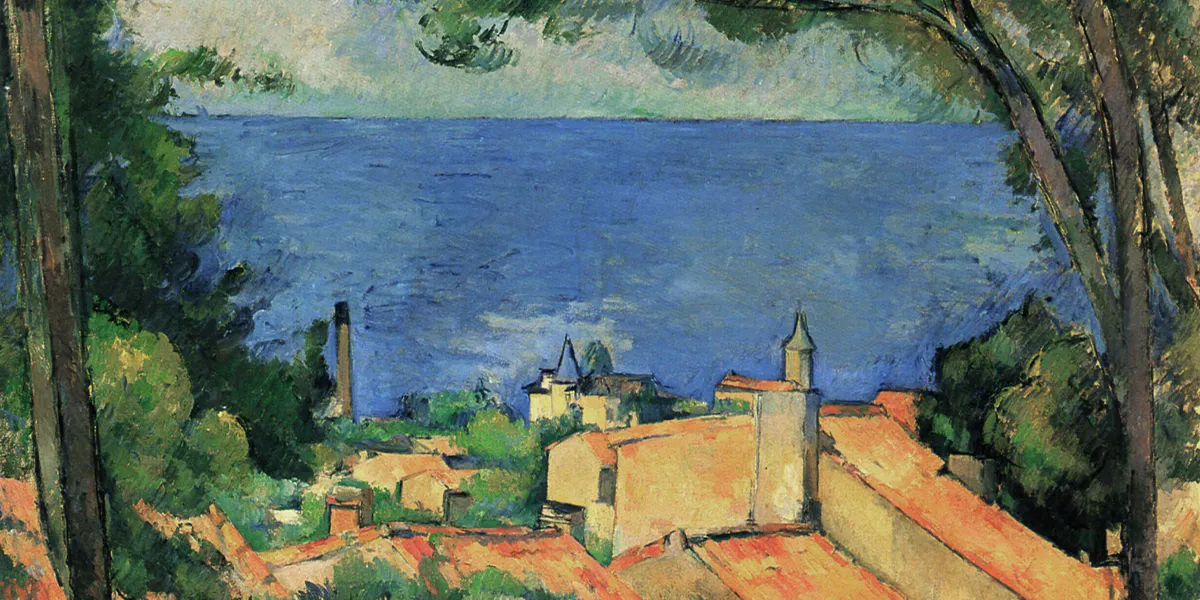
Paul Cézanne (1839–1906) was born in Aix-en-Provence, where his father was a banker. Although he was expected to follow in the family profession, Cézanne’s real interest lay in art. He moved to Paris but regularly returned to Provence, which became central to the development of his distinctive style. He abandoned traditional perspective, instead building up compositions through shapes and colours. This approach helped lay the groundwork for modern art and made him a key influence on Cubism.
Here are five facts about Cézanne you might not know:
1.1. Émile Zola Was His Closest Friend — Until He Wasn’t
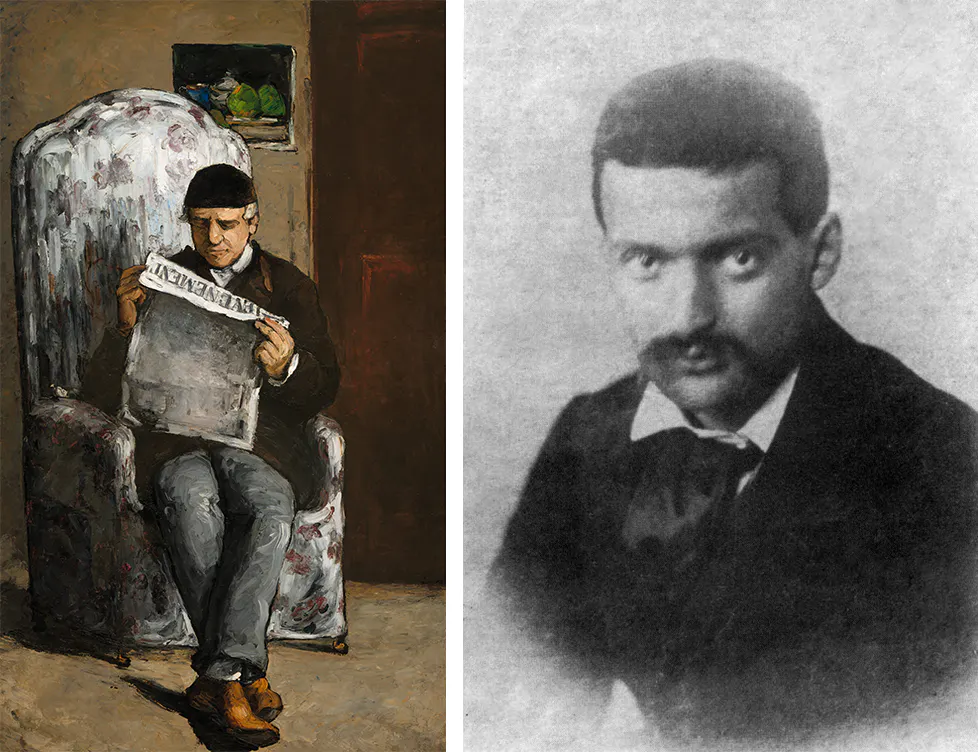
Cézanne and Émile Zola became close friends as schoolboys at the Collège Bourbon in Aix-en-Provence in 1852. Along with Jean-Baptiste Baille, a future engineer, they were known locally as “the inseparables.”
Zola moved to Paris in 1858, and it took him three years to persuade the hesitant Cézanne to join him. Cézanne applied to the École des Beaux-Arts but was rejected. Instead, he enrolled at the Académie Suisse and spent time copying Old Masters at the Louvre. After a brief return to Aix in 1861, he made another attempt in Paris the following year. In 1865, Zola dedicated his first novel to his two childhood friends, and in 1870, Cézanne was best man at Zola’s wedding.
See also: 8 Artists Inspired by the South of the France
Over time, though, the friendship faded. As Zola gained recognition, Cézanne continued to struggle with self-doubt and a lack of success. Their final break came in 1886, when Zola published L’Œuvre. Cézanne believed the novel’s failed painter was based on him.

2. He Took Advice from Camille Pissarro
Cézanne’s early work in Paris was dark in tone and subject, influenced by Delacroix and Courbet. He used thick layers of paint and dramatic contrasts. One of his first contacts in the Paris art scene was Camille Pissarro, who became a key mentor.
Pissarro encouraged Cézanne to adopt a lighter palette and looser brushwork. Through him, Cézanne met other artists including Renoir, Monet, and Sisley, and showed work at the first and third exhibitions of the group now known as the Impressionists, in 1874 and 1877. His paintings were widely mocked by audiences who preferred academic styles.
Ultimately, Cézanne felt little connection to Impressionism. He went on to develop a personal approach that would later influence the emergence of Cubism.
See also: How Cubism Changed the World
3. He Hid His Wife and Son
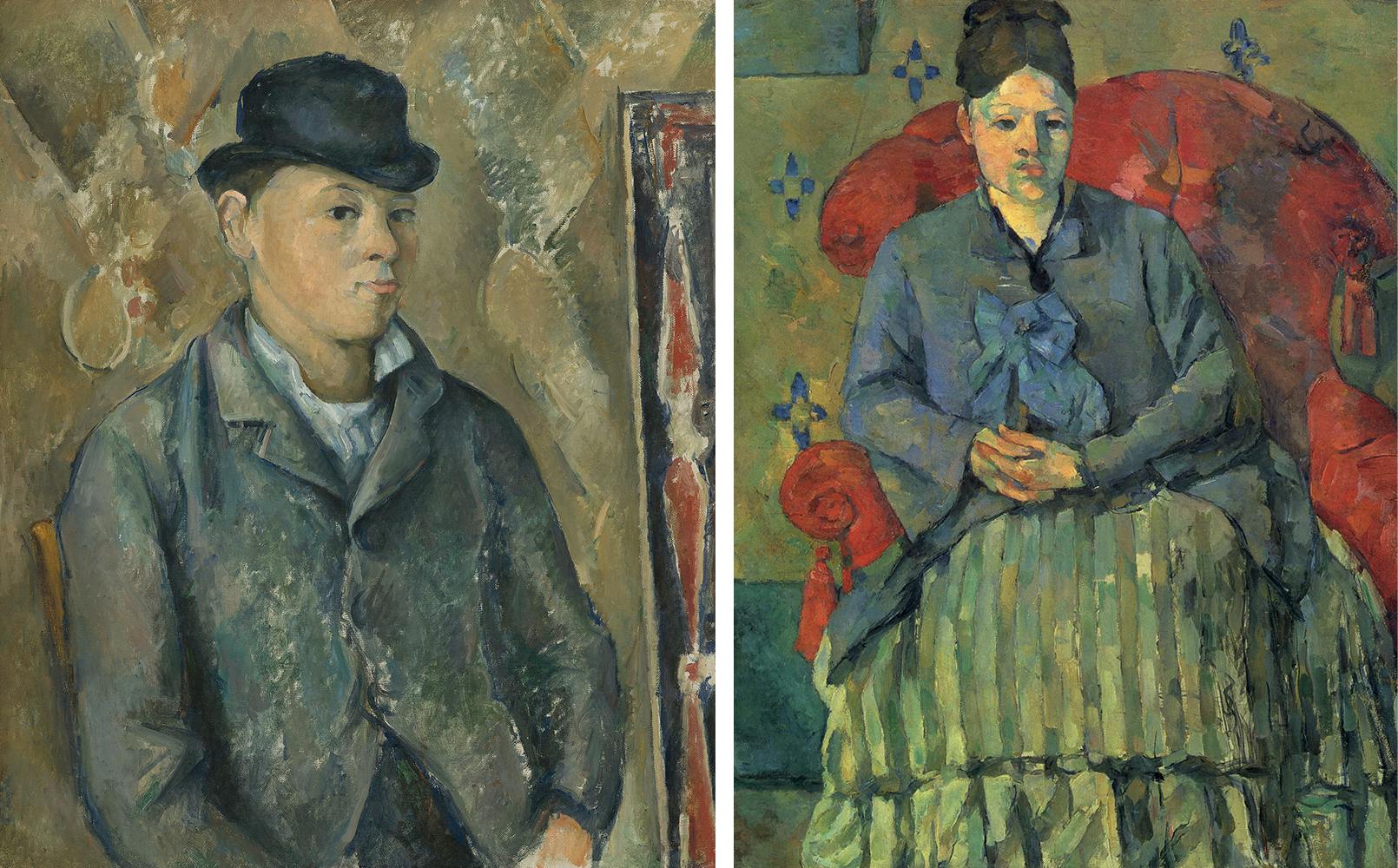
IIn 1869, Cézanne met Hortense Fiquet at the Académie Suisse. She wasn’t a student but worked as an artist’s model to support herself. Despite his shy and reserved nature — shaped in part by a fear of physical contact — Cézanne began a relationship with her. Their son, also named Paul, was born three years later.
Worried that his father would cut off financial support, Cézanne kept the relationship secret. When it was eventually discovered in 1878, his father halved his monthly allowance.
Cézanne and Hortense married in 1886, though the relationship was no longer happy. Still, she provided a degree of stability for their son, and Cézanne painted her at least 26 times.
See also: The Tales Behind Art History's Most Important Muses

4. He Preferred Apples and Oranges – and a Particular Mountain
Cézanne’s still life paintings, especially those featuring bowls of fruit, became a major part of his work from the 1870s onwards. He often chose apples, oranges, and sometimes pears for a practical reason: they lasted longer. Peaches, for example, would spoil too quickly. Cézanne worked slowly and frequently reworked his paintings, often remaining dissatisfied with the results.

He also remained deeply attached to his native region. After inheriting his father’s estate in 1886, he bought land north of Aix and built a studio there in 1901. From it, he had a clear view of one of his favourite subjects: Montagne Sainte-Victoire, an 18-kilometre limestone ridge dominated by the 1,011-metre Pic des Mouches.
Want more articles like this straight to your inbox? Subscribe to our free newsletter!
5. He Was Honoured in Paint During His Lifetime
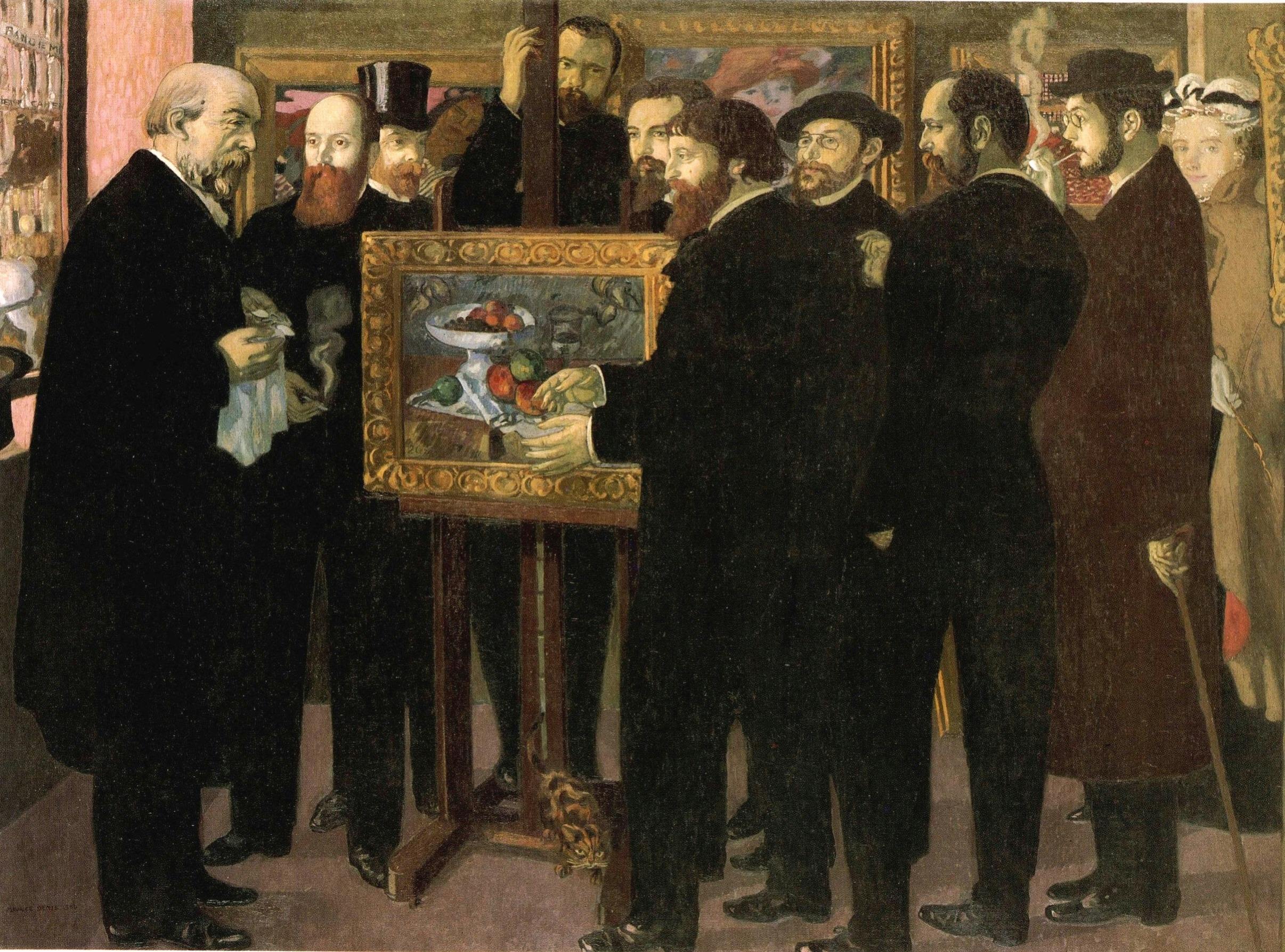
Although Cézanne was long dismissed by critics and the public, many artists recognised his importance early on. Among them were the Nabis, a group seeking to move beyond Impressionism by embracing rich colours and decorative form, often with spiritual overtones. While Paul Gauguin was the group’s central influence, Cézanne’s work also proved vital.
See also: 8 Patrons of the Parisian Avant-garde
This is clear in Hommage à Cézanne, painted in 1900 by Maurice Denis. Set in the gallery of dealer Ambroise Vollard, the painting features members of the Nabis, including founder Paul Sérusier. In the centre, Sérusier presents Cézanne’s Compotier, verre et pommes to the older Symbolist painter Odilon Redon, an act meant to convey Cézanne’s significance. Gauguin, though absent, is symbolically present: this particular painting had once belonged to him.
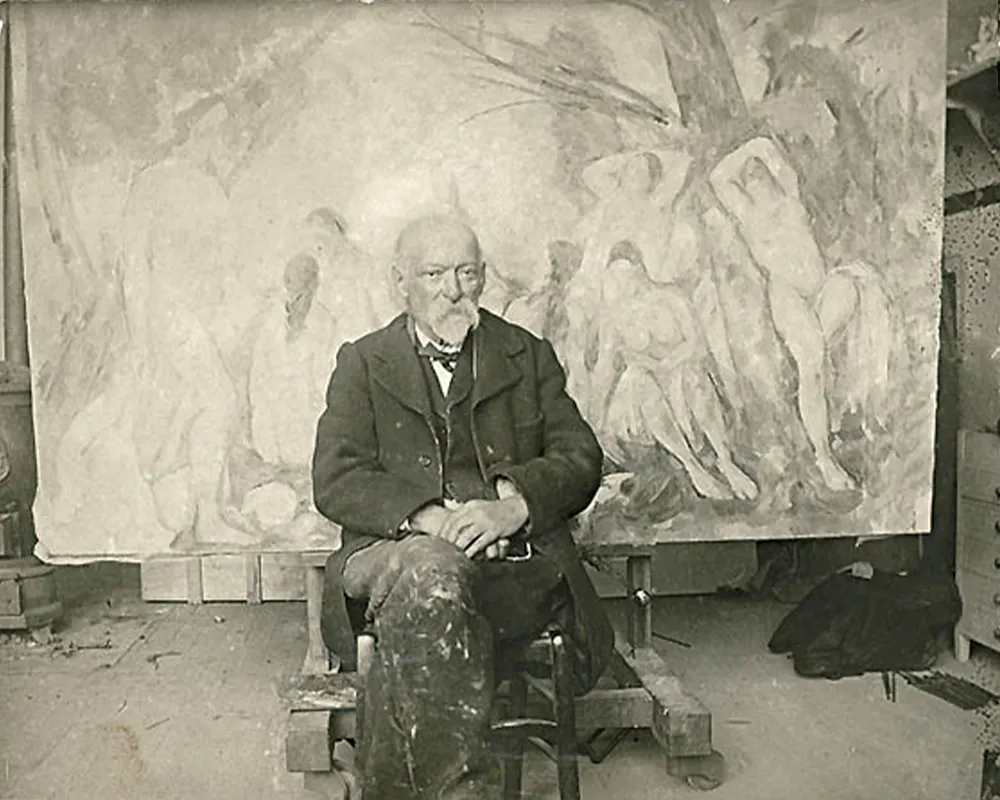
After Cézanne’s death in 1906, a memorial exhibition was held the following year at the 1907 Salon d’Automne in Paris. It was there that young artists such as Georges Braque and Pablo Picasso saw his work, an experience that would shape the development of Cubism.