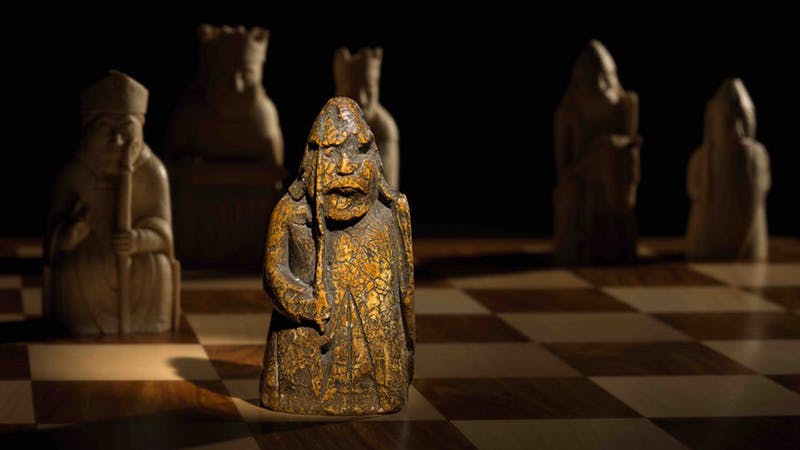
On July 2, 2019, Sotheby's London registered the record price for a medieval chess piece sold at auction when an extremely rare figurine with a rich history sold for $927,000.
Acquired in 1964 in Edinburgh, Scotland by an antique dealer for only five pounds sterling, the piece was carefully preserved before being inherited by the owner's daughter. Though she didn't realize the chess piece's historical importance, nevertheless she believed it had mystical qualities. The figurine then came into possession of the next generation, who decided to inquire about its value at Sotheby's.
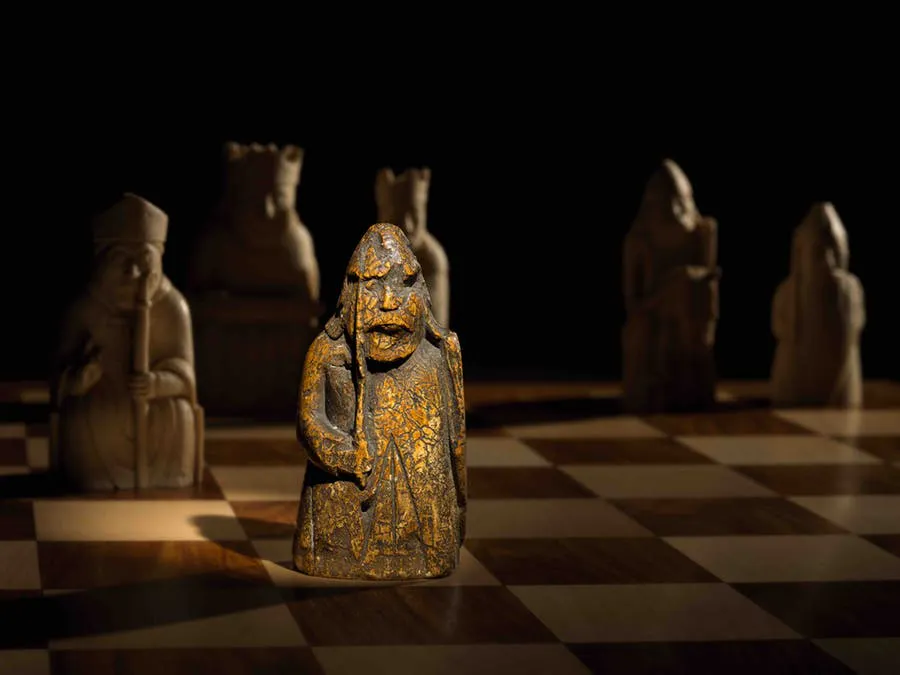
The current owners then discovered that it was a valuable historical artifact, called a Warder (equivalent to a rook), which was part of a Norwegian medieval Lewis chess set dating to the 12th century. Several theories have emerged about the origin of Lewis's Chessmen. The most conclusive is that the game was conceived in Norway, and more specifically in Trondheim, a city known for producing play pieces carved in the 12th century, often in walrus ivory. The most accepted hypothesis is that this Lewis set was buried off the coast of Scotland by a merchant after a shipwreck recorded in the 19th century.

In 1831, 93 carved objects were found on the Scottish isle of Lewis, including 59 figures, 19 pawns, 14 flat pieces, and a belt buckle. Of the 93 finds, 82 are now in the British Museum in London. The remaining 11 are on display at the National Museum of Scotland in Edinburgh.
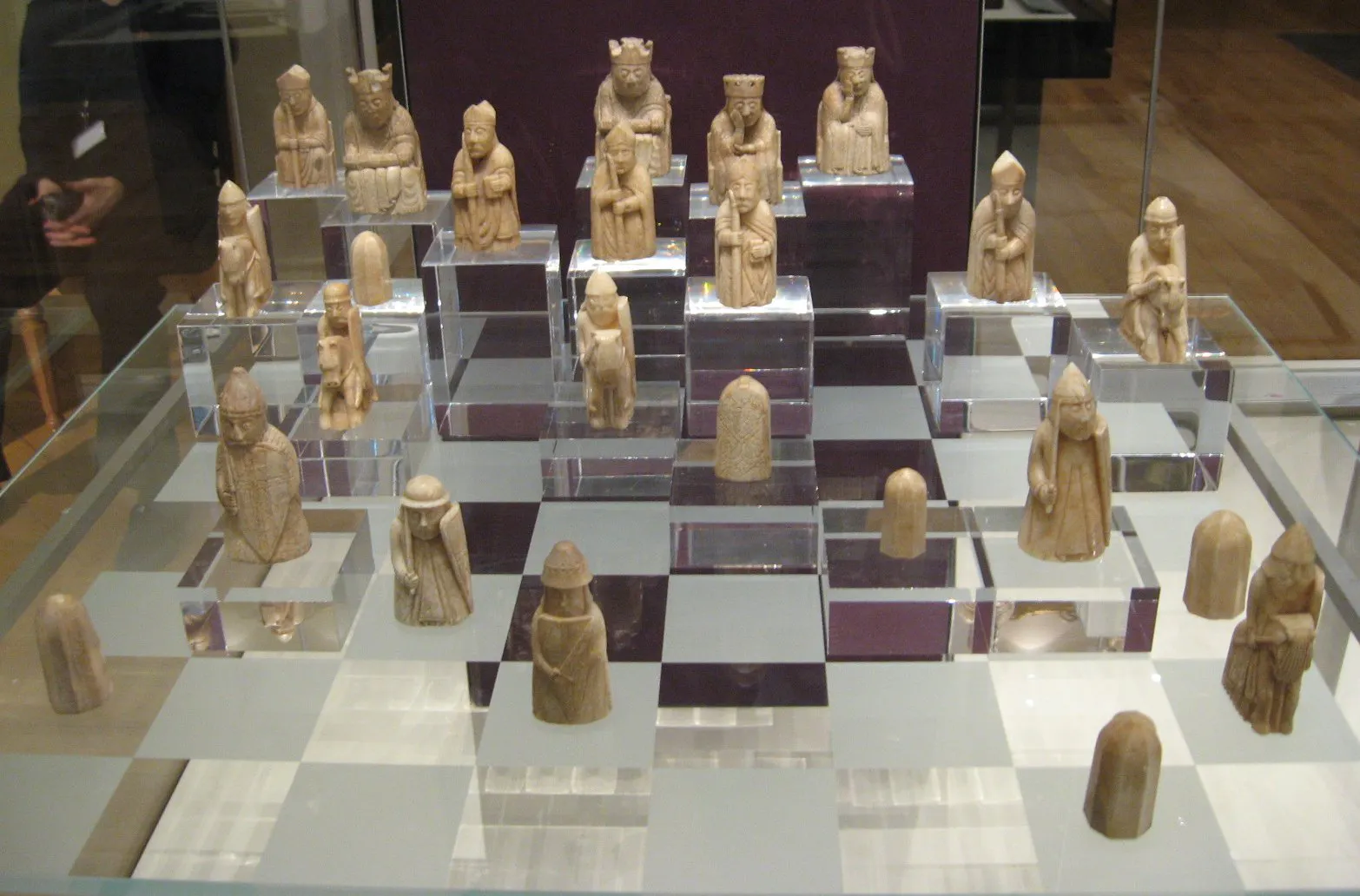
According to the experts, this Warder is one of the missing parts of a Lewis set and constitutes the most remarkable discovery of a medieval chess piece since that of 1831.
“This is one of the most exciting and personal rediscoveries to have been made during my career. It has been such a privilege to bring this piece of history to auction and it has been amazing having him on view at Sotheby’s over the last week – he has been a huge hit. When you hold this characterful warder in your hand or see him in the room, he has real presence," said Alexander Kader, director of the European Sculptures and Works of Art Department at Sotheby's.
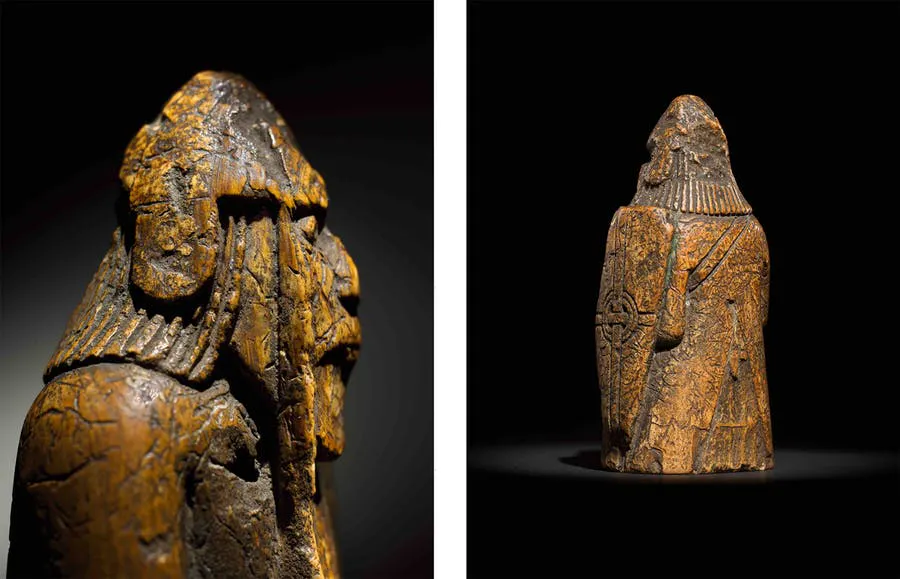
According to Neil Macgregor, the former director of the British Museum, "If we want to visualize European society around the year 1200, we could do no better than observe how they played chess. And no chess piece offers richer information than ... Lewis's Chessman."