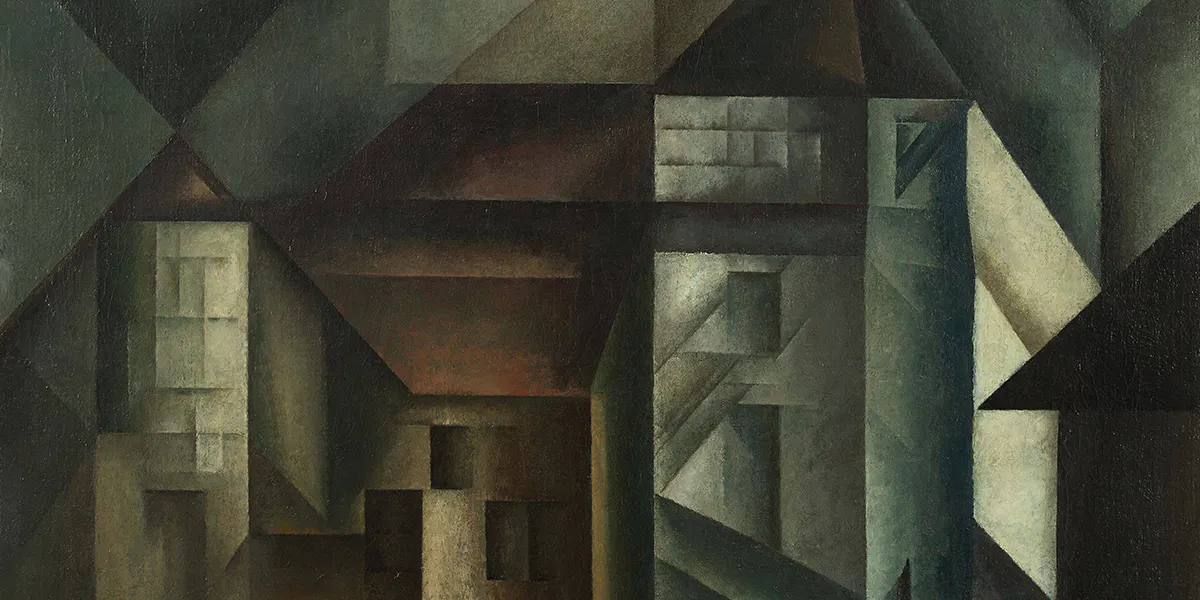
It took Lyonel Feininger ten years to complete one of the standout lots in this summer’s auction at the Berlin auction house Grisebach – an effort that proved worthwhile, as Vollersroda III became one of the celebrated paintings of the Weimar Republic.
The process began in 1906, when Feininger first visited Weimar and explored the surrounding countryside. He was particularly taken with the village of Vollersroda, which he returned to time and again to make sketches. From 1913 onwards, he began translating these into paintings. In 1914, the design for Vollersroda III was developed as a charcoal drawing, and the corresponding painting followed in 1916 – a carefully composed Cubist work in subtly nuanced, muted tones. The painting’s exhibition history began the following year and reached a high point in 1919 when it was acquired by the Nationalgalerie Berlin for its Galerie der Lebenden at the Kronprinzenpalais. By that time, Feininger had already been appointed as a teacher at the Weimar Bauhaus.
The National Socialists, however, had little appreciation for Feininger’s art. Vollersroda III – widely admired during the Weimar years and later housed in the Städtisches Museum in Halle (Saale) – was removed from public display in 1937 and sold to the United States in 1941. It ended up in New York, Feininger’s birthplace, to which he had returned in 1937.
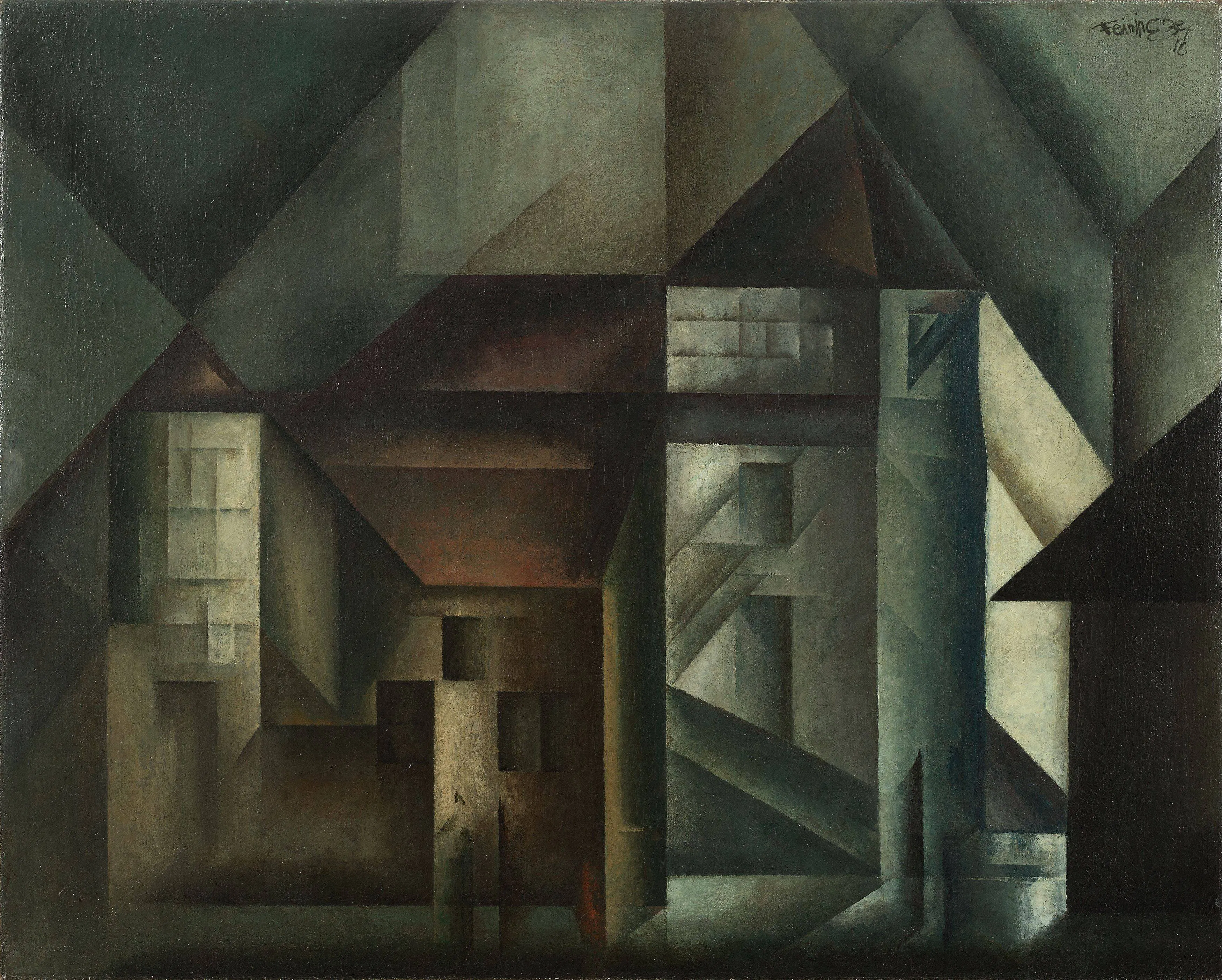
In 1997, Vollersroda III was sold by Grisebach to a prominent private collection in Berlin. Now, the work is returning to the saleroom of the same auction house, as part of a group of 57 works from this collection that will be offered in the summer auctions, split between the “Selected Works” sale on June 5 at 6 pm and the “Modern Art” sale on June 6 at 11 am.
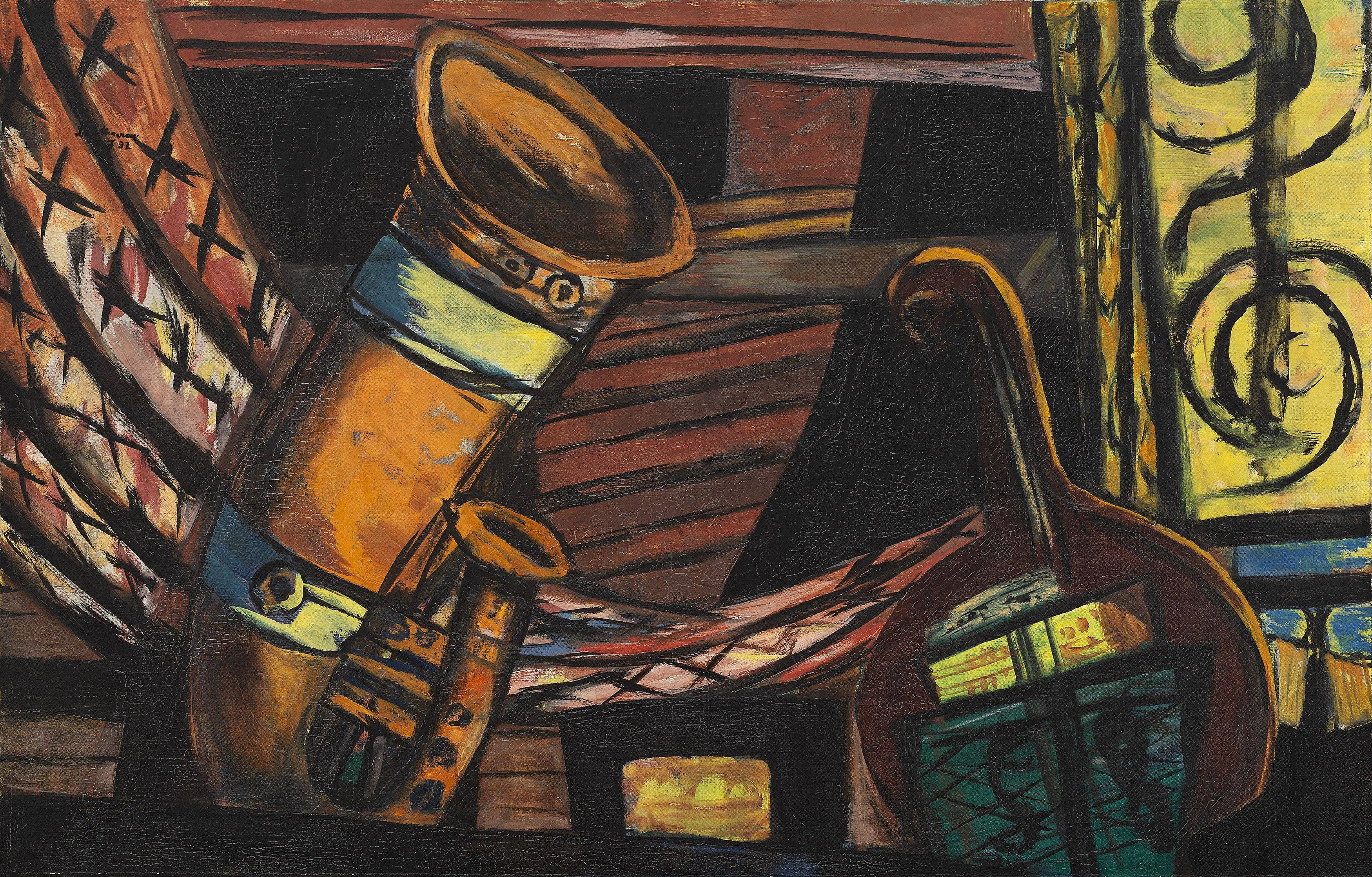
Like Vollersroda III, the second highlight from the collection will also go under the hammer on June 5: Max Beckmann’s Orchestra, an unusual commissioned piece from 1932. It was created for Ernst Levi, a Frankfurt lawyer and acquaintance of Beckmann, who commissioned it as a gift for his wife, Martha. A saxophone and a violin are depicted leaning towards one another, evoking the sense of a double portrait. This intimate arrangement may allude to the Levi couple, as Martha Levi was a concert violinist. Alternatively, it could reflect the Beckmanns themselves – Quappi Beckmann also played the violin, and Max had a strong interest in musical instruments, frequently incorporating them into his work, despite likely not playing any himself.
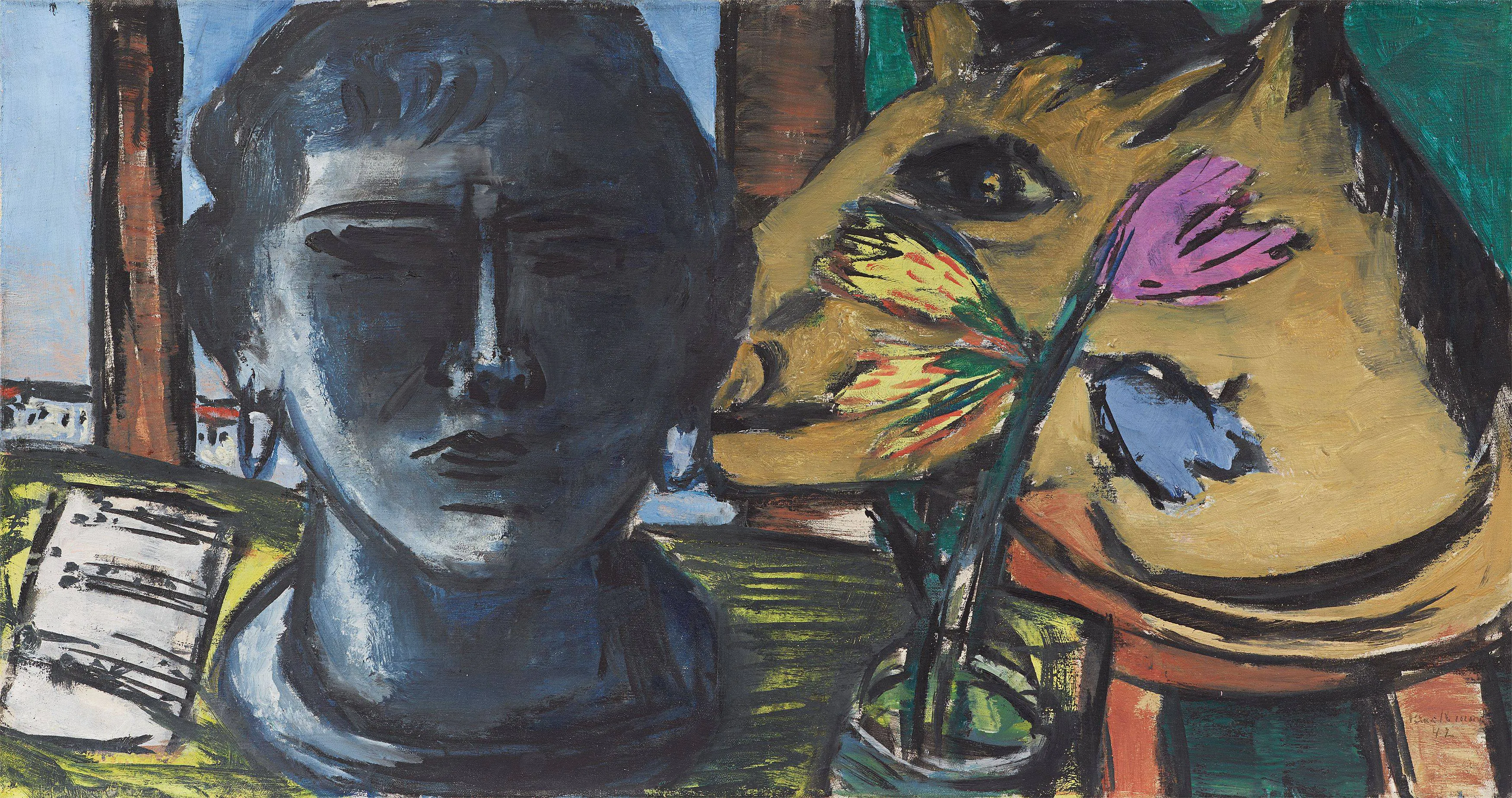
Another Beckmann painting in the sale is Still Life with Sculpture, created a decade later and no less enigmatic. Two heads are depicted like characters on a stage: one, a grumpy human head that might be bronze; the other, a friendly-looking horse’s head made from an indistinct material. They seem to be engaged in a silent exchange, with a subtle contrast between the horse’s amused expression and the man’s stern demeanour.
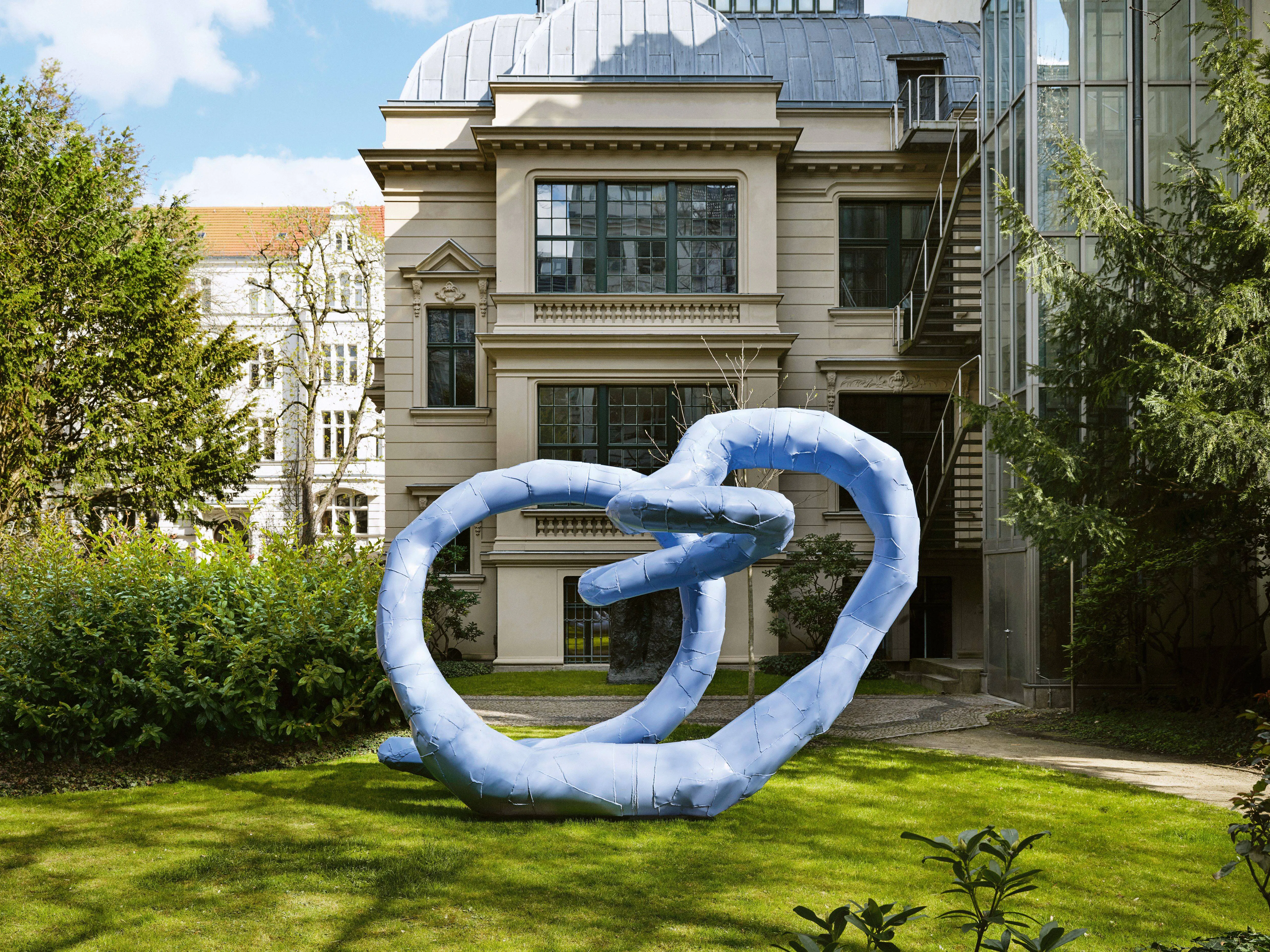
Currently, Franz West’s aluminium sculpture Flora has pitched its tent in the garden of Villa Grisebach, having previously formed part of the Generally sculpture ensemble outside the headquarters of Generali AG in Munich since 2007. In typical West fashion, Flora embraces a sense of arbitrariness that defies references to earlier art. The vivid colors stand out against the surrounding greenery, yet without causing discord.
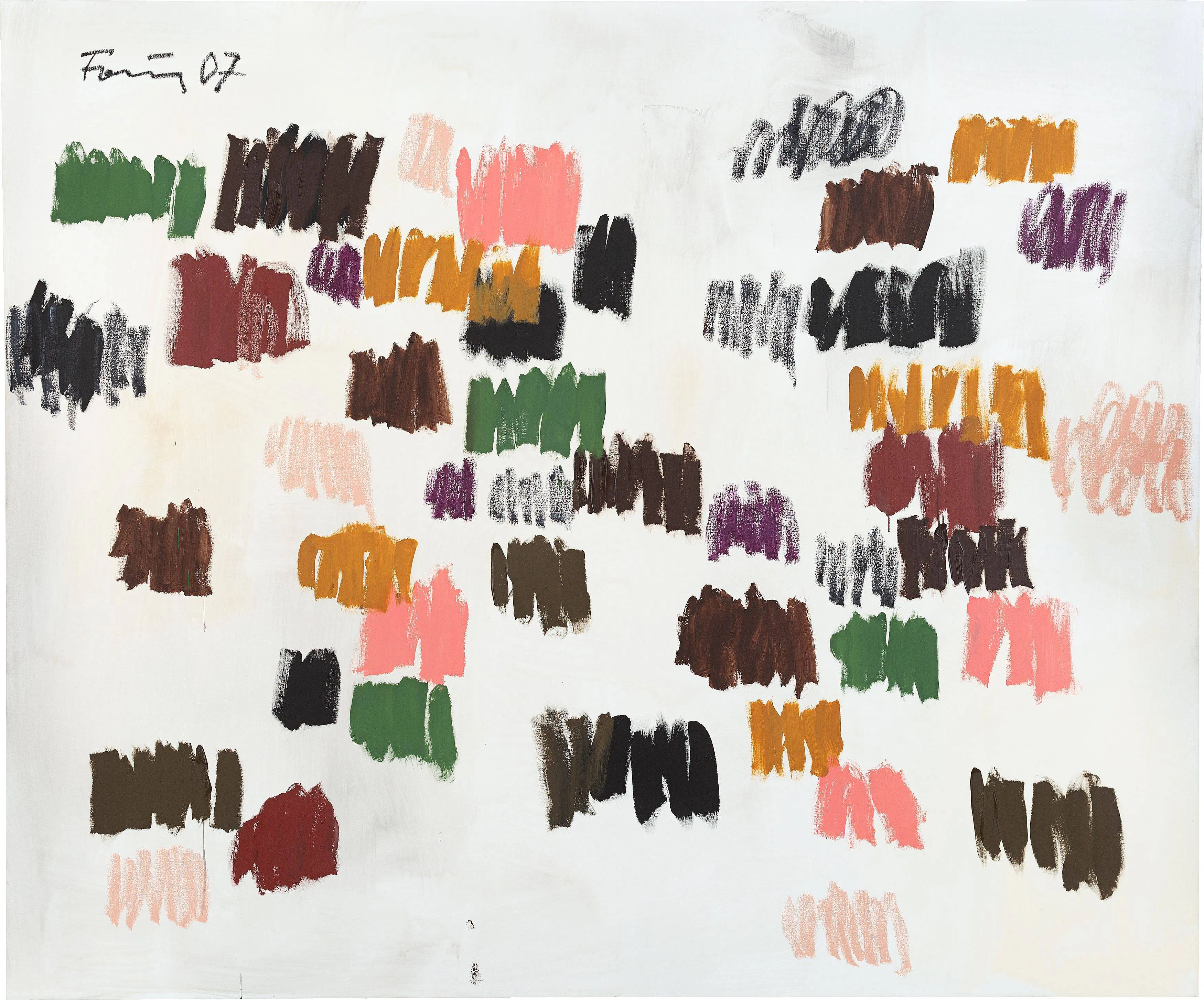
Like West’s Flora, Untitled by Günther Förg also belongs to the artist’s late period. His dot paintings, begun in 2005, were the final series he produced before a stroke forced him to stop painting. Förg chose his colors in advance, then applied them with varying brushstroke intensity – always in pursuit of a harmonious composition that remained entirely within the realm of abstraction.
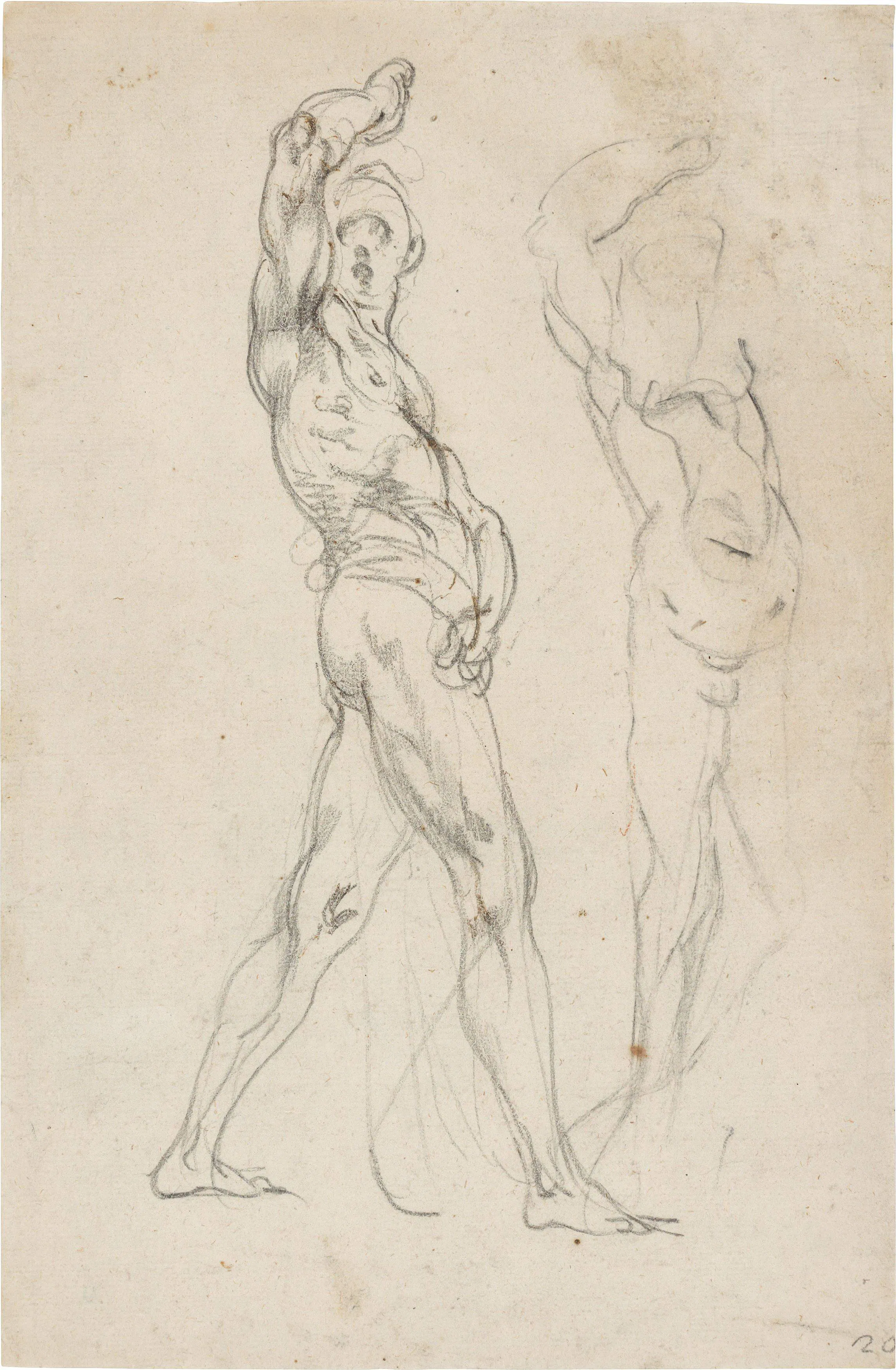
A much earlier work – in both time and style – is the chalk drawing by Jacopo da Pontormo, the great Florentine Mannerist and one of the outstanding draughtsmen of the 16th century. This particular sheet closely relates to the red chalk drawing Study of Three Male Nudes from around 1517, now held by the Musée des Beaux-Arts in Lille, and considered one of the young Pontormo’s key works.
Alongside “Selected Works” and “Modern Art”, Grisebach’s summer auction series will also include “19th Century Art” (June 5 at 2 pm) and “Contemporary Art”, which will conclude the programme on June 6 at 4 pm.
All auctions will take place at Villa Grisebach, Fasanenstraße 25, Berlin. The exhibition is open to the public from May 29 to June 4.