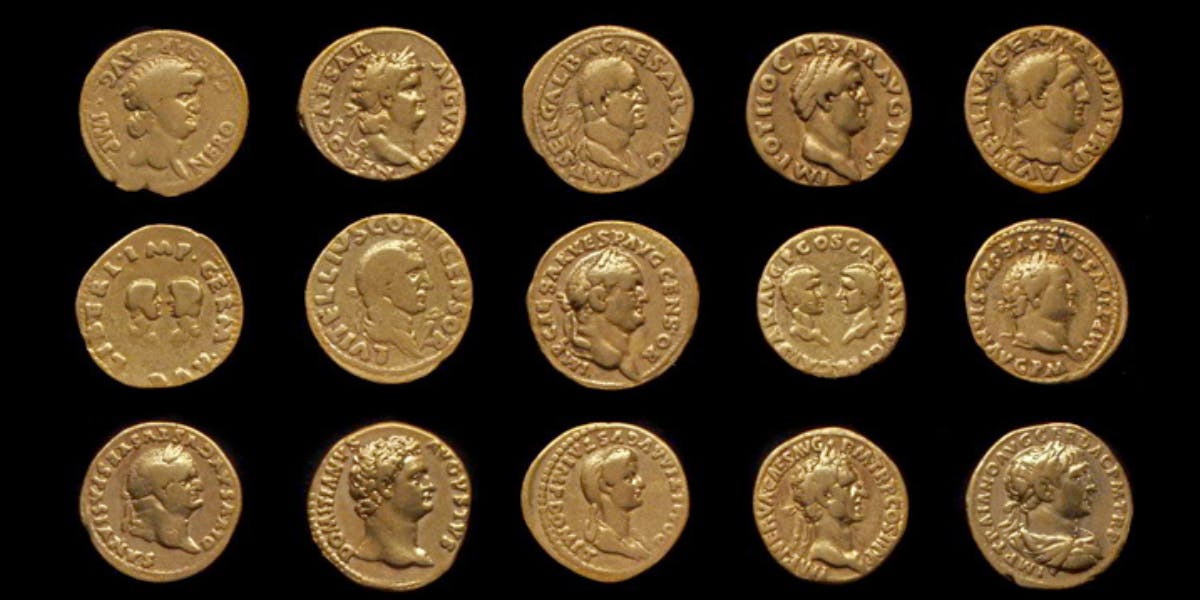
Since antiquity, coins have reflected the culture that produces them: political, social and religious imagery has always been conveyed through currency. Since the Romans began minting coins in the 3rd century BC, they took on great importance in popular culture, often serving as a means of propaganda for the elites.
“I added Egypt to the empire of the Roman people”, boasted the Emperor Augustus in his memoirs, and soon after the conquest, coins were minted depicting it. “Give them bread and circuses, and they will never revolt,” advised the poet Juvenal, and Roman politicians knew to issue coins with images of theaters and grain distributions.

The Greeks pioneered the use of coinage, which started circulating in Asia Minor as early as the 7th century BC. Romans adopted a system of currency much later, having initially used the Aes Rude (‘rough bronze’ in Latin), a literal nugget of bronze, as a type of proto-currency for at least four centuries. When the economic conditions caused by the Punic Wars (264-146 BC) began to impose on Rome, the Republic minted its first true coin, the Aes Signatum (‘signed bronze’). From the 3rd century BC onwards, Roman currency frequently changed in form, denomination and composition. Some denominations lasted throughout the centuries, such as the sestertii and denarii. Others were less common, but served as a model for later cultures, such as the British pound and South American peso, which both take their name from the Roman libra.
Related: How to Become an Outstanding Stamp Collector
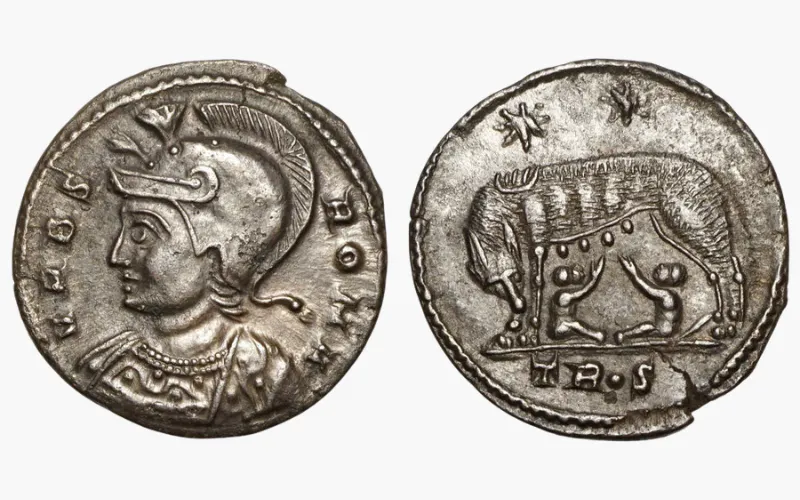
Thinking it unfitting for a Republic to bear the images of their rulers on their coins, the first coins of Rome depicted religious and mythological imagery. This was a break with the Greek tradition, in which tyrants frequently featured on currency. Early Roman designs were conservative, often portraying personifications of Gods such as Jupiter, Mars, and Juno, or the heroic legends of Rome’s past. In this style, one of the most popular coins was the Romulus and Remus follis. The coin illustrates the twin founders of Rome, who, according to legend, were abandoned in the woods and suckled by a she-wolf. The imagery became particularly relevant under the rule of Julius Caesar, who insisted on tracing his lineage all the way to the twins, in an attempt to legitimize his authority.
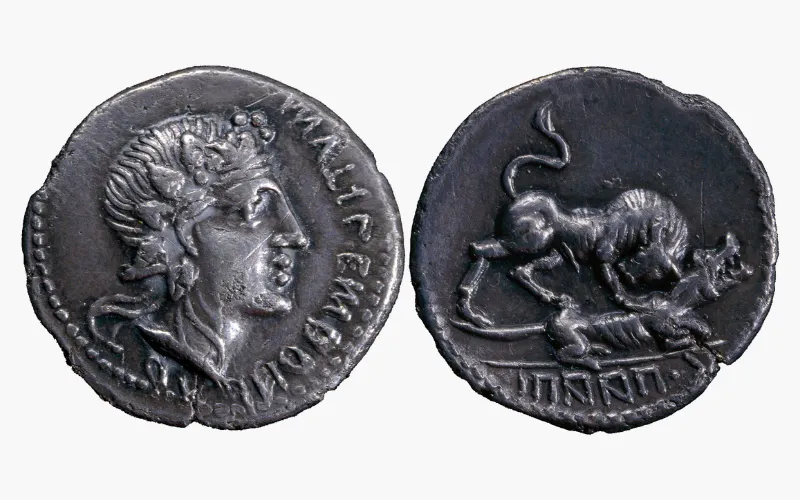
The she-wolf was such a powerful symbol of Rome that it was used against Rome in counter-propaganda coins. When in the 1st century BC a social war erupted between the Romans and the Italian allies, the Italians minted coins depicting a bull – which was the symbol of their own nation – attacking the wolf.
Related: Baroque Silver Furniture: A Symbol of Power
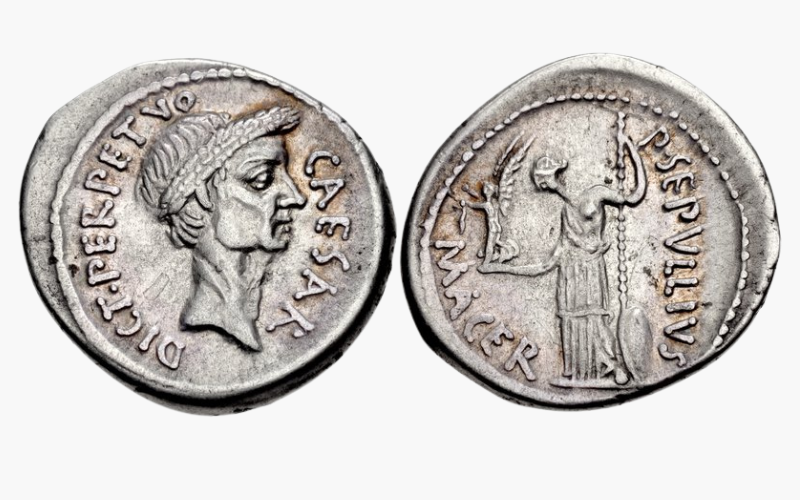
As Rome shifted from Republic to Empire under Julius Caesar, he became the first ruler to have his image depicted on coins, where gods and heroes previously figured. Denarii, struck in 44 BC, include the phrase DICT. PERPETVO, ‘dictator for life’. This was a first for Rome, often called ‘the coin that killed Caesar’. The blatant advertising of his establishment of a de facto monarchy (under the Republic, a dictator could hold power for only six months) proved too much to take for his fellow senators, who organized themselves to assassinate him on March 15, 44 BC. His heir Augustus, Rome’s first official emperor, made it a habit for living rulers to be portrayed on coinage. Because coins were small and easily circulated, they essentially functioned as the mass media of Rome. They carried the image of the Emperor, advertised his accomplishments, and depicted monuments that people outside of Rome would likely never see in-person.
Related: Why a $20 Coin Sold for Nearly $20 Million
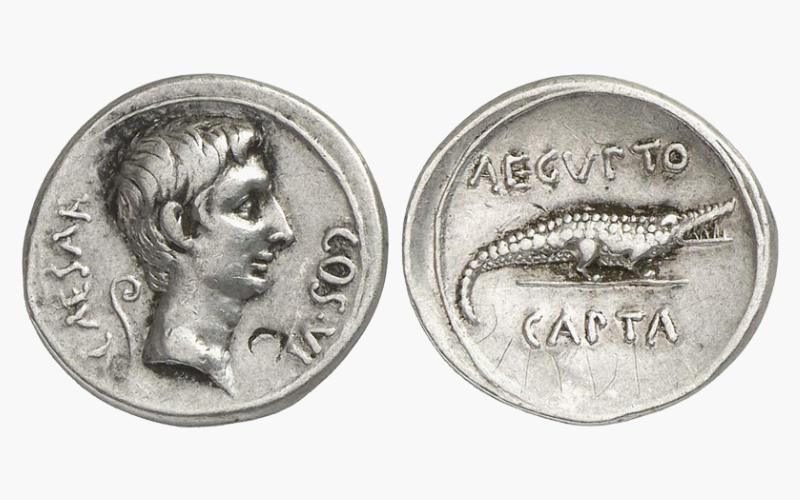
A famous example, also popular with collectors, is the gold aurei and silver denarii issued by Augustus in 27 BC, following the annexation of Egypt into a Roman province. The obverse depicts the head of Augustus and a lituus, a kind of war trumpet, and the reverse shows a chained crocodile, a symbol of Egypt, with the Latin inscription AEGYPTO CAPTA, (‘Egypt captured’). These coins were minted in the Eastern provinces, where, due to a time of political instability, it was thought necessary to advertise the strength of the Roman Empire. This geographical limitation has made the coins difficult to find, and therefore coveted by collectors: a gold Aegypto Capta sold for $268,000 at auction in 2015.
Want more articles like this delivered straight to your inbox? Subscribe to our free newsletter
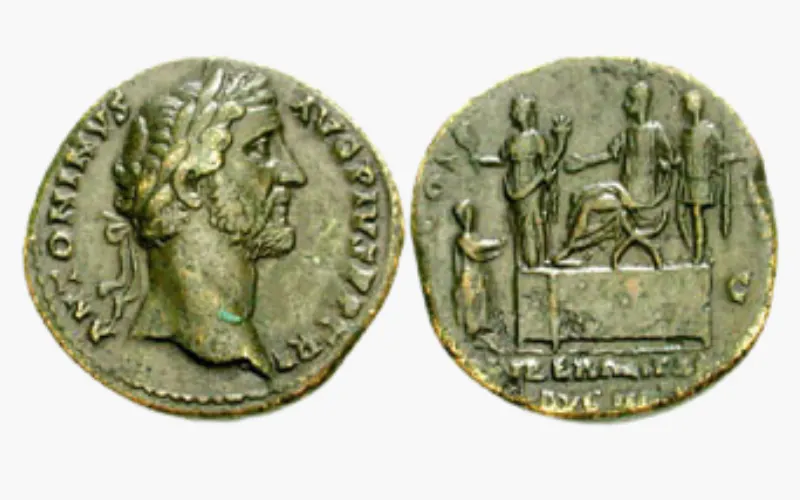
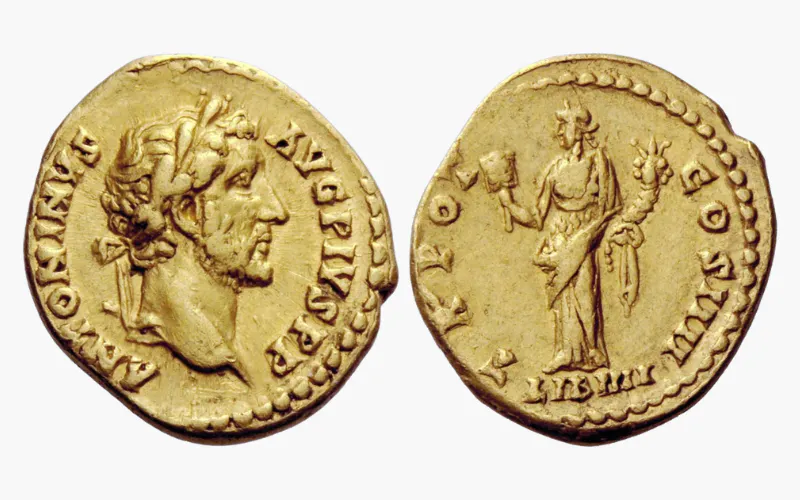
Geography was not the only source of specific imagery: archaeological evidence has shown that within the same territory, different values of coins could contain different iconography. As it became more important for the ruling family to display generosity, emperors started displaying images of their largesse on coins. But while lower denominations showed the practical act of distributing gifts itself, higher denominations simply depicted Liberalitas, the personification of generosity. Two coins issued during the same period by Antoninus (emperor from 138 - 161 AD) illustrate this targeted propaganda. The bronze coin, most likely used by the poorer beneficiaries of his favors, who relied heavily on grain and money distributions, depicts the emperor in the act of handing out gifts. The gold coin, most likely used by the elites, depicts the general concept of generosity. This generality allowed the rich to interpret the image depending on which personal favors they had received from the Emperor.
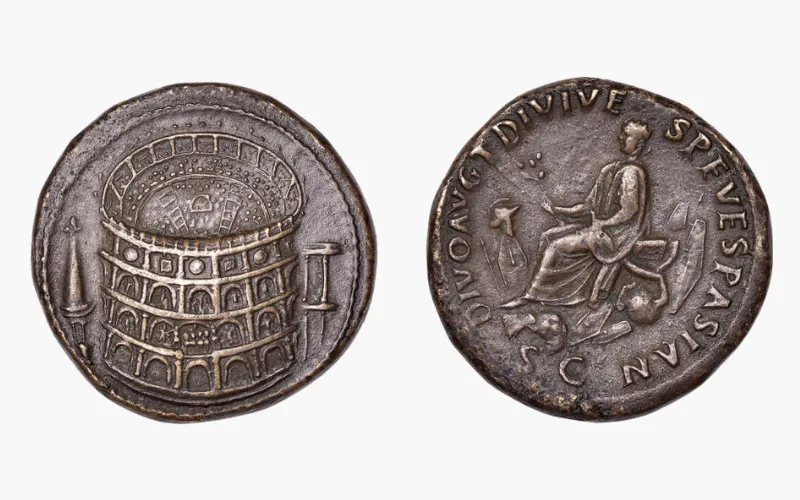
Similarly, monuments enjoyed by the populace were most often depicted on lower-value coins, as Emperors targeted the plebeians with images of the circuses meant to keep them content. One of the most famous examples in the world of numismatics is the bronze sestertii of the Colosseum, issued during the rule of Divus Titus in the late 1st century BC. Today, these coins are hardly common: in 2017, a bronze coin depicting the famous amphitheater was sold for a total hammer price of £310,000. Only 10 specimens of this type are known, 7 of which are in museums.
Related: 5 Tips for Antiques Hunting with a Metal Detector
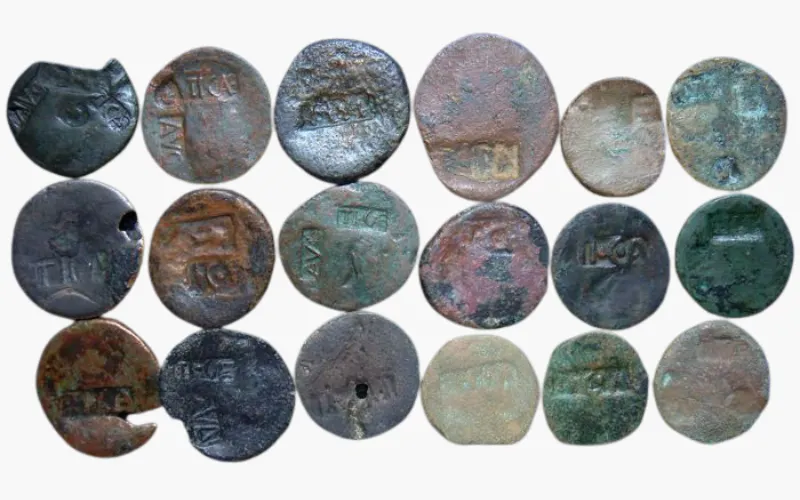
Coins proved so efficient in promoting the image of an emperor that when rulers fell out of popularity, or were assassinated, their coinage was pulled from circulation or effaced. The process, known as damnatio memoriae (‘condemnation of memory’), included the destruction of the emperor’s statues and public inscriptions. This first occurred after the reign of the Emperor Caligula, who, in his brief reign from 37 to 41 AD, declared himself a God, and was murdered as a result. His successor, Tiberius Claudius Augustus, countermarked Caligula’s coins with TICA (an abbreviation of Tiberius’ name), and effaced the features of his portrait.
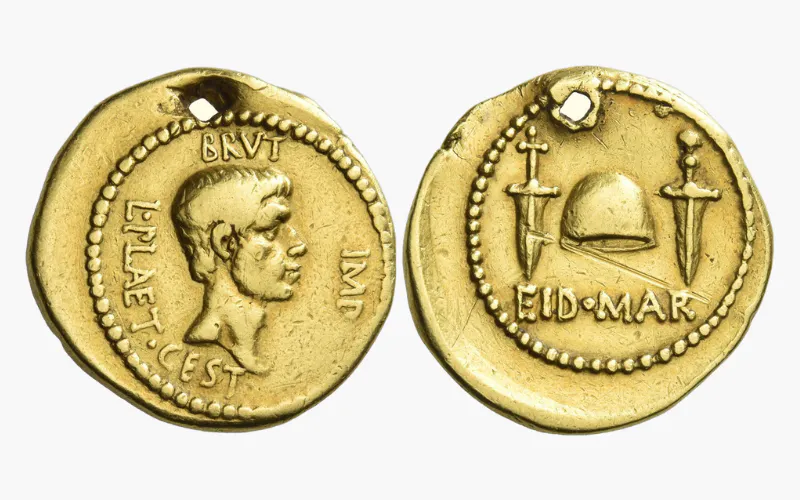
As much as ancient Roman coins celebrated triumphs and virtues, they could also commemorate grave events. The record for the most expensive Roman coin ever sold is held by the Eid Mar aureus, issued by Brutus in 43 BC after Caesar’s assassination. The obverse pictures the head of Brutus, the chief conspirator in the death of Caesar. The reverse displays the date of the deed - the Ides of March - and the cap of liberty, traditionally given to emancipated slaves. The cap is flanked by two daggers, signifying Rome’s murderous liberation from tyranny. Brutus was the second living person in ancient Rome to be depicted on coinage, a year after the ‘the coin that killed Caesar’. One of these gold coins was sold by Roma Numismatics in 2020 for £2.7 million. Only 3 of these gold aurei are known to survive, and while the silver denarii are more common, they can sell for as high as £500,000. The previous record for the most expensive coin was £1.8 million, for a sestertius of Emperor Hadrian sold in 2008.
Related: An $800K Penny Found by Metal Detector
Ancient Roman coins expose the mechanics of political communication. Not only are they beautiful aesthetic objects, coveted by collectors, but also mediums of propaganda that can shed light on Rome’s political and social history.