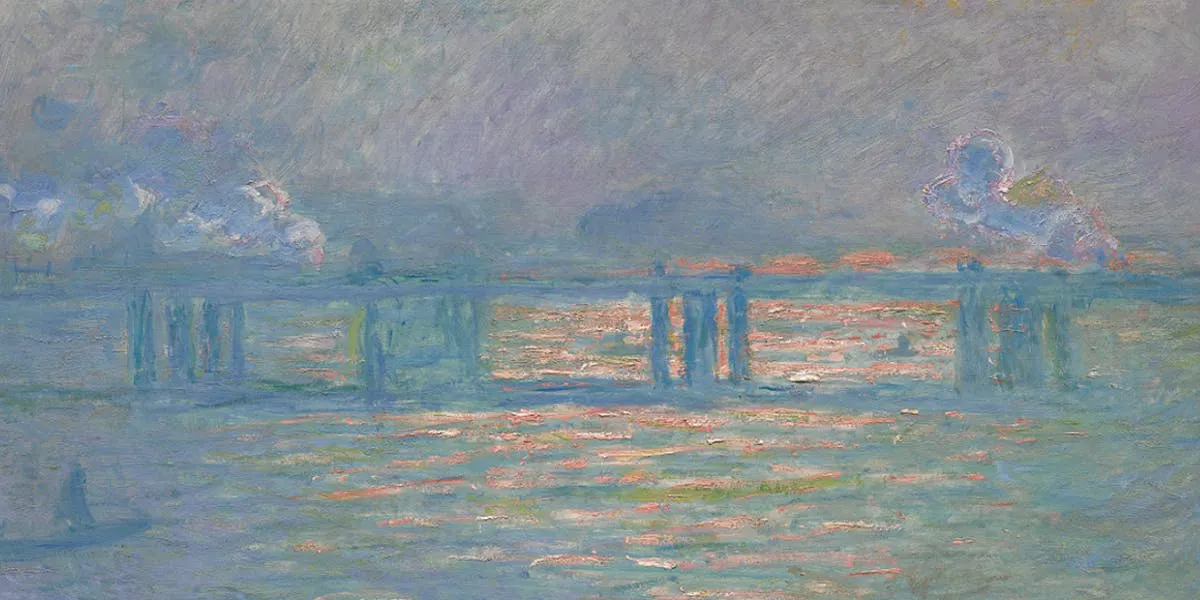
Thought not quite as famous as his waterlilies or haystacks, Monet's impressions of London are celebrated in collections around the world. Charing Cross Bridge is part of this prolific series produced by Monet during his many stays in London in the early 1900s and will be auctioned at presented at Sotheby's on November 12 with an estimate of $20-30 million. Despite the profusion of works painted by Claude Monet in the English capital, the views of Charing Cross Bridge are mostly in private hands and rarely appear on the market, according to the auction house.
Related: Claude Monet, The Father of Impressionism
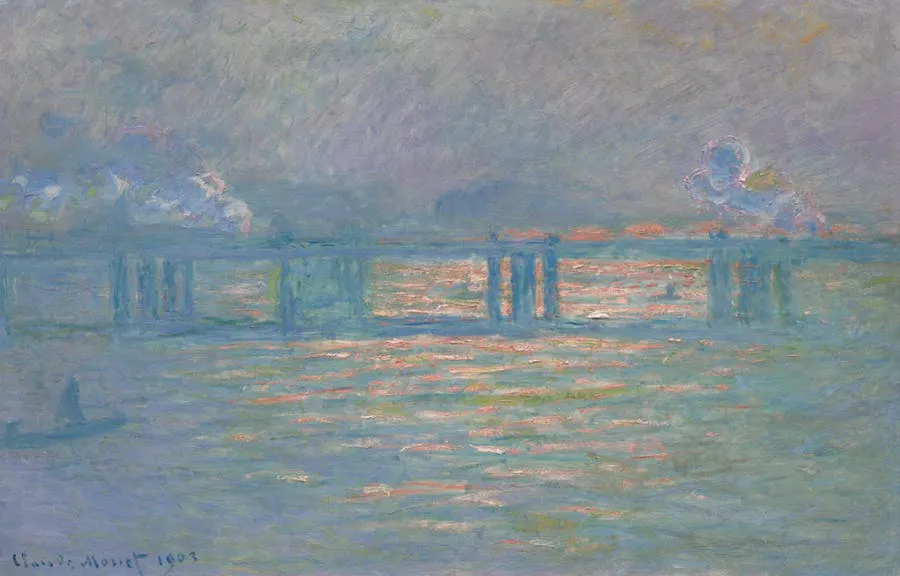
The series of Charing Cross Bridge was painted between 1899 and 1904. It represents the Hungerford Bridge (also called Charing Cross Bridge), with the Palace of Westminster (Parliament) in the background. This particular view was the one Monet enjoyed from his room at the Savoy Hotel, where he lived during his travels. The series, which is first and foremost a reflection on the characteristic London fog enveloping the Thames, includes 37 paintings and joins those of the Parliaments of London and the Waterloo Bridge. This is one of the most prolific periods of the painter's career.
Monet often began his day painting the Charing Cross Bridge and the Waterloo Bridge before transporting his supplies to depict the sunset behind the Houses of Parliament. The changing weather conditions and rapid fog movements on the river did not allow Monet to linger over a work for a long time, often pushing him to grab a new canvas to capture a new scene. At the end of his stay in 1901, the painter had produced nearly a hundred canvases on London, all more or less completed. Many of them were later retouched or finished by the artist until 1903.
For me, a landscape does not exist in its own right, because its appearance changes every moment, but its environment gives it life - the air and the light, which vary continuously ... For me, only the surrounding atmosphere gives objects their real value.
The painting dates to 1903 and has the soft light and ephemeral atmosphere characteristic of a scene captured on the spot. The composition is based mainly on the architecture of the bridge, whose bar and pillars divide the canvas vertically and horizontally, and the few orange highlights that punctuate the surface of the water. Two trains move quickly, releasing thick clouds of steam that stand out from the sky by a play of light, while the boats at the bottom of the composition evoke the peaceful activity of the waterway.
Related: Curator Discovers Monet's Water Lilies Underneath A Wisteria Painting
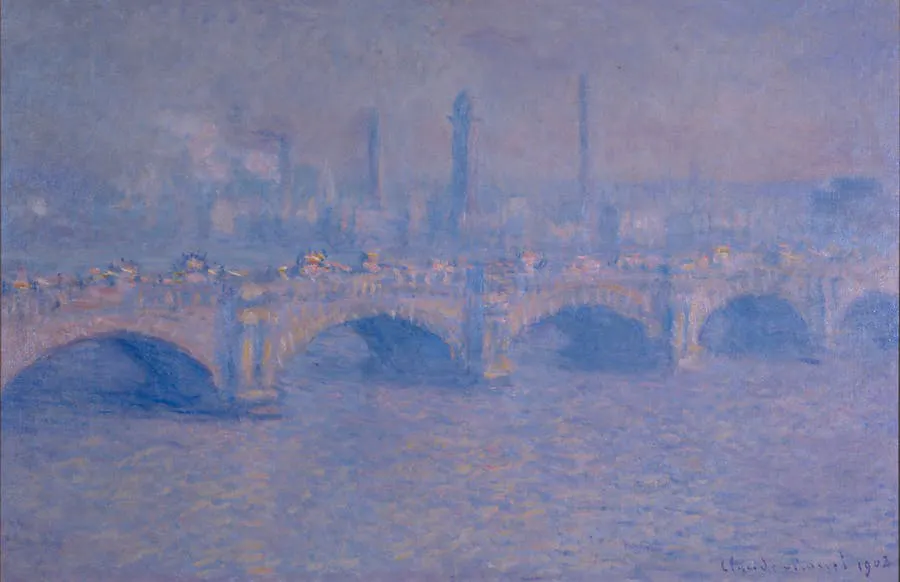
The Impressionist was particularly fond of London fog, although he complained of how quickly the weather changed and made the exercise difficult. In a letter to his friend Rene Gimpel , he confided: "What I like most about London is fog. Without it, London would not be a beautiful city. It's the fog that gives it its depth."
The canvas announced at auction was acquired in 1977 by Andrea Klepetar-Fallek and Fred Fallek and hung over their sofa for more than 40 years. The couple used to have a work of art for each wedding anniversary, which allowed them to assemble an impressive collection of paintings, sculptures and drawings by artists such as Pierre Bonnard, Edgar Degas, Lyonel Feininger and Emil Nolde.
Related: The May of Monet
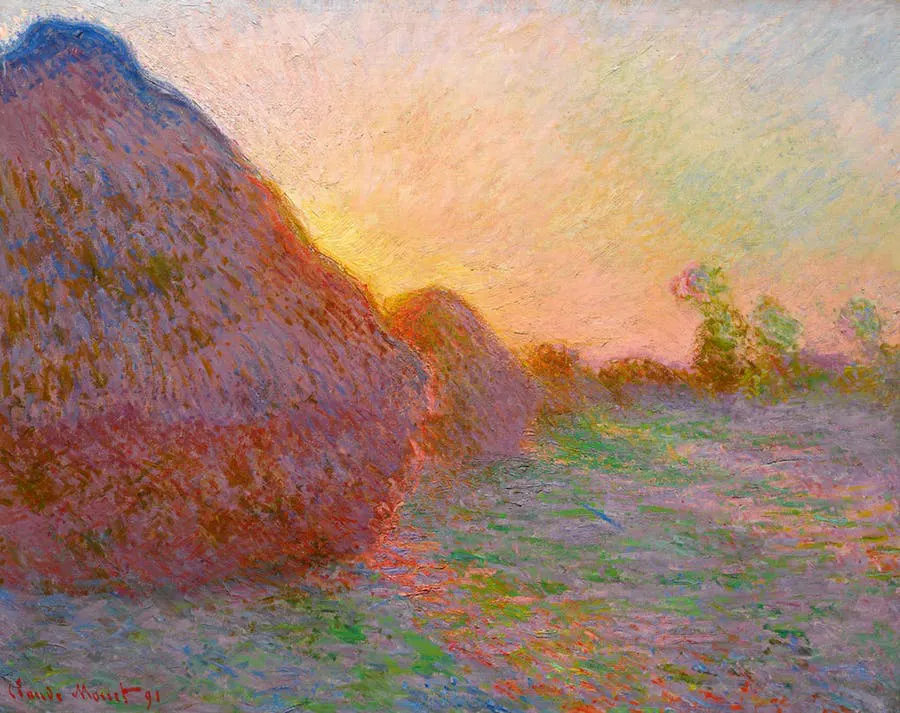
Although Charing Cross Bridge's high estimate is far from the artist's record, established with Meules at $ 110 million last May at Sotheby's in New York, the series' works are rarely available on the market and the sale could attract important collectors.
Related: A Stolen Paul Signac Painting Recovered in Ukraine

Two exceptional works by Paul Signac and Gustave Caillebotte will also be presented during the session. La Corne D'Or (Constantinople) executed by Signac in 1907, is estimated between $14-18 million, while Richard Gallo et son chien Dick, at Petit-Gennevilliers by Caillebotte will enter the room with an estimate of $18-25 million dollars.