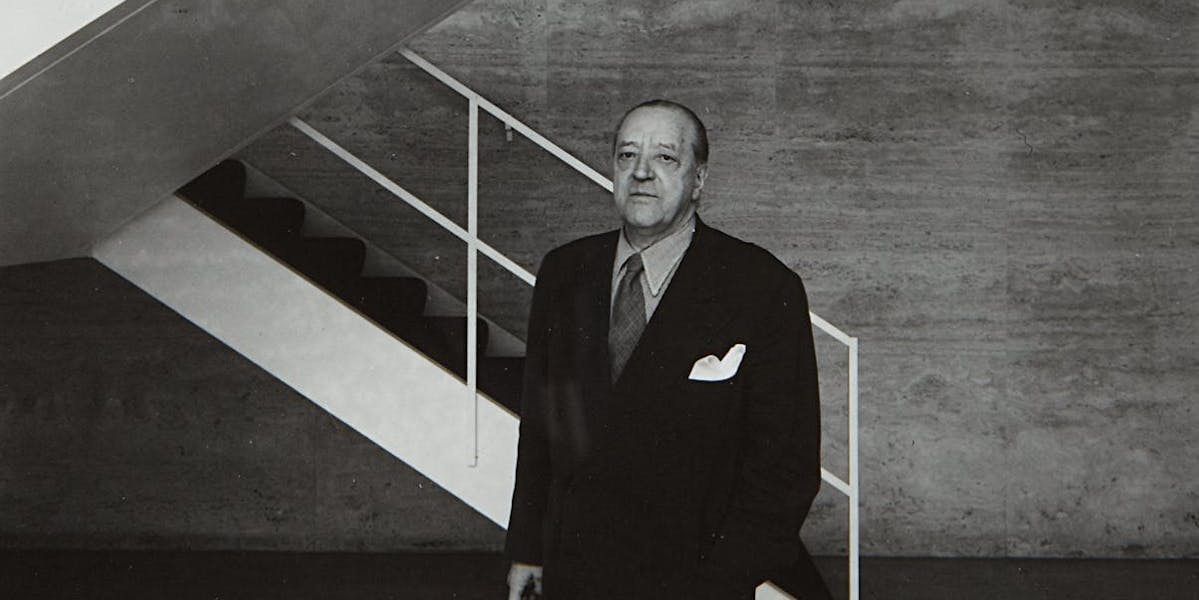
Ludwig Mies van der Rohe was born in 1886 in Aachen, Germany, a heavy industrial area at the time. From a young age, he was able to use his creativity by working in his father’s stone carving shop. He began his career as a designer for plaster ornaments and in 1904, thanks to his drawing talent, was employed by the architect Albert Schneiders.
He had his first experience working on furniture designs for the architect Bruno Paul. In 1907, van der Rohe reached his first breakthrough when he got the opportunity to design a house for Alois Riehl who was a famous Austrian neo-Kantian philosopher and his wife in the style of German reform architecture. Through his constant desire for change, the young designer transferred to the office of the avant-garde designer Peter Behrens, who worked closely with the famous architect – and later director and founder of the Bauhaus – Walter Gropius. During this time, van der Rohe was tremendously inspired and influenced by exhibitions and visits to the constructions of artists such as Karl Friedrich Schinkel and Frank Lloyd Wright.
During this time, his neoclassical style evolved and he was offered to take part in designing the private living and museum space for the Helene Kröller-Müller in the Netherlands. Due to disagreements with Behrens and the client, the contract was later revoked. However, van der Rohe was offered to carry on working on parts of the Kröller-Müller project and so he moved to DenHaag in 1912. There were other designers that were asked to create a draft for the building and the client eventually decided to give the job to Hendrik Petrus Berlage.
An ideal zone of tranquillity.
In 1913, van der Rohe returned to Berlin and decided to marry Adele Auguste, with whom he had three children before separating in 1918. During the First World War, he was drafted in the army and worked for various building companies around Germany.
Related: 100 Years of Bauhaus
The war was something like a wake-up call for many young architects as it became their mission to reshape the norms of architecture. Van der Rohe’s interest grew not just in architecture but also in philosophy and sciences. It was during this time in 1921 (the same year he and his wife separated) that he decided to join an artistic group in Berlin called the ‘Novembergruppe’, or the November group.
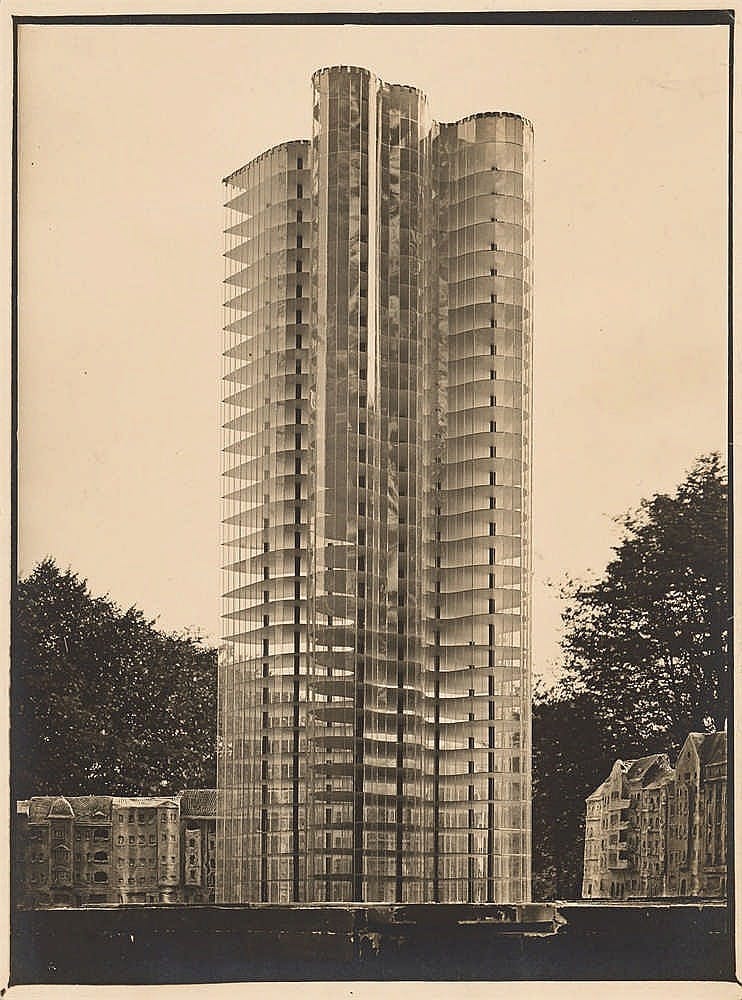
He enjoyed their long discussions about art and the world and eagerly created architectural contributions for the group at the Großen Berliner Kunstaustellung. His design of a glass skyscraper and Landhaus in Backstein caught visitors’ attention. These and three other studies of his were presented in various architecture exhibitions around Europe and were viewed as extremely innovative. These works inspired van der Rohe throughout the rest of his career.
Related: Josef Albers: Thinking Outside the Box
Once the great inflation caused by the First World War was relatively under control, the architect received numerous projects that caused his career to truly take off. After a very successful exhibition in Stuttgart, he was asked to create a building for the Exposició Internacional de Barcelona. The Barcelona Pavilion is known today as his masterpiece.

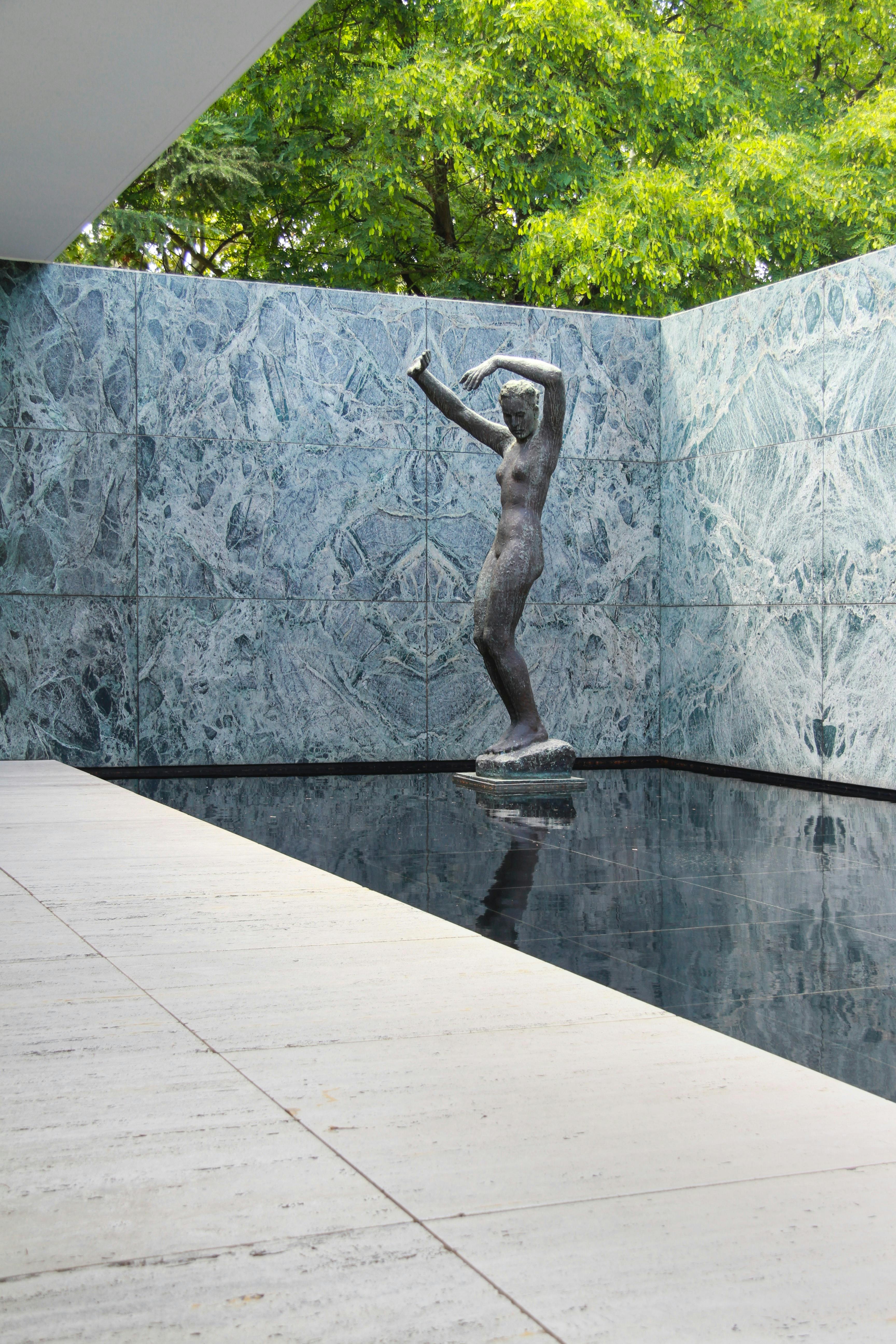
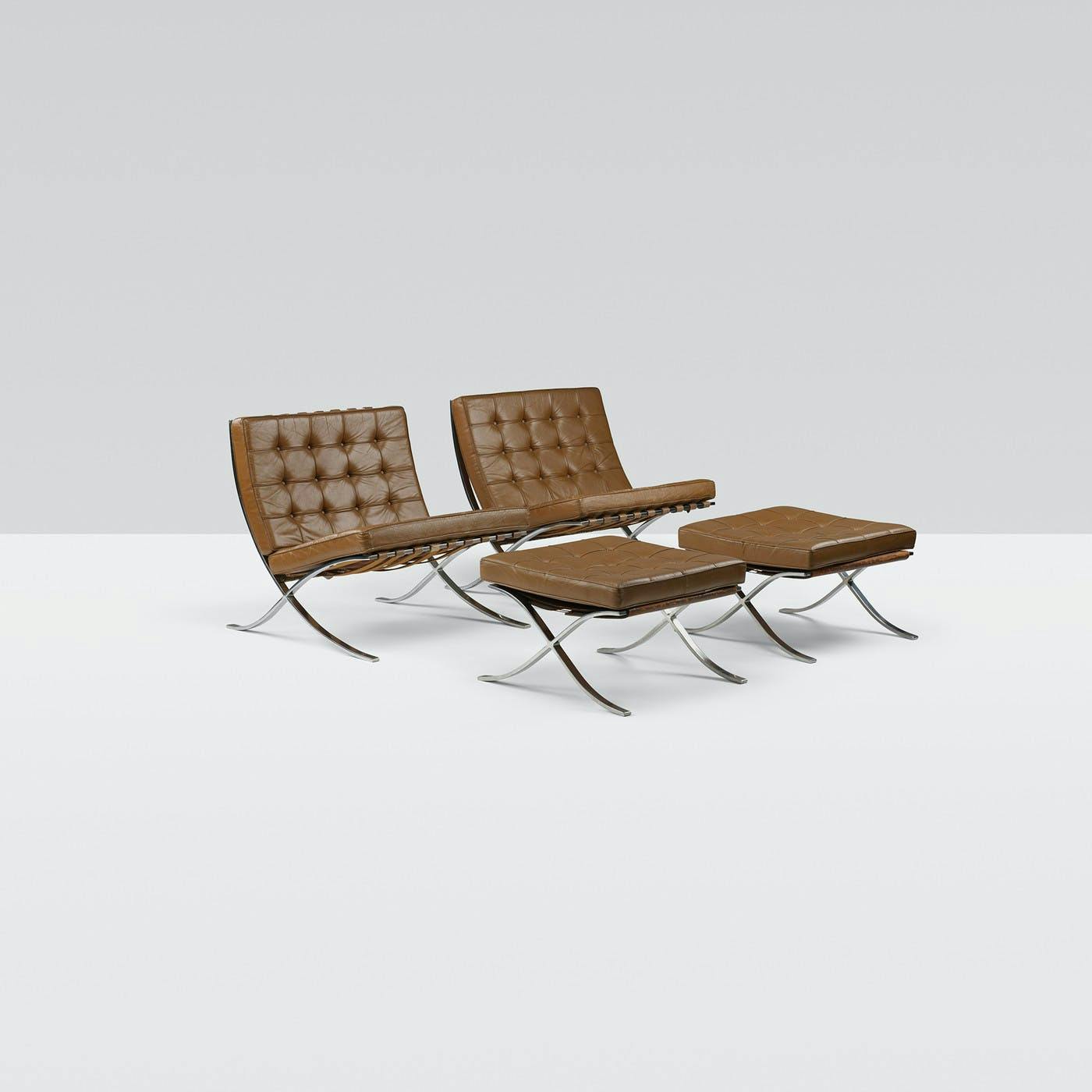
With its expensive materials, such as onyx, marble and travertine, he accomplished a perfect bond between minimalism and extravagance. He worked together with the designer Lilly Reich and they reduced the entire exhibition space to one single sculpture and a few specially-designed Barcelona chairs. It was van der Rohe’s aim to achieve a perfect flow between the outdoors and indoors. Without any furniture, and a lot of stone material, he achieved an exceptional transition between the urban city and nature, or as he said it: "an ideal zone of tranquillity". The building was demolished after the show but it received so much attention that a few Catalan architects reconstructed the building in 1983-86.
After being offered the position as director of the Bauhaus, Dessau, van der Rohe began his teaching career in 1930. This was short-lived however, due to the majority gain of the National Socialism party, who closed the school in 1932. Not wanting to give up the fight, van der Rohe moved back to Berlin and created a private Bauhaus institute there, but it also had to close in 1933 as it could not withstand the pressure of the growing Nazi regime.
Van der Rohe hated the idea of letting politics influence his work and after the National Socialist German Party completely stopped him from working, he decided to leave Germany and move to the United States. It was there where he opened a new design studio in 1939 and accepted a teaching position at the Amour Institute. Through his innovative thinking and design, he was offered to build a campus for the newly founded Illinois Institute of Technology.
Related: Gio Ponti: A Founding Architect
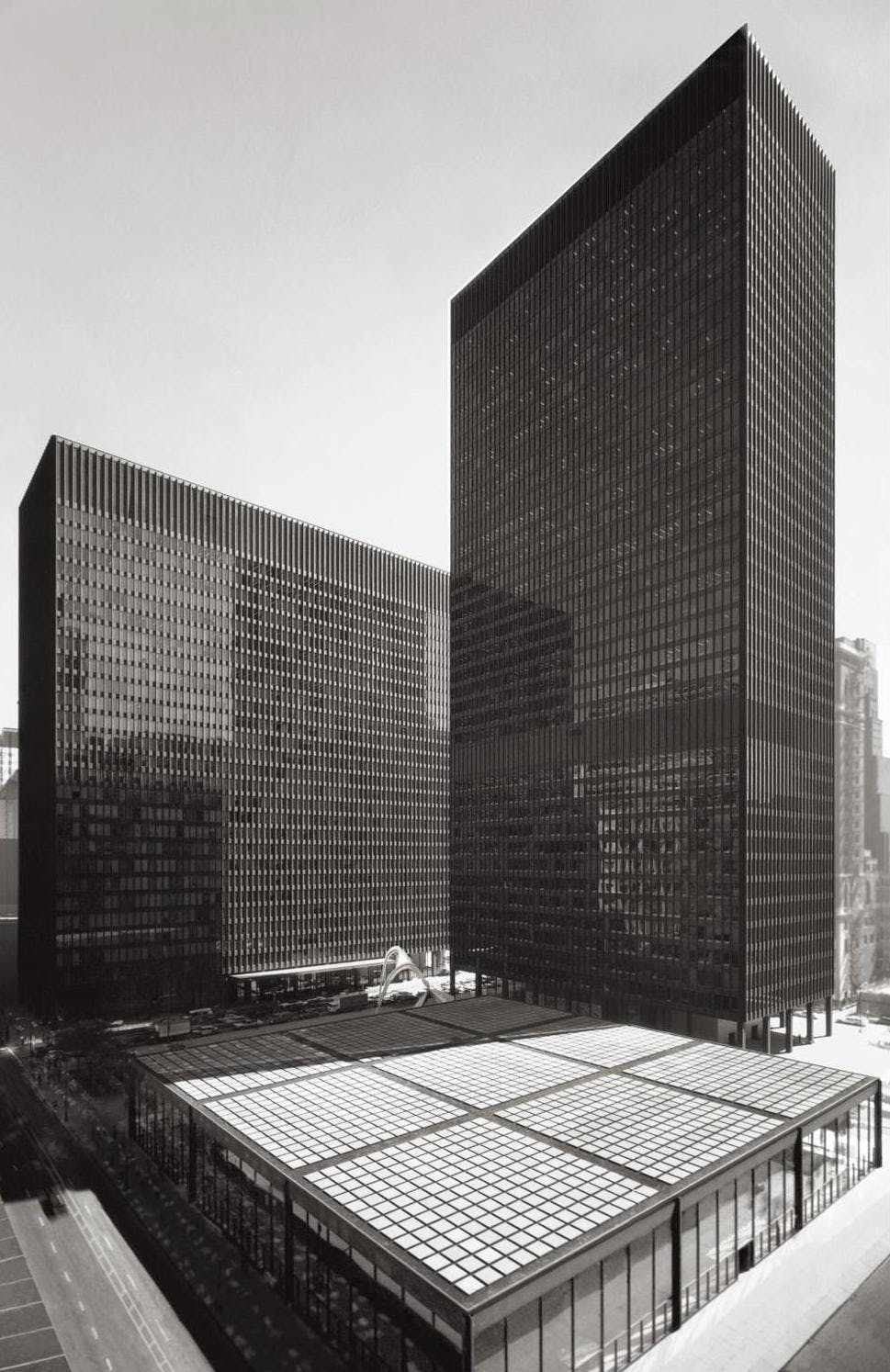
In 1946, he met the project developer Herbert Greenwald, who worked with van der Rohe to build six skyscraper apartment buildings throughout the States. The steel construction that he applied to these buildings was a part of almost all of his future designs. Although van der Rohe carried on working on architectural projects for the rest of his life, he only designed three more houses.
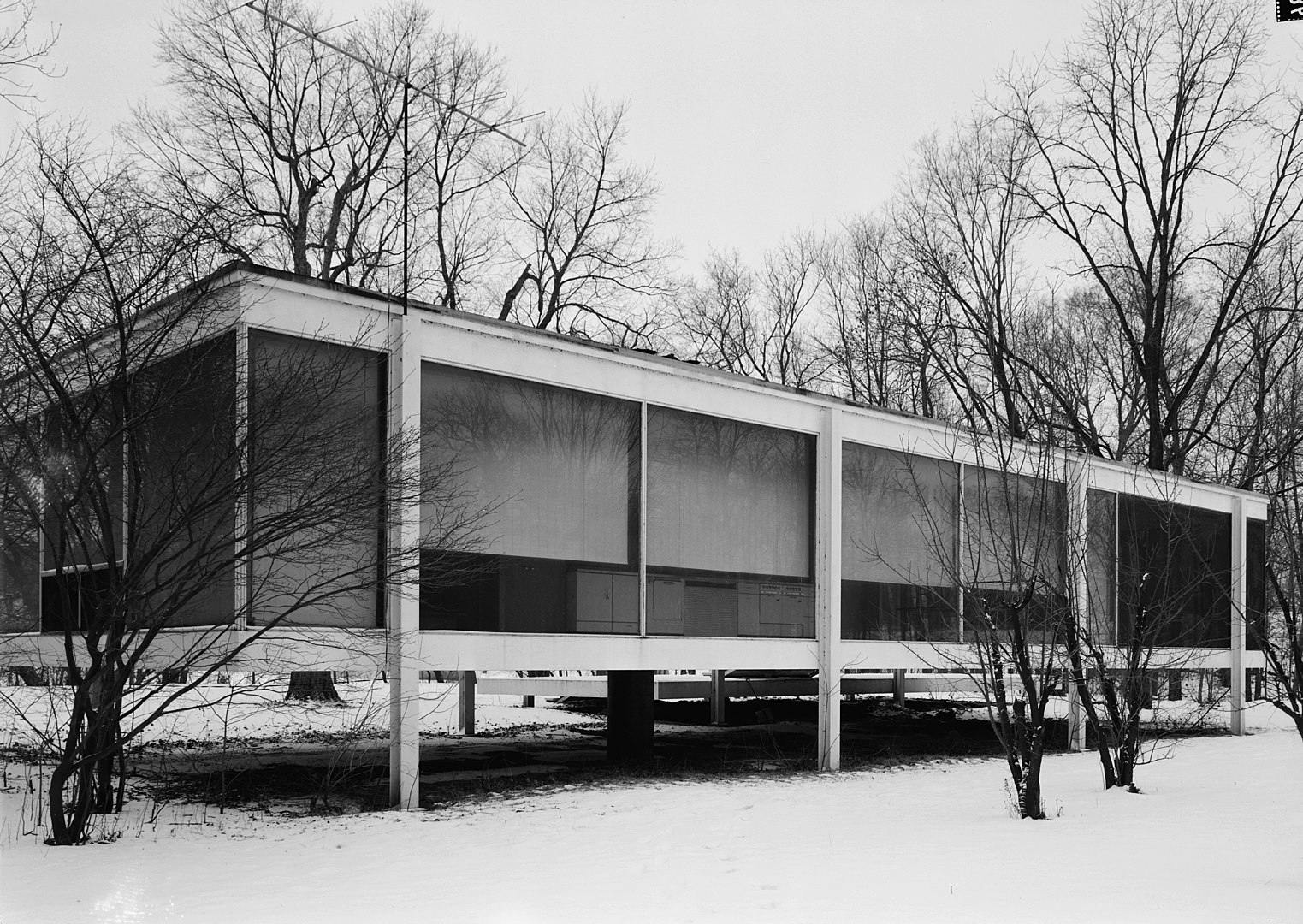
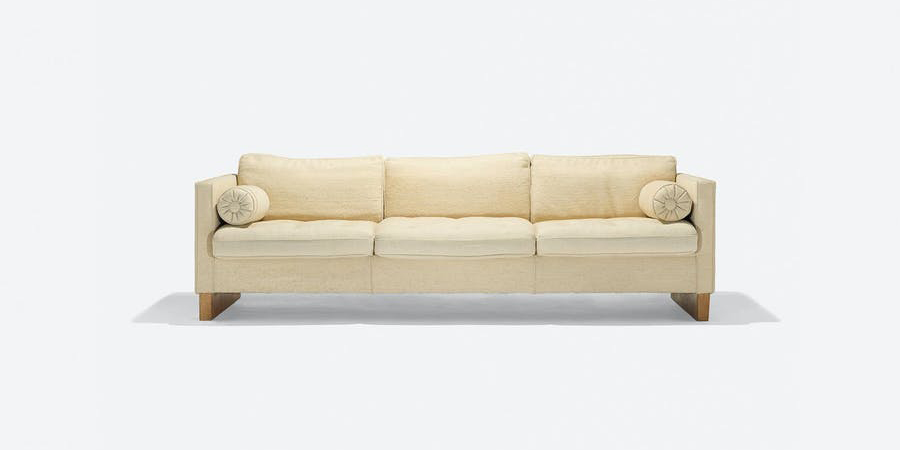
The most well-known is the Farnsworth House (1945-51), which was a one-room building built completely out of steel and glass. It sold in 2013 to The National Trust for Historic Preservation for $7.5 million, exceeding its high estimate of $6 million. Today a museum, the interior includes van der Rohe’s famous Barcelona chair, which has become one of the architect’s trademarks. These chairs sell for many thousands on the auction market: in 1997, a model MR 90 version sold for $203,105 at Christie’s. Other van der Rohe pieces are also collectors’ items. His Tugendhat coffee table, model no. MR 150/3 from c. 1929-31, sold for $345,862, 383% above its estimate, at Phillips in 2012.
Van der Rohe died at the age of 83 of esophageal cancer in Chicago after a lifelong career filled with recognition and awe for his incredible contribution to the architectural world.
Explore more Ludwig Mies van der Rohe here
Article by Sophie Bubmann