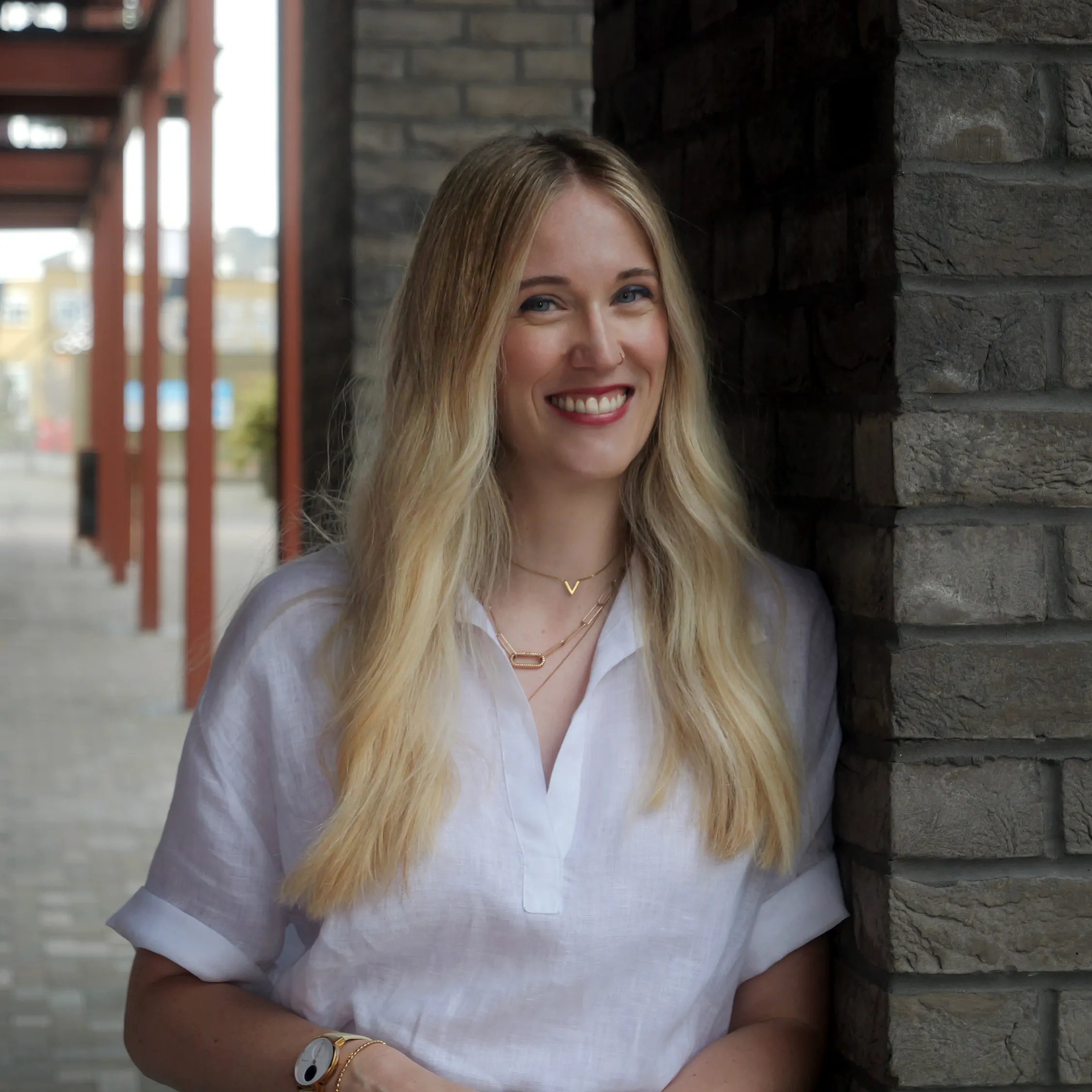
Born May 7, 1966 to Mexican-American actor Anthony Quinn, Lorenzo had a childhood divided between Italy and the United States. He then embarked on a course at the Academy of Fine Arts in New York to become a surrealist painter, but it was in sculpture that he found his way, thanks to a project which proved to be his first completed work.
Quinn draws his inspiration from the great masters, like Michelangelo, Gian Lorenzo Bernini and Auguste Rodin, and constantly seeks to transcribe authentic emotions. His ideas are impressed with lightning – his inspiration comes in a millisecond. He owes this creative urgency, above all, to his incessant observation of daily life and everything that surrounds it.
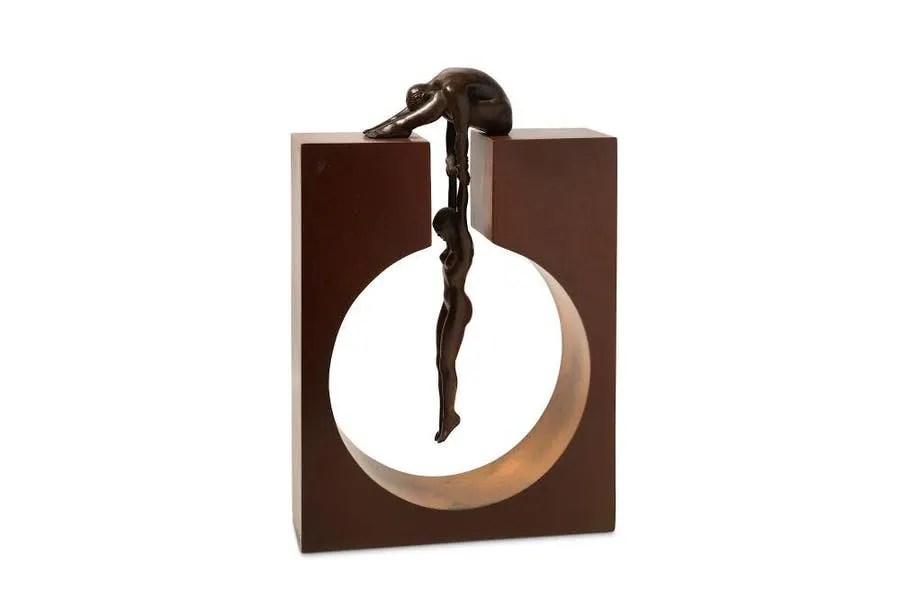
But if ideas arise in abundance, a project can take several months to be finalised, because its meaning must be clear and deep. Quinn conceives each of his works in writing, and then the poetic text is transcribed into a three-dimensional piece, but always as an integral component of the work, and not as a simple explanation of its concept.
See also: Tony Cragg: Sculptor of Energy
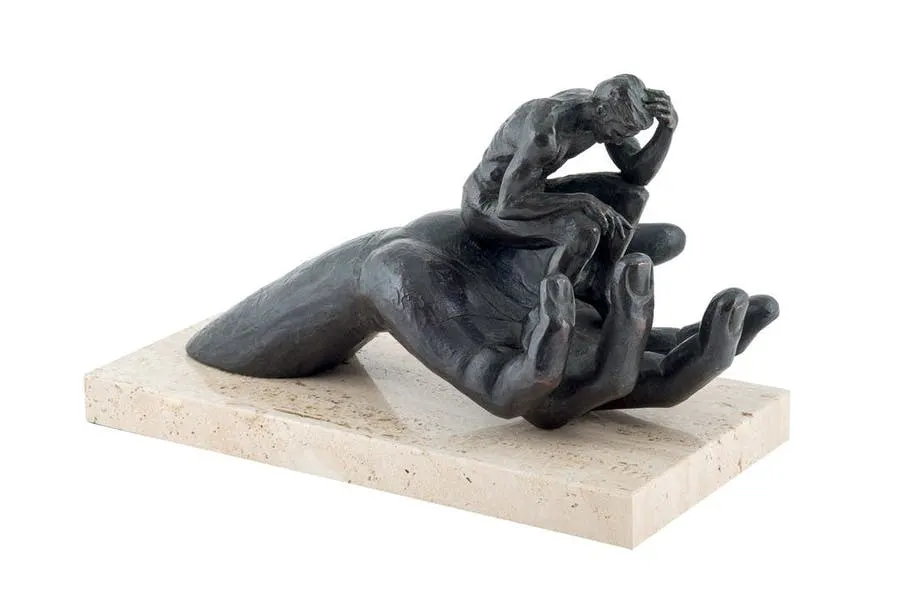
Quinn has made a name for himself with his ultra-expressive sculptures of human hands, a part of the body which he says is heavy with meaning.
I wanted to sculpt the part of the human body considered to be the most difficult and the most demanding from a technical point of view. The hand has a lot of power, that of loving, hating, creating, destroying.
Quinn's work is present in many private collections, while several institutions have used his talent for remarkable commissions, such as his The Tree of Life for the United Nations, and his commemorative sculpture of the Basilica of Santo in Pueda for the Vatican. For the 2011 Venice Biennale, he presented This is Not a Game, a project comprising on the one hand a simulated shell impact on a wall, and on the other a Soviet tank surrounded by life-size soldiers, manipulated by giant hands.
See also: Jenny Saville: The Art of the Sculpted Nude on Canvas
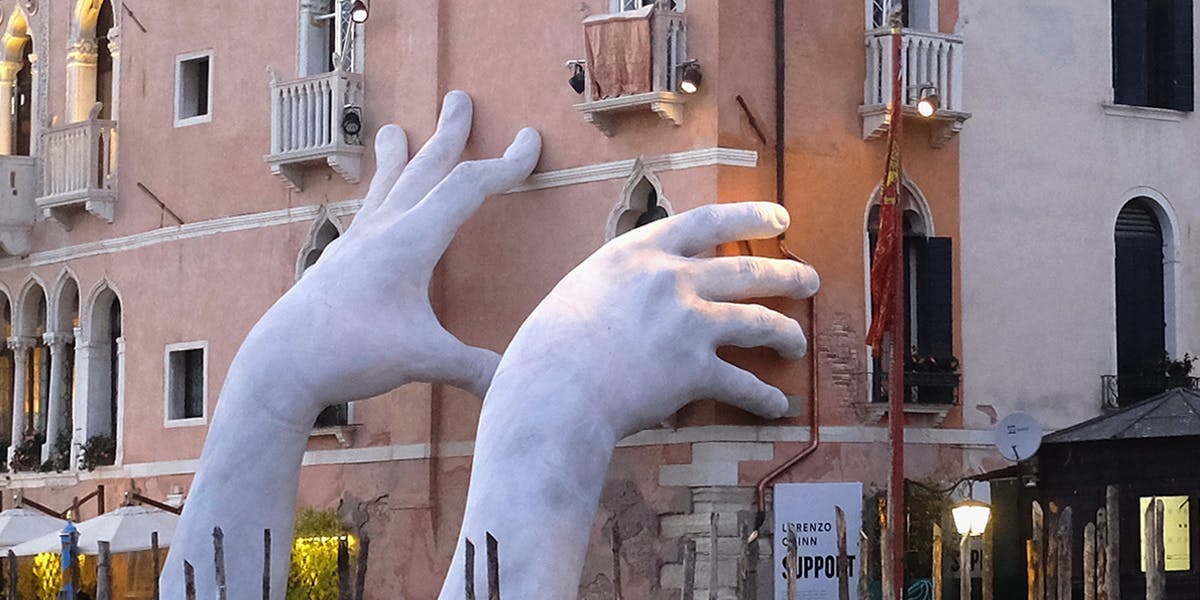
And no one can forget his Quinn’s monumental hands temporarily installed on the Grand Canal in 2017. 26 to 30 feet high, the two body parts emerged from the water to support the Ca’ Sagredo Hotel Palace. Entitled Support, the work aimed to draw attention to the rising sea level, which threatens to destroy the architecture and heritage of Venice.
Quinn’s works have been exhibited internationally and several permanent installations are now visible in public spaces.