
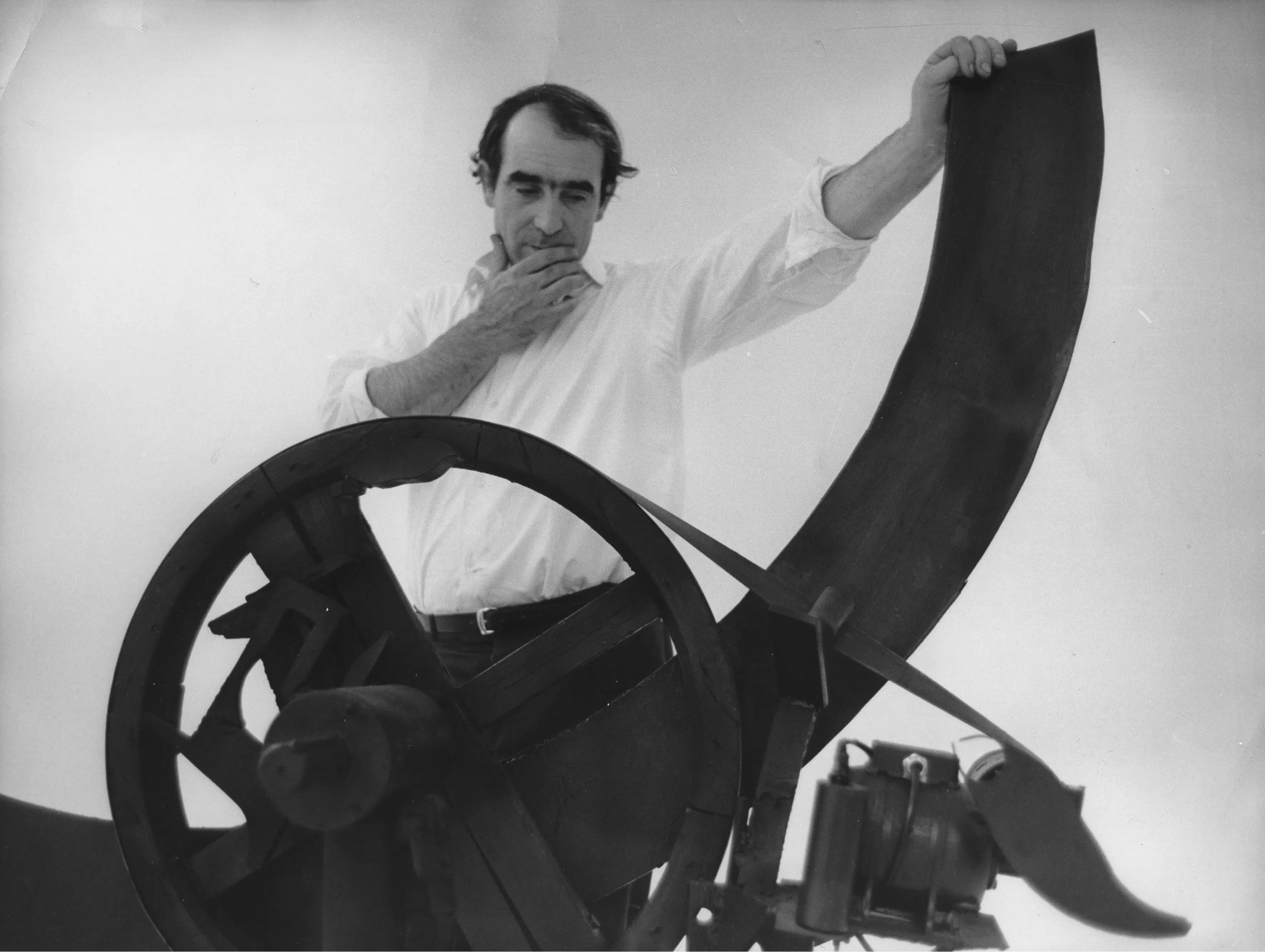
Jean Tinguely (1925-1991) was one of the most original artists of the 20th century. His work focused on movement expressed in futuristic terms that brought everyday objects to life. Assembled as a single being, they became robots driven by the ‘mechanics of chance’.
Tinguely was born in Fribourg, Switzerland in 1925. His family moved to Basel after his birth and it was there that he designed his first machines while playing in the woods. In 1941, he began his studies as a decorator and entered the School of Applied Arts in Basel. There, he met his future wife, Eva Aeppli, and made his first metal sculptures (Stabilé II, c. 1948). From the beginning, the influence of Alexander Calder, Wassily Kandinsky, and Kazimir Malevich became apparent in his work.
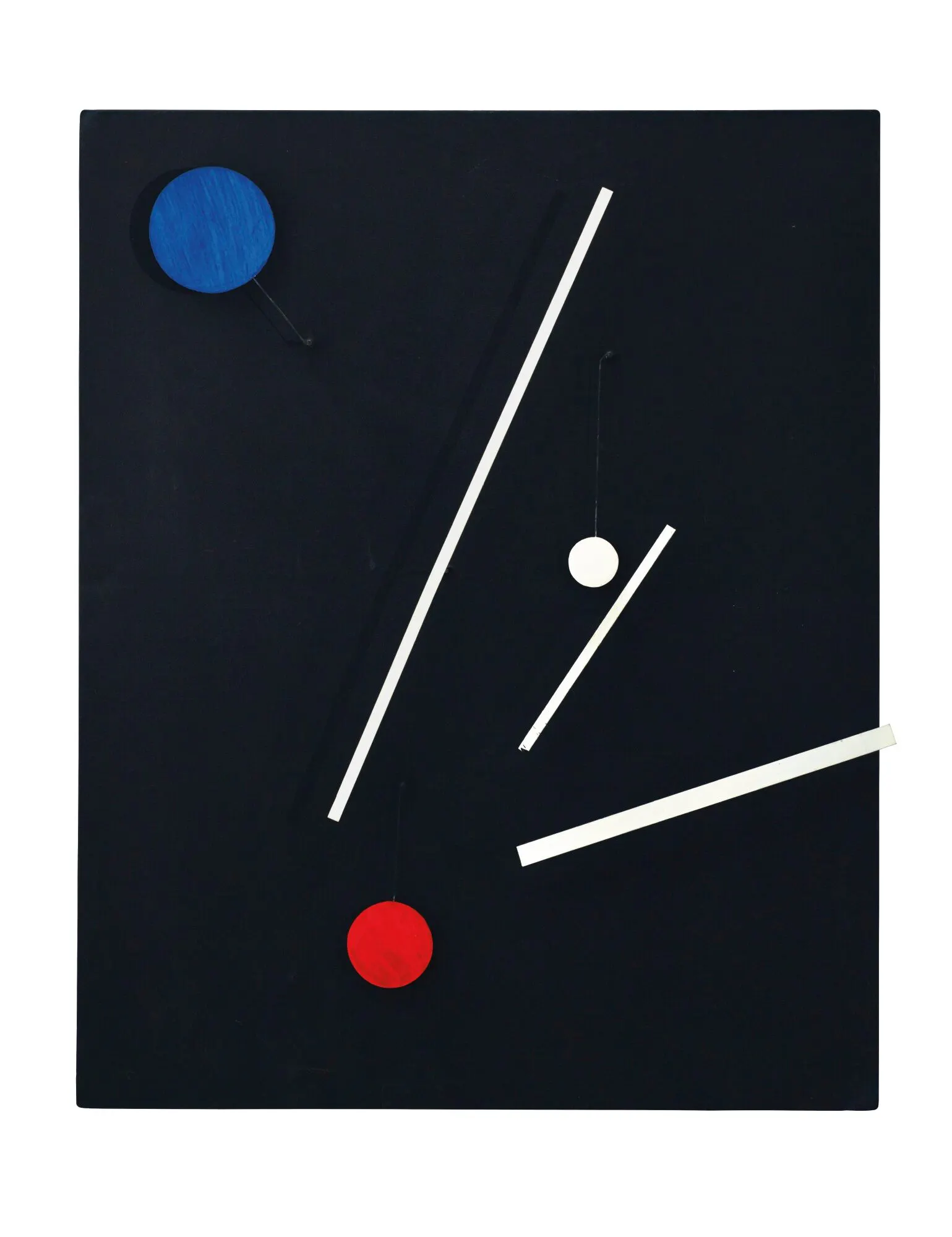
In 1952, the couple moved to Paris and a first exhibition of Tinguely's work was held at Arnaud Gallery in 1954. He also exhibited in Milan and Stockholm, and met art critic Pontus Hultén. As early as 1955, Tinguely and Aeppli rented a large workshop located at Ronsin impasse. It was there that the artist went on to design his most beautiful pieces. The first machines testify to the spirit in which he developed all of his models: assemblies of ordinary objects animated by a mechanical life. However, unlike Leonardo da Vinci’s machines, Tinguely's ‘anti-machines’ are knowingly imperfect: degraded, noisy, uncontrollable. They are precisely useless (or rather unusable), dedicated solely to the liberation of movement and energy.
See also: Tony Cragg: Sculptor of Energy
In 1955, Tinguely participated in the first exhibition of kinetic art at the Denise René Gallery in Paris. Also included in the show were works by Alexander Calder, Marcel Duchamp and Victor Vasarely. In 1959, Tinguely inaugurated the Meta-Matics series: mechanical sculptures that drew by themselves and ran on gasoline. Several models were exhibited at the Iris Clert Gallery, also in Paris, as well as a monumental version which showed during the first Biennale de Paris, under the astonished eye of André Malraux.
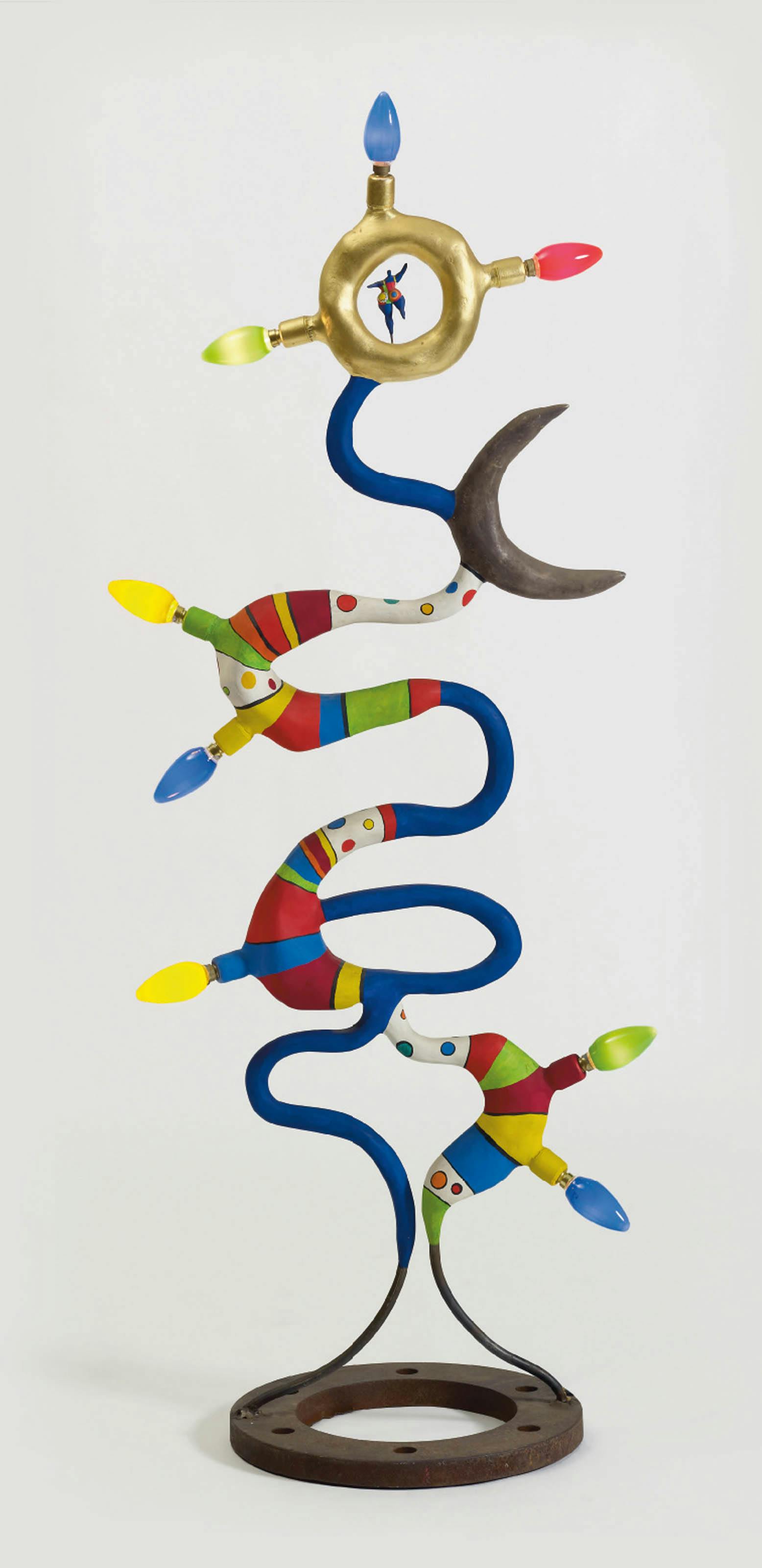
In 1960, Tinguely and Aeppli divorced, and then Tinguely met Niki de Saint-Phalle, who later became his partner. He was in contact with Daniel Spoerri, Yves Klein and Pierre Restany during this time, and together they created the manifesto of ‘New Realism’. After 1960, his creations took a self-destructive turn. In New York, he presented a sculpture composed of waste that disintegrated directly in the gardens of MoMA, New York. “It was a splendid work of art,” the artist said. “She had disappeared, she had turned around, she had no sense, she became pure spirit.”
See also: Alberto Giacometti: The Unbearable Lightness
When Tinguely returned from the United States, he began a new phase of creation. His machines became noisier and more metallic, and he designed other self-destructive installations, such as Étude Pour une Fin du Monde No.1 (1961) and No.2 (1962). This series was followed by Baluba in Zoomorphic Drums (1962) and Heureka (1964): odes to a movement that fascinated the artist.
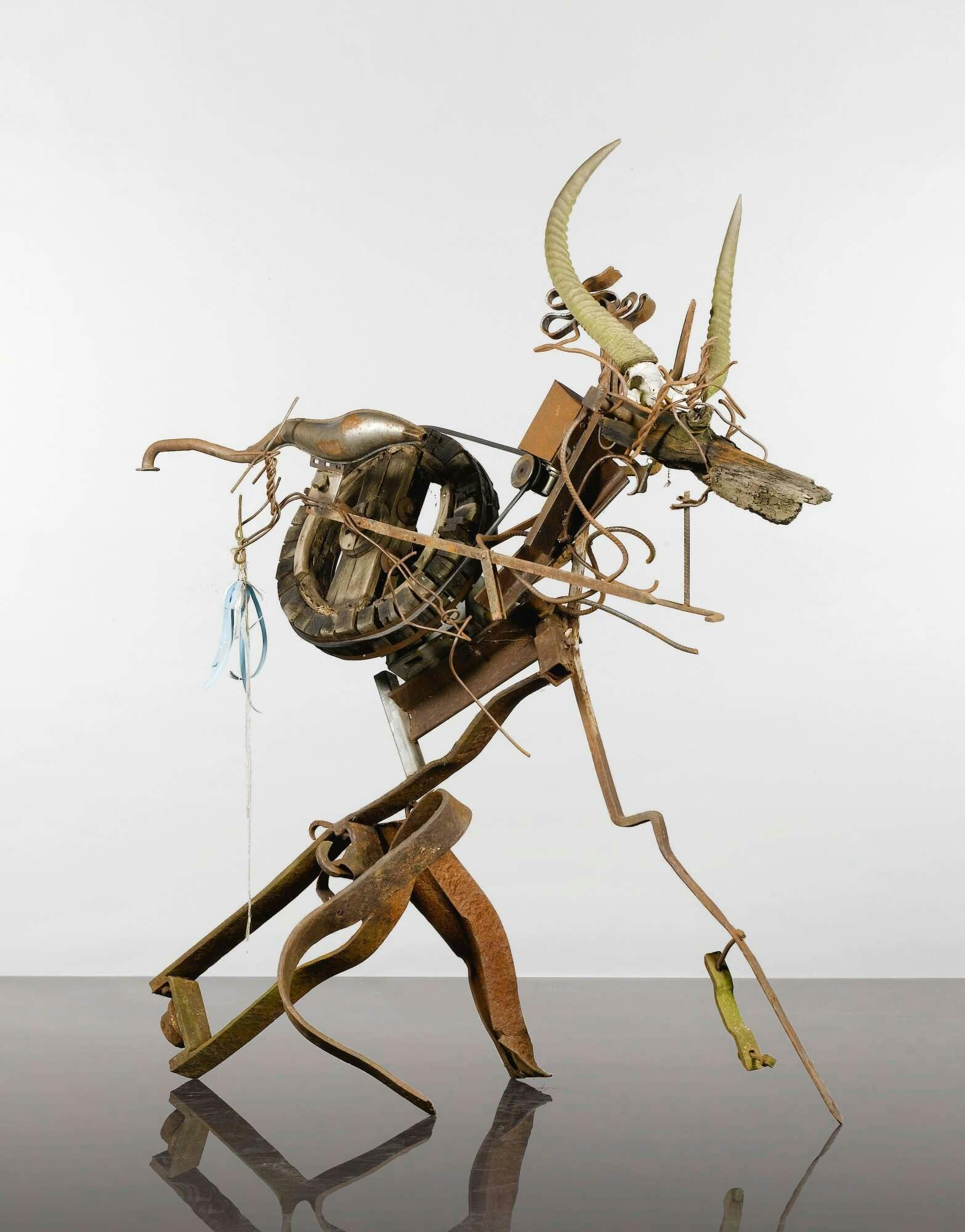
Tinguely’s machines soon reached impressive dimensions: Requiem for a Dead Leaf (1967) measured 36 × 10 feet. In Fantastic Paradise, Tinguely’s creations played against Niki de Saint-Phalle’s Nanas (1967). Gradually, humor seemed to give way to a soft derision. The senseless, aimless movement of the sculptures becomes an echo of vanity and futility. Nevertheless, the sculptures remained monumental, like Chaos No.1 (1973). Pharaonic projects were conceived but never saw the light of day, such as a 360-foot tall Lunatour. Each installation required days of assembly and endless materials, just like a real construction site.
She had disappeared, she had turned around, she had no sense, she became pure spirit.
In 1970, Tinguely obtained a piece of land in Northern France on the Milly-la-Forêt side. He installed a 72-foot tall Cyclop head, in which one could stroll, and, in 1977, he presented his famous Crocrodrome in Paris during the inauguration of the Centre Pompidou. In 1978, he designed his first Méta-Harmonies – machines that produce neither music nor noise, but sound. From 1979, he also took part in Niki de Saint-Phalle’s famous Tarot Garden in Tuscany.
See also: Yayoi Kusama: The Queen of Cool
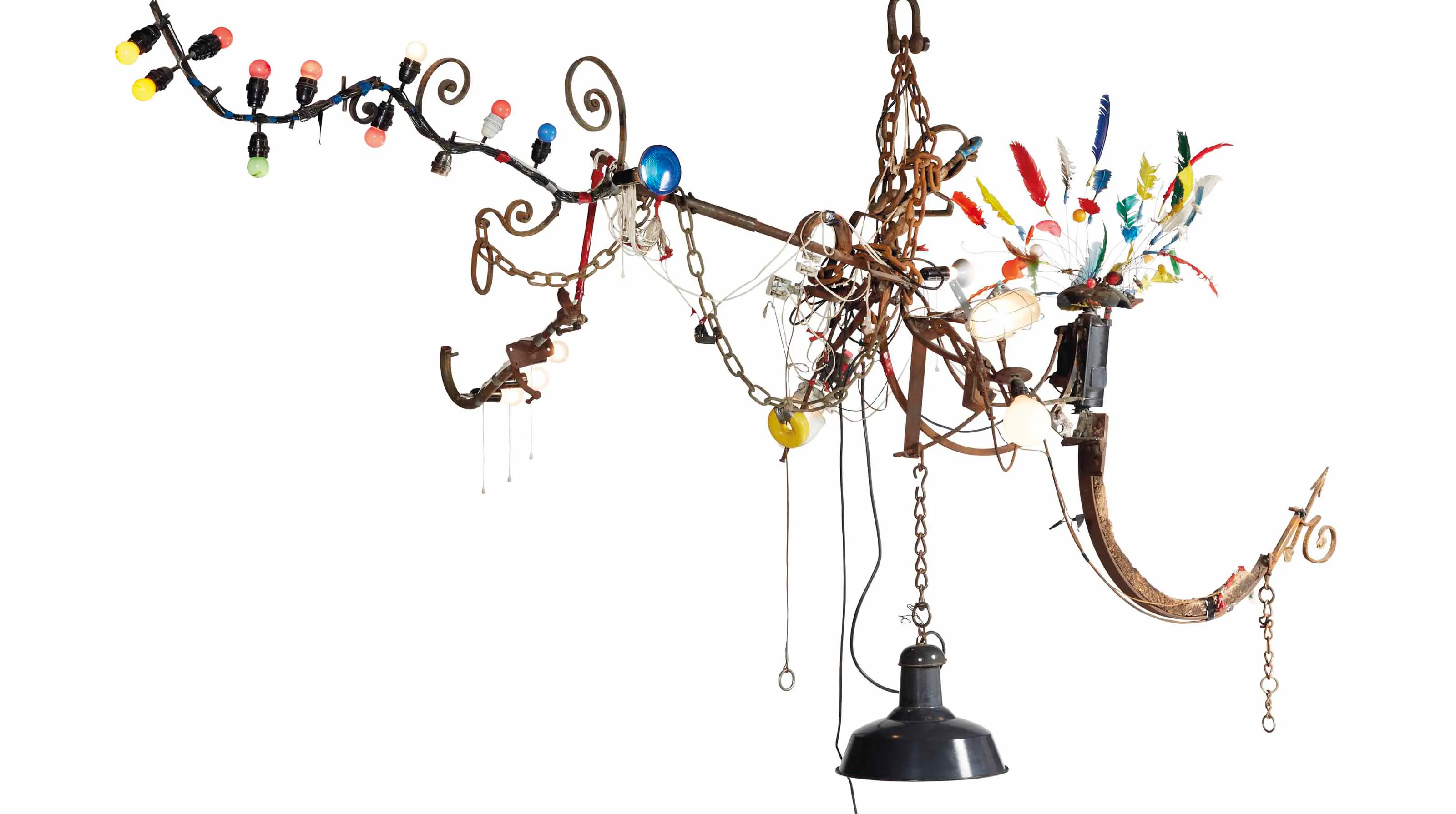
His structures of the 1980s took a darker turn. Tinguely incorporated animal bones, and, as a speed enthusiast, parallel to this he drove F1 cars. In 1987, he designed the Grosse Méta-Maxi-Maxi-Utopia for the major retrospective dedicated to him at the Palazzo Grassi in Venice. The Mengele-Danse macabre series (1985) completed this dark and superb cycle. The spirit of death reappeared in his initiative of the Torpedo Institute built in Freiburg in 1988 (now closed).
The artist died in 1991, and many of his works are particularly sought after today. In 2008, he set a personal record with the sale of his Metamatic No. 7 for $2 million at Sotheby's. His Meta-Malevitch series, also very popular, reached $730,710 in 2015 at Sotheby’s.