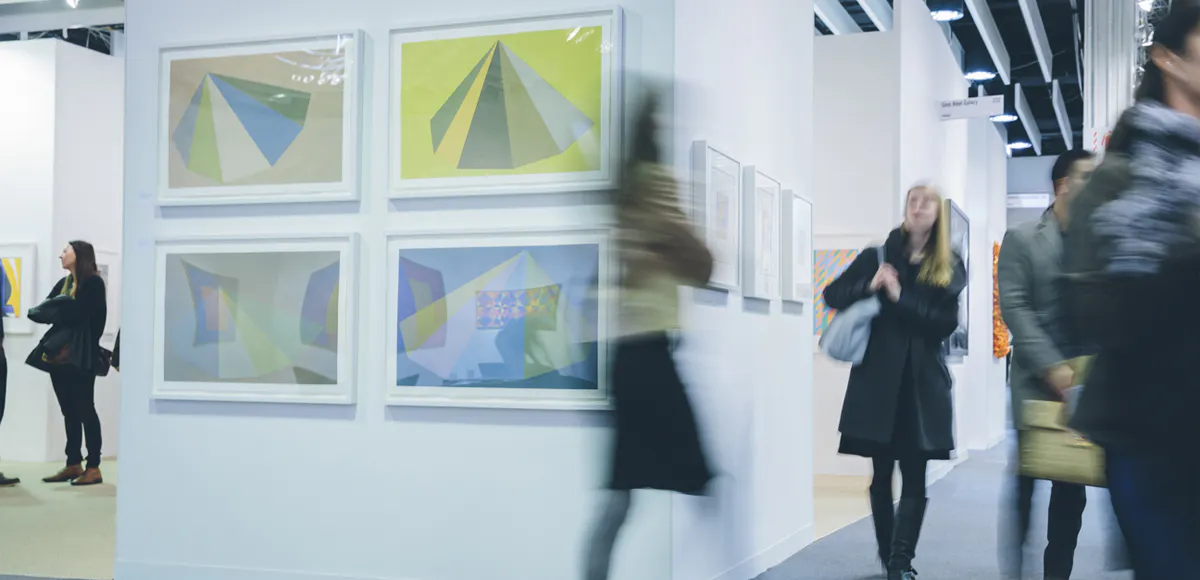
The original Armory Show was held in 1913 and was a watershed moment for the art world by introducing modern European art to an American audience. Works by Duchamp and Matisse especially shocked American conservatives, bu the show ultimately became a harbinger for the redefinition of art in the 20th century.
"It is my belief that as a fair we must continue to provide a platform that sparks critical dialogue," said Nicole Berry, the director of the Armory Show. "It is our obligation, but also our privilege to showcase important voices and to be a vanguard for the art community as well as a robust and vibrant marketplace."
The Armory Show of 2020, a fair that was originally founded in the Gramercy Park Hotel in 1994, still upholds the tenets of its namesake by bringing a wide range of innovative contemporary art from around the world to New York every year. However, next year the fair will take place in the fall at the newly renovate Javits Center on the city's west side.
But for now, don't miss the Armory Show at Piers 90 and 94 through March 8. Here are the booths to know:
Pier 90
Pier 90 is composed entirely of curator-led projects and initiatives that address themes such as revisionist histories, social satire, and the contemporary re-contextualization of 20th century work.
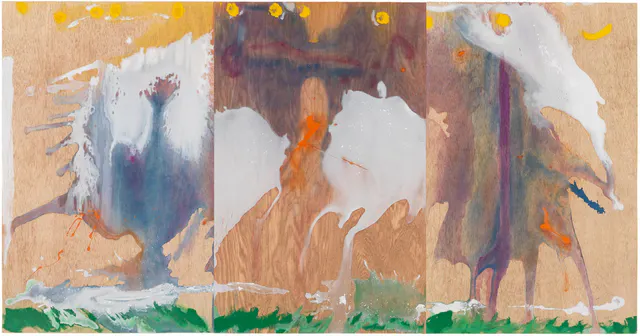
Susan Sheehan's gallery mounted an exhibited titled "The Handmaker's Tale: American Prints and the Women Who Made Them," which celebrates the women who led print-making workshops in the post-war years. Prints on display are from the era's most renowned artists like Helen Frankenthaler, Alexander Calder, Ellsworth Kelly, Lee Krasner and Jasper Johns.
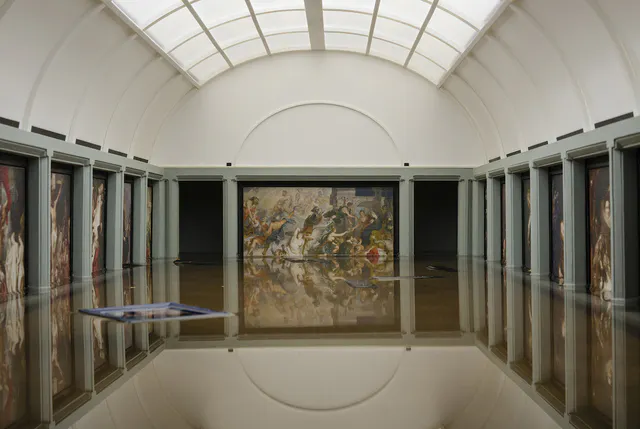
Inspired by the flooding of the Seine in 2018, and the effect of environmental changes on cultural institutions, Tezi Gabunia created an exhibit for Berlin's Galerie Kornfeld booth that combines a model and film. The film, titled Breaking News: The Flooding of the Louvre (2018–20), shows the Louvre's Medici gallery, which displays Peter Paul Ruben's large-scale masterpieces, filling up with water, while the model, a mini reconstruction of the gallery, simultaneously fills with actual water.
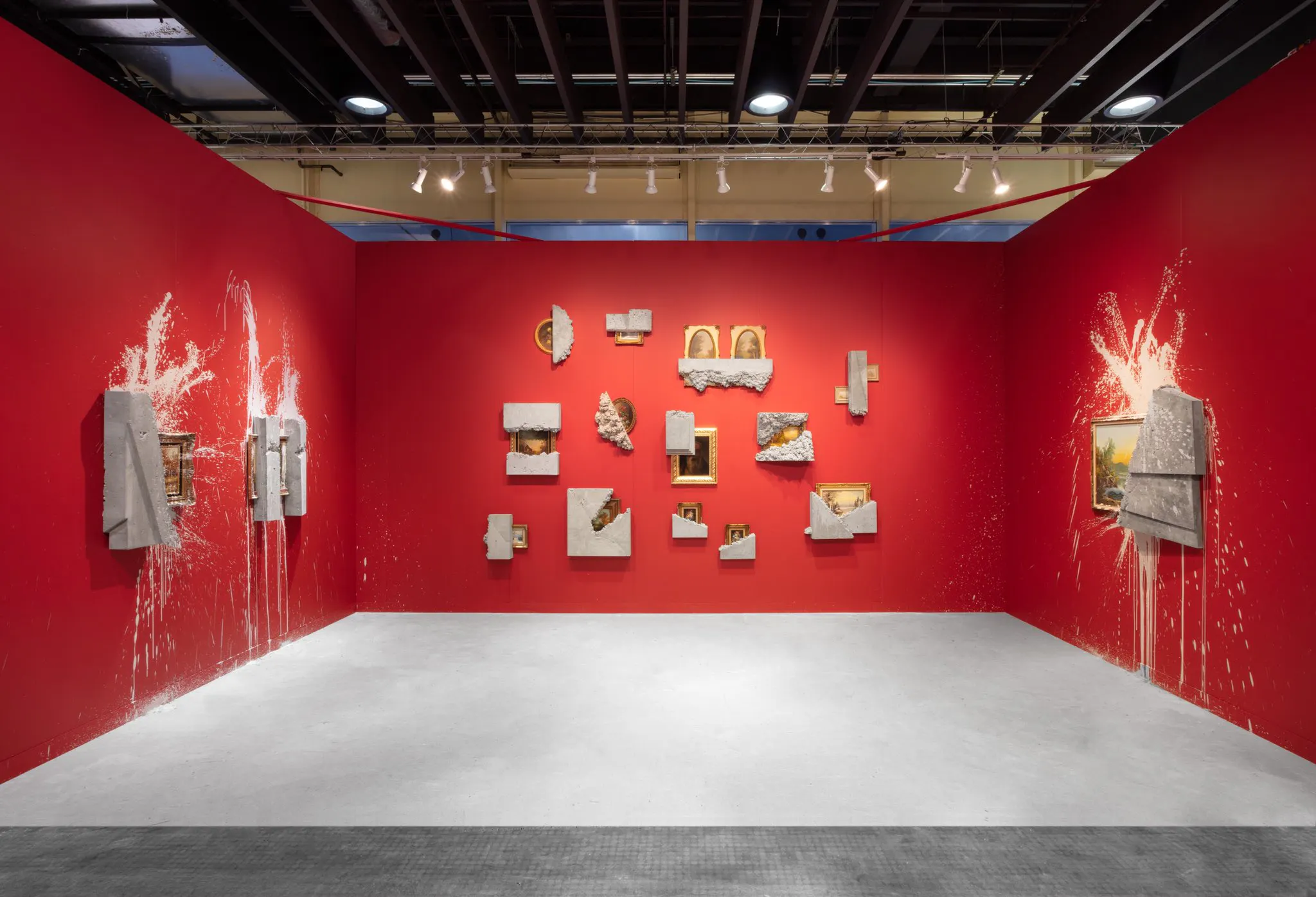
Mexican gallery CURRO also blurred the lines between Old Masters and contemporary destruction in their booth, in an exhibit titled "Horror Vacui," translating from Latin to "Fear of empty place". Alejandro Almanda Pereda was the feature artist, whose work involves framed reproductions of portraits and landscapes partially obscured by slabs of concrete and sometimes white paint in a booth painted a vivid crimson red.
Pier 94
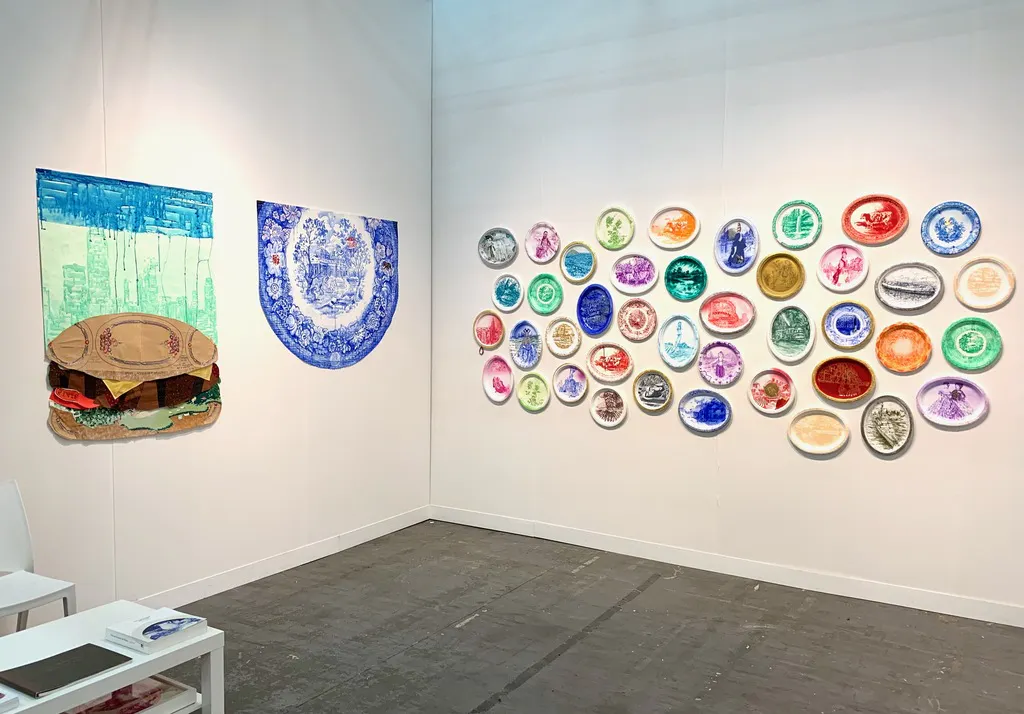
The recipient of the 2020 Presents Booth Prize went to Upfor gallery for the solo presentation of Julie Green. Green's work deals with sociopolitical issues like criminal justice, such as her First Meal paintings that depict meals eaten by wrongfully convicted persons after leaving prison. Her Fashion Plate series are painted on Chinet plates and platters and depicct landscapes, historical elements, women in traditional and cultural fashion and intricate design.
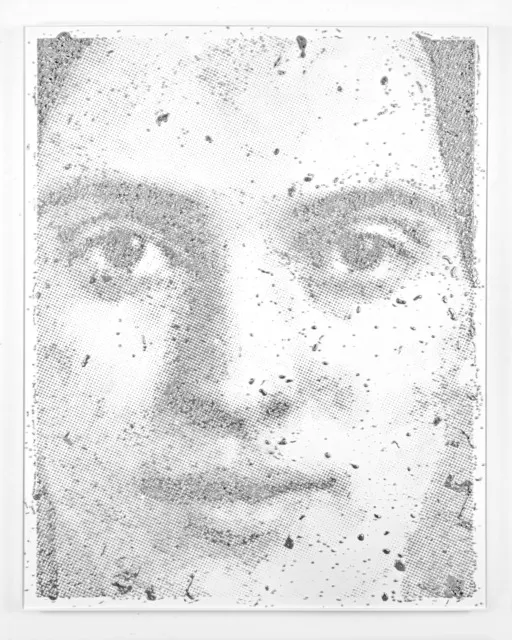
A fascinating mix of the arts was on display at Praz-Delavallade in Matthew Brandt's series Authors, which displays the portraits of prominent female authors of history - such as Edith Wharton, Virginia Woolf, Maya Angelou, Toni Morrison, Louisa May Alcott and Emily Dickinson - in molten type metal on paper. Up close one can see a clusters of silver lumps, while from far away the clear portrait is apparent.
James Cohan's booth was one of the most colorful at the fair with a mix of extraordinary works. The centerpiece was a large-scale oil and acrylic painting by Firelei Báez, Untitled (Temple of Time), a sunburst of color that almost completely obscures a Palladian-style building inscribed with "Temple of Time." Another highlight is a sculpture by British-Nigerian artist Yinka Shonibare CBE, RA of a woman with a globe for head while the body is covered in a brightly colored pattern. His work deals with post-colonialism and globalization.
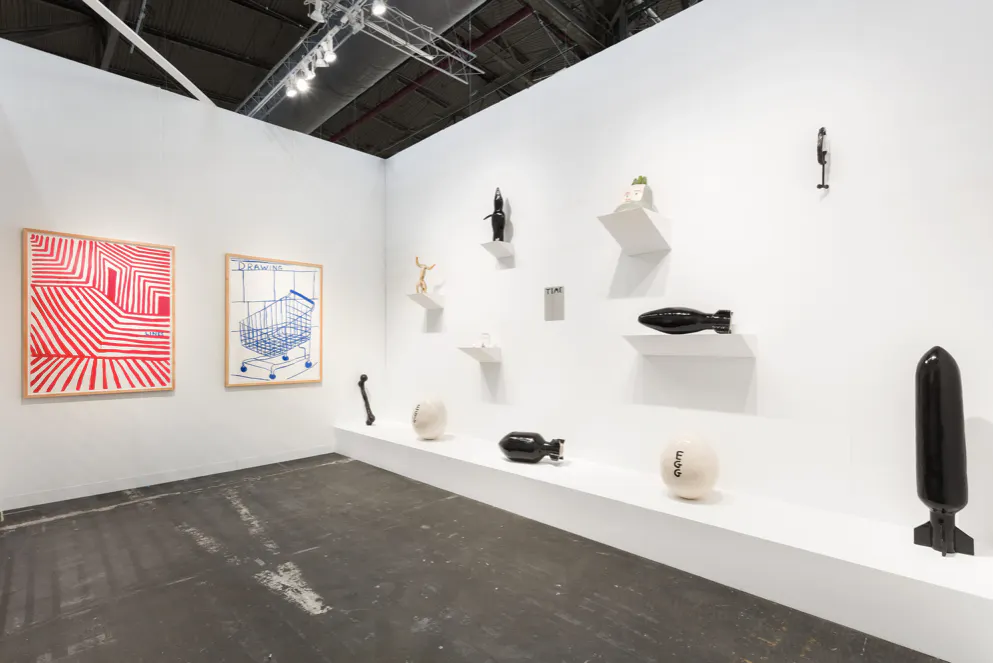
British artist David Shrigley has enchanted the masses with his ironic and socially critical artworks since the 1990s. At Stephen Friedman's booth, he installed Cabinet of Curiosities, a separate room from the main booth accessed by two gates, one titled "Death" and the other "To be kept shut". Inside the room were sculptures, works on paper, ceramics, and other knickknacks.
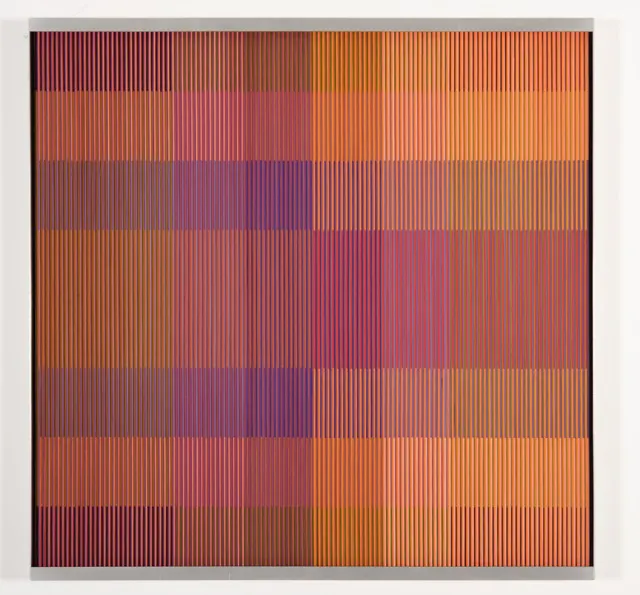
At Caracas-based Ascaso Gallery, the mixed media on aluminum works by Carlos Cruz-Diez, the Venezuelan Colorist who died last summer, are put in. conversation with works by Argentinian artist Luis Tomasello. His fantastic Op-art works deal with the dynamism of color and light contrast with Tomasello's geometric works, often one-toned in white or black.
The Armory Show runs through Sunday, March 8 at Pier 90 and 94, Manhattan. Buy tickets here.