Vlado Kristl (1923-2004) came from a pre-war bourgeois family in Zagreb, Croatia. His grandfather and mother were talented painters, influencing Vlado at a young age. He started his education at Strebersdorf College in Vienna, an institution for the Austro-Hungarian bourgeoisie, and maintained an extensive correspondence with his family. His letters, resembling comic strips, depicted his life at this institution.
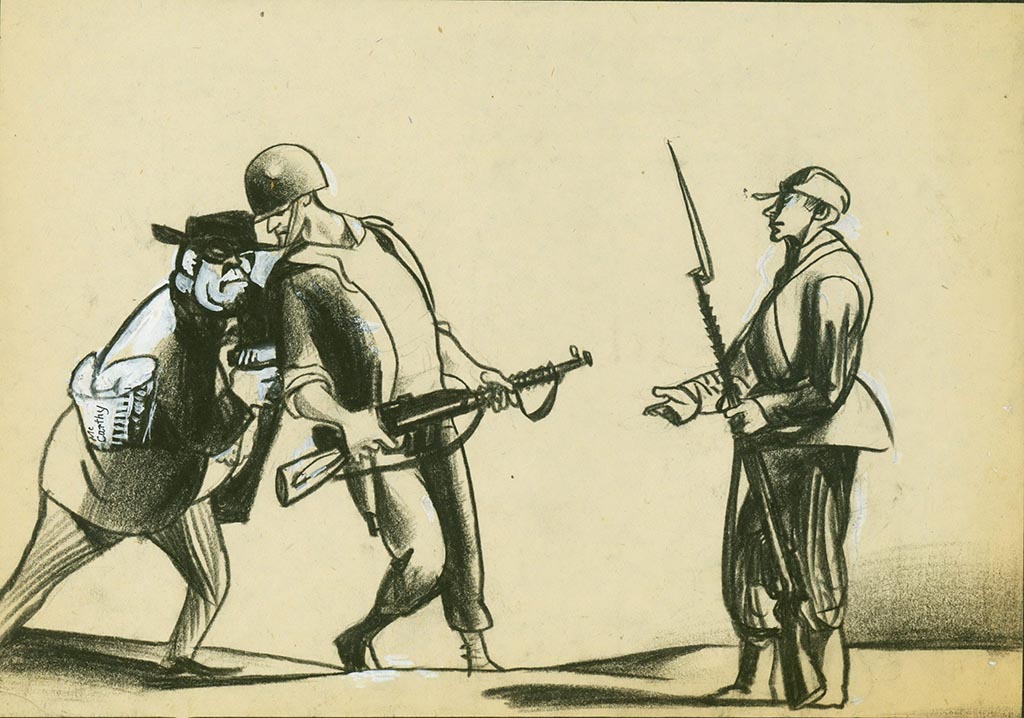
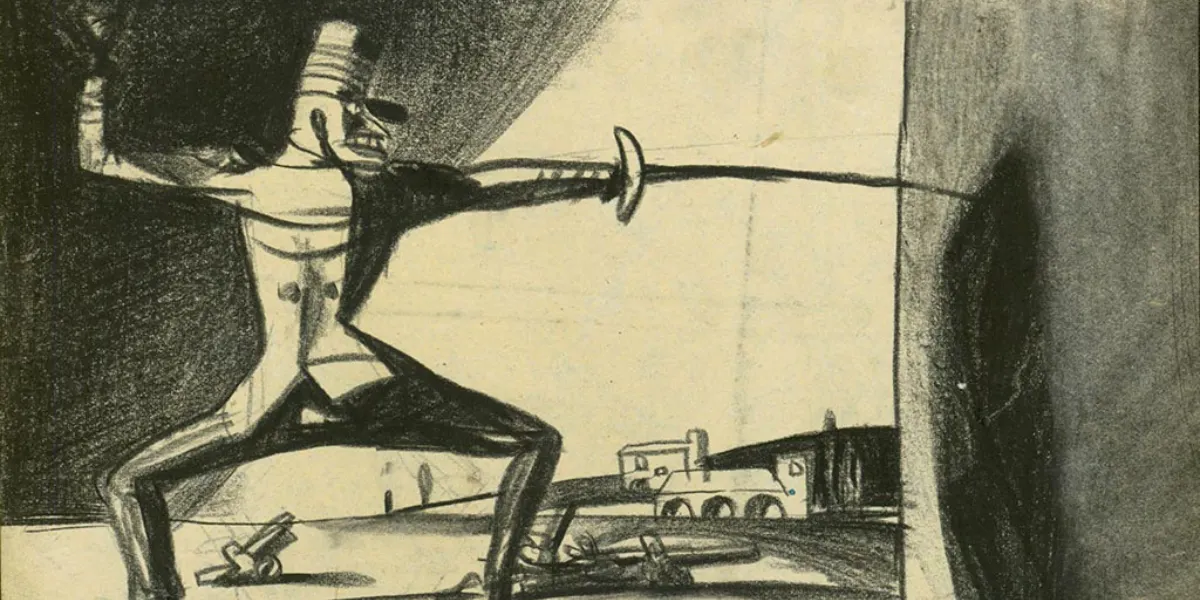
In 1942, Vlado Kristl joined the Partisans in the forests of what was then the Kingdom of Yugoslavia. He contributed caricatures to their journal, which were posted on trees. Aside from serving as political propaganda, they were also noted for their artistic quality and persuasive power. Many are now housed in the National Archives of Zagreb.
After the war, Kristl continued studying at the Academy of Fine Arts in Zagreb, and produced political drawings for local newspapers.
Related: Caricature in the 19th Century: The Art of French Criticism
In the 1960s, he began making animated films for Zagreb-film, a renowned animated film production company in former Yugoslavia. From 1959 to 1962, he directed several films such as La peau de chagrin (1960) and Don Quixote (1961), which earned him international acclaim.
Before creating his film masterpieces, he was a member of Exat 51; a collective of artists, painters, and architects based in Zagreb. Named after an experimental workshop, Exat 51 specialized in geometric abstraction as a response to the State's socialist realism. Kristl's paintings during this period were minimalist and abstract, and he used geometric abstraction in his animation work until his relocation to Germany.
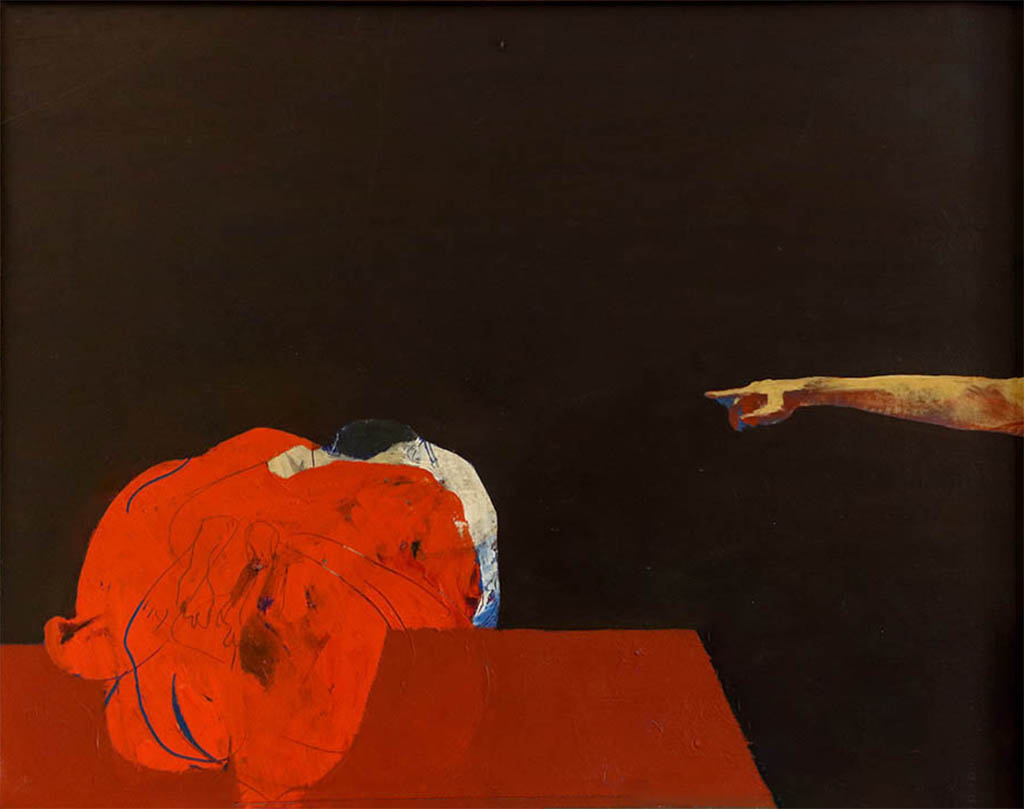
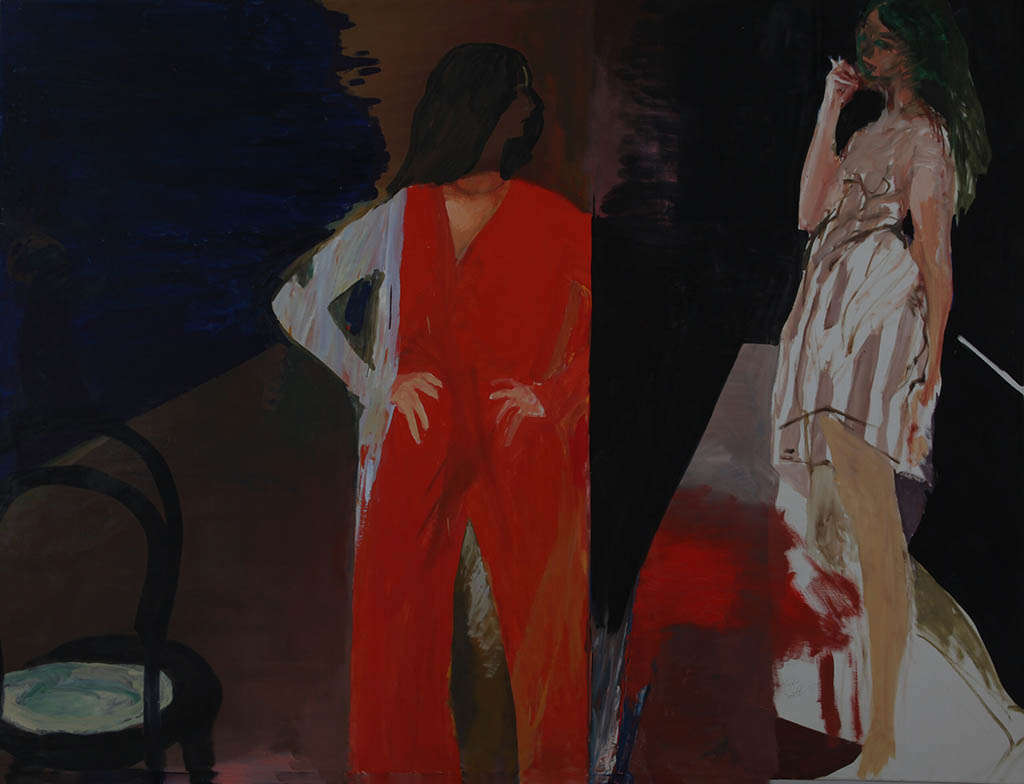
After 1963, his painting style underwent a radical transformation and he began producing figurative paintings. He often embellished his books and letters he wrote with drawings. Moreover, he incorporated his own sketches into his subsequent animated films and the design of his authored books.
Related: The 6 Most Famous German Paintings
However, his subversive work led to censorship from the State. In 1964, he moved to Germany, where he continued producing animated films using a new technique of filming his drawings directly on paper. He also developed a method of reinterpretation for each drawing, evident in works like Mundmaschine (1969) and Der gelernte, diplomierte und promovierte Autodidakt (1996). In Germany, he focused on experimental films but maintained his passion for painting, drawing, and writing for the rest of his life.
Barnebys had the opportunity to discuss Vlado Kristl with four women who knew him well: his wife, Jelena Kristl; his daughter, Madeleine Kristl; a collaborator, Johanna Pauline Maier; and journalist Ana Marija Habjan.
What were his influences?
Ana Marija Habjan: It's hard to say if he was influenced by anyone. During his animation work for Zagreb-film, he had several collaborators, but he always stamped his authorial seal on all his works. Later on, he primarily worked alone. In Croatian art history, he's mentioned as a member of Exat 51 and the New Tendencies movement, but he was never interested in working within communities or groups.
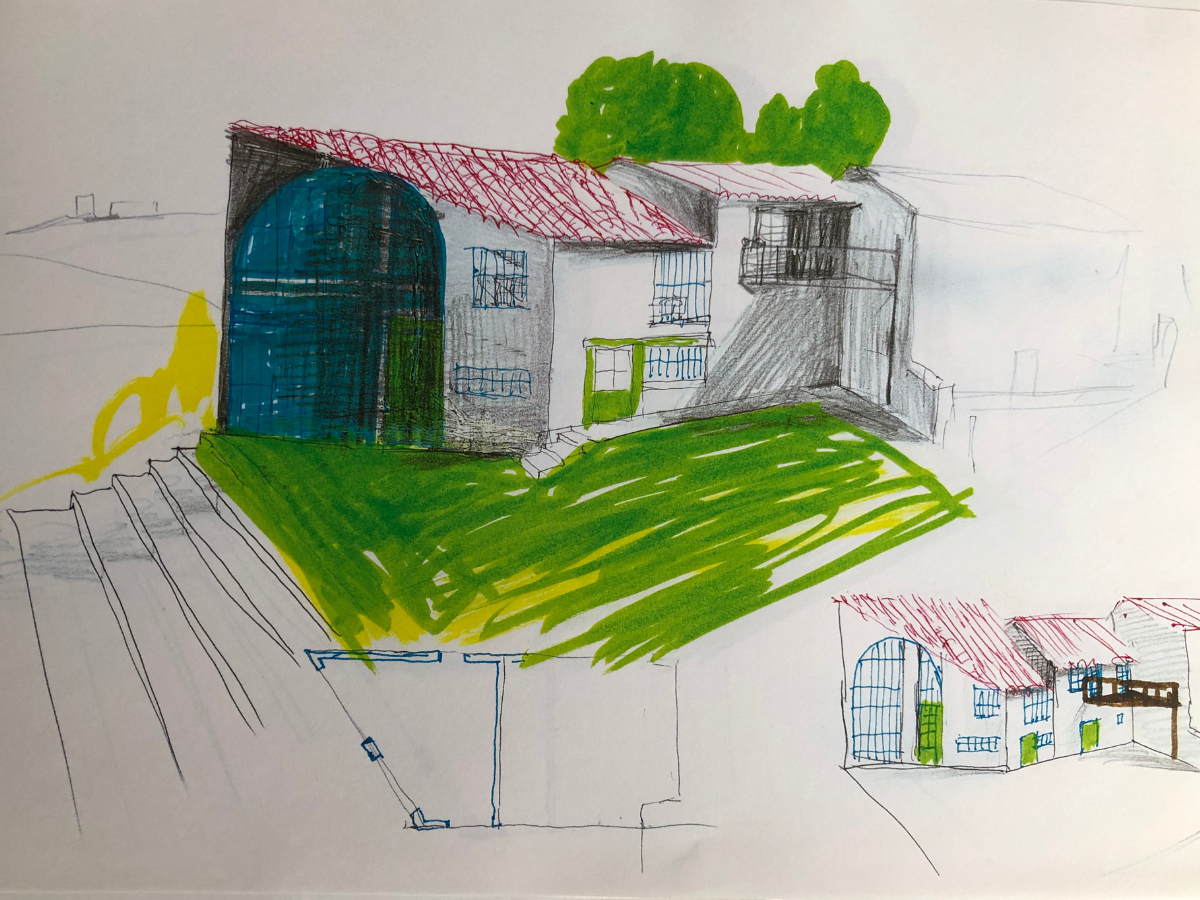
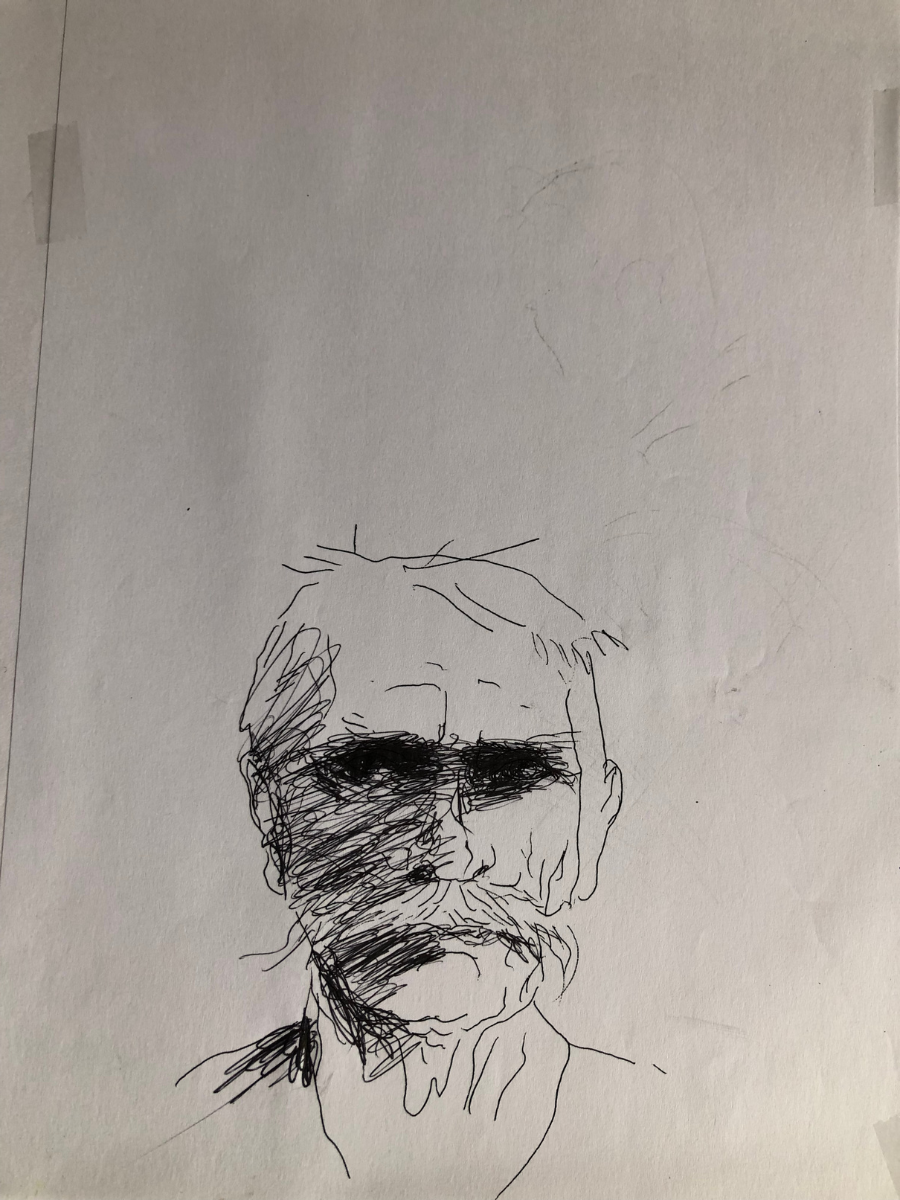
Jelena Kristl: While still a student, he learned to create classical drawings, as taught at the Academy of Fine Arts. If we compare his post-war caricatures created for the Zagreb press, one might think of Honoré Daumier, as they always carry a certain lightness and humor. These characteristics remained present in all of Vlado Kristl's creations throughout his life, always serving as the guiding thread of his stories. On occasion, he would draw a subject in all its details, whether a portrait or an architectural drawing during his later years in the south of France, in Fanjeaux (Aude department).
Johanna Pauline Maier: He was initially influenced his experiences: living through war and seeing the same people who fought for freedom later gaining power. Thus, he witnessed fascist and communist regimes succeeding each other and almost doing the same thing: depriving people of their freedom. Artistically, his foundation was his classical training at the Academy of Fine Arts in Zagreb with a taste for 19th-century portraiture. After his exile to Munich, the 1968 revolution deeply impacted his films and painting. The socio-political context always acted as a starting point for his artistic activities. However, regarding drawing, it seems entirely different: drawing remained a stable guiding thread running in parallel, simply becoming more accomplished... and perhaps increasingly abstract too.
What was Vlado Kristl's preferred drawing technique?
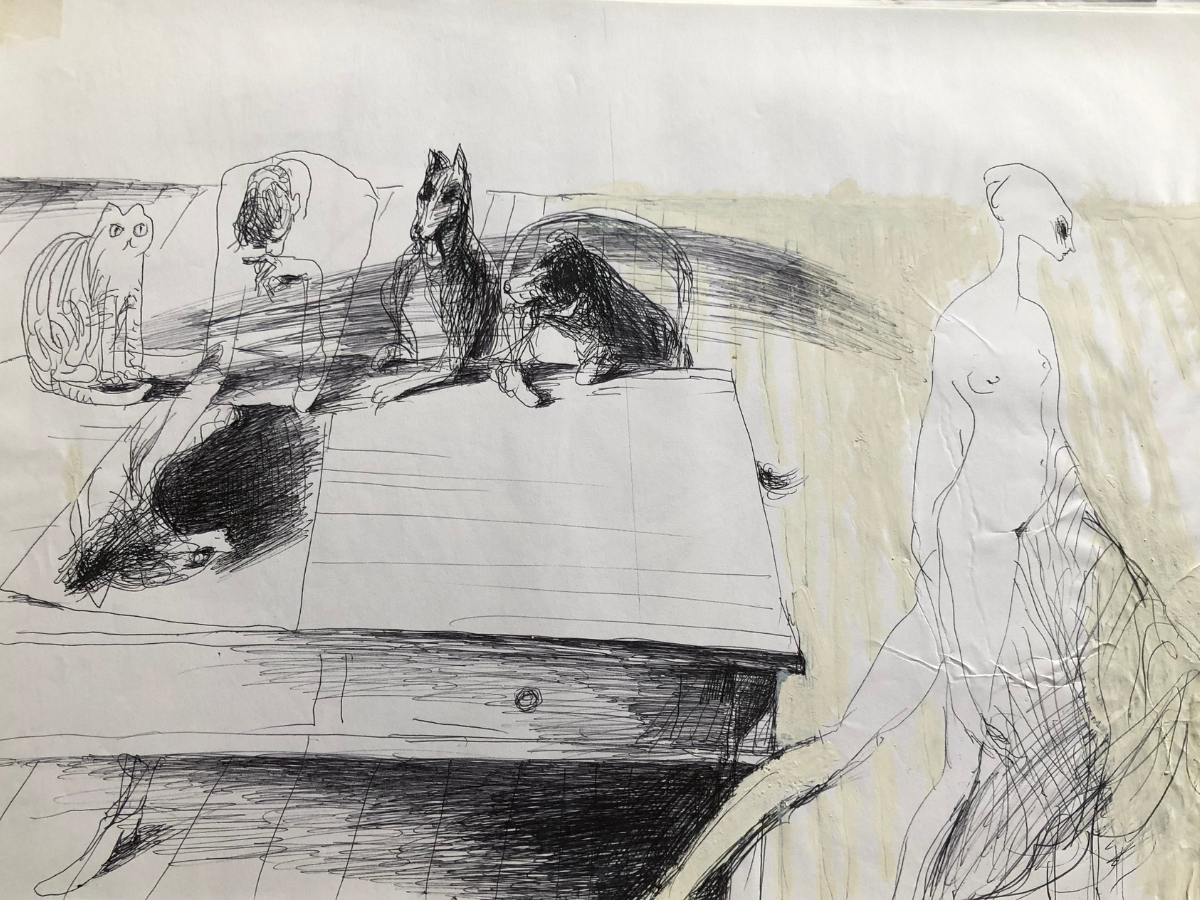
Jelena: Kristl often used pencils, sometimes ink and chalk. For color, he often used watercolors and markers. He drew on sheets from drawing pads of various sizes, in small notebooks or blocks, on scraps of paper lying around, or on his own silkscreens.
Madeleine: He could draw anywhere, there was no specific place, time, or context. He could go on an outing with the intention of drawing a landscape, a beach, a field, for example. At that moment, he used an A3 or A4 drawing paper pad and pencils or ballpoint pens. He didn't necessarily color then; it could come later, partially and with markers, or remain in black and white. Often, drawing would spontaneously begin, for example, to beautifully finish a letter. It's fair to say that drawing was omnipresent in his life. From my memory, he didn't make preparatory sketches; it was always at a specific moment, and he did everything from A to Z, all at once.
Want articles like this sent directly to your inbox? Subscribe to our free newsletter!
Ana: I don't think he had a preferred technique; he used various mediums. However, since he often painted over older paintings, he typically used the overlaid drawings as a base for new ones. Drawing was the easiest way for him to express his thoughts, doubts, and explorations. His daughter Madeleine Kristl recalls his calmness when he began drawing, as if the act of drawing relaxed him.
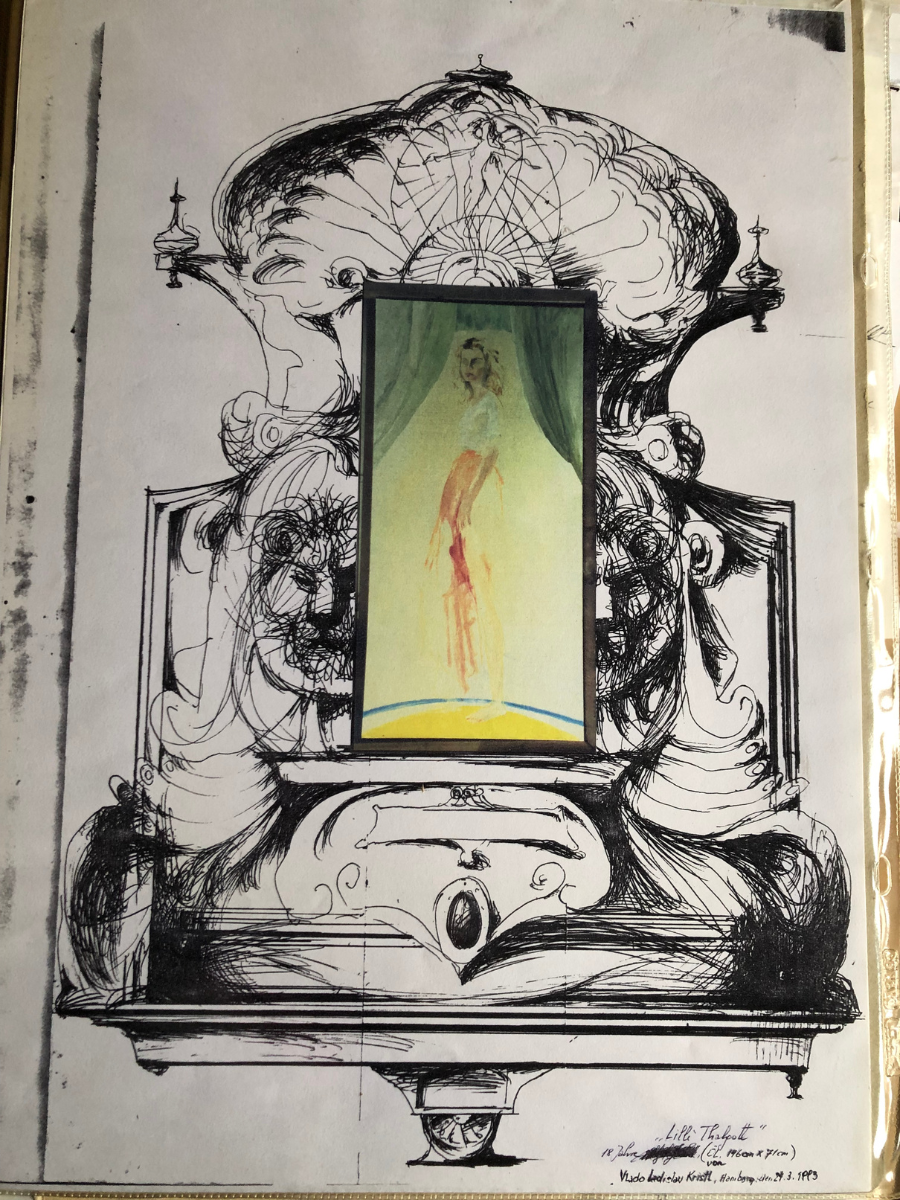
Johanna: Later on, he almost exclusively used ballpoint pens and markers. This meant that erasing wasn't an option, so he corrected by drawing over what was already there. Although he sometimes painted over with white, it was rare. When I knew him in Munich, he made photocopies to produce books and collages, then continued drawing on these copies with variations, in black and white or in color. He also worked retrospectively: there were old book publications with texts and drawings stored in piles under his table, from which he randomly selected and modified certain drawings so that each book became unique. Thus, you could find a version of the drawing on any page that was original... you never knew where. I think he liked being provoked by what already existed. So, he kept working on his own photocopies/publications or painting on photos with permanent marker.
What was his creative process like?
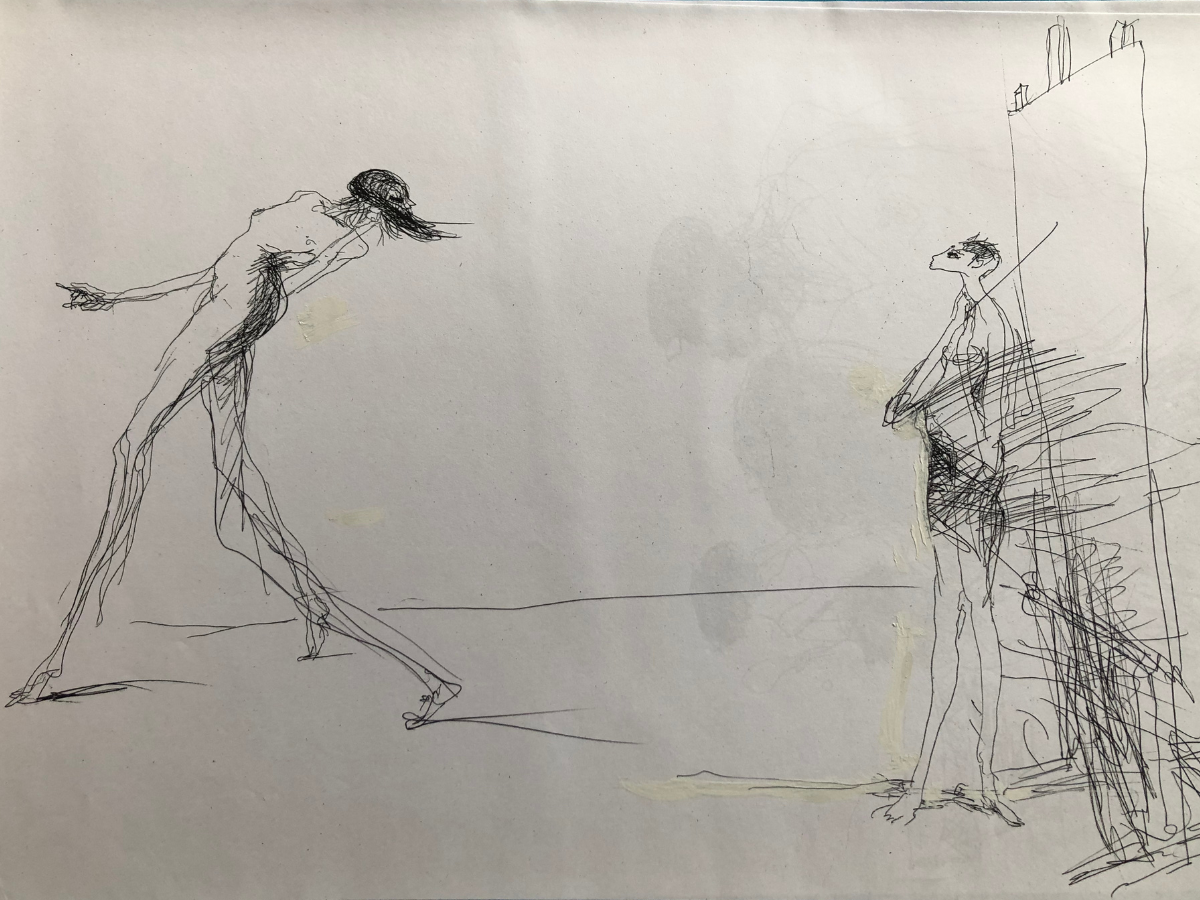
Johanna: In my film, there's a scene where he paints and another where he draws [in Vlado Kristl – Ich bin ein Mensch-Versuch, 2006]. Amusingly, the painting scene required concentration because he had to paint a model (me) while being filmed simultaneously. Thus, he had to carefully observe me while focusing on his canvas and managing the camera aimed at him. Conversely, the drawing scene portrays him in a state of lightness and immersion. Here, too, he gazes at his model – his partner Carola – but it's much more relaxed. The drawings were spontaneous; he'd conceive an idea, execute it, and refine it into something else. Besides the initial idea, he didn't plan extensively.
What are his preferred subjects?
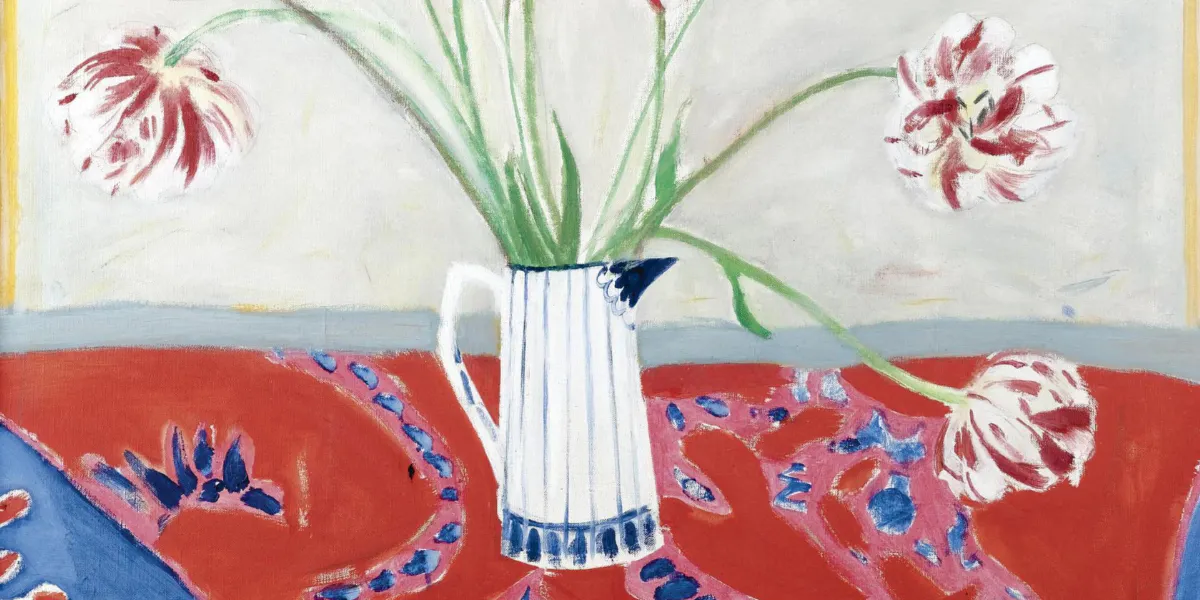
Jelena: Beautiful women (Amazons, only their busts or nudes), dogs, cats, lions, his children... He loved drawing landscapes, preferably those of the South of France. You'll also find interiors, flower bouquets, athletes, especially cyclists. Among the most striking drawings, he features his raven, which is also the protagonist of his film composed of drawings, Die Hälfte des Reichtums für die Hälfte der Schönheit (Exchanging half of the wealth for half of the beauty). It seems that Vlado Kristl saw much of his own soul in this raven.
Related: Five Centuries of the Nude in Painting
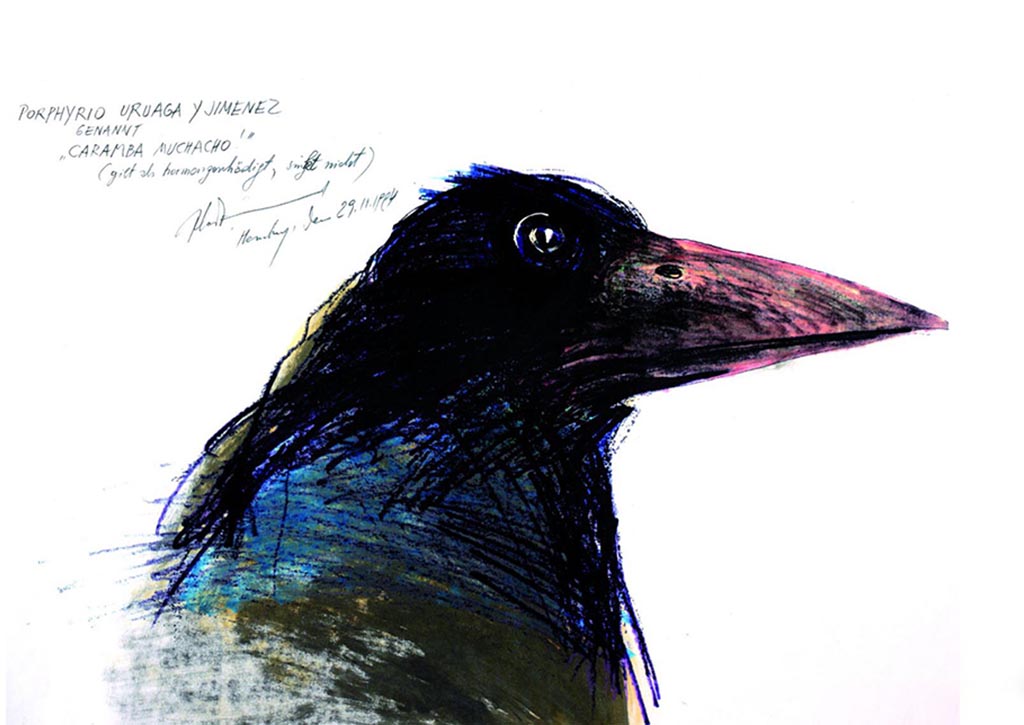
Ana: His recurring motifs include depictions of the artist, women, cats, dogs, and a raven. Additionally, he demonstrated a strong ability in architectural drawings and floral representations. Through his art, he explored themes such as authority and the role of art, often expressing nostalgia and romanticism in his portrayal of young women, who were frequently depicted as idealized objects of desire. Kristl's books seamlessly blend drawings with poetry and prose, connecting images and text. Despite sometimes appearing cryptic, these connections have a fresh depth of thought.
Related: Cats in Art: 10 Decidedly Feline Works
What does he express in his drawings?
Jelena: His drawings convey his emotions. We recognize his sympathies and his dreams, and his anger, particularly toward authority figures. This is evident in the collection of large-format drawings, Körper des Unrechts (The Body of Injustice), from 1978 and in Techniken die Kunst machen (The Techniques that Create Art) from 1981.
Did he change his approach to drawing over the years?
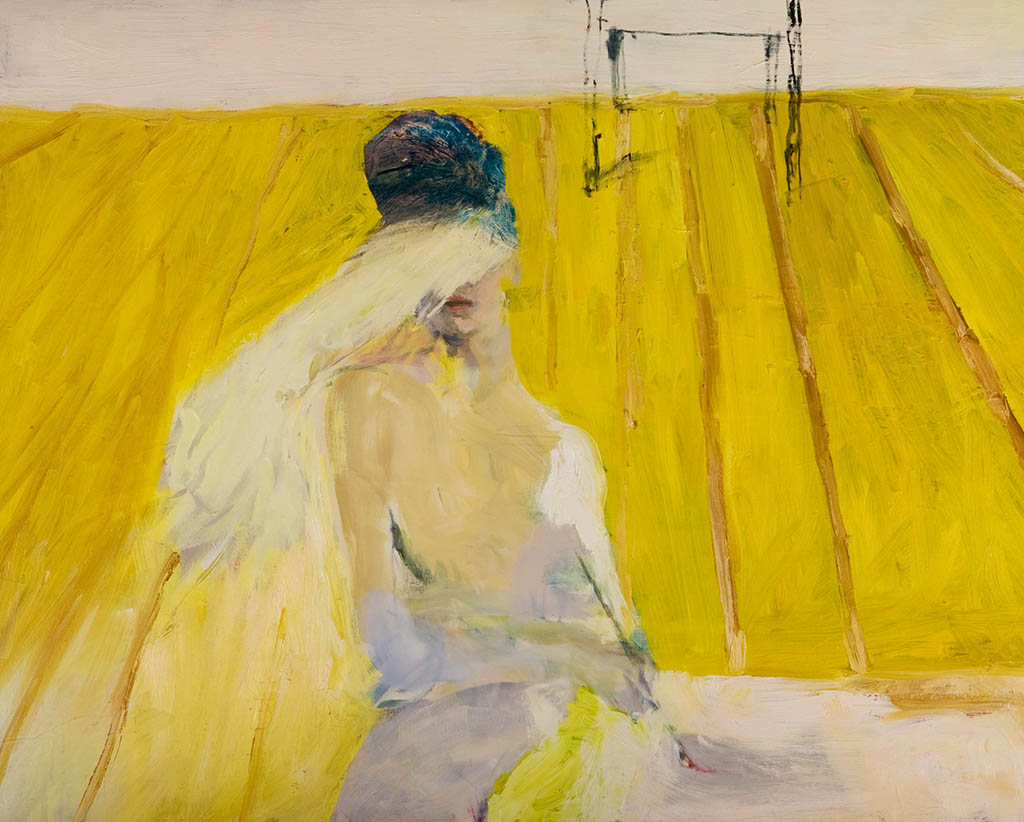
Johanna: He painted faster and with more confidence over time. Instead of 20 lines, he only needed to draw one line at the end, which contained those 20 lines. But that's normal when you've drawn a motif 1000 times. Stylistically, it became more and more abbreviated; his process became integrated within his drawing. Perhaps this is the indirect link with cinema. Some animated films are very similar to his drawings; there are animated films very close in style to his paper drawings. In some films, you can even see how a drawing is created and hear the pen scratching. In the latest oil paintings, you always see elements drawn. I believe he transferred his drawing skills to painting, perhaps as a basic structure. In any case, he didn't always cover these elements with a painterly technique, so you see fragments of them.
Jelena: Eventually, he made sketches that had fewer or more blurred lines, but clearly show us what he wants to express. These sketches pave the way for other artistic activities, which be followed by a new production of drawings.
How do his drawings compare to his films or poems?
Ana: In Kristl's work, everything is interconnected. The main themes that occupy him, such as questions regarding the author's existence, the trauma of war never overcome, and the conflict with the system in general, as well as the fascination with women, appear in all areas: in his paintings, his poems, and his films. His anarchist and experimental approach has given rise to unique works. War, persecution, suffering, deprivation of freedom, power systems, and corruption are the key concepts of his personal biography as well as 20th-century European history.
Johanna: I think the idea of developing a work while realizing it (meaning there's an initial idea, but the rest comes during the realization), and including accidents in the creative process can be found at all levels. The joy of working with it, of grappling with it...
Related: George Grosz: The Critical Caricaturist
Johanna Pauline Maier was born in Berlin (GDR) and grew up in southern Germany (FRG). Fascinated by Chinese philosophy and culture, she studied Sinology in Berlin and Beijing, where she discovered her love of film. She began studying filmmaking at the Beijing Film Academy, then at the Munich Film Academy, where she met Vlado Kristl in 2001. The two soon developed an exchange that was expressed in a joint short film (World Congress of the Homeless) and in a film about the artist made with Markus Nechleba (Vlado Kristl - Ich bin ein Mensch-Versuch (Vlado Kristl - I am a human experience)). Since 2010, she has been living and working as a freelance filmmaker and film teacher in Paris.
Ana Marija Habjan graduated in art history and Italian language and literature at the Faculty of Philosophy in Zagreb. She works in the cultural department of Croatian television, as a journalist, editor and director. She has produced a series of television portraits of Croatian artists and documentary films on particular artistic phenomena and groups, including a portrait of Vlado Kristl. In 2020, she enrolled in the Humanities postgraduate doctoral study, with a specialization in art history, at the University of Zadar, on the theme "Vlado Kristl's painting and animated film after 1963".
Jelena Polak - Kristl, his wife and the mother of his children. Jelena, born in 1936 in Donji Miholjac (in Slavonia, a region in eastern Croatia) studied law in Zagreb. She joined and married Vlado in 1966 in Munich, Germany. She has worked in various German cultural institutions and publishing houses and now lives in quiet retirement. From the time they met in Zagreb in 1962 until Vlado's death in 2004, she continued to exchange artistic ideas with him. She carefully preserved all the works he gave her throughout his life.
Madeleine Kristl was born in 1966 to Jelena and Vlado in Munich. Her brother Pepe Stephan was born in 1968. After studying to be a translator (German - French - Russian), she moved to Paris in 1992, where she worked for a photojournalism agency until 2000. After traveling for a number of jobs in the tourism industry, she returned to Paris and joined the world of national museums. She is currently Administrative Assistant in the Visitors Department at the Musée d'Orsay. She has always been very close to her father and has always exchanged ideas with him. Today, with her brother, she manages her father's artistic legacy.