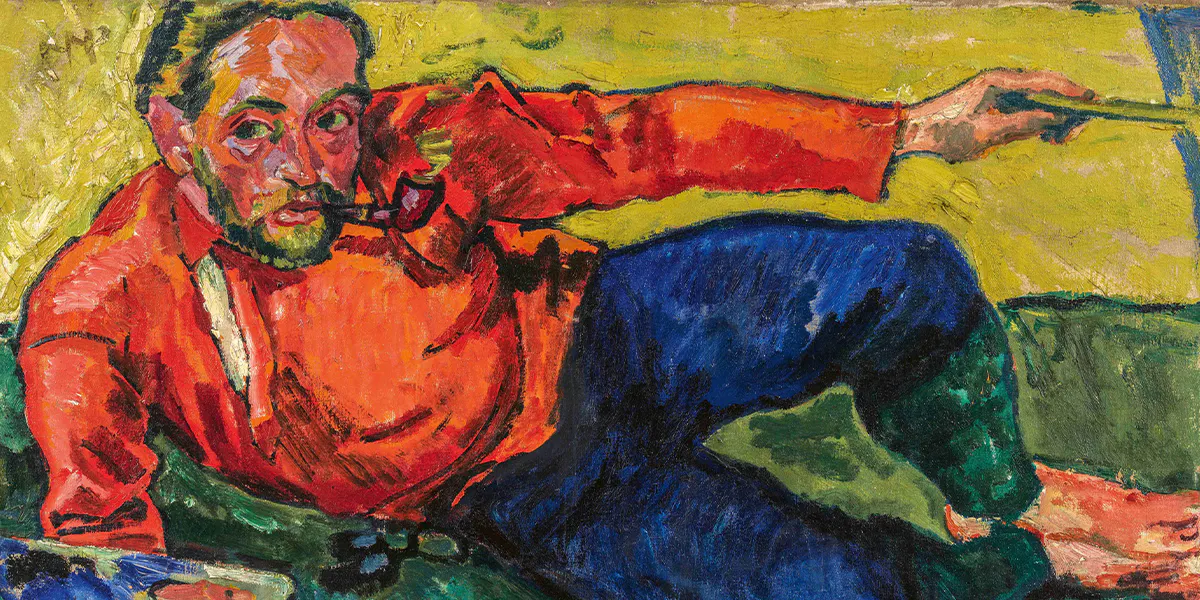
On December 1, the Cologne-based auction house Lempertz presented its Evening Sale featuring 72 works of modern and contemporary art. Taking the lead in the bidding was Hermann Max Pechstein's Self-Portrait, Reclining, which came with an estimated value of €1.5-2 million. Interest mainly came from bidders from Germany and Switzerland, but ultimately, a German private collector secured the winning bid when the hammer fell at €3,036,000. Including the buyer's premium, the final result reached €3,182,840 (about $3.9 million), marking the second-highest price ever paid for a Pechstein work in the auction market.
Self-Portrait, Reclining is an early major work representing Pechstein's most crucial self-portrait. It also serves as one of the first instances showcasing his transition to an expressionist style characterized by vibrant colors, marking the pinnacle of his artistic achievement.
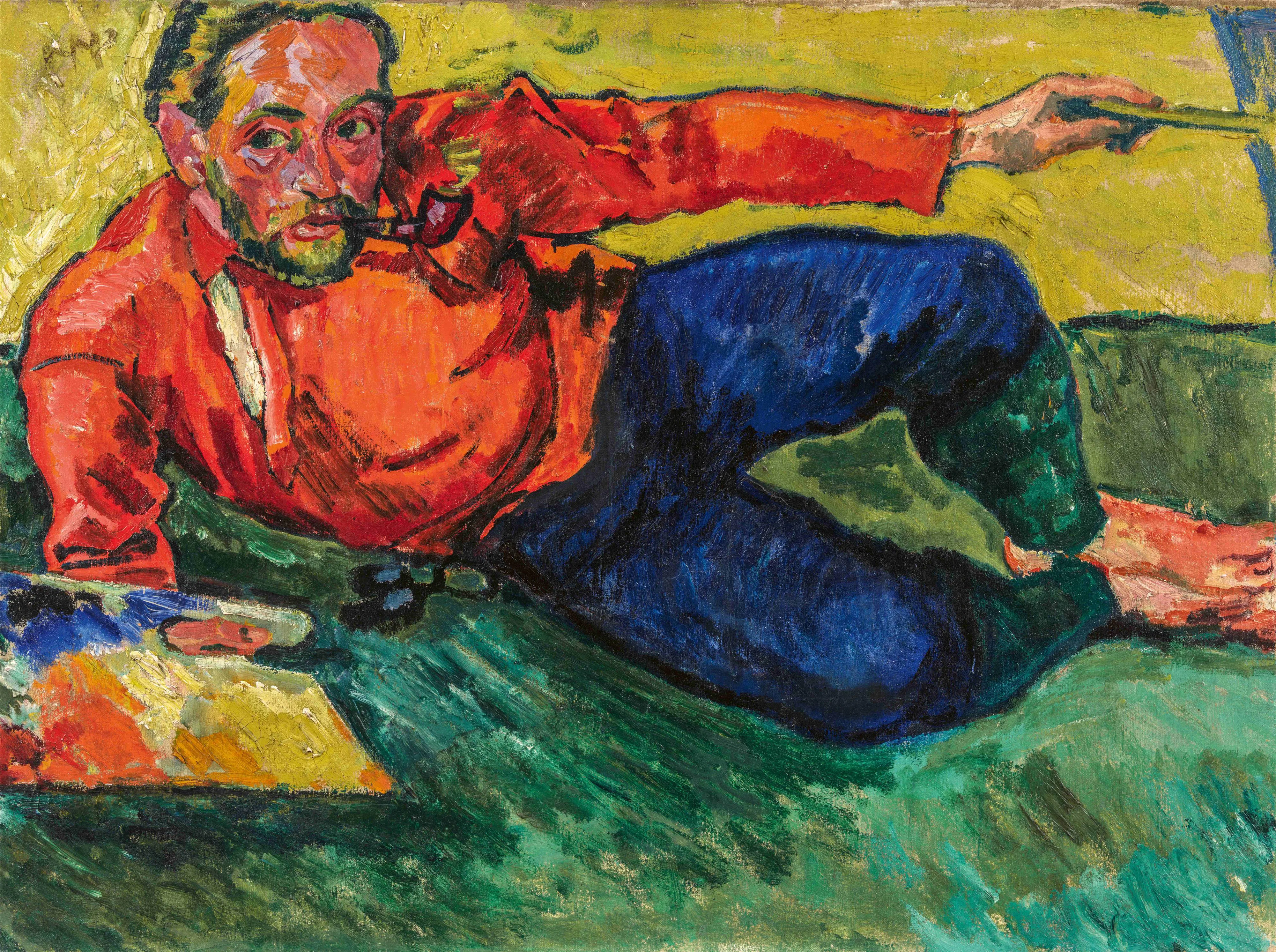
Painted in 1909, the artwork is defined by Pechstein's impressions gathered during his first summer stay in Nidden on the Curonian Spit that year. With sun-kissed skin and hair bleached by the sun, he depicted himself in the clothes of the Baltic Sea fishermen, a recurring motif in his work during the summer. Every detail, including a whisker and a pipe, has been meticulously included.
In creating his self-portrait, Pechstein, a member of the 'Brücke' group of artists since 1906, opted for an unconventional posture. Pechstein portrayed himself in the act of creating the painting, holding the palette with colors mirroring those of the painting in one hand, while the brush touched the canvas with the other. His focused and self-assured gaze is directed beyond the painting, presumably towards a mirror. His body serves as the link between the palette and the canvas — a metaphorical bridge, so to speak.
Want more news like this straight delivered to your inbox? Subscribe to our free newsletter!
Self-Portrait, Reclining was initially scheduled for auction at Lempertz in June, but had to be abruptly withdrawn after the painting was added to the Lost Art Register on the day of the auction, at the request of the heirs of its former owner. Beginning in 1920, the Jewish internist Dr. Walter Blank had amassed a collection of expressionist art in Cologne, including Pechstein's significant work. In 1936, a year after being widowed, Dr. Blank sold the collection and emigrated to Antwerp with his two sons. Dr. Walter Blank passed away in Barcelona in 1938.
Related: The National Gallery Buys First Painting by Max Pechstein
Before the June auction, Kunsthaus Lempertz KG had thoroughly examined the provenance and ownership of the painting, ruling out its classification as looted art based on prior agreements. Through the auction house's facilitation between the heirs and the consignor, Pechstein's masterpiece was able to proceed to auction without any restrictions.