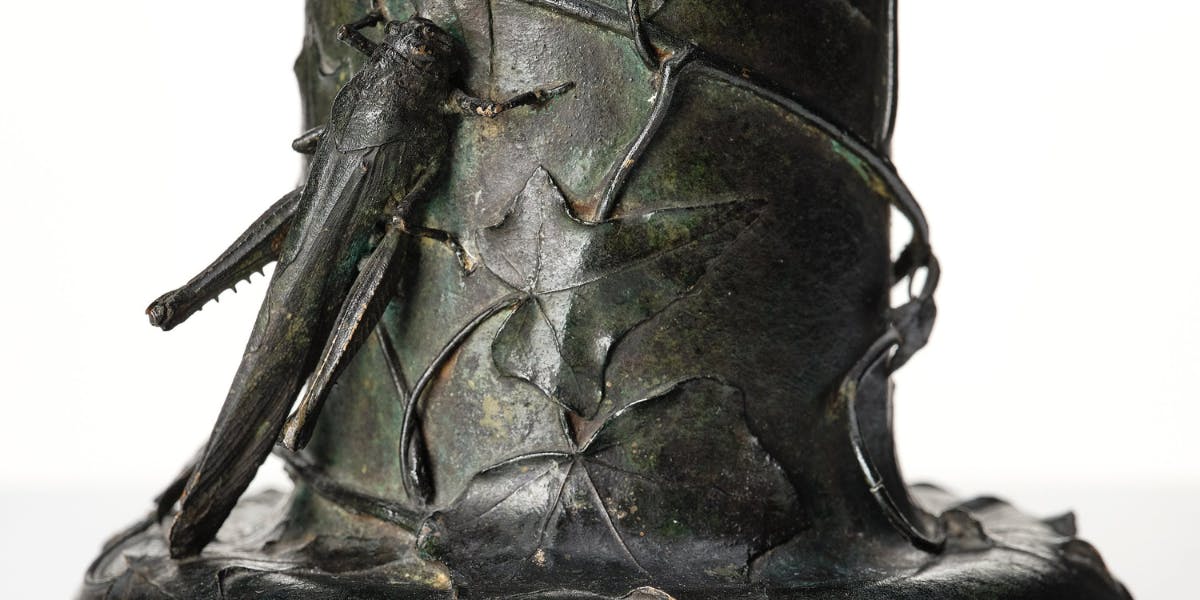
When the sculptor Hugo Elmqvist (1862-1930) grew up in the small town of Blekinge, the world was a closed place. It is hard to imagine when he started working at the age of 11 if he knew where life would take him. However, thanks to the happy combination of society's development and his own genius, he made it all the way to Florence and Paris – and managed along the way to be recognized as both an artist and a scientist.
With two barrels in the room, one with herring and one with potatoes, he coped with hunger and was able to devote himself to art.
Without those boards that he started planing as an 11-year-old boy, Hugo Elmqvist probably wouldn't have made it this far. In the evenings, he stayed at a carpenter's workshop and learned to carve wood. Later in Stockholm, he worked at a plaster casting studio and at the same time studied at Konstfack. From 1888, he was enrolled at the Royal Academy of Arts and had his own studio in Stockholm. With two barrels in the room, one with herring and one with potatoes, he coped with hunger and was able to devote himself to art. Elmqvist was described as eager and dedicated.
Related: Degas' Little Dancer Sets a World Record
He approached technology with confidence and energy. His invention, the full forming principle according to what came to be known as the Elmqvist casting method, was patented in 1902 and was a bold attempt to change an entire manufacturing process. Elmqvist himself, despite ten years of study in the subject, was later most interested in paying tribute to another artist, Erna Elmqvist (née Wichmann). Hugo said that she "strongly contributed to the happy end result."
Related: Bernard Palissy's Ceramics: Nature on the Plate
With their dedication, Hugo and Erna tried to get the technology to work - creating a one-time start-up company. For just over ten years, they marketed the discoveries and raised capital - and when they got became more popular, they settled in Florence.
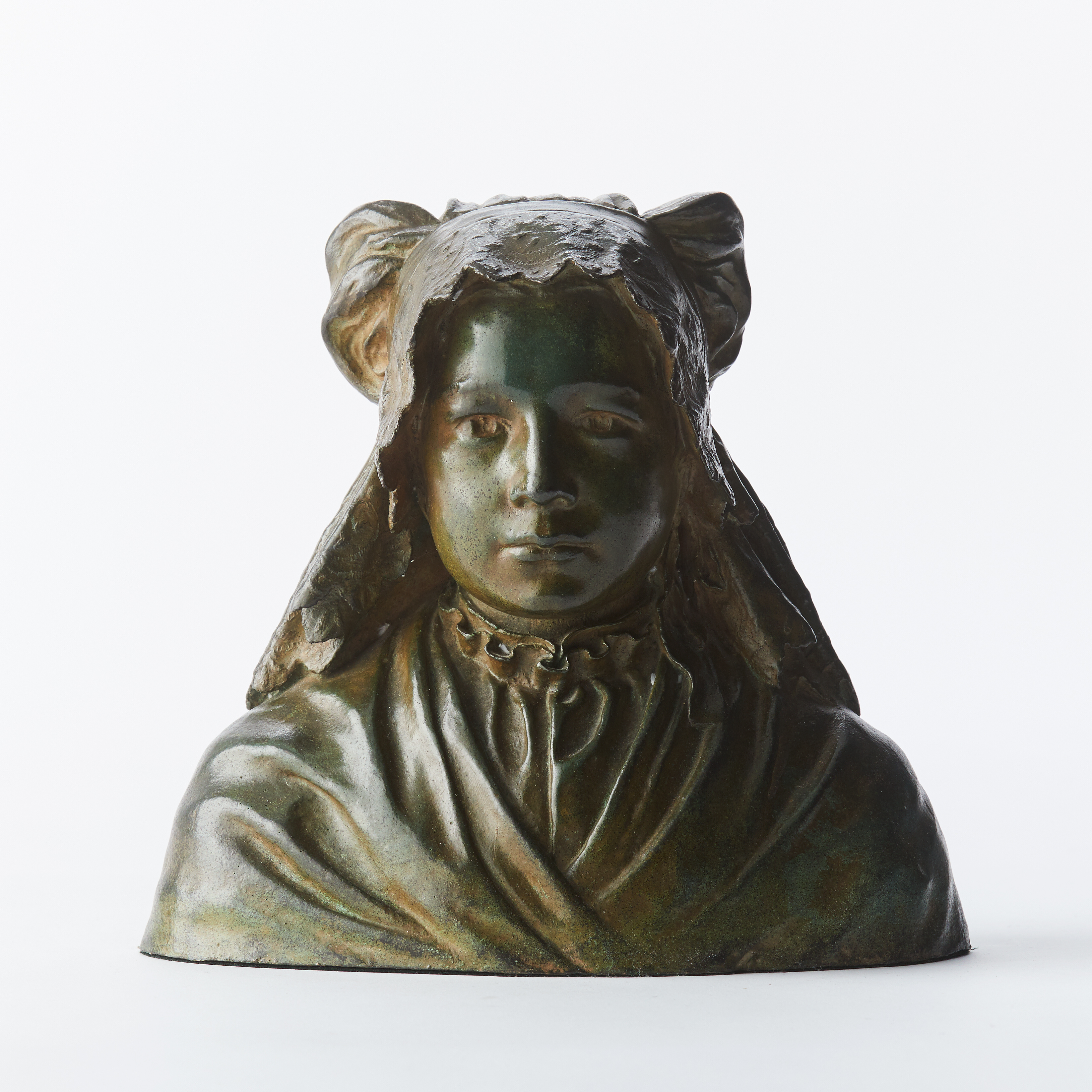
The two had met in Paris. When they weren't patenting, they created art side by side. Hugo made sculptures, busts, statuettes, vases and bowls in stone, marble, clay, plaster and bronze. Erna painted flowers from nature, garden interiors and portraits in watercolor, oil, and pastel. Eventually they had two daughters together – Idina and Helga (the latter tragically executed during the German retreat in World War II).
Perhaps Elmqvist was at his best at the Stockholm exhibition? With his genius, he gave a small piece of the world to Sweden.
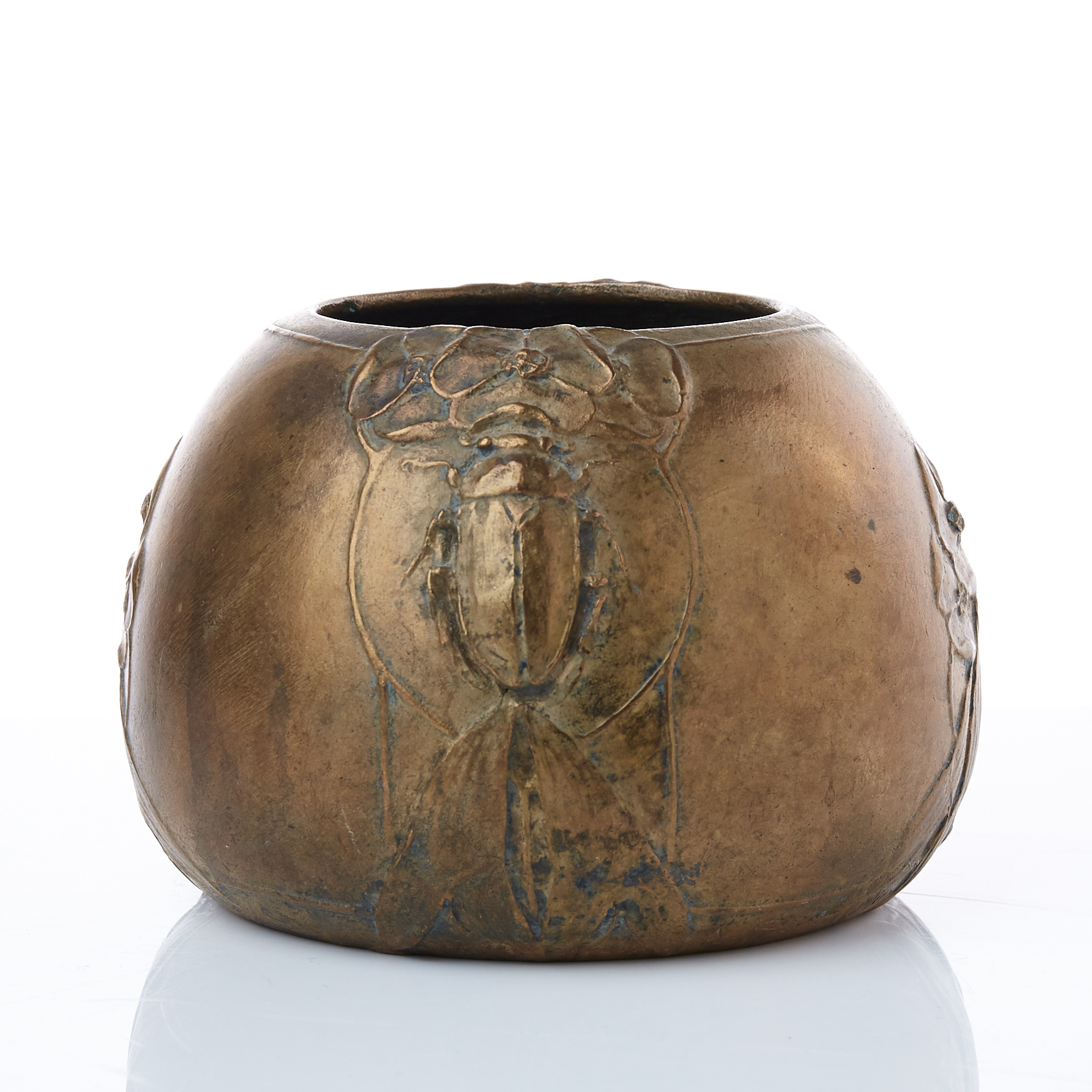
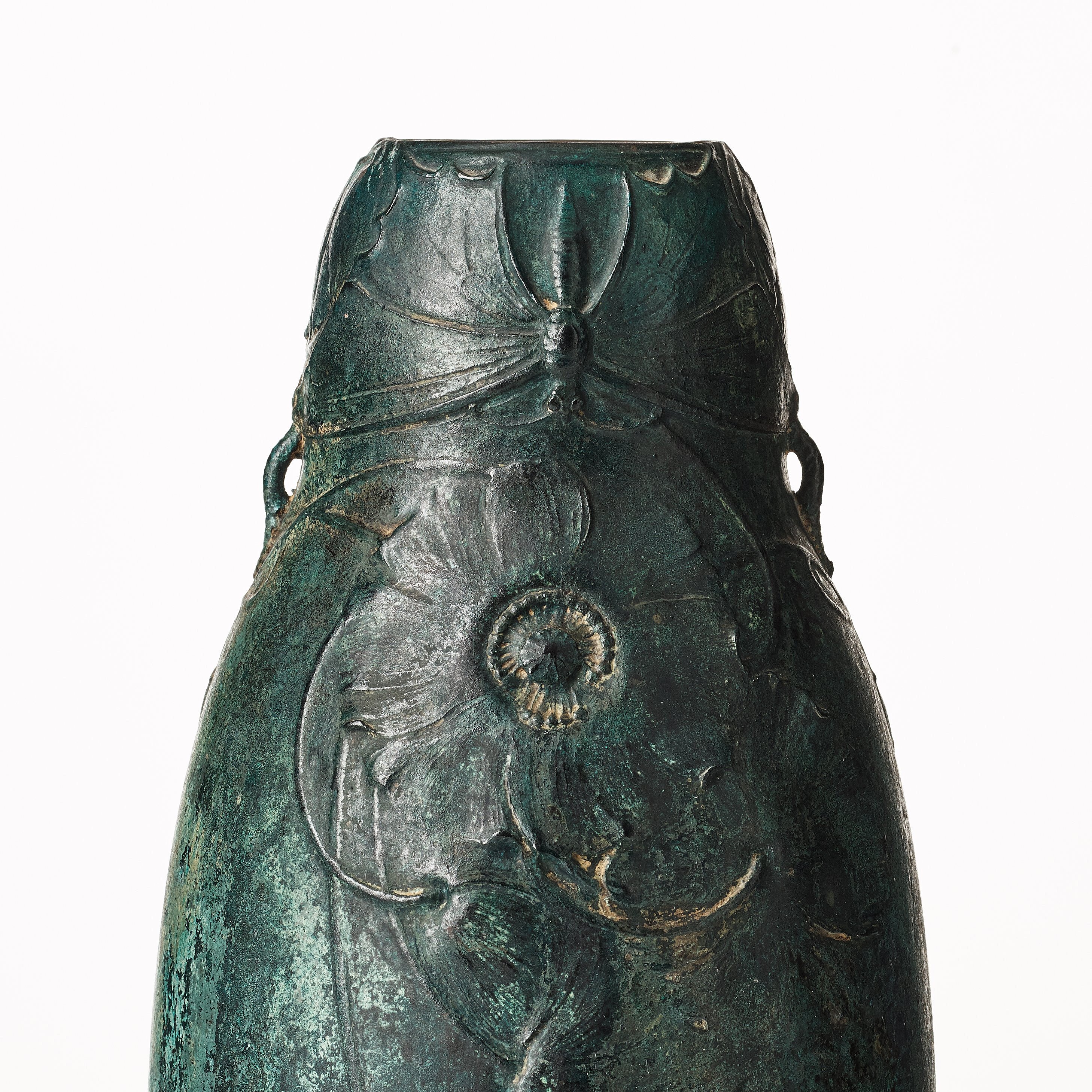
The works created by Hugo Elmqvist were made in the Art Nouveau style – they were organic, undulating, imaginative and true to life. Some are worth mentioning: for example, the Ragnar Lodbrok at Skansen, the work Old Age, the marble child Gryning at Stockholm National Museum and bronze vases also housed in the National Museum.
"Hugo and Erna Elmqvist united the light southern European and Art Nouveau style with the northern European slightly heavier and darker variant that came to be called 'Jugend' in a rare successful way," says Pontus Silfverstolpe, expert and co-founder of Barnebys. "The typical motifs of the Swedish flora and fauna function as elegant stylistic elements in the otherwise rather strict designs."
Want more articles like this delivered straight to your inbox? Subscribe to our free newsletter!
The works took time, but Elmqvist didn't trust anyone else and did most of it himself. When he was awarded a travel grant for the work Old Age worth 3,000 SEK, he went to Paris and made a life-size seated girl in plaster. He then traveled to Italy to find marble and transported the entire stone to Sweden to work on it himself.
Related: 10 Famous Sculptures in Art History
The works from the long period abroad appeared in exhibitions in Sweden - such as Religionen and Revérie at the Stockholm Exhibition in 1897, the great breakthrough festival for the Art Nouveau movement. It was then that Elmqvist was perhaps at his very best. With his genius, the artist gave a small piece of the world to Sweden.
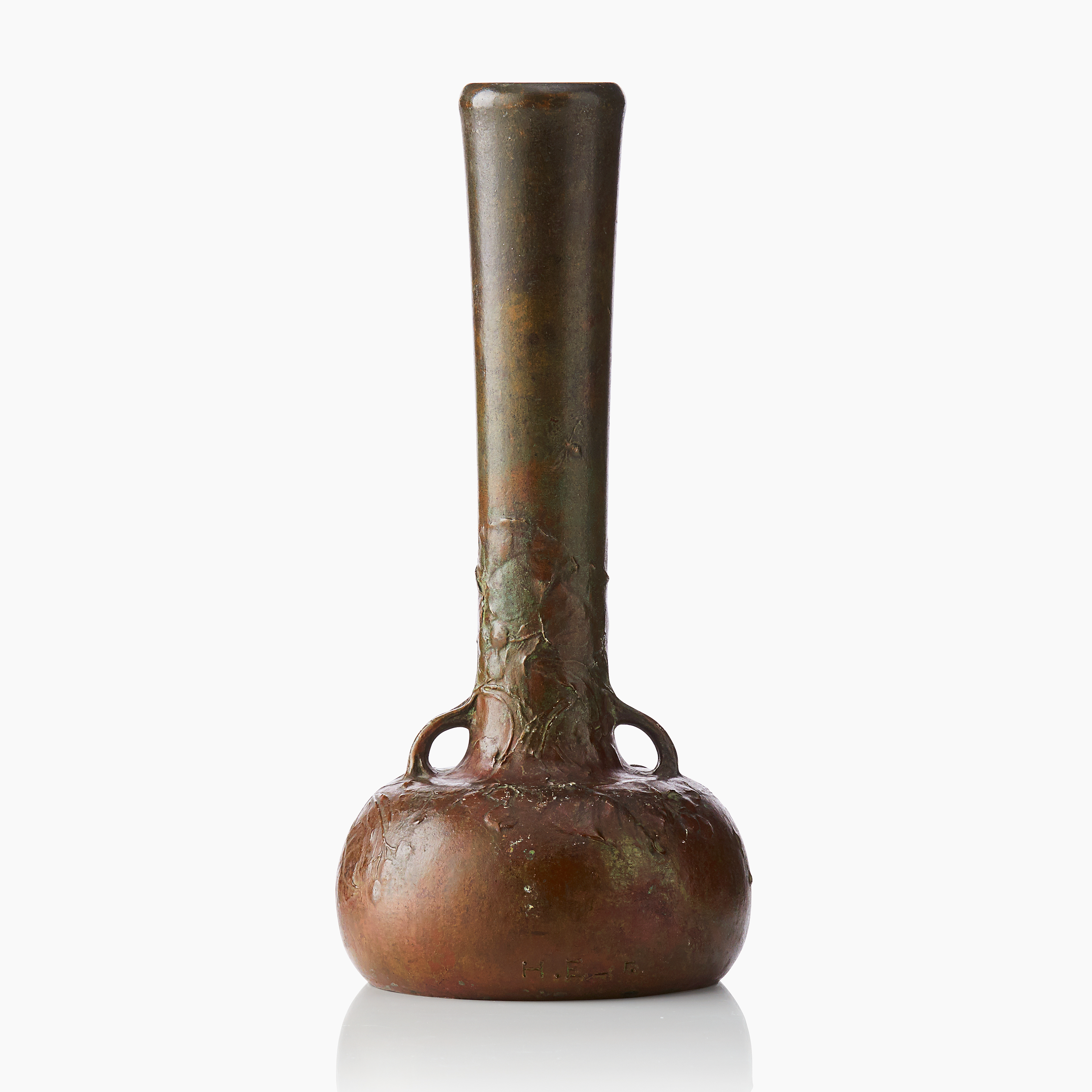
On Barnebys, smaller works from Hugo Elmqvist appear from time to time. A round vase in bronze was hammered at American auction house Wright for SEK 5,000 in 2013, and a smaller variant in Sweden in 2015 for around SEK 3,000. And prices have increased. Among the sculptures, hammer prices are noticeable at Uppsala Auktionskammare and Bukowskis, where works went for around SEK 45,000. Barnebys continues to keep tabs on the artist.
"In recent years, the Elmqvist couple's designs have attracted an international audience, not least the characteristic bronze objects," says Pontus Silfverstolpe. "From having found the vases for a couple of thousand Swedish kroner at Swedish auctions, the same ones at international antique and design fairs cost between SEK 50,000-100,000."