
The May auction season in New York painted a complex portrait of a market in flux. Over seven key evening sales from May 12–15, Sotheby’s and Christie’s tested the appetite of increasingly selective buyers, and results reflected a cooler, more measured demand than anticipated.
Here's what happened during this spring’s marquee sales. All results are calculated with fees unless otherwise noted; estimates are without fees.
May 12: Mondrian Falls Short of Record
Christie’s opened the week with the much-anticipated sale of the Leonard and Louise Riggio collection, followed by its 20th Century Evening auction. Together, the two brought in just under $490 million with fees.
The Riggio trove, 39 works amassed by the late Barnes & Noble founder and his wife, fetched $272 million, less than the $252 million low estimate when stripped of fees. The headline lot was Piet Mondrian’s Composition with Large Red Plane, Bluish Gray, Yellow, Black and Blue (1922), which sold for $47.6 million — below both its $50+ million expectation and the artist’s auction record. The painting went to a lone phone bidder, likely the guarantor, with little visible competition.
See also: Piet Mondrian: Abstract Geometry on Canvas
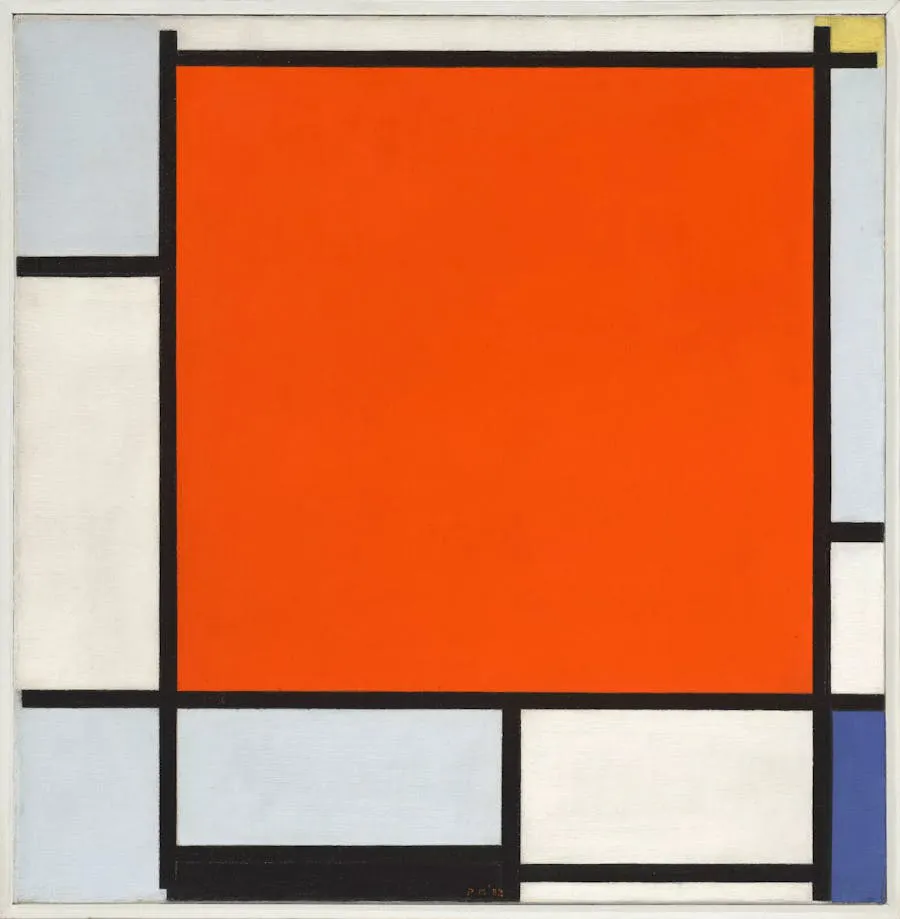
The collection was heavily pre-sold through guarantees and irrevocable bids, blunting any dramatic bidding on the night. According to insiders, Christie’s had scrambled in the days before the auction to offload risk, approaching third parties to back works by Picasso, Giacometti, and others. One notable casualty of market nerves was Warhol’s Big Electric Chair, expected to sell for $30 million but withdrawn at the last moment after whispers of tepid interest.
The subsequent 20th Century Evening Sale saw livelier phone action, ultimately achieving $217 million (with fees) against a low estimate of $194 million. A Monet of poplars at twilight (Peupliers au Bord de l’Epte, Crépuscule) led the night at $43 million, following a spirited five-minute contest. Still, signs of market fatigue persisted: a 2017-sold Fontana work returned to the block and fetched just $7.5 million — barely half of its last price.
Want more news like this delivered straight to your inbox? Subscribe to our free newsletter!
May 13: Giacometti Bust Fails to Sell
Expectations were high for Sotheby’s Modern Evening Sale, headlined by Giacometti's Grande tête mince — estimated in excess of $70 million. But the star lot’s failure to sell sent a chill through the room and ultimately dragged the sale down.
Despite early momentum from strong results for Jean Arp, Robert Delaunay, and a fresh-to-market Kupka, the Giacometti bust — a painted bronze of the artist’s brother Diego — stalled at $64 million and was passed over. Notably, the work came to market with both an aggressive estimate (an unpainted cast sold for just over $50 million with fees in 2013) and no guarantee, at the request of the consignor, the Soloviev Foundation, which aimed to maximise returns by forgoing a prearranged minimum price. That decision proved costly.
See also: Alberto Giacometti: The Unbearable Lightness
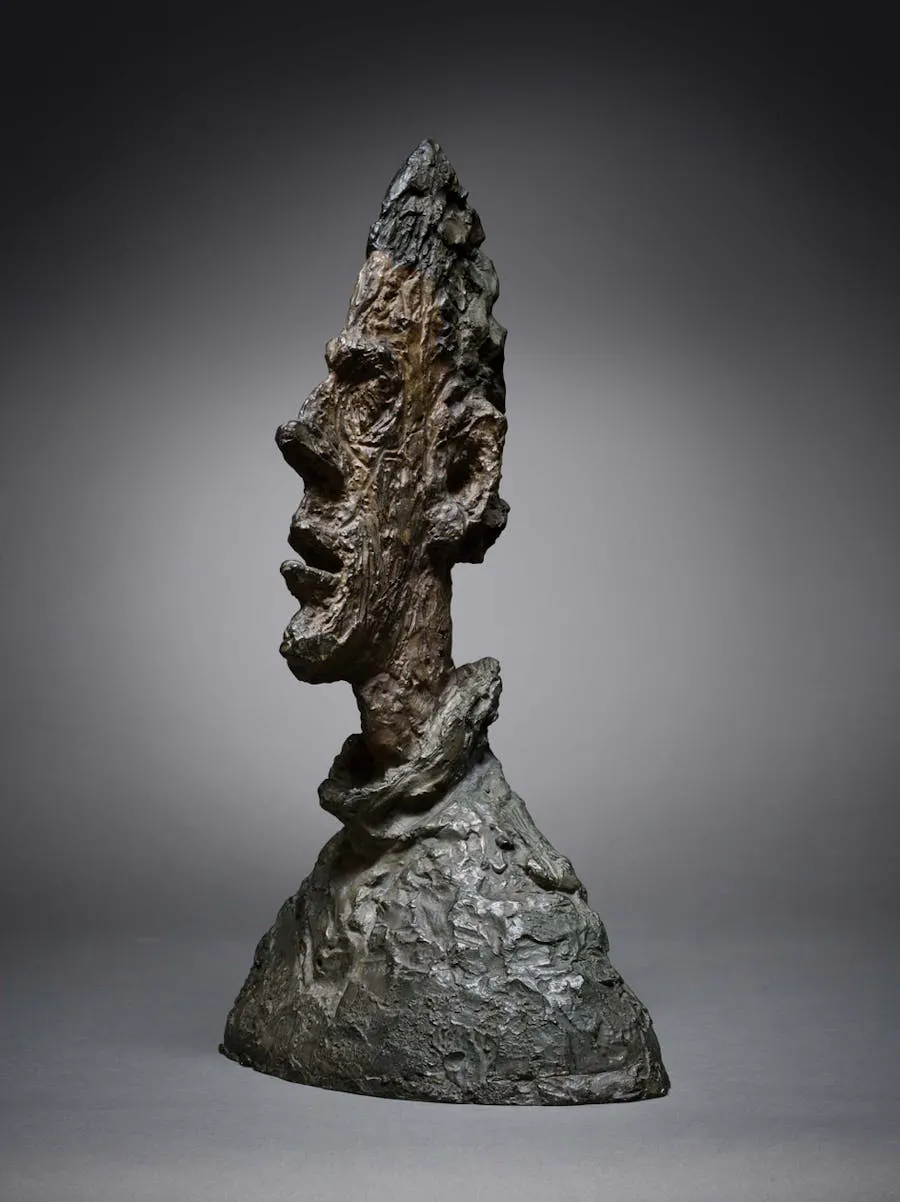
The bust had represented nearly 30% of the presale low estimate. Sotheby’s still managed $186.4 million with fees, but this was well below the $248 million high estimate. Of 65 lots, nine failed to sell and five were withdrawn pre-sale — including works by Homer, Kandinsky, and Renoir. The silver lining: a lamp by Frank Lloyd Wright sold for nearly $7.5 million after an 11-minute bidding war, setting a new record for the architect and nearly quadrupling its 2002 auction result.
May 14: Marlene Dumas Sets New Record
Christie’s 21st Century Evening Sale on Wednesday night totalled $96.5 million (with fees), up from $80.3 million the previous year. While the sale lacked major fireworks, it delivered the week’s most historic moment: a new record for a living woman artist at auction.
See also: The 15 Most Expensive Female Artists
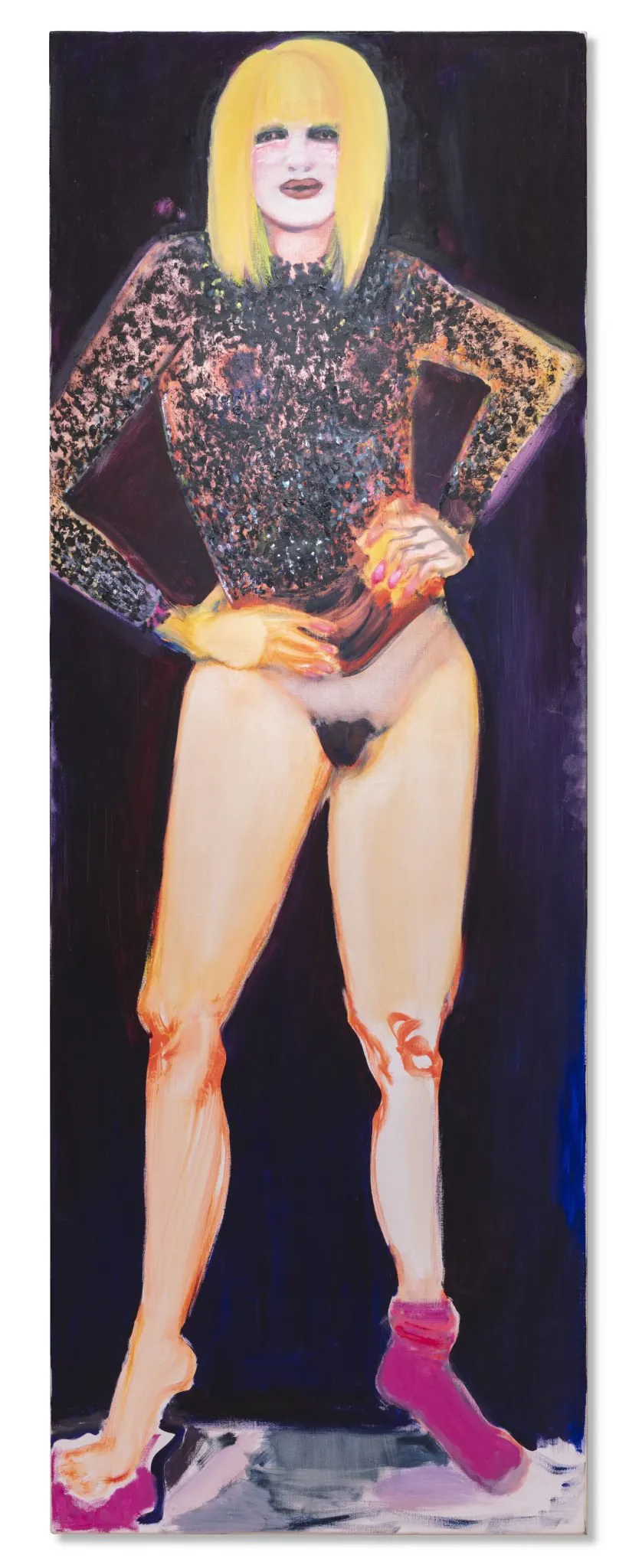
Marlene Dumas’s Miss January (1997) sold for $13.6 million, more than doubling her previous $6.3 million record and surpassing Jenny Saville’s adjusted high. The painting had been consigned by Miami collectors Don and Mera Rubell and bought by a phone client via Christie’s Sara Friedlander. Bidding overall was relatively subdued — many lots carried guarantees and several were withdrawn before the sale — but the Dumas result stood out, both as a signal of strong demand for top-tier works by women and as part of a broader surge in prices for female artists. (New records were also set for Dorothea Tanning, Remedios Varo, Grace Hartigan, Kiki Kogelnik, and Simone Leigh throughout the week).
May 15: Two White-Glove Sales
Sotheby’s capped off the week with a three-part evening auction that totalled $186.1 million across 68 lots.
The night began with two tightly curated, white-glove sales: one featuring 12 works from the estate of the late gallerist Barbara Gladstone, and the other featuring 15 works from dealer Daniella Luxembourg. The two sales were artist-driven rather than blockbuster-oriented, reflecting their owners’ refined, conceptually rigorous tastes. The Gladstone trove brought in $18.5 million, just exceeding its high estimate, with good results for Richard Prince, Thomas Schütte, and Andy Warhol. Luxembourg’s collection achieved $40.4 million, led by Lucio Fontana and Michelangelo Pistoletto, and also surpassed expectations.

The momentum continued with The Now sale, focused on ultra-contemporary art. While bidding was often thin, standout results included a 1981 Basquiat, which led the night at $16.4 million and drew intense competition from multiple bidders.
A Market Still Seeking Its Footing
This spring’s New York sales confirmed what many suspected: guarantees are shaping outcomes more than open-market appetite, and aggressive estimates are backfiring in a market increasingly wary of overpaying. Not a single work sold for over $50 million — a striking shift from just a few years ago, when that threshold was the benchmark of a successful season. Now, sell-through rates in the 80–90% range, often achieved via guarantees and private deals, are being offered as the new measure of success.
See also: The 10 Most Expensive Paintings Auctioned in 2024
Auction houses appeared to be doing more behind the scenes than in the room. The abundance of withdrawn lots and third-party guarantees suggests that collectors, and the houses themselves, are using financial engineering to preempt public failure, even as some, like the Giacometti, still slip through the cracks. Finding sellers willing to consign in this environment is a challenge, and houses are increasingly reliant on guarantees to secure top material. The absence of many Asian buyers, once a major force, added another layer of caution to already fragile proceedings.
Still, there were bright spots. Female artists, both historical and contemporary, delivered standout results, though skeptics noted that strong bidding may partly reflect the relatively modest pricing compared to their male counterparts. The art market, like the broader economy, is being tested by uncertainty. But the game continues – this time more measured, and with safety nets in place.