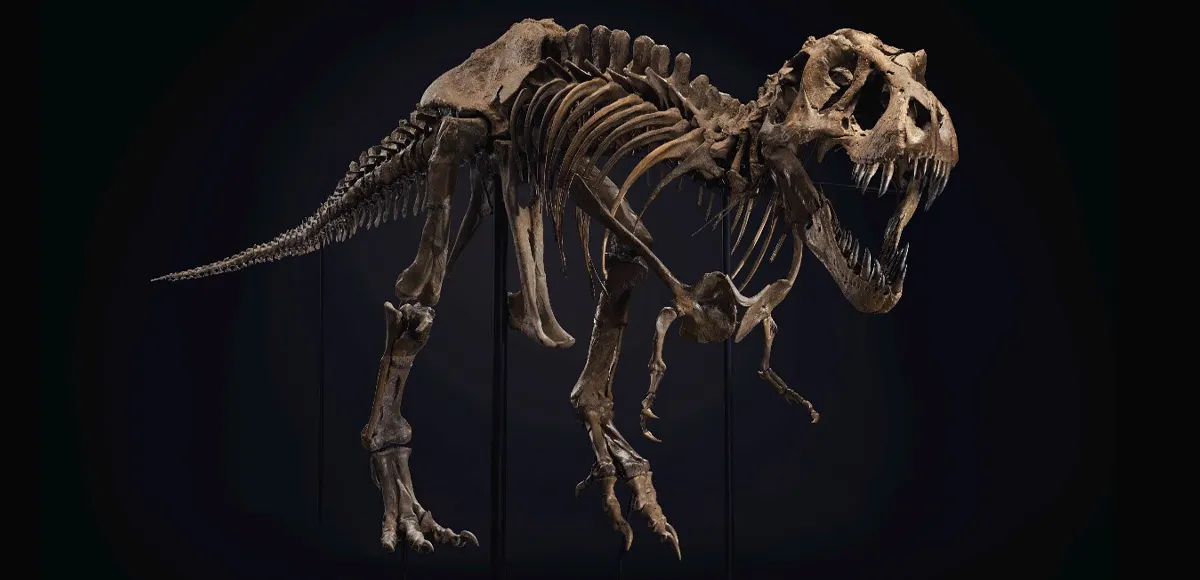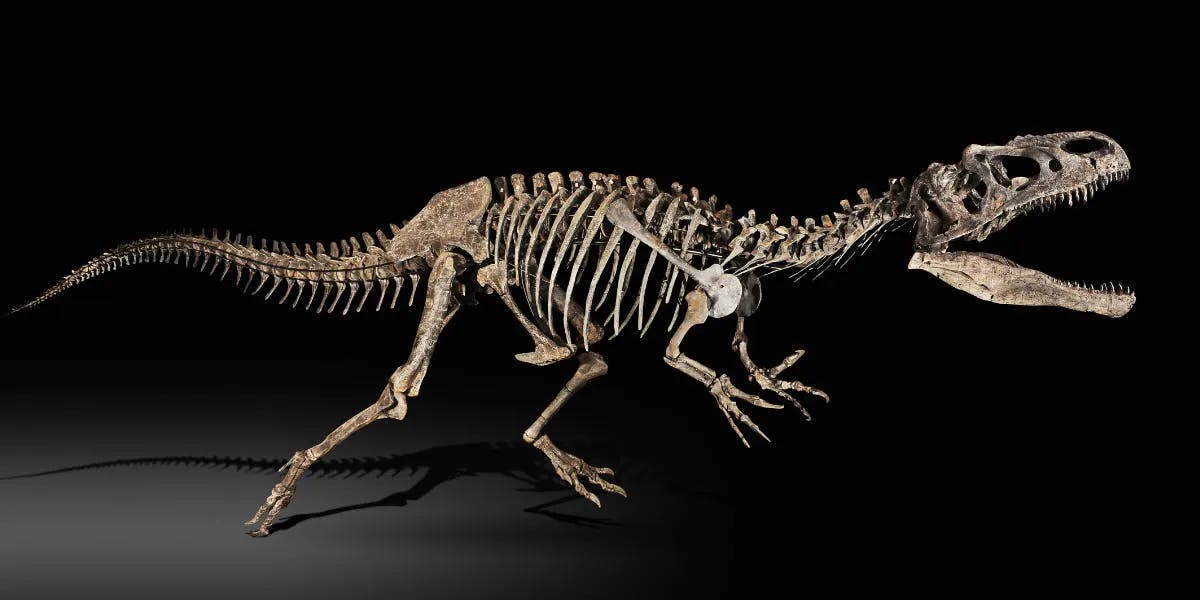
Big John, Big Sara, Stan, Kan, Sue… Behind these nicknames are the skeletons of T-rex, Allosaurus, diplodocus and other species of dinosaurs that drive auction prices into the seven figures. Since the first dinosaur skeleton auction in New York at Sotheby's in 1997, T-rex, Diplodocus, Allosaurus, Triceratops and other fossils have landed in auction rooms. According to natural history expert Eric Mickeler, there's a small but eager market for dinosaur skeletons made from the bones of the same specimen that are sold as decorative items. Regarding prices and preferences, he explains that carnivores usually sell for more than their herbivorous counterparts and that traces of fights or incurable diseases drive up the prices. “People want teeth!" he adds.
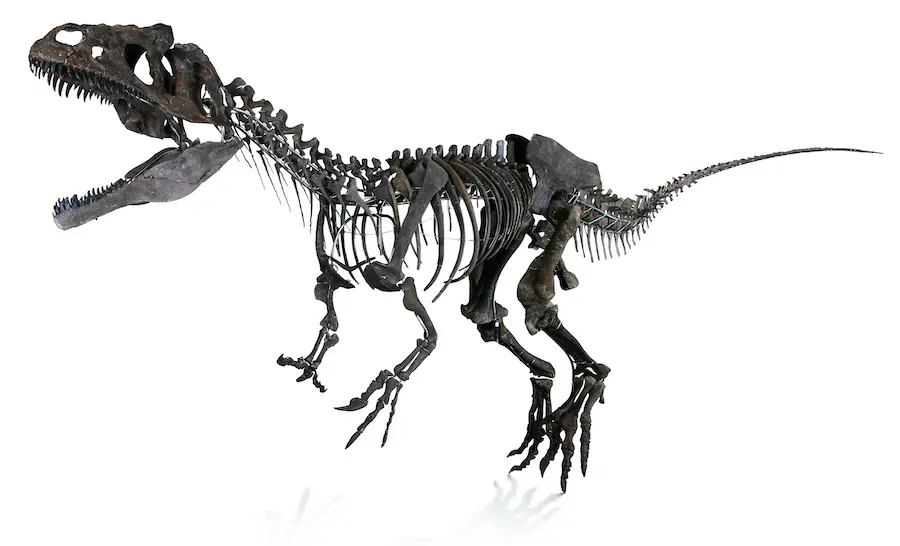
However, the dinosaur market is aimed at a limited customer target given the price and size of such skeletons. Fewer than five sell per year at auction worldwide.
We sought to understand who these buyers are and why they invest in old bones. But first let's go back to the sales that have marked the natural history departments of auction houses in recent years.
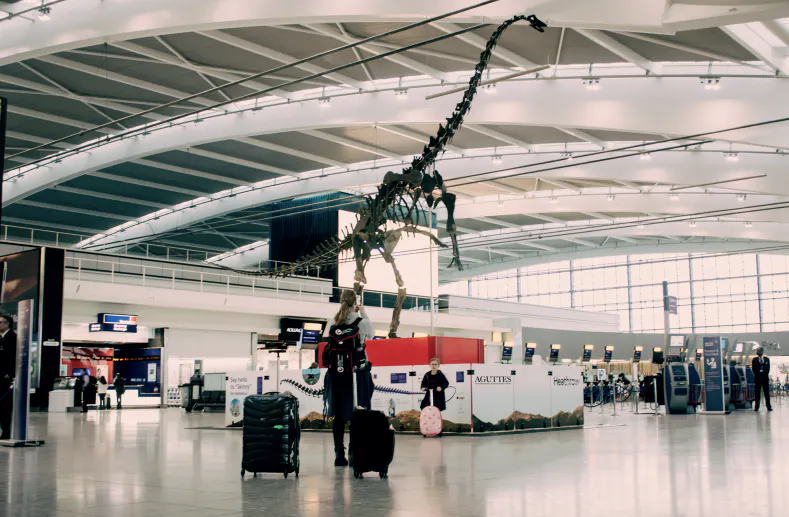
Related: A Million Dollar Dinosaur On Display At Heathrow
Sotheby's New York was one of the first auction houses to devote itself to this field, setting the record in 1997 for Sue, a complete Tyrannosaurus that sold for $8.4 million. The creature, 13 feet high and nearly 43 feet long, has since been exhibited at the Field Museum in Chicago, thanks to the purchase by companies such as Disney and McDonald's.
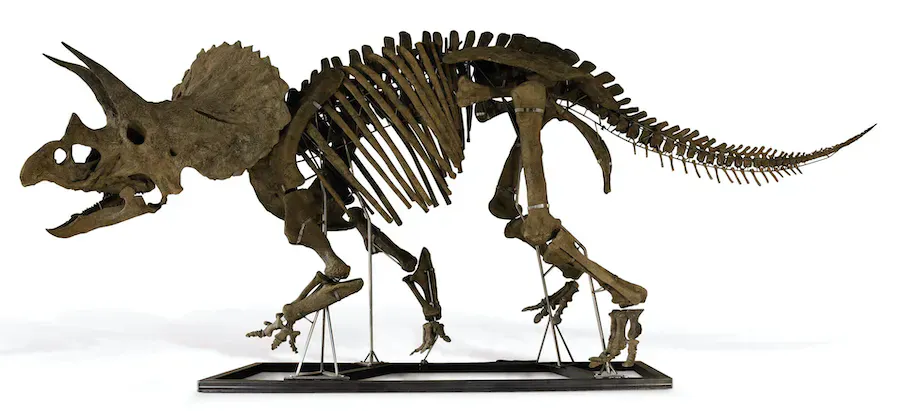
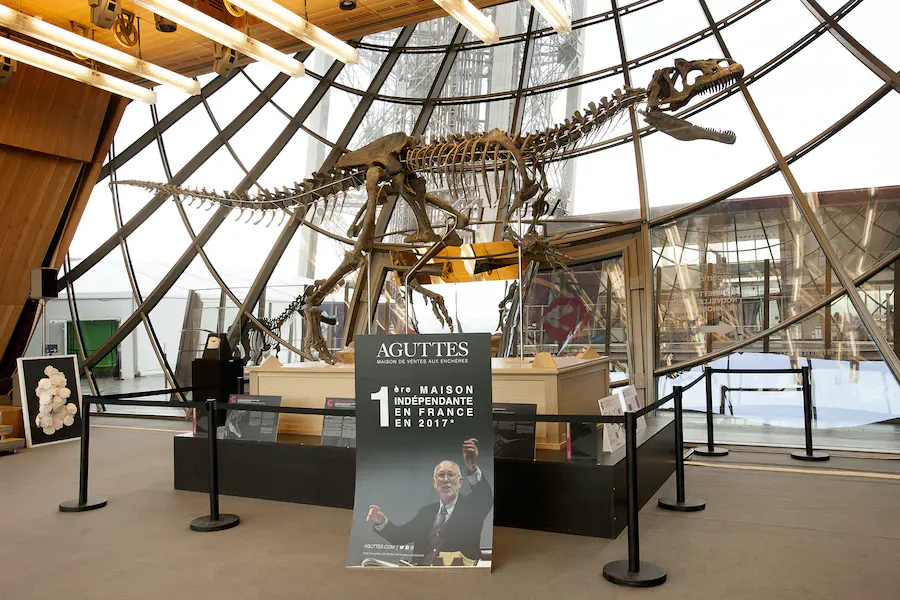
In April 2008, Christie's Paris sold the skeleton of a Triceratops for €592,000 to an American patron who named it Cliff and donated it to the Science Museum in Boston. It was the first dinosaur skeleton sold in France. In October 2010, Sotheby's sold a complete Allosaurus dinosaur skeleton for €1,296,750 to a European collector. This is currently presented on the university campus of Novartis International in Basel, Switzerland. In 2016, Kan, a 150 million year old allosaurus went under the hammer at Aguttes in Lyon, selling for €1.128 million to a French buyer. The year 2018 was particularly busy for dinosaur sales. In June, a new cousin species of Allosaurus was sold at auction at Aguttes for more than 2 million euros. The specimen was on display at the Eiffel Tower for the event. Later, the buyer loaned the fossil to the Royal Belgian Institute of Natural Sciences in Brussels, where it has since been on public display.
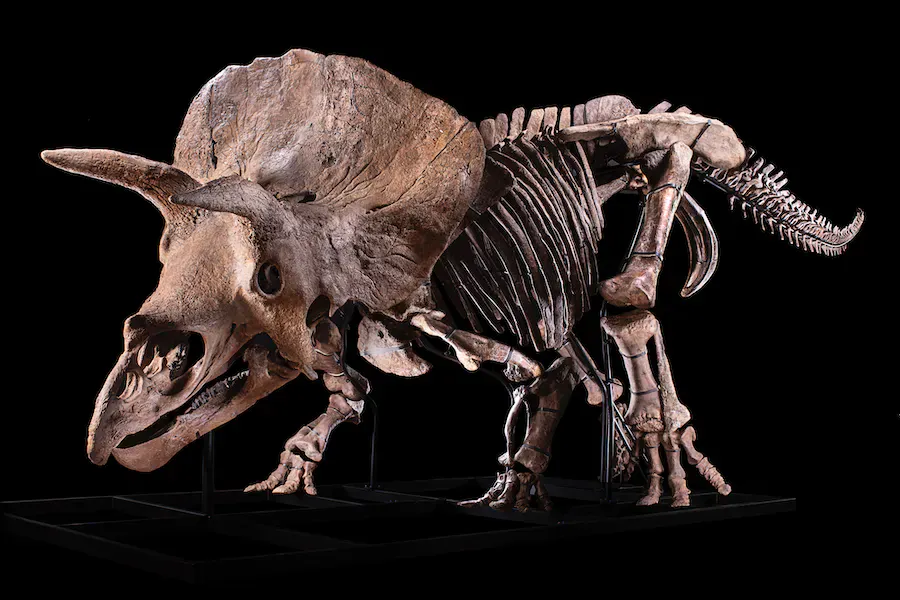
In April, a Filipino businessman was seduced by the “60 sharp teeth” of an Allosaurus skeleton, as well as by the “12 meters from nose to tail” of a Diplodocus. Each sold for 1.4 million euros at Giquello and Binoche. Later, in October, the same auction house put Big Sara, another Jurassic Allosaurus under the hammer, which had spent the three consecutive years since its discovery in 2015 at an Italian laboratory to be reassembled. Big Sara was acquired for more than 3 million euros after an incredible bidding battle. In 2020 in New York, the 1997 record was broken with the sale of one of the most complete skeletons in the world: a 67 million year old T-Rex named Stan that sold for $31.8 million dollars. In 2021 the French (and European) record is beaten with a sale of 6 million euros at Giquello and Binoche for the skeleton of Big John, the largest Triceratops known to date.
Related: T-rex Skeleton Breaks New Record
Critics are never far away when it comes to dinosaur skeleton auctions. Some think it's a marketing stunt and lacks scientific rigor, as well as the negative privatization of the heritage of humanity. According to Eric Mickeler, one of the first to have presented dinosaur skeletons at auction more than 15 years ago, buyers are above all businessmen making an investment in a childhood dream.
Related: The Story Behind Russell Crowe's Dinosaur Skull That Sold at Sotheby's
Enthusiasts often collect isolated parts of fossils: teeth for example but not the whole of a skeleton, in particular due to a challenge of supply, space and transport. However, the collectors often donate these skeletons or partial skeletons to cultural institutions for public viewing. According to Mickeler, the purchase of a dinosaur skeleton is a strategic investment aiming to combine a cultural offer with a commercial product. Recently, a wealthy Czech businessman who owns shopping centers, among other things, opened a museum space in one of his shopping malls to exhibit his collection.
However, the purchase of a dinosaur skeleton is ultimately often the realization of a childhood dream. According to Alexandre Giquello, auctioneer at Giquello and Binoche, dinosaurs hold a fascination for many and paleontology is a discipline accessible to all. For him, the Jurassic Park effect is undeniable. It describes a relatively young audience of buyers with high economic potential who grew up with pop culture icons. Often, these buyers are also patrons, since by lending their acquisition to museums, universities and other public institutions, they allow as many people as possible to discover these pieces of heritage.
Want to receive our latest articles straight to your inbox? Subscribe to our newsletter !
If the price of these prehistoric skeletons seems excessive, we can put things into perspective. How many millions are business tycoons willing to shell out for a Warhol or a Picasso that's only a few decades old compared to a piece of history, approaching millions of decades old?