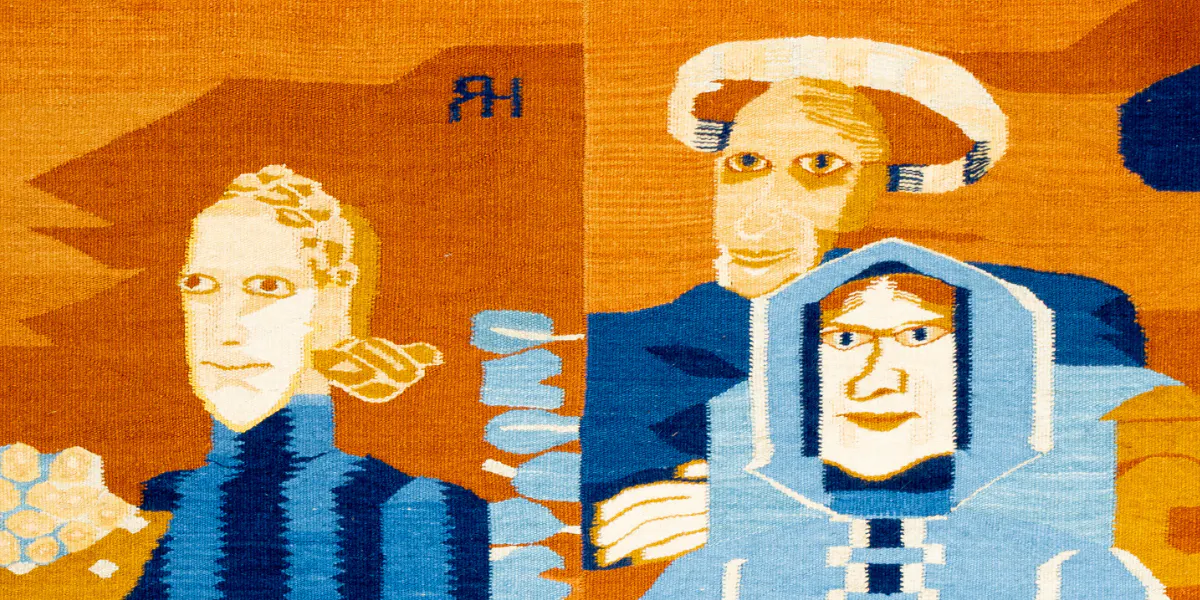
A tapestry by the internationally acclaimed textile artist will be auctioned at Olséns Auktioner on October 5. The work, Memories of Three from 1949, is valued at SEK 200,000–250,000 (about $21,500-26,800).
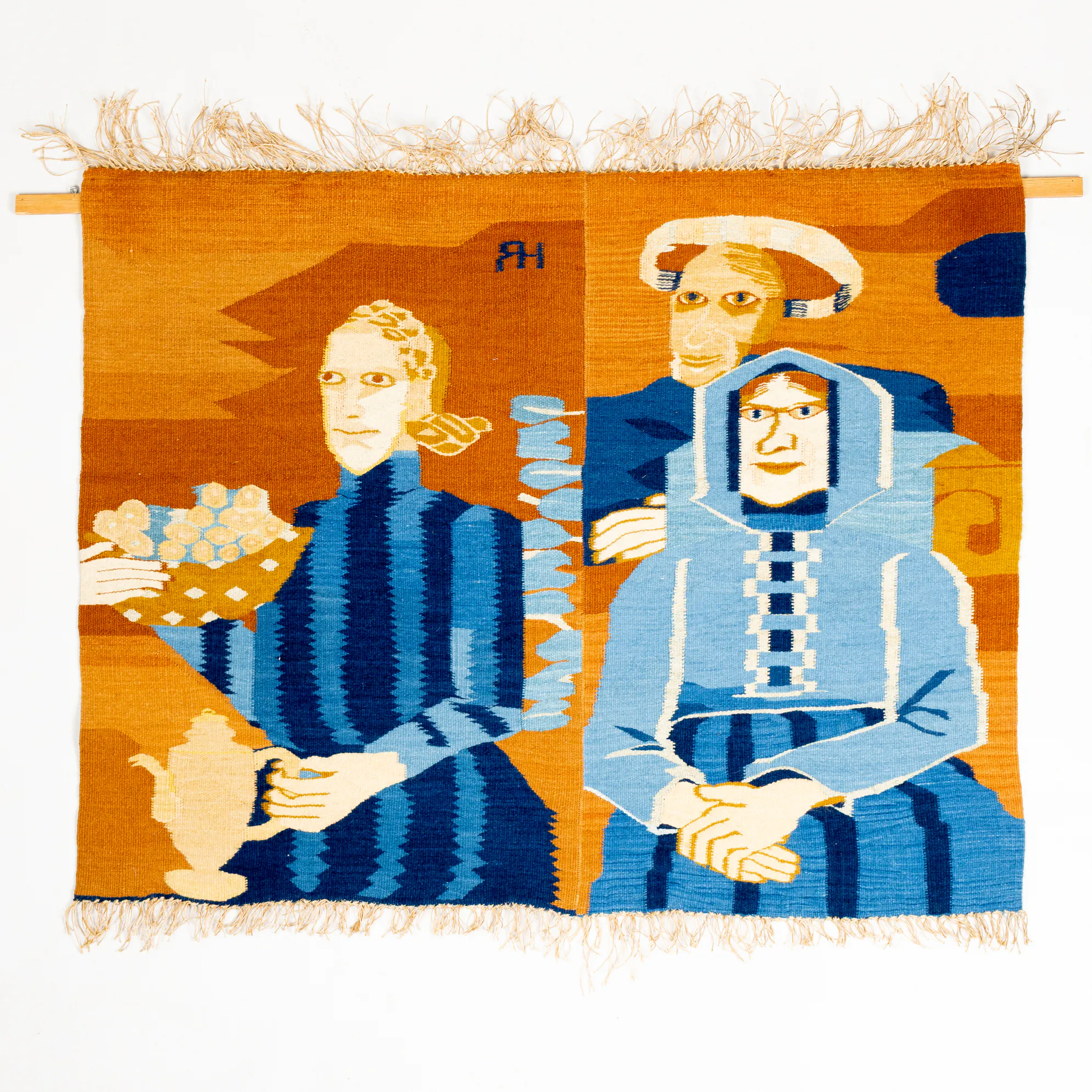
Woven using the flamskväv technique, the piece measures 130 x 100 centimetres and is signed HR. The technique makes the tapestry double-sided, with equal detail on both sides. The motif depicts three women who were central in Ryggen’s life: her mother Karna Gall Jönsson, her aunt Elna Gall Nilsson, and her friend Olivia, Hannah’s first weaving teacher.
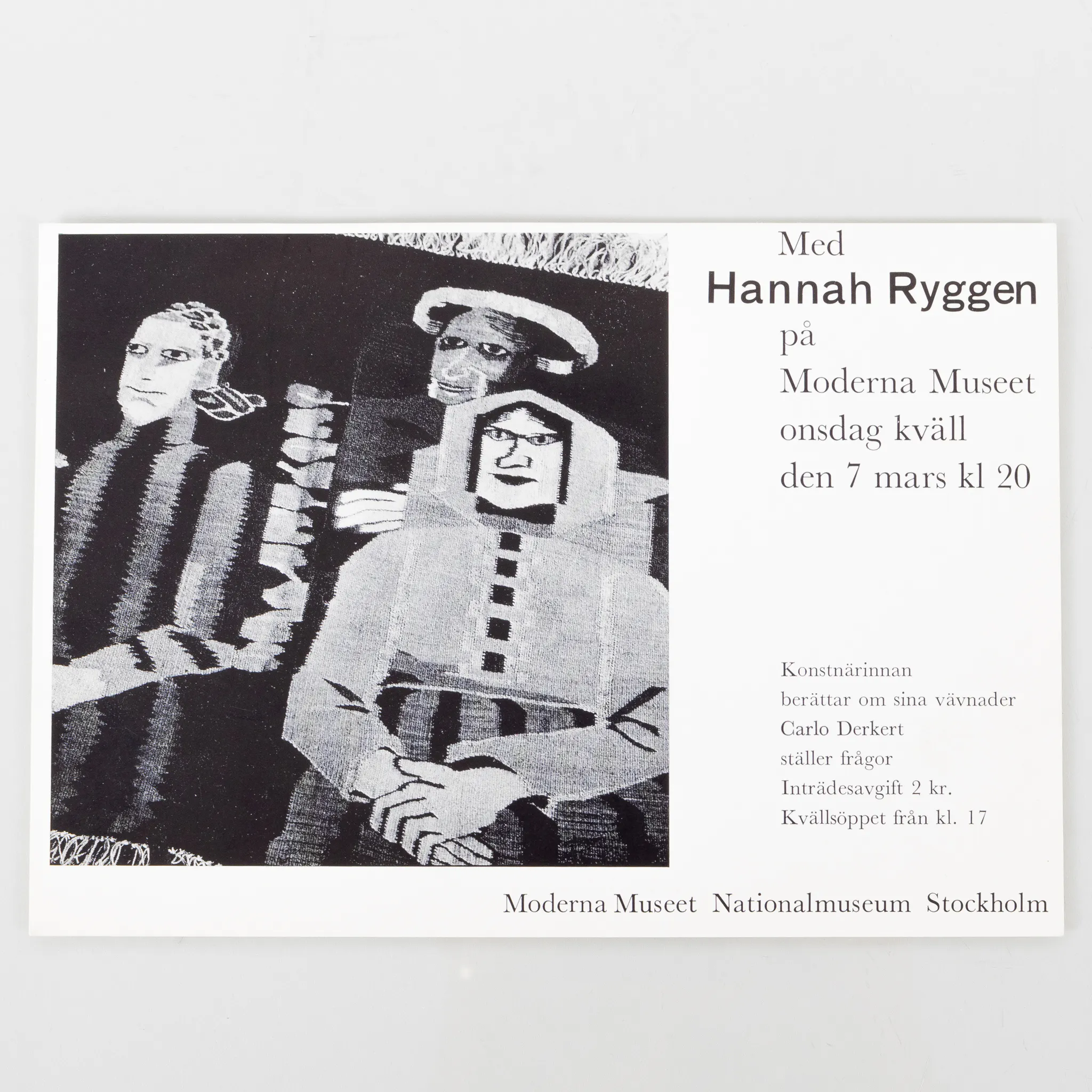
The work has a strong exhibition history. It has been shown at Malmö Museum in 1951, Moderna Museet in Stockholm in 1962, and Nordenfjeldske Kunstindustrimuseum in Trondheim in 1970, among other venues. Nordenfjeldske now holds the largest collection of Ryggen’s work. Passed down through the family, the tapestry is being sold by a relative.
“We are both proud and grateful to be able to offer this work by Hannah Ryggen, a piece of textile history and cultural heritage that has been passed down within the same family. Now we have the great honour of presenting it at auction. The Selected Items auction ends on 5 October, and we look forward to strong interest from collectors and art lovers,” says Lina Olsén, CEO of Olséns Auktioner.
Although Memories of Three does not carry the strong political message that characterises many of Ryggen’s most famous works, her craftsmanship and sense of colour are clear. Her distinctive shade of blue, potteblå (known as “piss blue”), is especially striking here. She made the dye herself by mixing indigo with fermented urine and a secret ingredient, possibly orange peel, according to author Inga E. Næss. Male guests at the family farm in Ørland were expected to contribute to the process, as women’s urine was not considered suitable for dyeing. Potteblått became Ryggen’s signature colour, associated with hope, longing and vitality, and she often used it in depictions of herself.
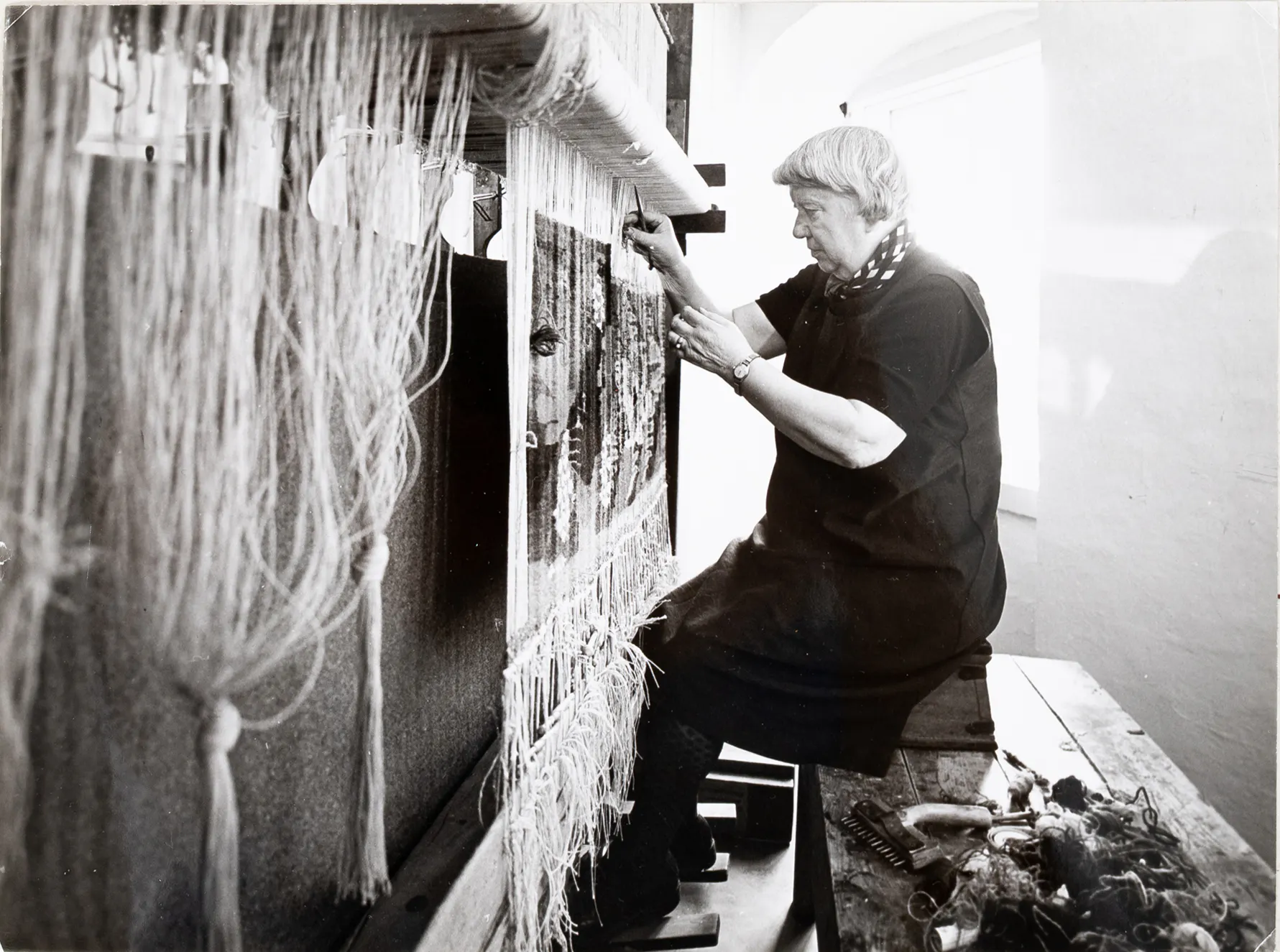
Hannah Ryggen, born Jönsson in Malmö in 1894, is regarded as one of the most important textile artists of the 20th century and a leading figure in modernism. Her tapestries were stylised, figurative and often overtly political. She described herself as an anti-fascist, anti-militarist, communist, feminist and humanist, and her uncompromising outlook shaped both her art and her public engagement.
After leaving her teaching position in Lund in the 1920s, she moved to Ørland, Norway, where she lived on a farm with her husband Hans and their daughter Mona. Ryggen broke with the traditional division between artist and weaver by mastering the entire process herself, from carding, spinning and dyeing with plants to weaving the finished tapestry. She also worked without models, giving her art an intuitive and expressive character.
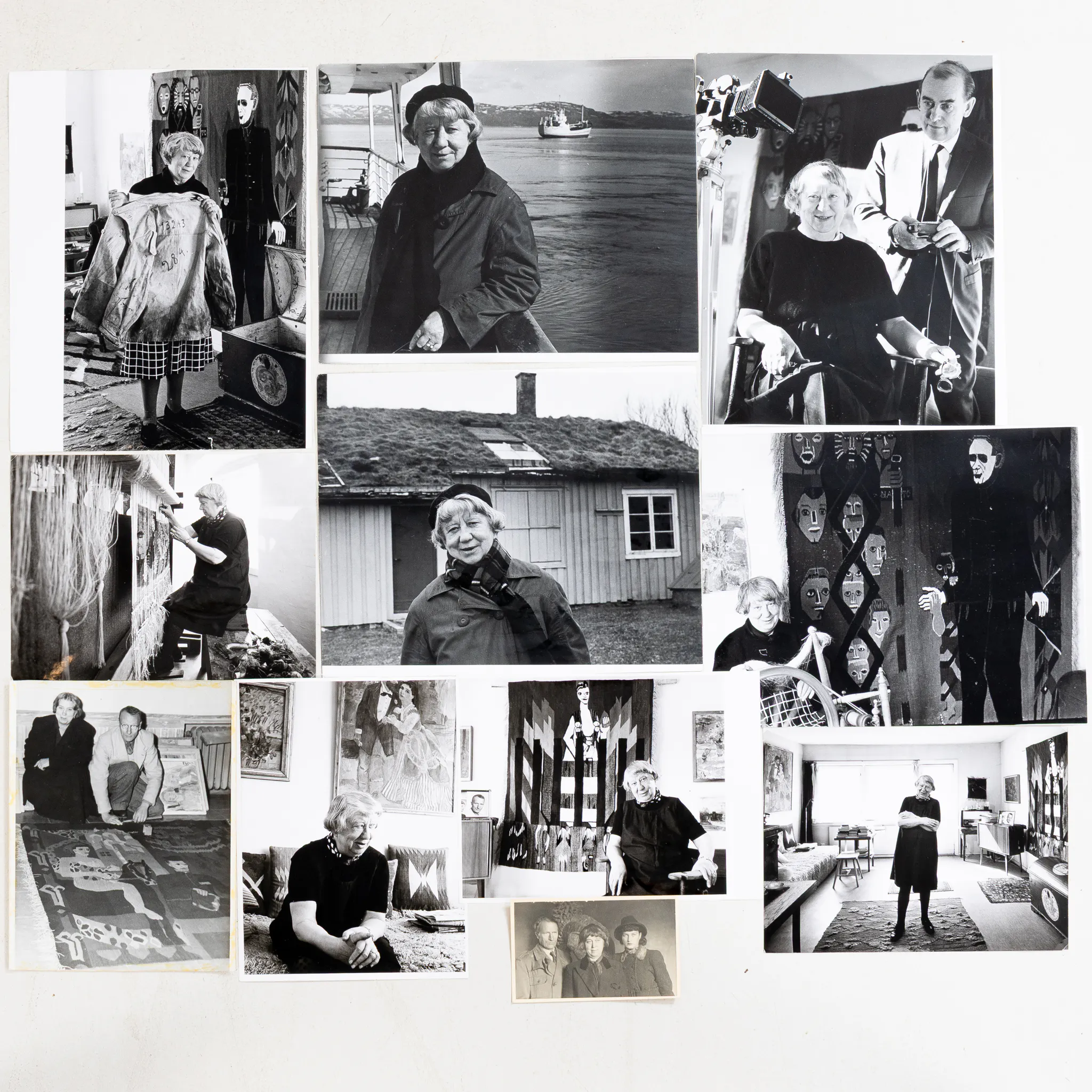
Her international breakthrough came in 1939 at Kunstnerforbundet in Oslo, the same year she took part in the World’s Fair in New York. Two years earlier, she had exhibited at the World’s Fair in Paris. Over the following decades, her tapestries gained growing attention, not least for their political content. In 1964 she made art history as the first textile artist to exhibit at the Høstutstillingen in Oslo, and as the first woman to represent Norway at the Venice Biennale.
In total, Ryggen created more than a hundred large tapestries, many of which are now housed in museums and public buildings across the Nordic countries. Her art continues to resonate and attracts collectors worldwide.
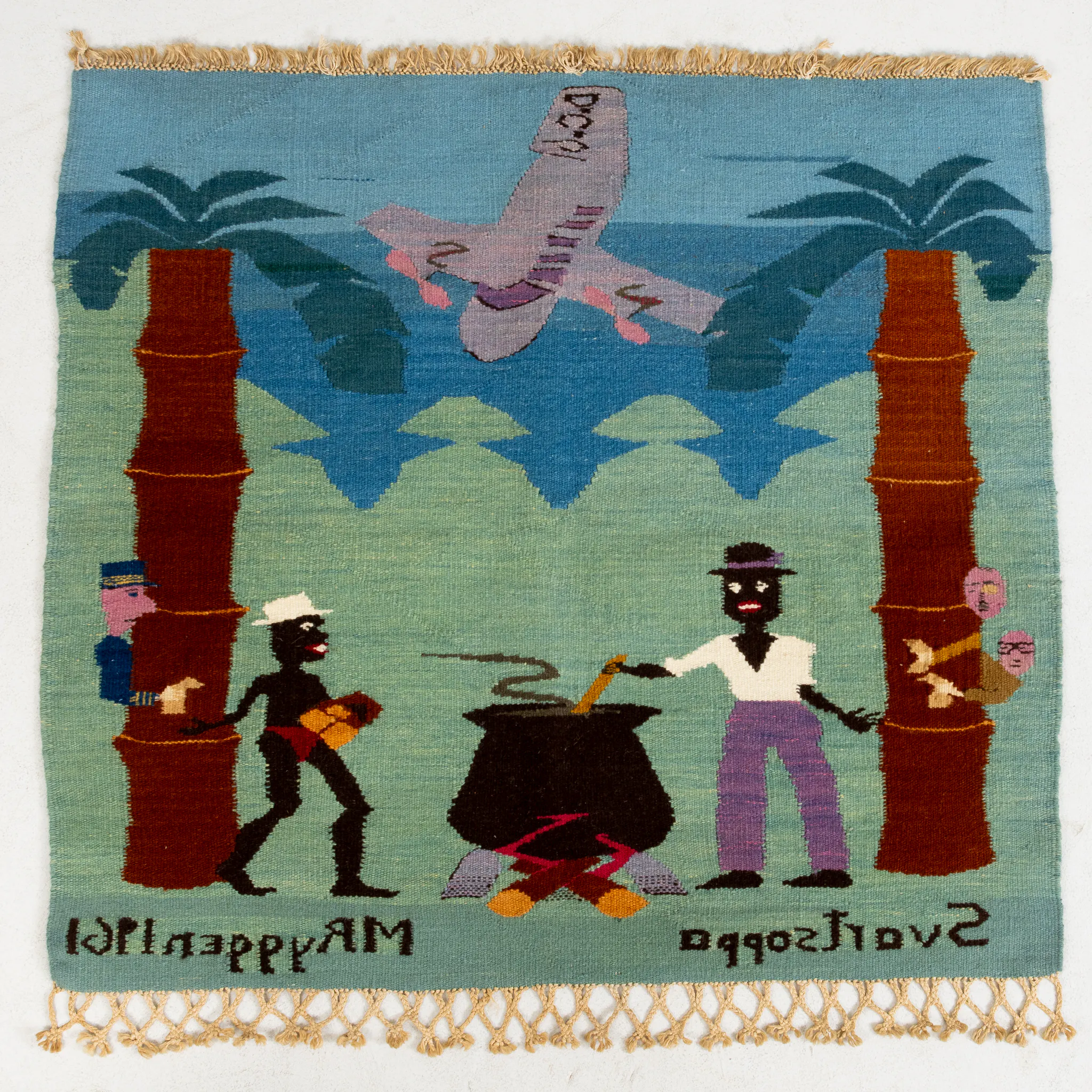
Alongside Memories of Three, Olséns Auktioner is also offering a pastel by Hannah Ryggen, a tapestry by her daughter Mona Ryggen, and smaller oil paintings by her husband Hans Ryggen.