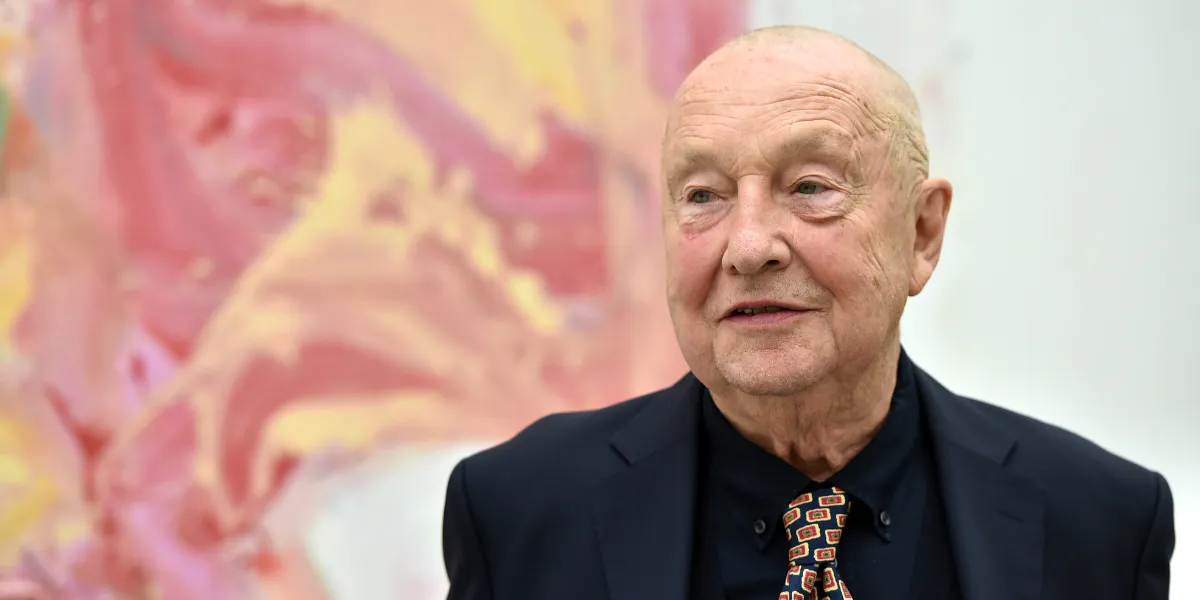
Through his work, Georg Baselitz encouraged his audience to question established ways of looking at art and to reinterpret it.
Georg Baselitz was born on January 23, 1938 as Hans-Georg Bruno Kern in Deutschbaselitz, Saxony. His early years were shaped by war, but he refused to be confined by life in the newly established socialist state. Nor did he assimilate into an art scene dominated by Socialist Realism. He began studying at the Academy of Fine and Applied Arts in Berlin-Weißensee in 1956, but was expelled after two semesters. He continued his training at the West Berlin Academy of Fine Arts and left the GDR for good in 1958. After travelling as far as Paris and Amsterdam, he changed his name to Georg Baselitz in 1961.
Want more articles like this straight to your inbox? Subscribe to our free newsletter!
At times provocative, he did not conform to the Western art scene, and eventually developed a style of his own that deliberately resisted the dominant artistic movements of the time. In 1965, he was awarded a fellowship at the Villa Romana in Florence and began work on his series Heldenbilder (“Hero Paintings”), which explored the German identity crisis following the Second World War through raw and unsettling figures. His Frakturbilder (“Fractured Images”) were even more dramatic: fragmented and reassembled bodies broke with classical modes of representation and forced the viewer to adopt a new way of looking. This marked a direct step towards Baselitz’s famous upside-down paintings, which defined his international breakthrough from 1969 onwards. His participation in Documenta 5 in Kassel cemented his position as an internationally recognised artist, and in 1980 he was entrusted with designing the German Pavilion at the Venice Biennale alongside Anselm Kiefer.
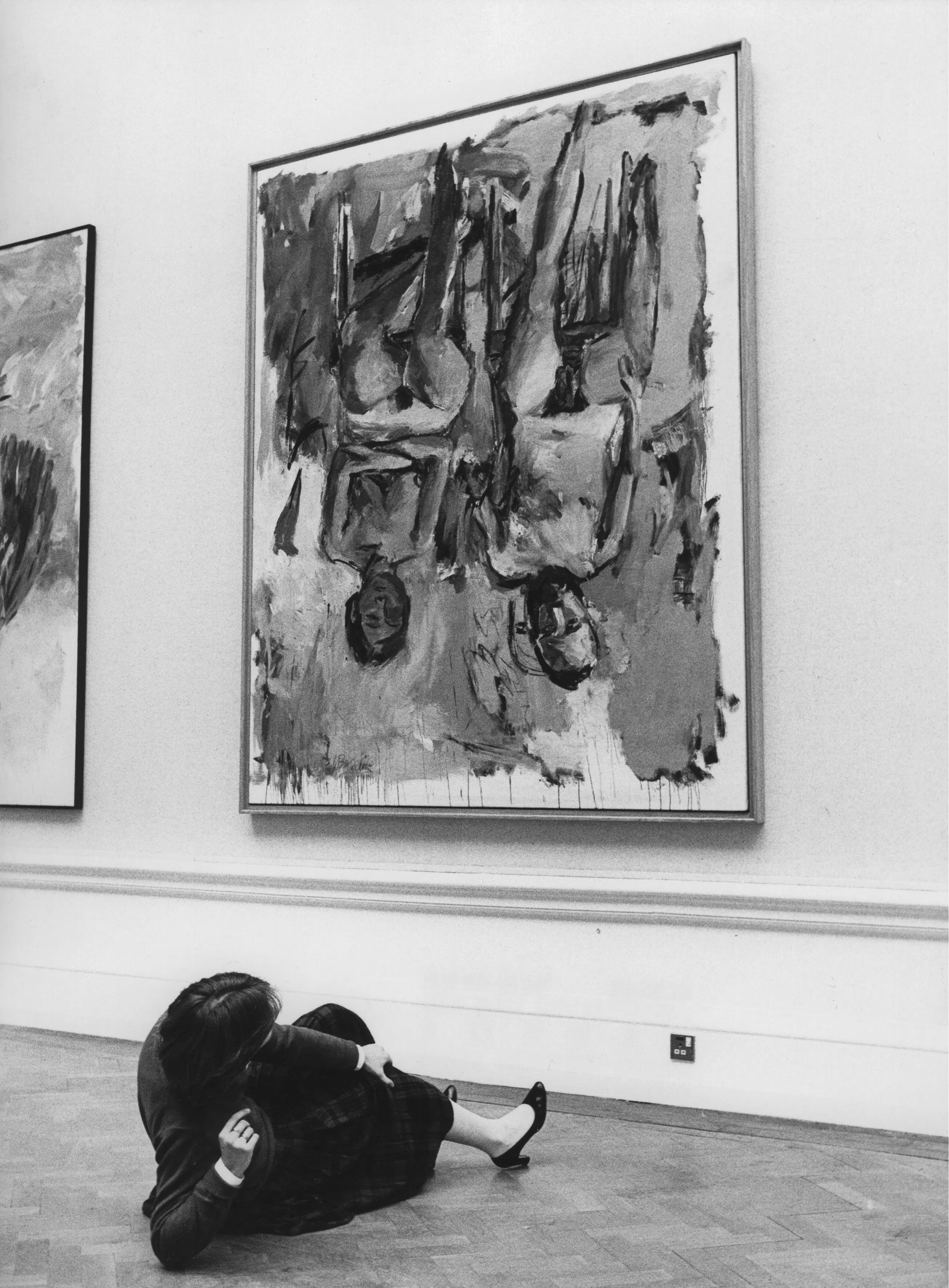
From 1977 to 1983, Baselitz taught at the State Academy of Fine Arts in Karlsruhe; from 1983 to 1988, and again from 1992 to 2003, he taught at his alma mater, now the Berlin University of the Arts. Returning to works from the 1960s and 1970s, the Remix series, which began in 2005, revisited and re-explored his own oeuvre. It took his art to a new level, marking a culmination of his development both as an artist and as a person.
Georg Baselitz, the influential artist who defied categorisation, died on April 30, 2026 at the age of 88.