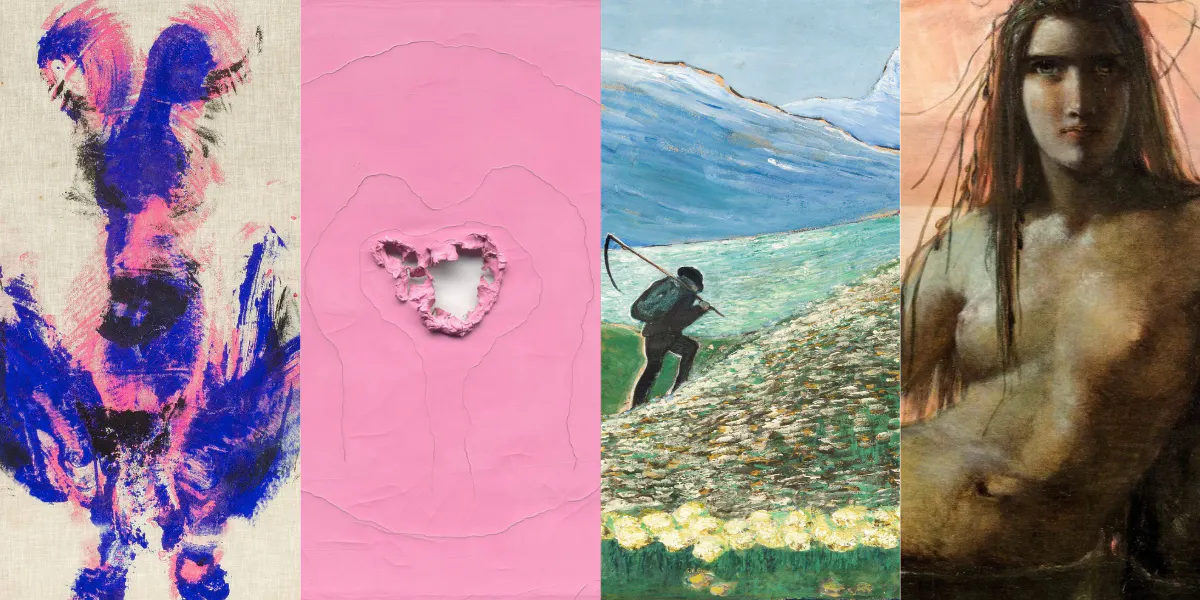
At the end of the month, the Berlin auction house Grisebach will present its annual winter auctions featuring art from the 19th to the 21st centuries. The "Selected Works" auction, featuring an outstanding selection of 65 lots, will open on November 26 at 6 p.m. Here are some of the highlights:
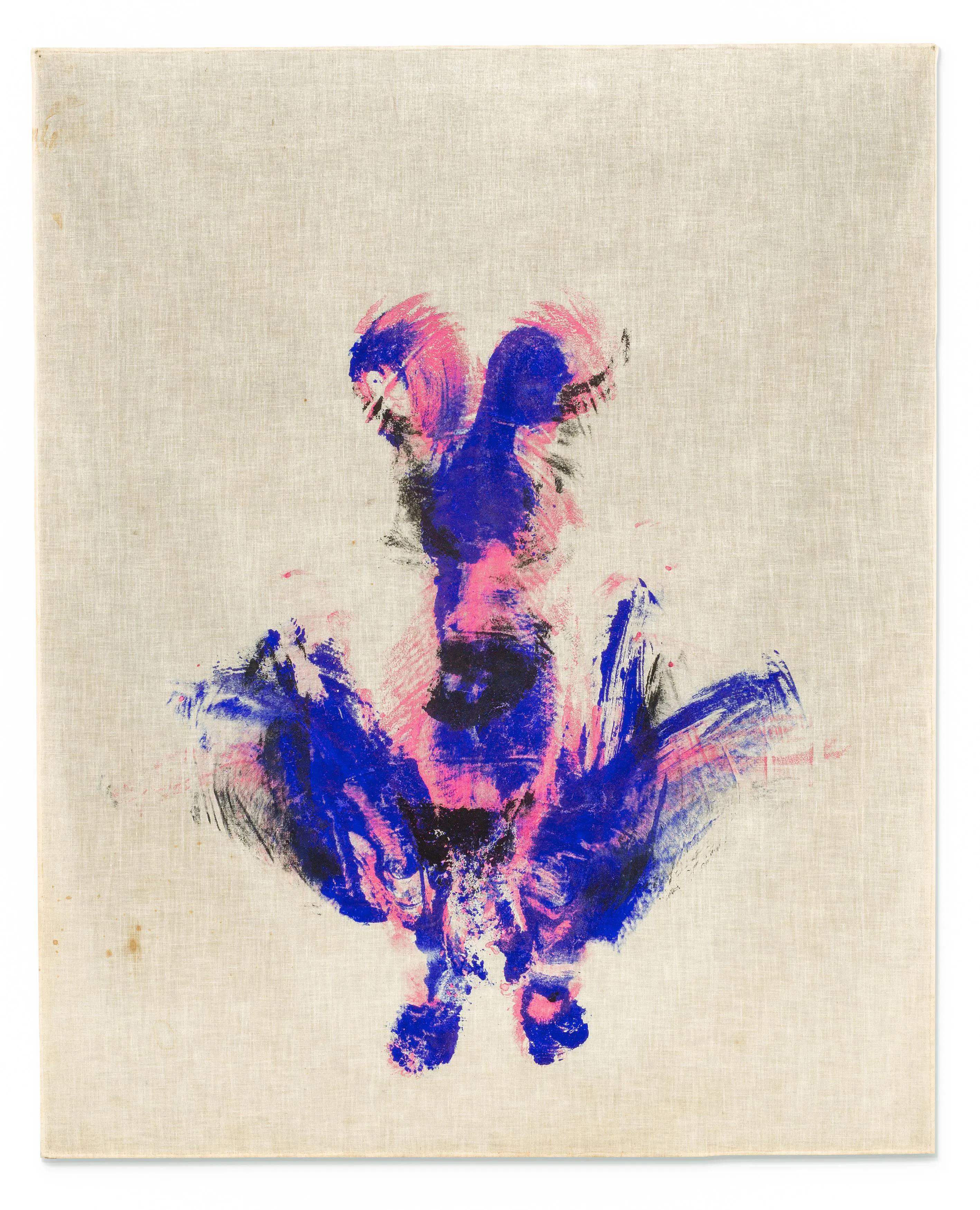
Leading the auction is Yves Klein's Untitled Shroud Anthropometry (ANT SU 30) from 1960, one of the few works from this group of only about 30 to be privately owned. From 1960 onward, Klein put his idea of using "human paintbrushes" into practice by instructing models covered in paint to leave imprints of their bodies on various backgrounds. This process resulted in approximately 150 prints on paper and the roughly 30 on cloth or canvas, including the present work, which Klein gifted to the Swiss filmmaker Yvan Butler. It has been part of a private collection in North Rhine-Westphalia since 1985.
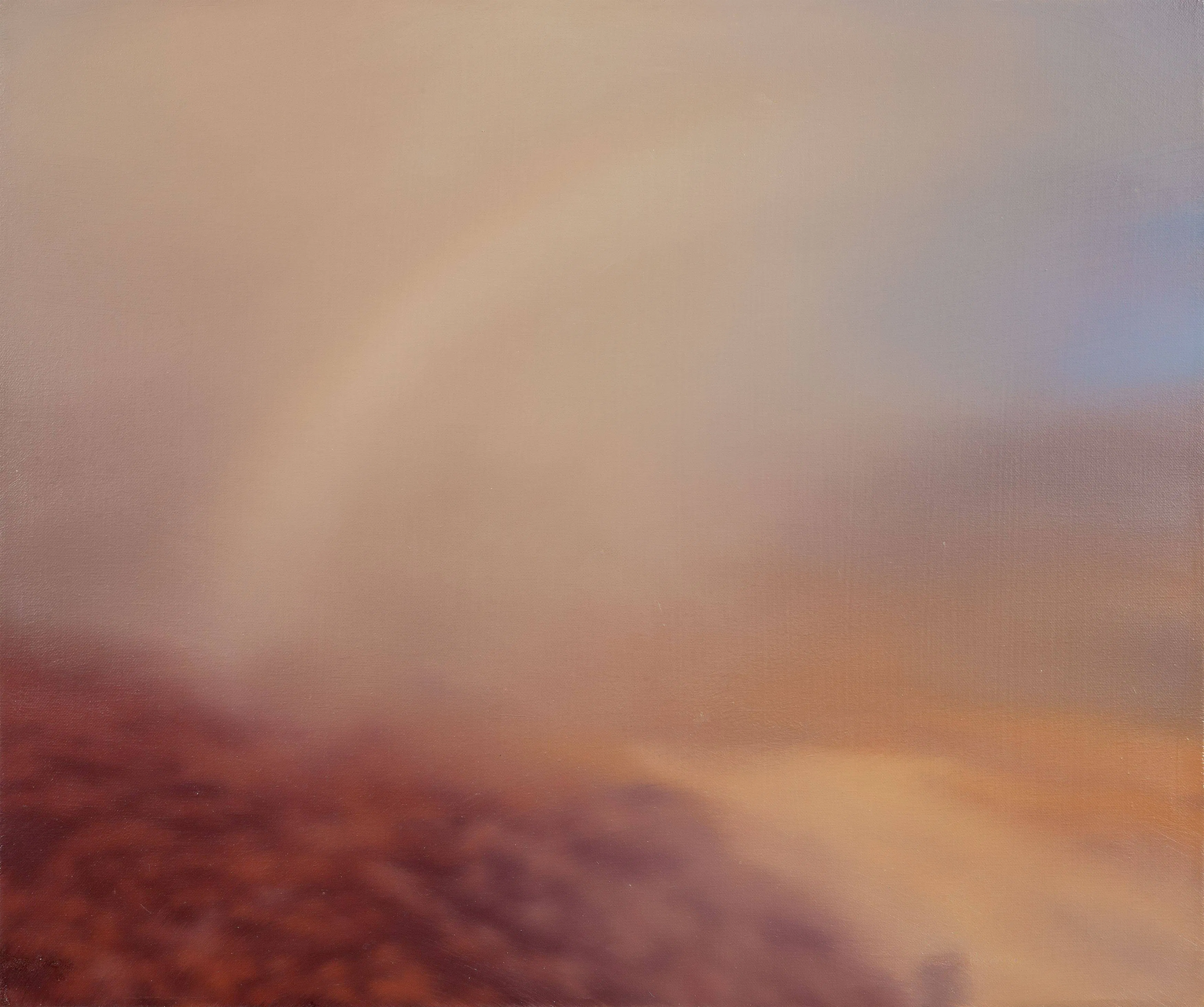
Gerhard Richter's Little Teide Landscape from 1971, also a gift from the artist, has found its way into the auction from the Wulf Herzogenrath Collection. Richter had only begun painting landscapes based on photographs a few years earlier – driven by the simple desire to paint "something beautiful." For some of these paintings, Richter used photographs from holidays in the Canary Islands; in this case, of the landscape around the Teide volcano on Tenerife.
About 107 works from the collection of the art historian and curator Wulf Herzogenrath, who passed away in June, have been entrusted to Grisebach for auction this year. In addition to the painting presented here by Gerhard Richter, works by artists such as Sigmar Polke, Nam June Paik, Paula Modersohn-Becker, Arthur Segal, and Marcel Duchamp will be offered.
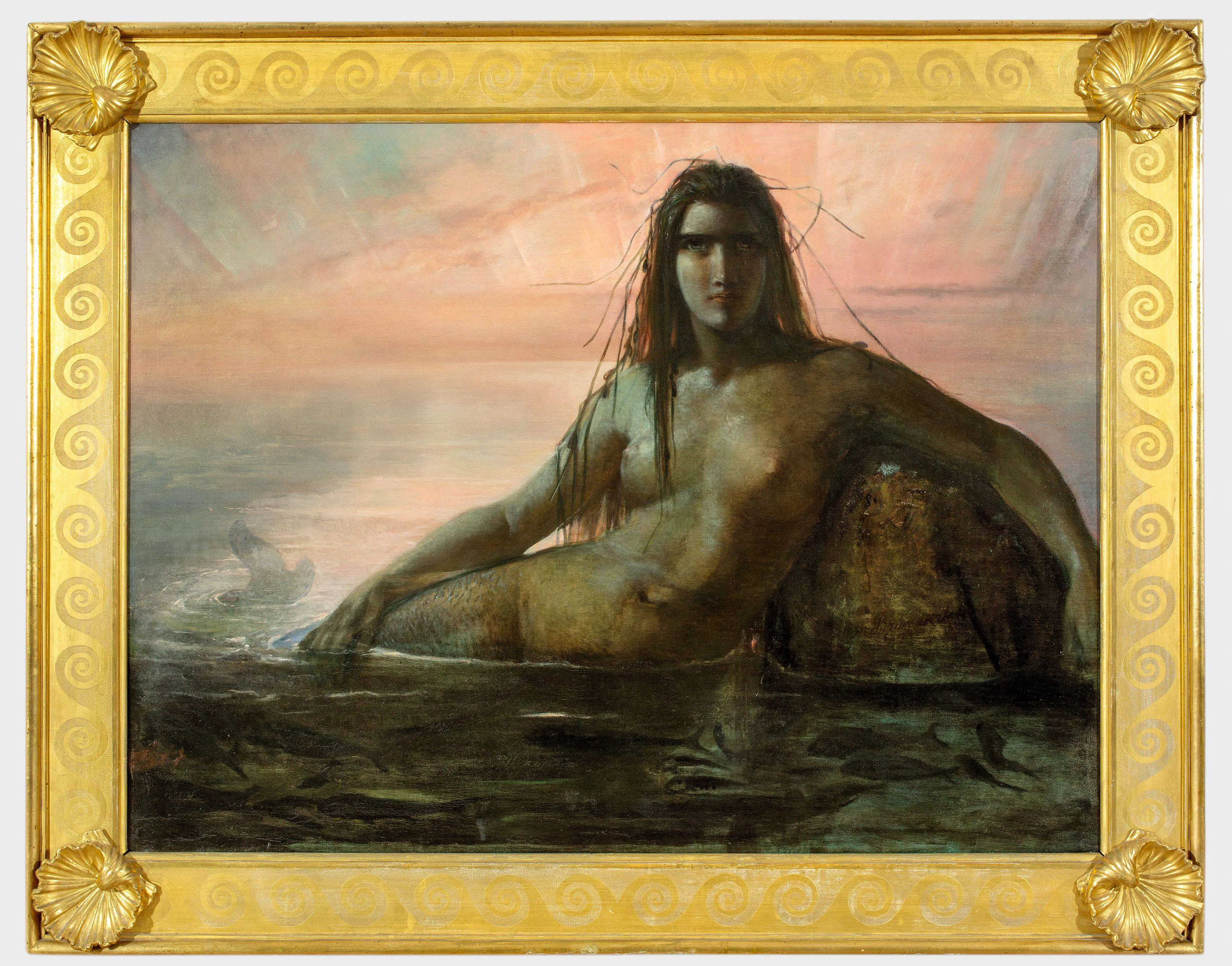
When the German-Polish painter Elisabeth Baumann met the Danish writer Hans Christian Andersen in Rome in 1845, it marked the beginning of a lifelong friendship and the start of her exploration of the mermaid motif, as Andersen had published his famous story The Little Mermaid eight years earlier. In 1846, Elisabeth Baumann married another Dane, the sculptor Jens Adolf Jerichau, who soon after took her to his homeland. Elisabeth Jerichau-Baumann began work on her first mermaid painting while still in Rome, though it was likely completed later in Copenhagen. This painting, which was followed by at least three more mermaids up until the 1870s, captivates viewers with a symbolic expressiveness that was ahead of its time. Jerichau-Baumann did not part with her work until 1861, and it has remained in private collections ever since. The recent rediscovery can be considered a real sensation, which rightly makes A Mermaid (En Havfrue) (1847/61) a highlight at Grisebach.
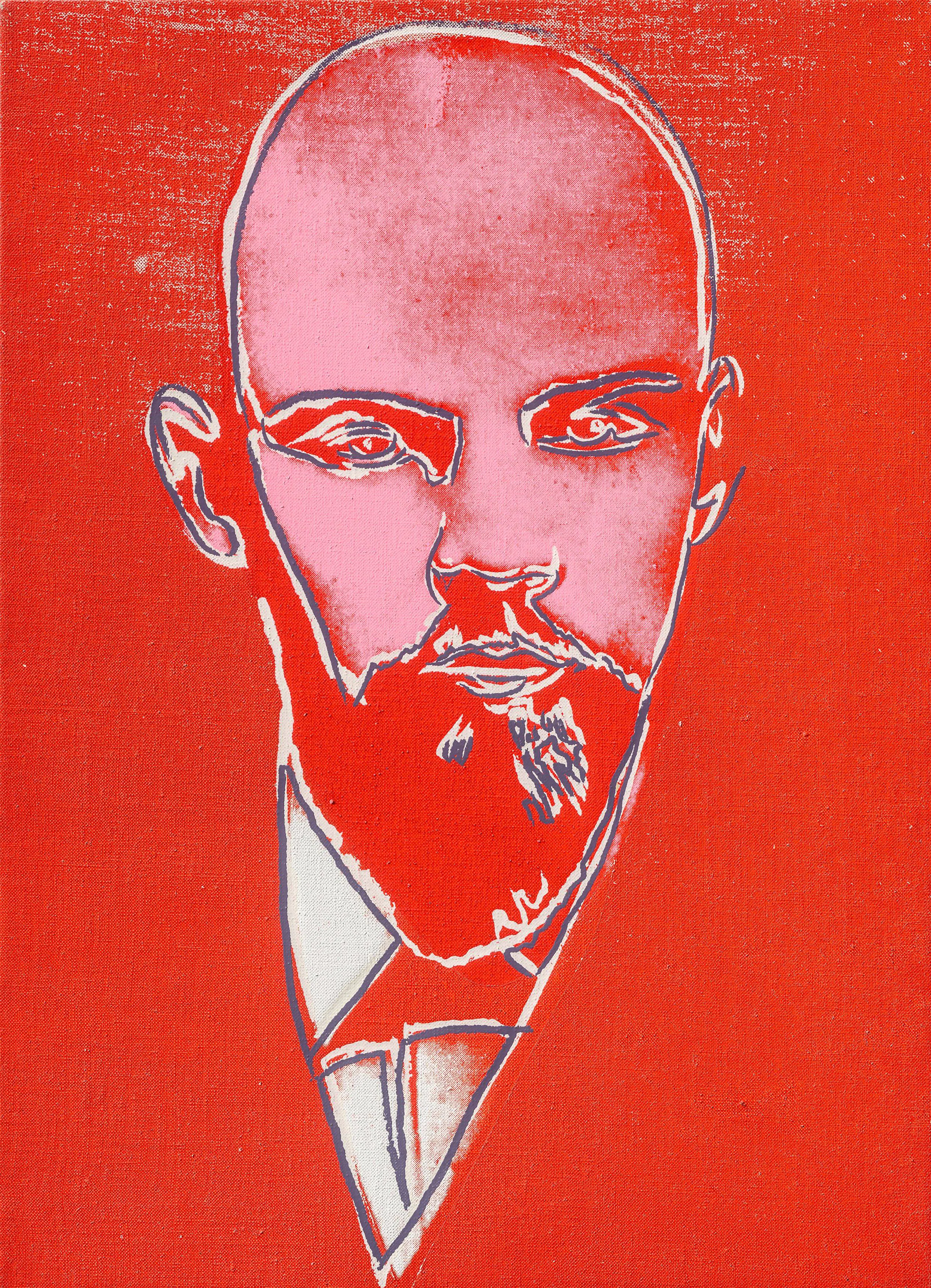
After nearly four decades in the same family's possession, a work from Andy Warhol's Lenin series is now being offered at auction for the first time. Warhol's work on the portrait of the Soviet revolutionary leader was one of his last major portrait series in 1986, before his unexpected death the following year. The idea for the series came from his Munich gallerist, Bernd Klüser, who suggested Lenin's likeness from a group photograph taken in 1897. The present example is one of the few in the series rendered in an intense red, reflecting the subject's political leanings.
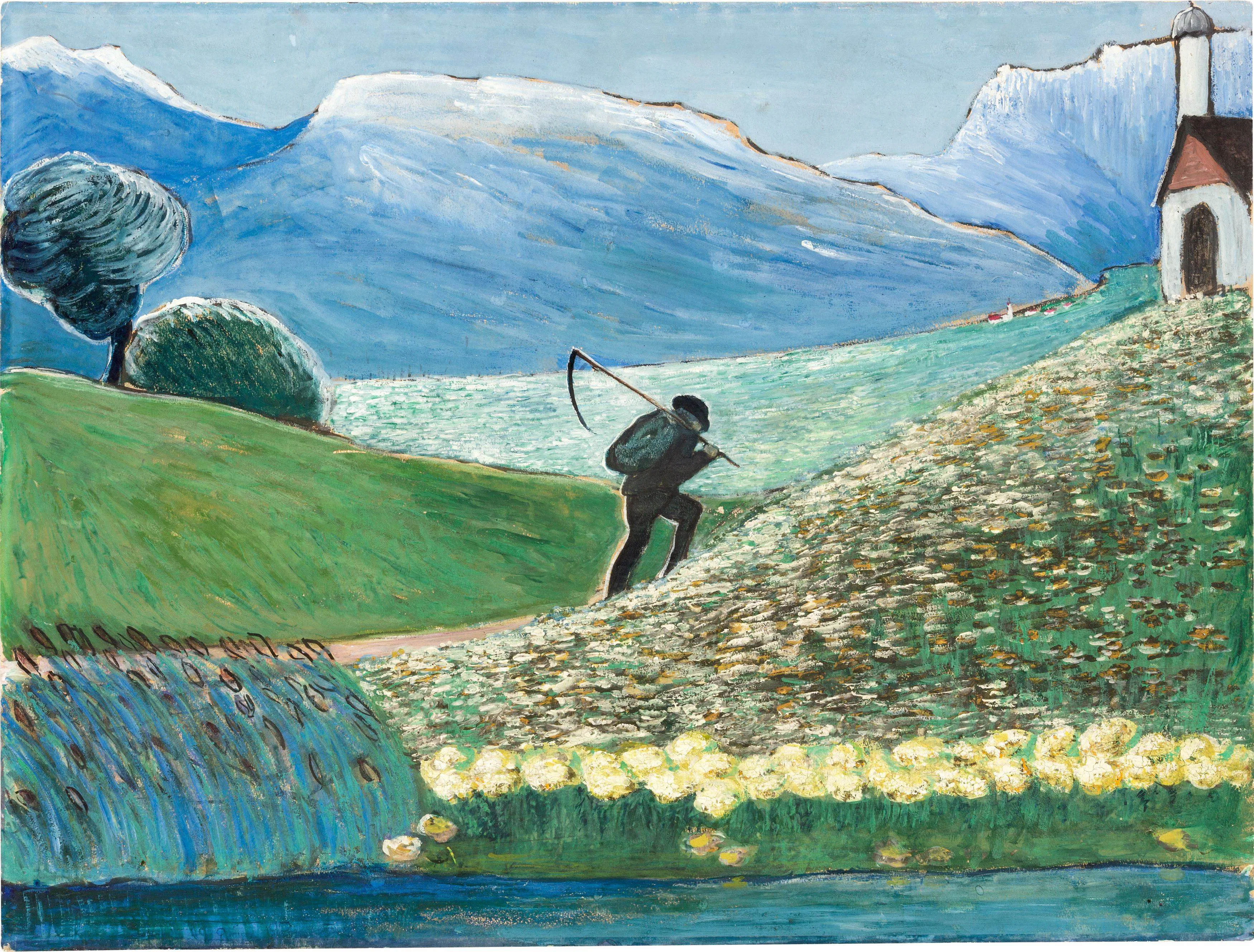
From vibrant red, we move to a collage of blue, green, and yellow that defines Marianne von Werefkin's important work, The Reaper (c. 1910). Indeed, the work appears as a collage with its individual elements forming the backdrop for the shadowy protagonist. The Reaper was created during a significant phase of Expressionism on the cusp of abstraction, when the quartet of Werefkin, Jawlensky, Münter, and Kandinsky spent their summers in Murnau am Staffelsee. They were striving for new forms of expression—a desire that ultimately led to the founding of the Der Blaue Reiter group .
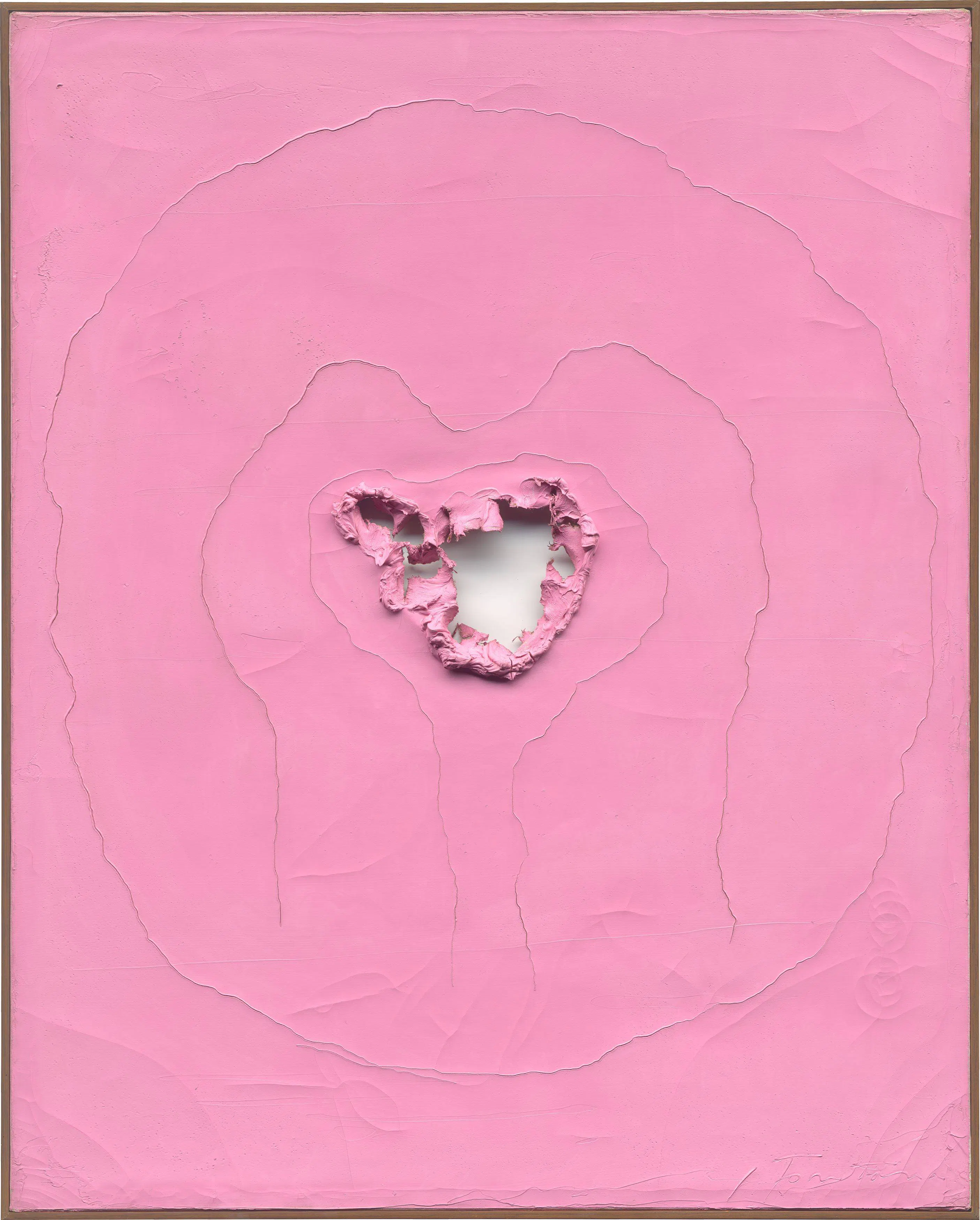
Finally, Lucio Fontana's Concetto Spaziale (1966/67), from his important Olii series, deserves mention. From 1949 onwards, Fontana explored the perforation of canvas to blur the boundary between painting and sculpture. With the Olii series, he utilized the properties of still-wet oil paint, allowing it to project into space as a three-dimensional form around a meticulously planned, yet executed in a matter of seconds, hole in the canvas.
Grisebach's winter auctions will continue on November 27 with the offerings "Modern Art & 19th Century" (11 a.m.) and "Contemporary Art" (4 p.m.).
The auctions will take place on November 26 and 27 at Villa Grisebach, Fasanenstraße 25, in Berlin. Previews are possible from November 19 to 25.