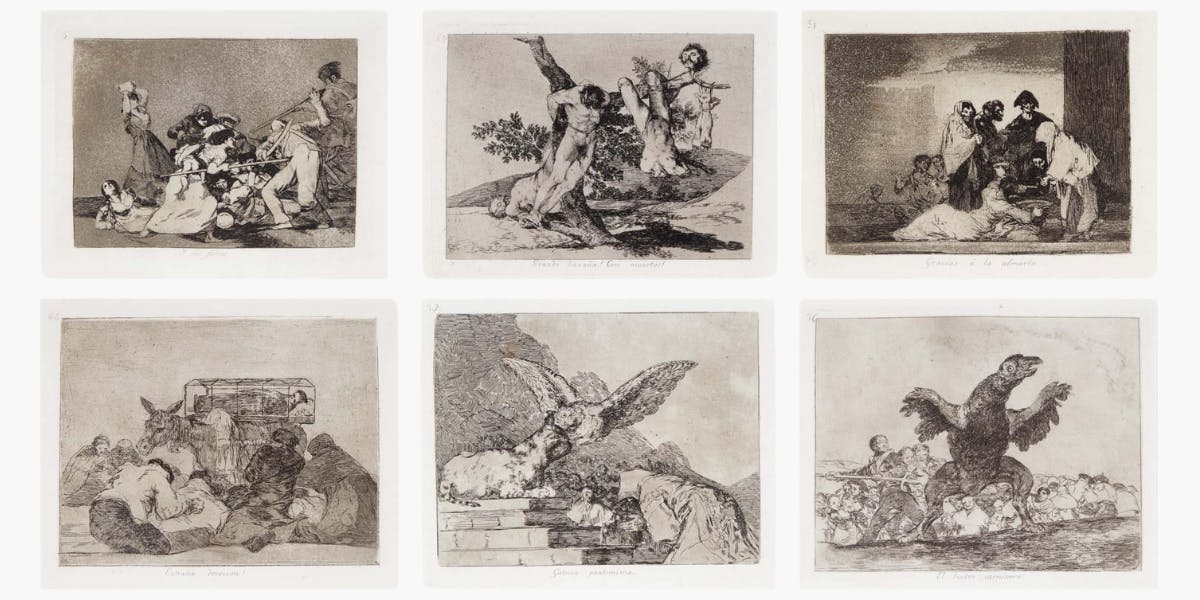
Nearly 150 lots of prints, woodcuts, and ceramics by celebrated artists are in the spotlight at Waddington’s Editions online auction, open now through May 1, 2025. While collectors will find important modern works, such as a lithograph of Joan Mitchell's Bedford I and a ceramic plate by Pablo Picasso, the top lot of the sale is a collection of prints from Spanish master and royal painter Francisco Goya’s Los Desastres de la Guerra (The Disasters of War) suite. Though best known for his painted masterpieces, Goya was also a skilled engraver. From 1810 to 1815, Goya worked on The Disasters of War series, which depict scenes of war, famine, and political instability in Spain during the early 19th century. These drypoint and burnish aquatint etchings were made in sepia ink and originally published in a set of 80, of which 76 are being offered for sale as one lot. The set is estimated to bring between CA$80,000 - CA$120,000 (about USD$58,000-$87,000) at Waddington’s auction.
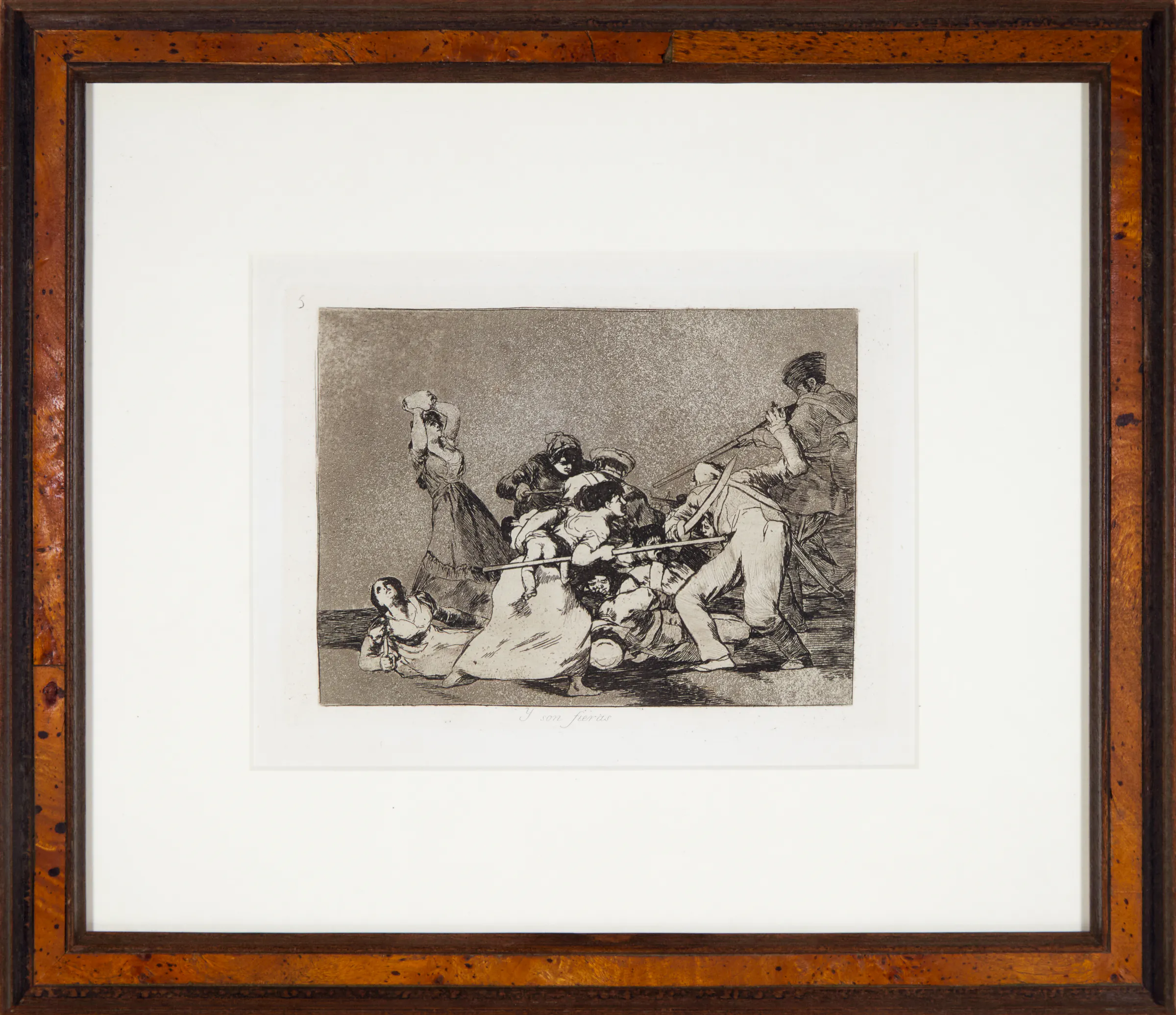
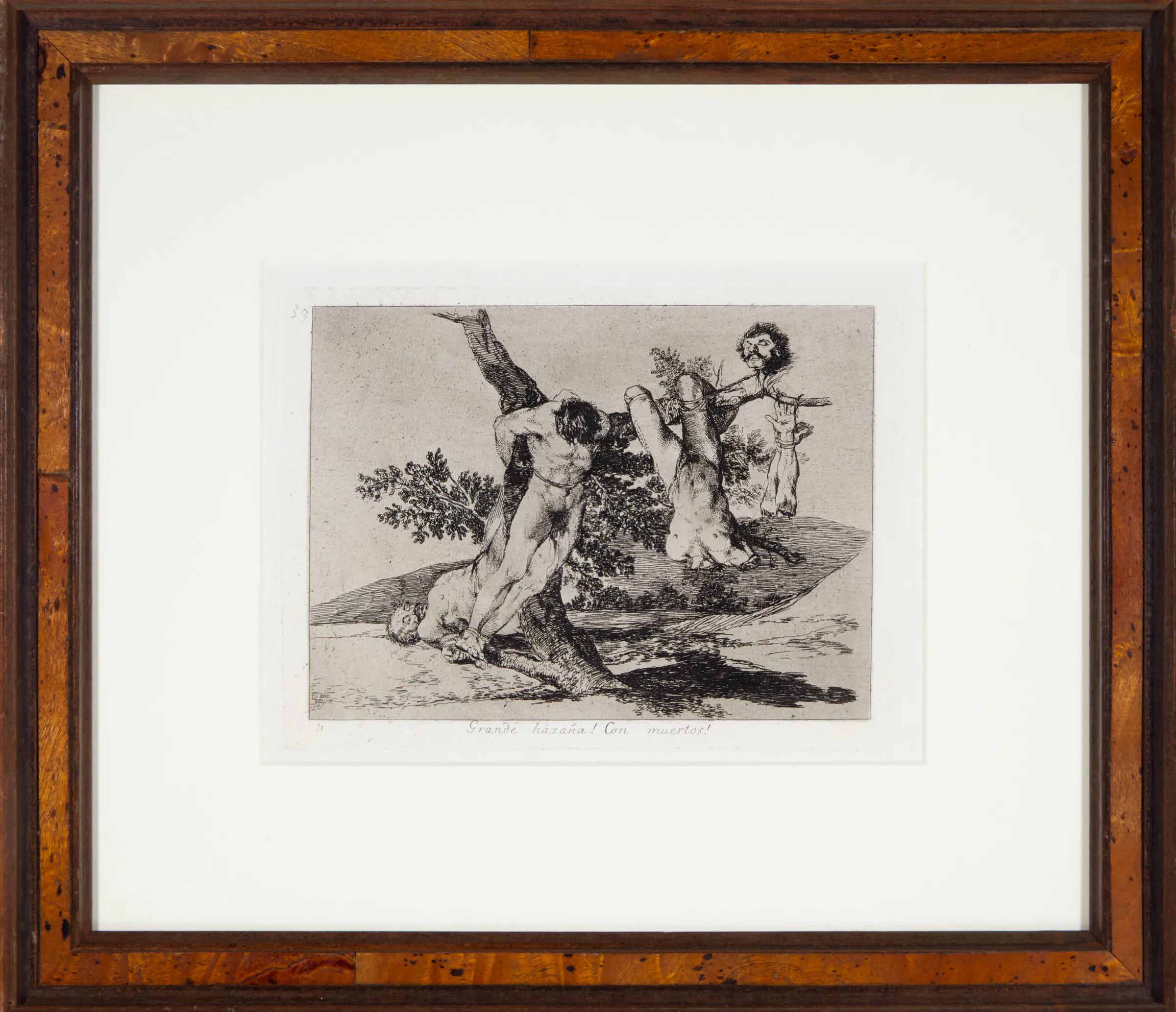
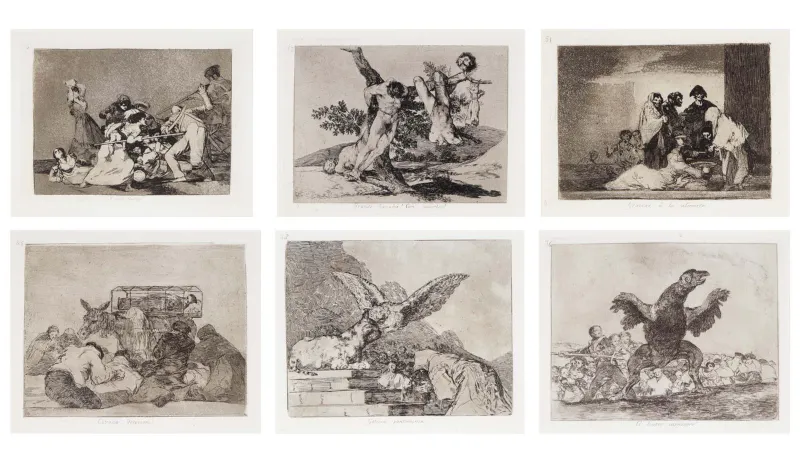
The scenes in The Disasters of War series likely showcase real life events that the artist witnessed during the Peninsular War (1807-1814), when Napoleon invaded Spain and Portugal. For example, Plate 5, which is titled Y son fieras (And they are like wild beasts), shows men, women, and children involved in the turbulent conflict of battle. Even more sobering images continue, such as Plate 39, titled Grande hazaña! Con muertos! (A heroic feat! With dead men!), which portrays three dead bodies, including a decapitated head and limbs hanging from a tree.
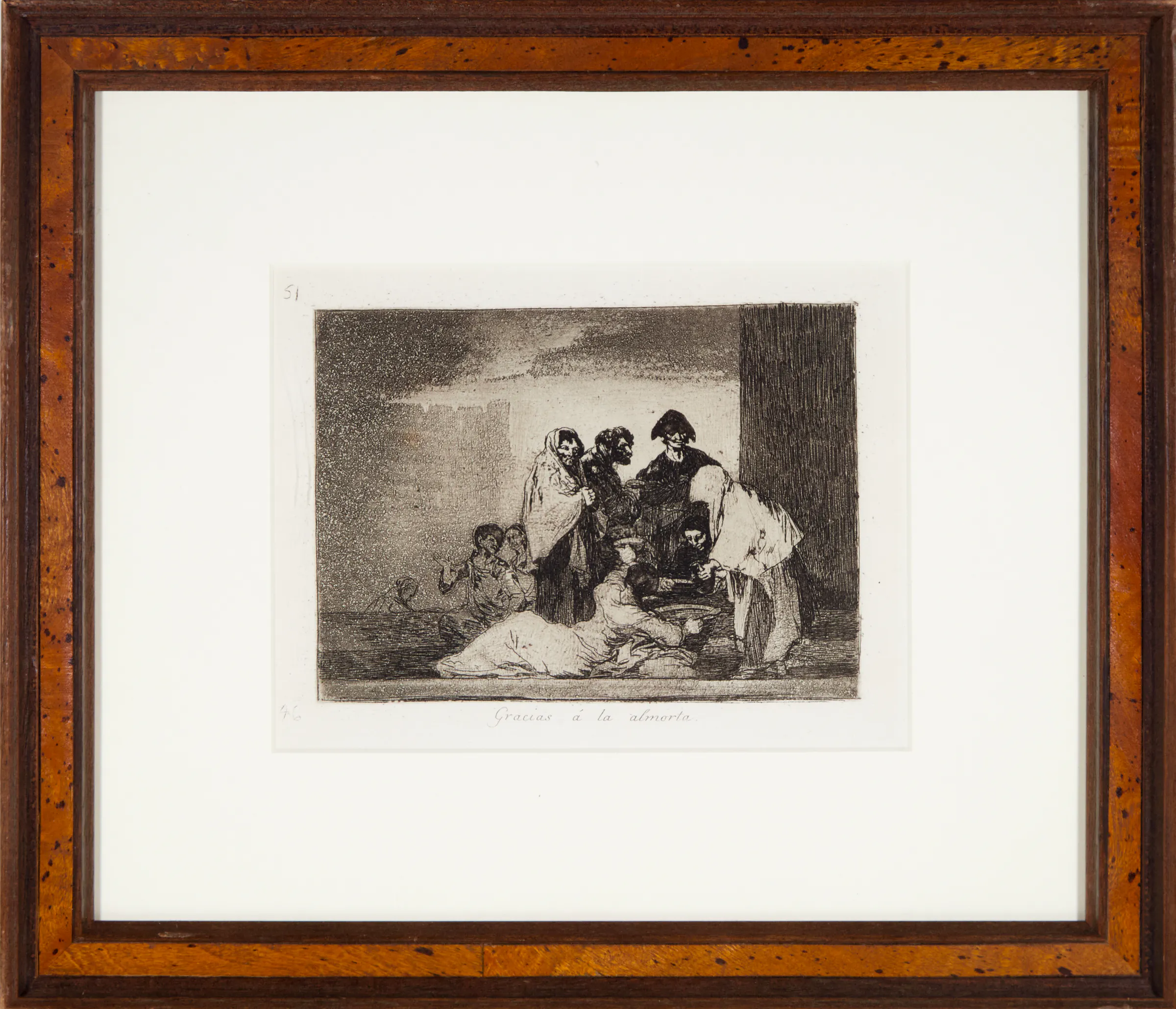
In 1811 and 1812, the effects of war caused a widespread famine in Spain. Goya captures the pain and desperation of this famine in his etchings. Plate 51, titled Gracias á la almorta (Thanks to the millet), shows gaunt figures trying to collect grain. In Plate 66, titled Extraña devocion! (Strange devotion!), a donkey carries a coffin past bowing mourners.
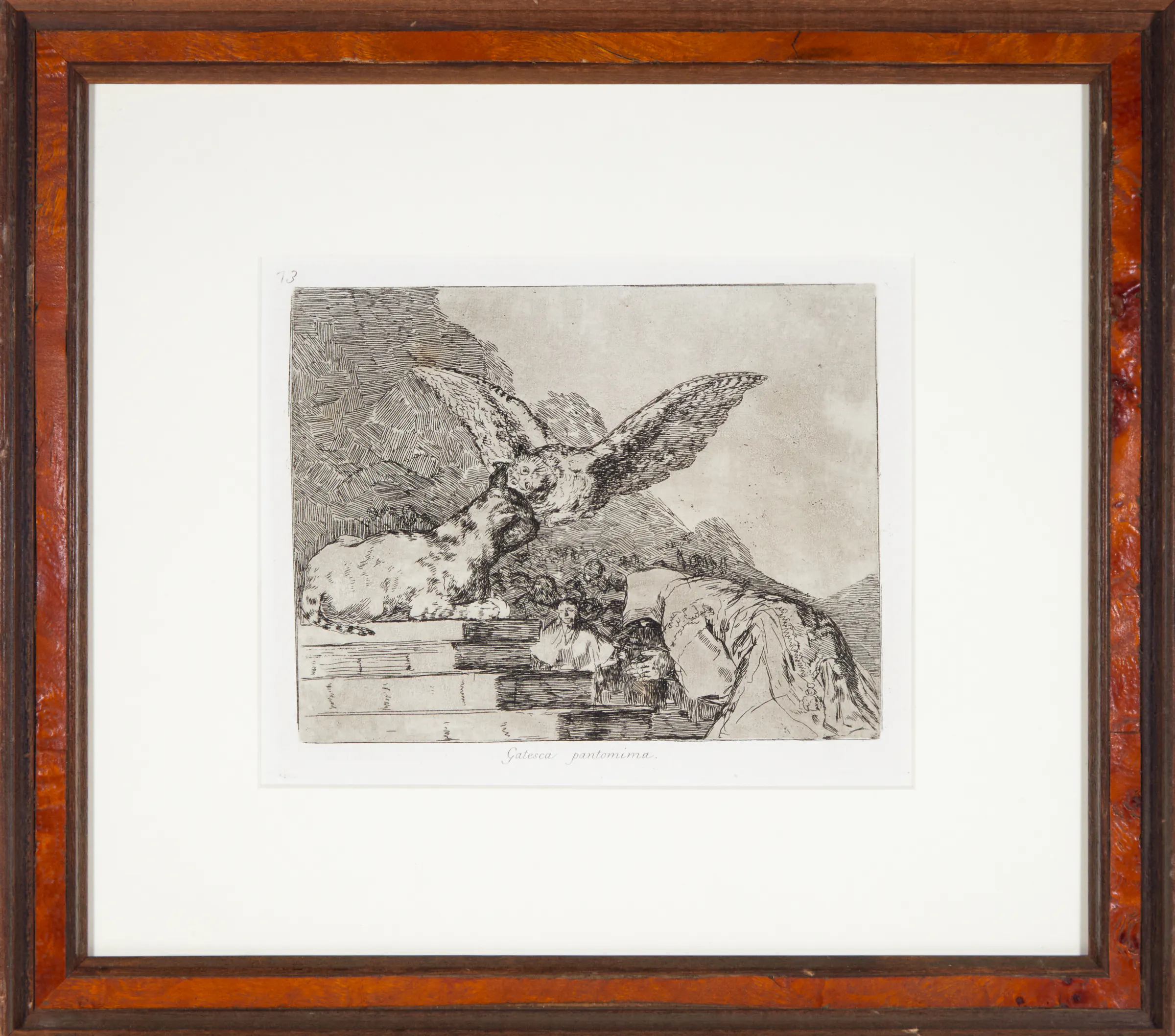
In the last set of The Disasters of War series, Goya’s theme shifted from the horrors of the Peninsular War and the agony of famine to political criticism of the rule of King Ferdinand VIII of Spain. During what is referred to as the “Ominous Decade,” from 1812 to 1823, Ferdinand VIII abolished the constitution, and widespread riots ensued. Examples include Plates 73, titled Gatesca pantomima (Feline pantomime), and 76, titled El buitre carnívoro (The carnivorous vulture), where Goya employs animal imagery to evoke the savagery of Ferdinand’s rule.
Goya never made The Disasters of War series public, likely due to the repressive regime. Decades later, the original copper plates of The Disasters of War were discovered in the collection of his son Javier. The full series originally consisted of 82 plates. In 1863, the Real Academia in Madrid published 80 of the 82 plates in an edition of approximately 500. This collection reveals Goya’s incredible mastery of engraving and is a highly significant artistic depiction of a tumultuous period in Spanish history.
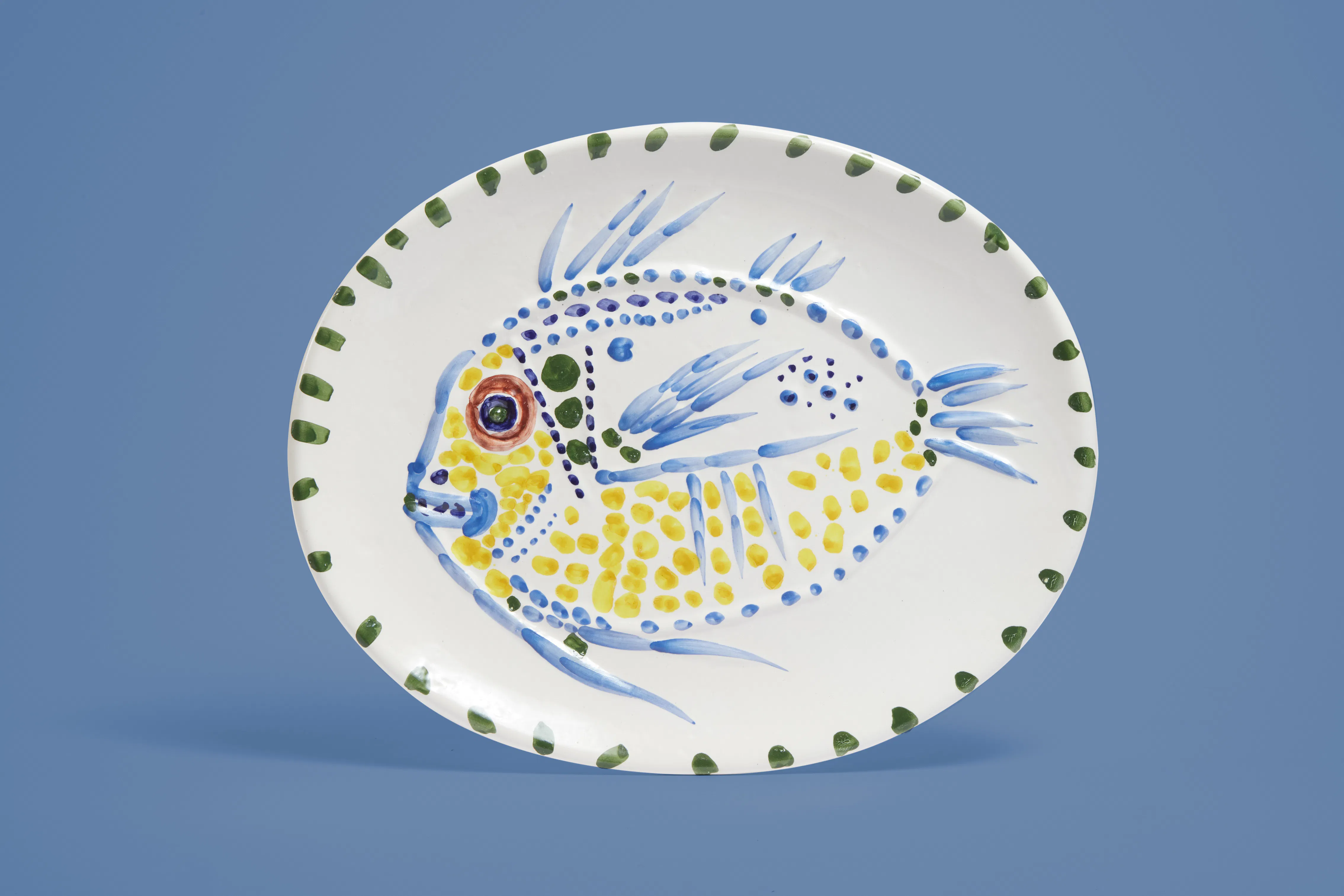
In addition to Goya’s The Disasters of War series, Waddington’s Editions auction brims with over 140 other renowned artistic treasures. Another top highlight is Pablo Picasso's Poisson Fond Blanc (1952), an earthenware ceramic plate bearing the mark of the famed Atelier Madoura in Vallauris, where the artist created hundreds of pottery pieces during his lifetime. Abstraction is on view with Joan Mitchell’s Bedford I (1981), a dynamic exemplar of her Abstract Expressionist style and command of vivid color. British-Canadian artist Sybil Andrews’ linocut Wings (1979), showing birds in flight over a field mowed by tractors, is reflective of her fascination with movement in all forms and her life in a rural community on Vancouver Island. The potential of movement also is captured by Ontario artist Gregory Richard Curnoe’s striking Doc Morton, Front Wheel (1980), a colorful geometric screen print on plexiglass.
Discover all of these highlights and more in Waddington’s Editions online auction, open now through Thursday, May 1, 2025. Lots begin closing at 2 p.m. EDT, and all bidding takes place exclusively on the auction house’s website.