… finding the artist’s signature felt like a one in a million chance.
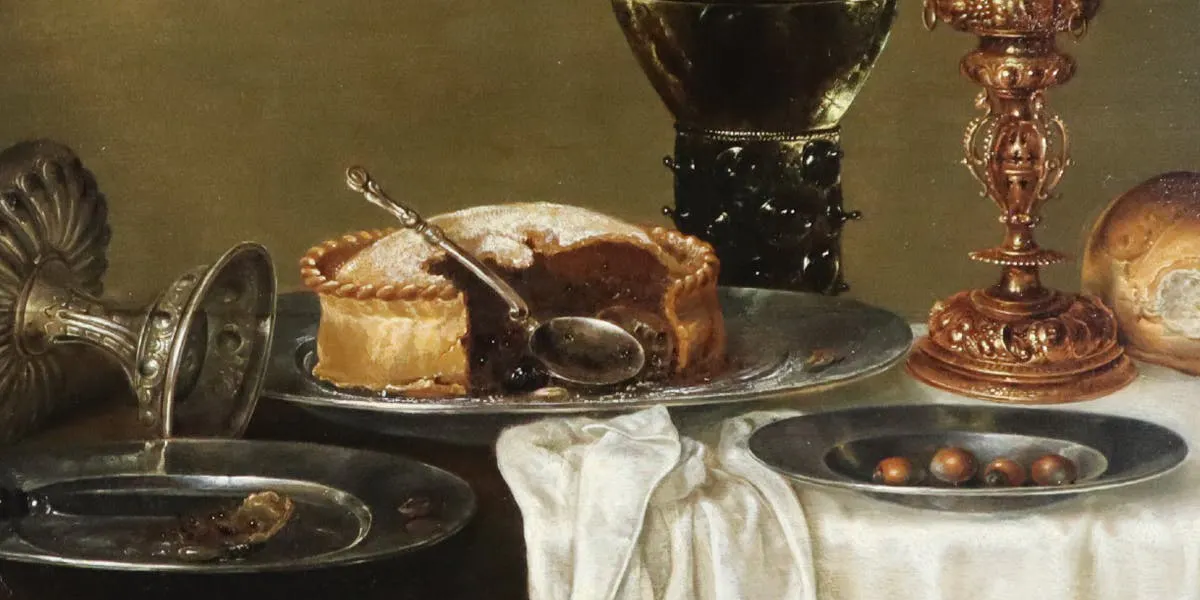
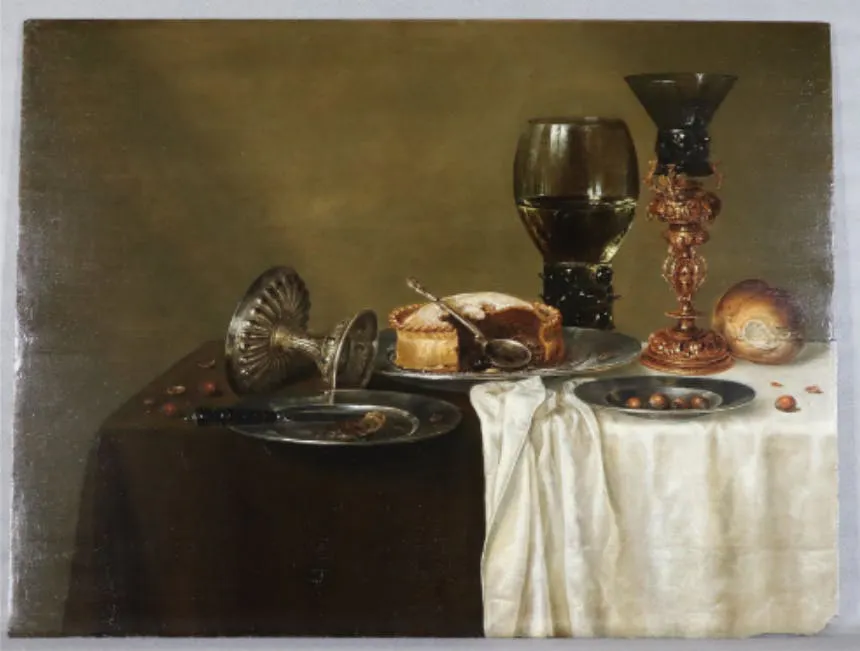
On April 17, in a National Trust property in New South Wales, Australia, an exciting discovery was made: a Baroque still life whose beauty was largely hidden under centuries-old layers of dirt was recognized as the work of the Dutch painter Gerrit Willemsz Heda (1620/25-1647/59). Not only did the masterfully-executed and detailed view of a table with glass and silver and a half-eaten pie come to light with its clean, but also the signature of the painter, which – tiny – was discovered on the knife blade in the foreground.
“We believed the artwork might be an authentic 17th-century painting, but finding the artist’s signature felt like a one in a million chance," said Rebecca Pinchin, collections manager for the National Trust. "This is a remarkable story of discovery, which has taken us on a journey across a number of years, piecing together and validating the work through expert advice and technology.”
Related: 6 Sensational Attic Finds
Since Gerrit Willemsz Heda was only around 17 years old when the painting was executed in 1640, it is very likely that his father and teacher, Willem Claesz Heda (1594-1680) was also involved. This further increases the value of the painting, which was previously estimated at $200,000 before the reveal of the signature, as the father's work is sold at higher prices than the son's. The Guardian estimated the painting’s value to now be as much as $5 million.
How long the still life has been in the National Trust’s Woodford Academy, a 20th-century school, is not known. The building itself was built in the 1830s as an inn in the Blue Mountains near Sydney and is now the oldest surviving colonial building in the region. From 1907 to 1936, the house served as a school and was given the name it still uses today, Woodford Academy. The school was headed by John McManamey, whose daughter Gertrude bequeathed the building to the National Trust in 1979.
However, the painting probably came into the house earlier, when it was bought by Alfred Fairfax in the 1870s and used first as a private country residence and later as a guest house.
Little is known about the creator of the painting, Gerrit Willemsz Heda. He lived and worked in Haarlem in the Netherlands, was trained by his father and, like his father, mainly painted still lifes. He also took over the recurring image detail of a plate protruding over a table’s edge.