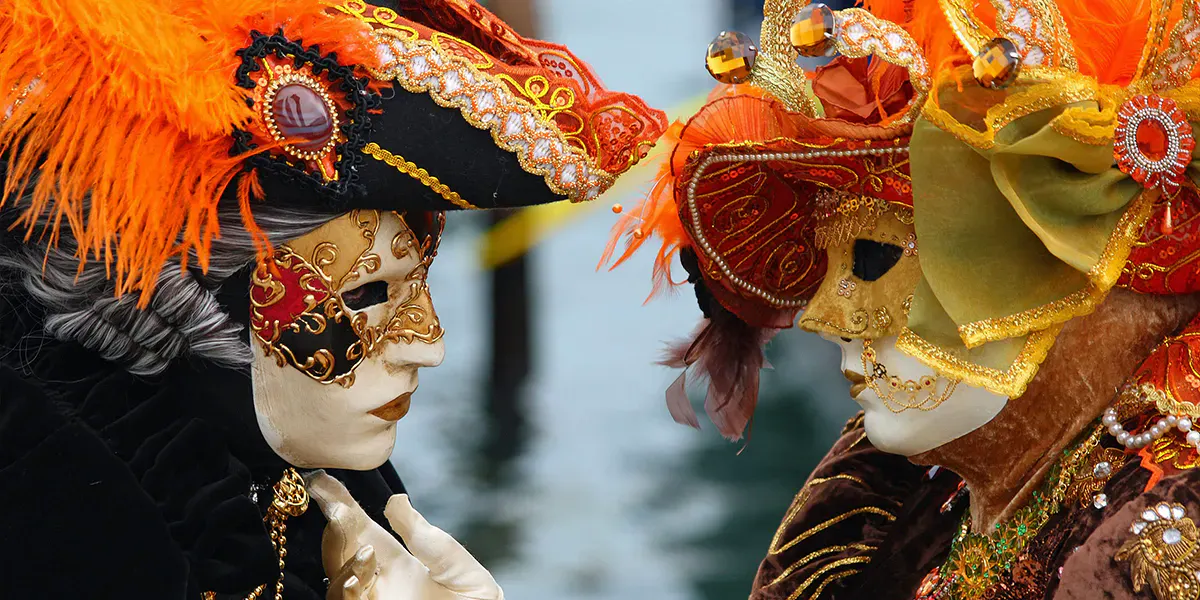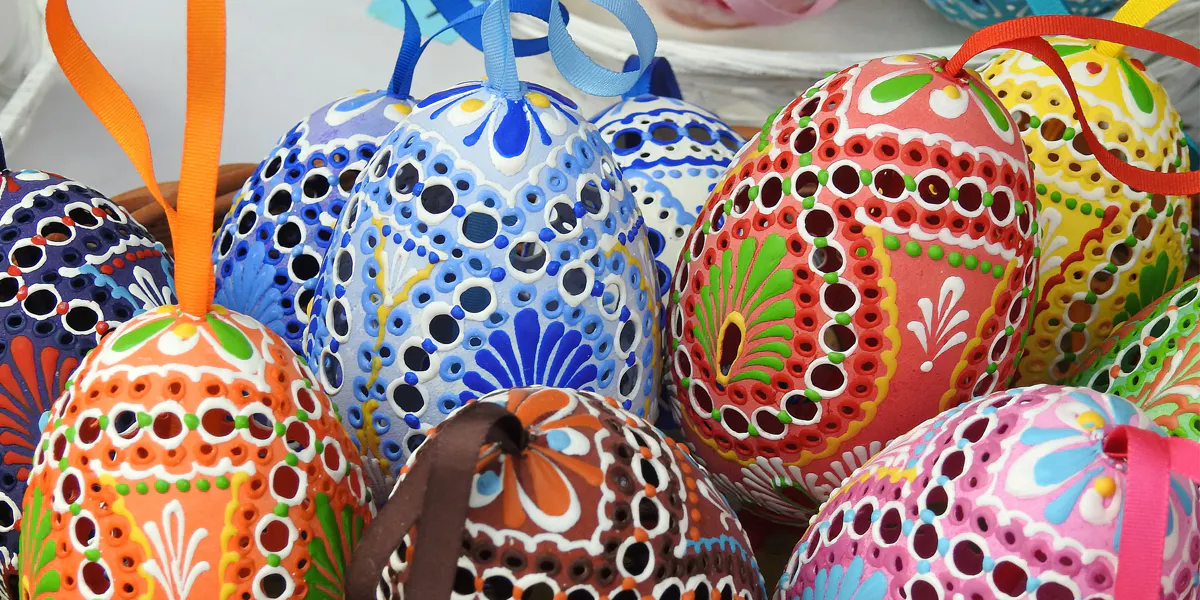
Easter is above all a religious holiday. For Christians, it celebrates the resurrection of Christ three days after his death and his ‘passage’ to eternal life, and ends the forty-day Lenten period. Meanwhile, in pagan traditions, Easter symbolizes a period of renewal with the arrival of spring. Similarly, in the Jewish faith, Passover commemorates when Moses led the exodus of the Israelites out of Egypt and into the start of a new life.
The egg is the ultimate symbol of Easter, it is the emblem of fertility and rebirth. Among the ancient Egyptians, Persians and Romans, the egg was understood as a symbol of life and was offered in the spring.
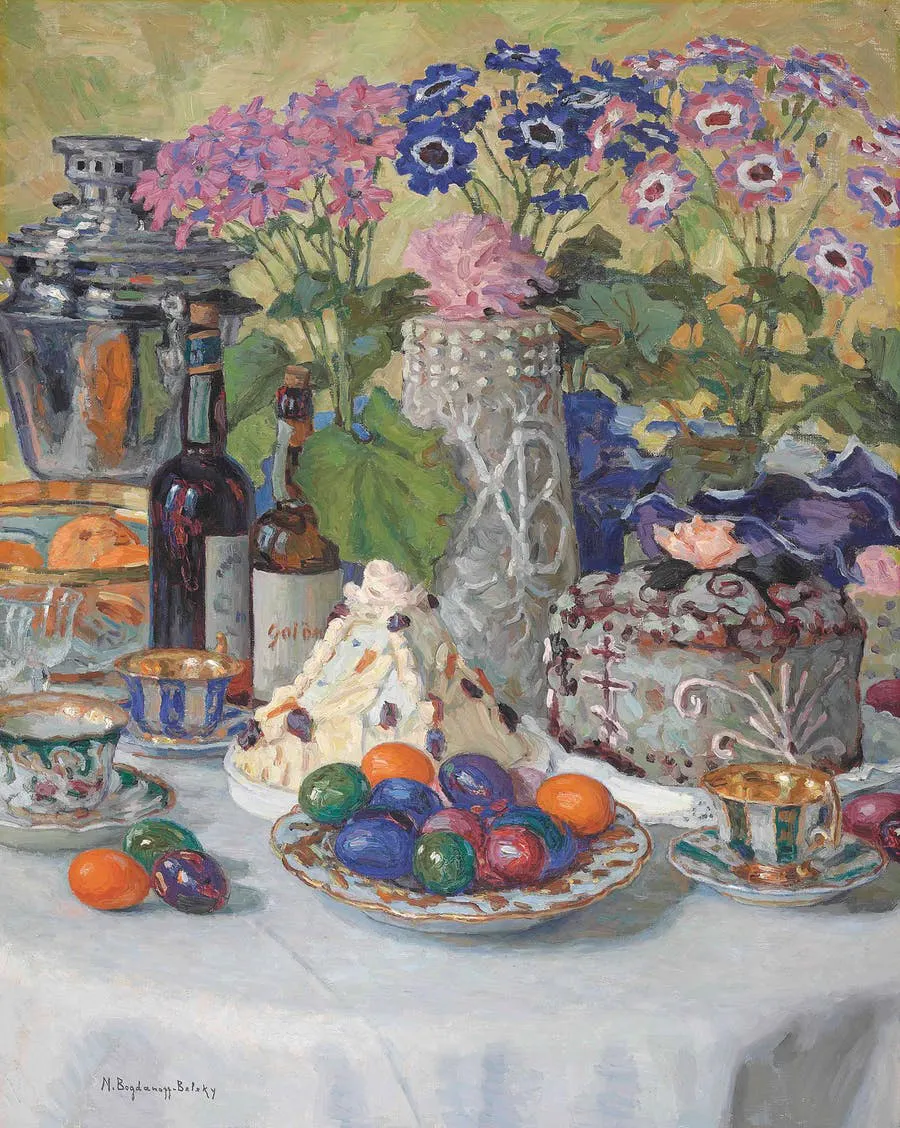
In the Middle Ages, it was forbidden to eat eggs during the Lenten fasting period, though of course, hens didn’t stop laying their eggs. From this surplus emerged the tradition of decorated eggs.
Related: Spring in Art
But what about the bells, chocolates and rabbits associated with Easter? For several centuries in France, Belgium and Italy, it has been forbidden to ring church bells between the days of Holy Thursday and Easter Sunday as a sign of mourning for Christ.
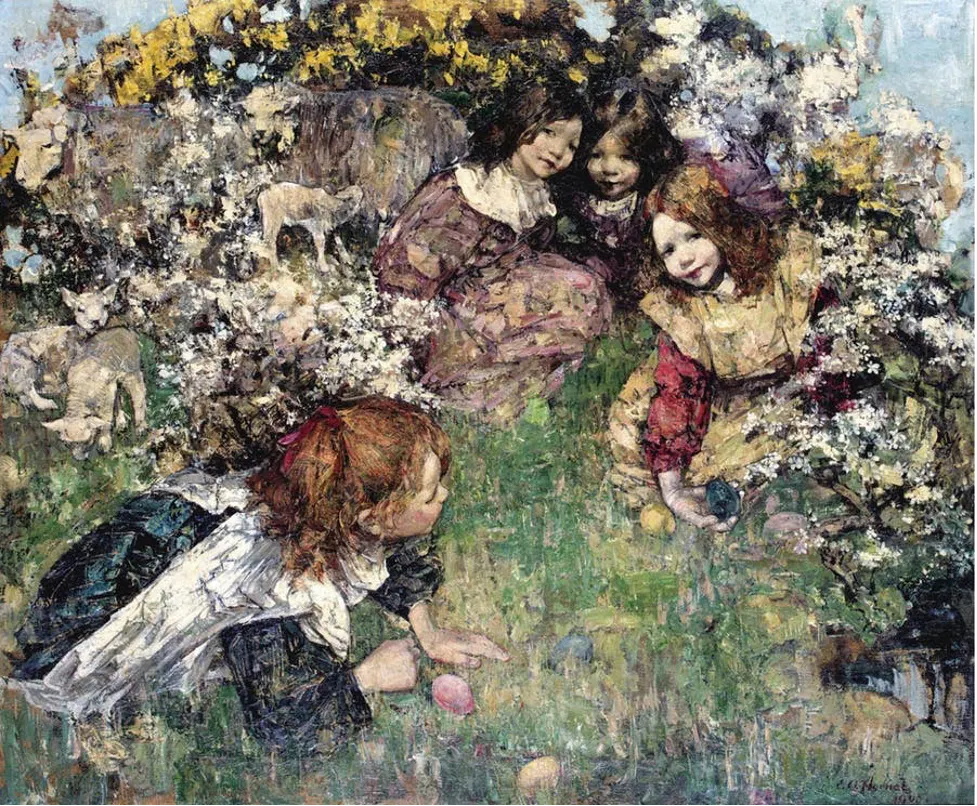
Children in these countries were told that the bells were going to be blessed by the Pope in Rome. When Easter was over, and the bells allegedly returned from Rome, they would ring. The bells would also announce their magical return by depositing the famous Easter eggs in children’s gardens.
Whether painted or made of sugar and chocolate, eggs therefore mark the end of Lent and its associated period of deprivation.
Related: The Art of Motherhood
The generous donors who give children Easter eggs are not always symbolized in the form of bells. They can take several forms, depending on the country and tradition. In Germany, the United States and eastern France, it is commonly a rabbit who deposits the treats. The rabbit is an emblem of the goddess Ostara, a symbol of fertility.
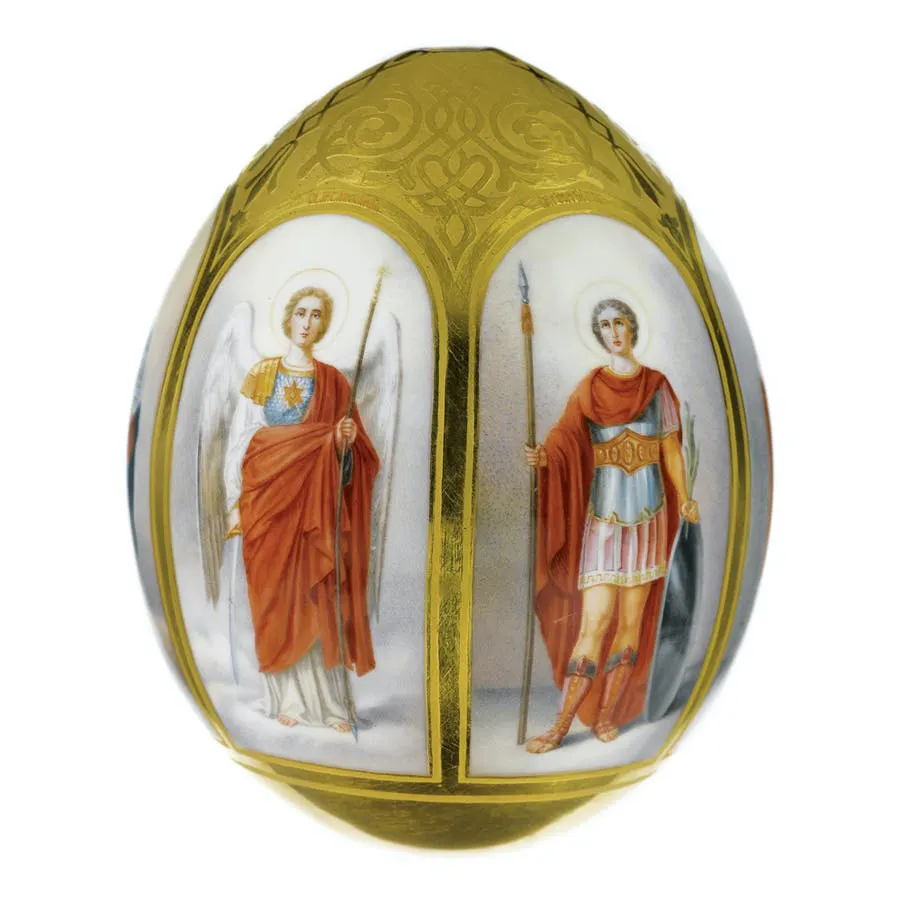
Passover eggs, commonly eaten during the Seder meal, inspired one of the most expensive traditions in history: the famous Fabergé eggs. These eggs were created for the imperial family of Russia and decorated with the most precious materials. Fabergé's first egg was made when the Tsar Alexander III requested that the royal goldsmith Peter Karl create an egg to offer the Tsar’s young wife, Maria Fedorovna. During the jeweler’s career, Karl produced a series of fifty imperial eggs for the Tsar's family. These imperial eggs have since gone on to auction for several tens of millions.
Nowadays, there are many precious collectible eggs made of various materials and decorated with assorted religious motifs.