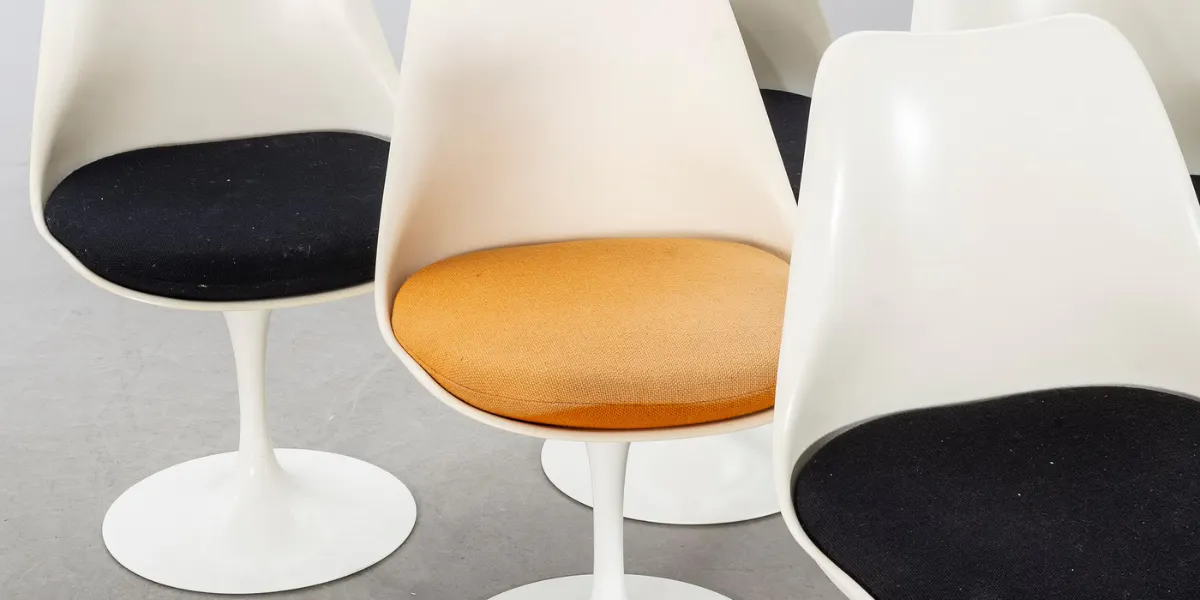
When Eero Saarinen presented the Tulip Chair to the American furniture company Knoll in 1955, it was unlike anything on the market. Knoll, founded by Hans and Florence Knoll, had already become a leading producer of modernist furniture. Its range included work by Ludwig Mies van der Rohe, Harry Bertoia and Isamu Noguchi, and Saarinen’s design fitted neatly into the company’s profile.
See also: The Noguchi Table: Art Meets Function
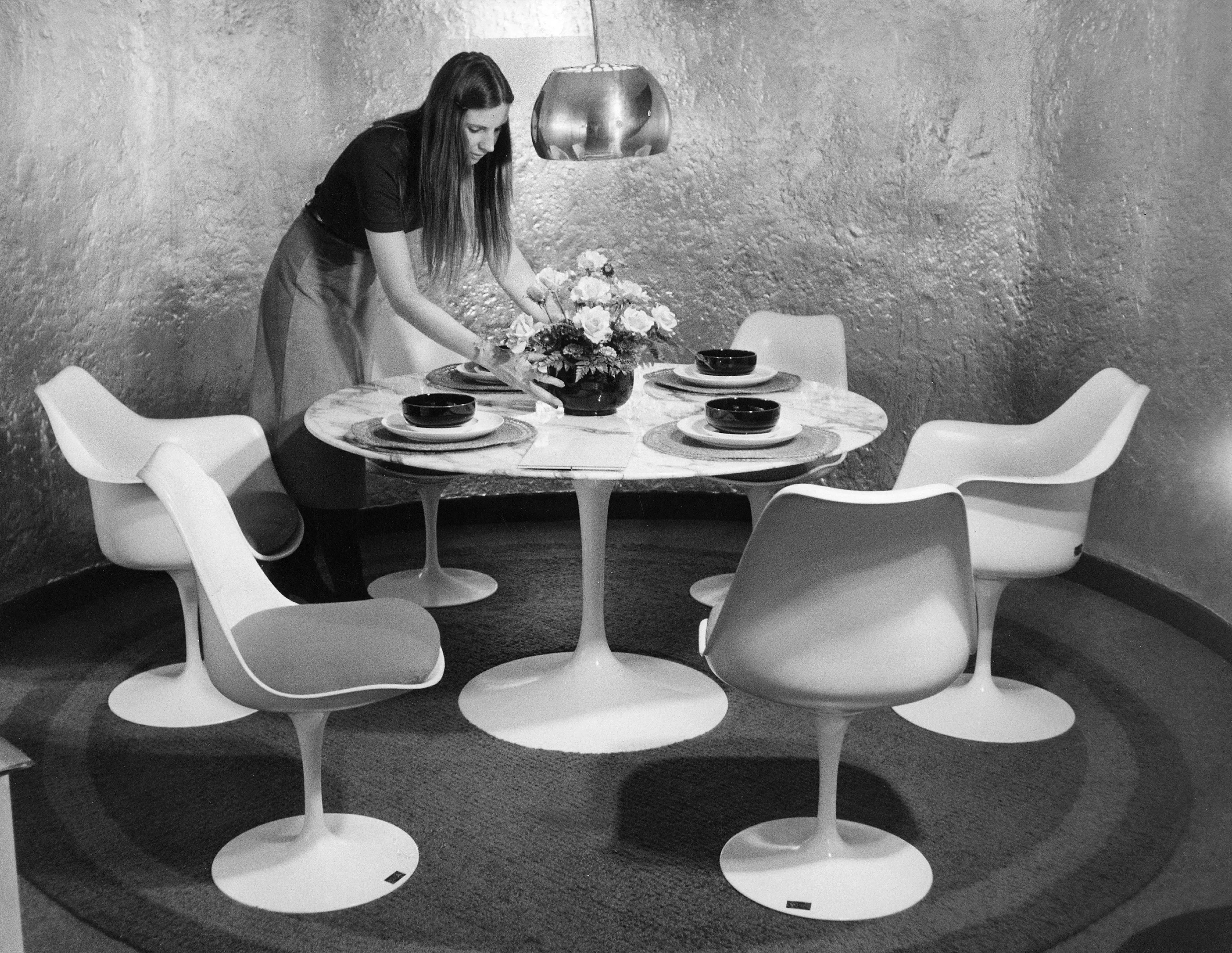
The Tulip Chair was developed within the Pedestal Group, a collection of chairs, tables and stools launched in 1958. Three years earlier, Saarinen had told Florence Knoll: “We have chairs with four legs, with three and even with two, but no one has made one with just one. So that’s what we’re going to do.” His goal was to remove the clutter created by multiple legs and create a clearer, more cohesive look.
Create a search alert for Tulip chairs and you will receive an email when new items appear!
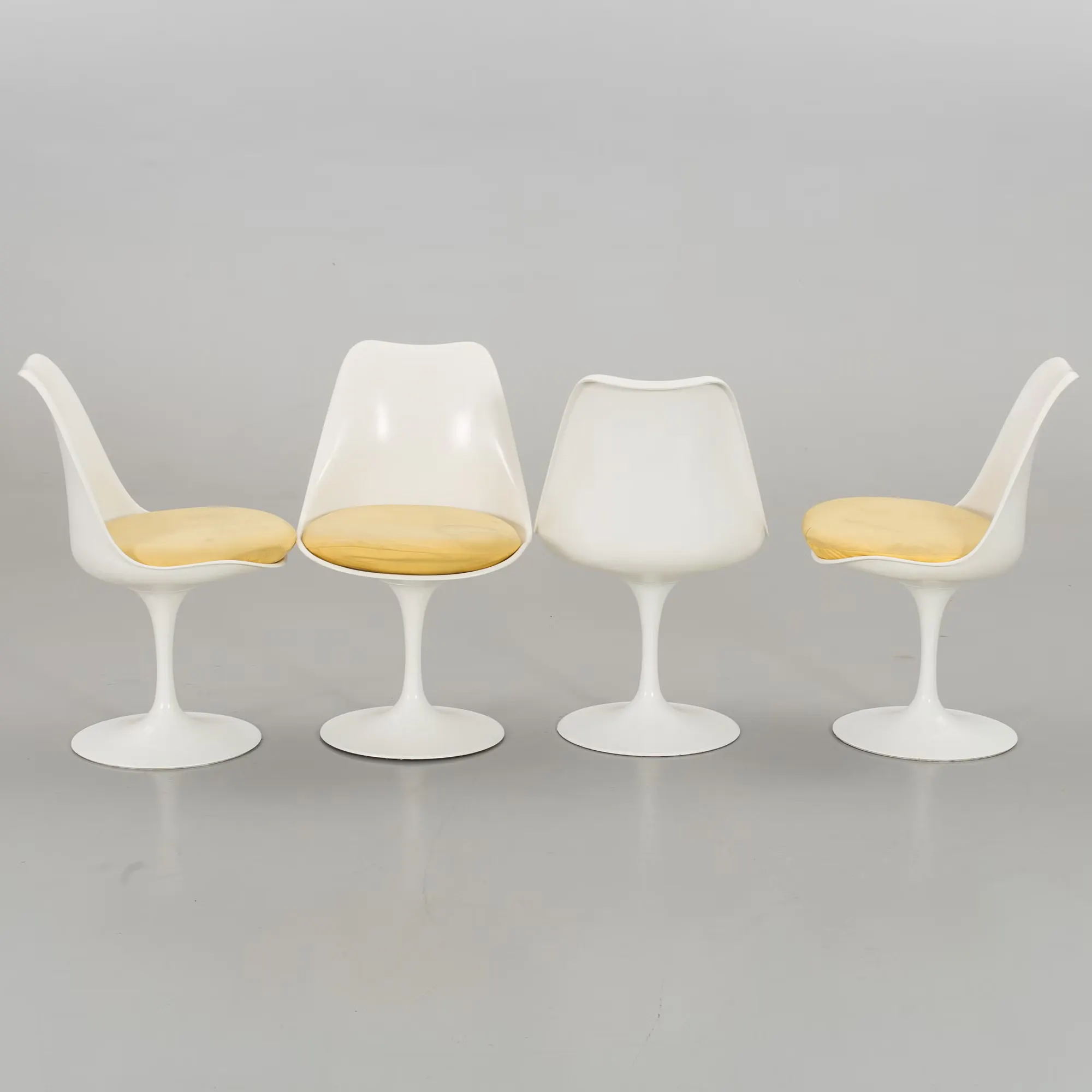
The chair broke with the conventions of its time. It rejected four legs, straight lines and traditional materials. Saarinen aimed to merge the seat and the base into a single form. The outcome was a sculptural chair with a central stem, often described as an early example of Space Age design.
His original plan was to cast the entire chair in fibreglass, but the material was not strong enough. The final solution combined a moulded fibreglass seat with a cast aluminium base, coated in Rilsan to give a uniform appearance.
The series included a chair, an armchair and a stool. All had a rotating seat, which made it easier to sit down at a table. A removable cushion in fabric or leather offered extra comfort while keeping the shape clean.
See also: Bruno Mathsson's Jetson: The Space Age Swivel Chair
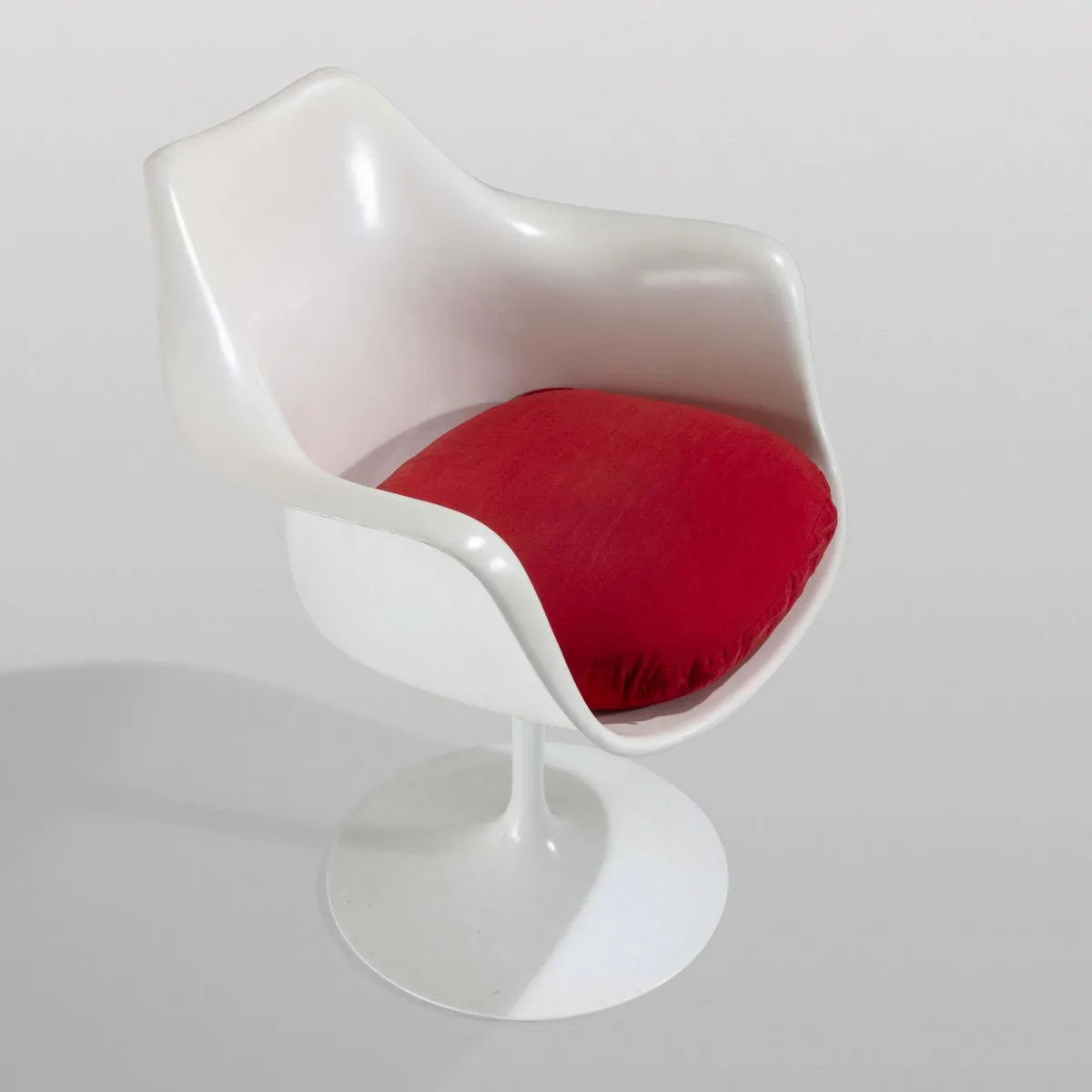
The Tulip Chair gained immediate attention and was quickly recognised as a model of industrial design. Saarinen received a patent for the chair in 1960, and over the next decade it won several major awards, including the Design Career Stuttgart Award in 1962 and the Museum of Modern Art Award in New York in 1969.
Want more articles like this straight to your inbox? Subscribe to our free newsletter!
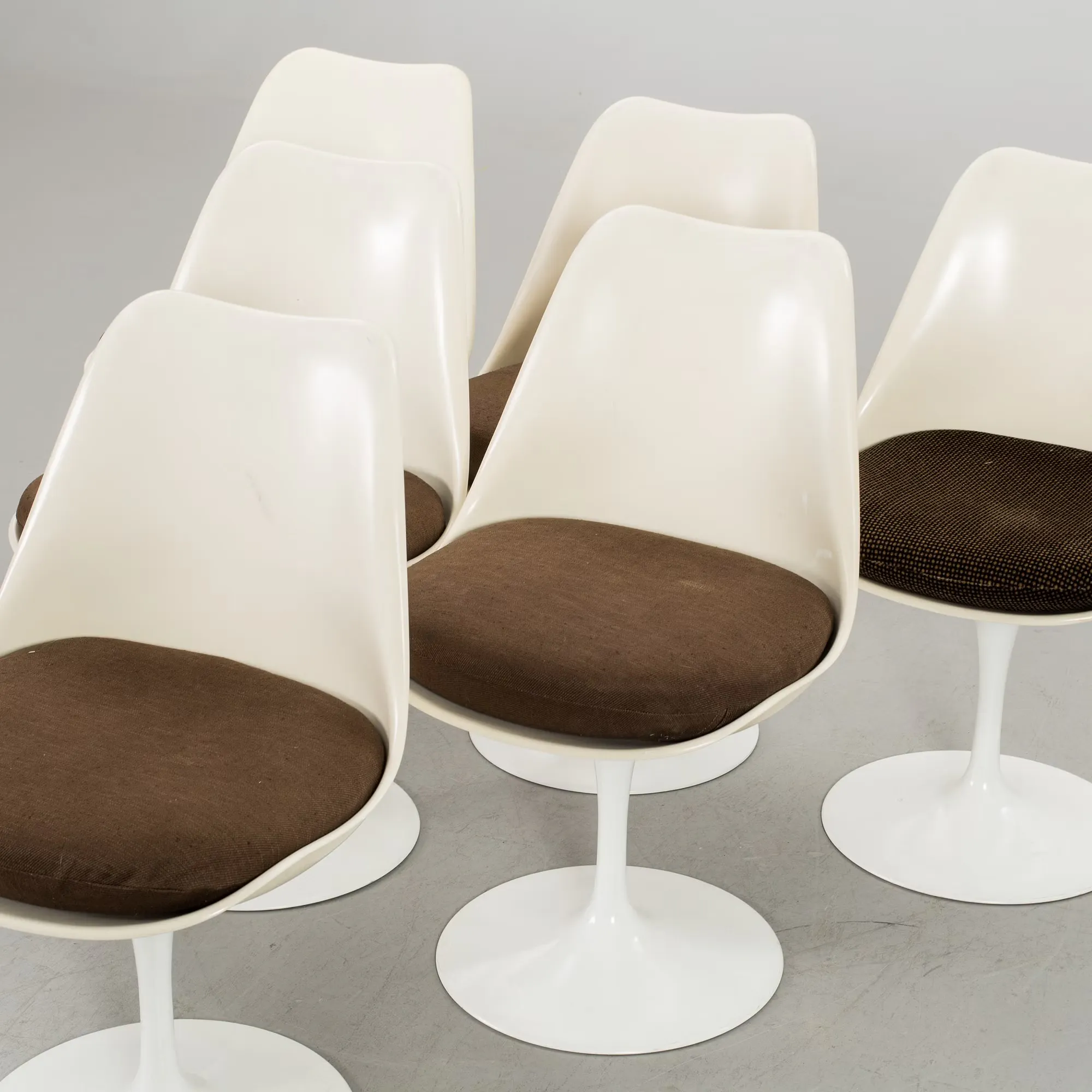
Pieces from the 1950s and 1960s are especially valuable, although later Knoll models are also in demand. Chairs and tables from the series continue to appear at auction, often starting at a few hundred dollars depending on condition and provenance.