The Basque police officer who led the investigation told the court that the case was “one of the greatest falsifications or manipulations relating to archaeological materials from the Roman world,” reported the Guardian.
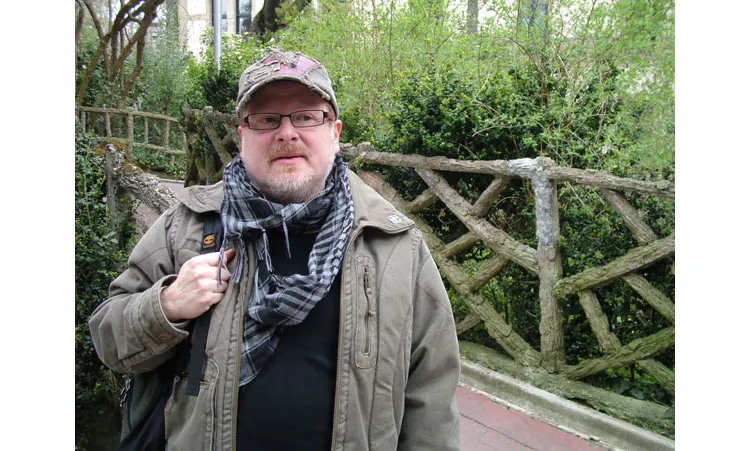
It all began in 2006, when Spanish archaeologist Eliseo Gil was celebrated for discovering, among other items, one of the earliest representations of the crucifixion. His artifacts were presented as excavated from the Roman town of Veleia, near the Basque city of Vitoria.
Gil’s discovery was considered something of a miracle: pieces of third-century pottery engraved with one of the first depictions of the crucified Christ, Egyptian hieroglyphics, and with Basque words that predated the earliest known written examples of the language by 600 years.
See also: Fugitive Art Dealer Inigo Philbrick Arrested on a Pacific Island
While Gil proclaimed that his finds would “rewrite history books”, unfortunately, it was too good to be true.
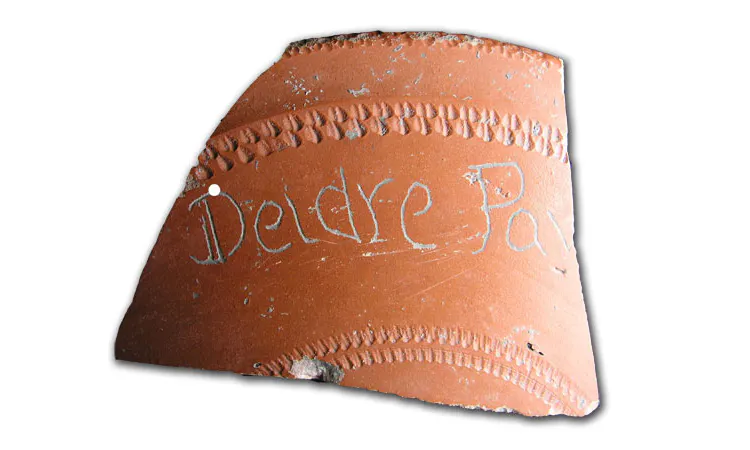
Within two years, an expert committee had pointed out several red flags among Gil's finds. While some of the pieces bore traces of modern glue, others had references to nonexistent gods and to the 17th-century French philosopher René Descartes. Not to mention, the crucifixion scene read ‘RIP’, which contradicts Christian belief in the divinity of Jesus.
See also: A Clue to the Stolen Van Gogh Painting Emerges
Suspicions also arose from markings on pottery shards that were perfectly contained within each piece, as if they had been inscribed after they were broken. And the spelling, punctuation and grammar often didn’t make sense – for instance, Jupiter was written with a ‘J’ instead of an ‘I’, though no ‘J’ exits in the Latin alphabet. The field archaeologists on the dig also could not recall seeing these inscriptions, which turned up after lab analysis.
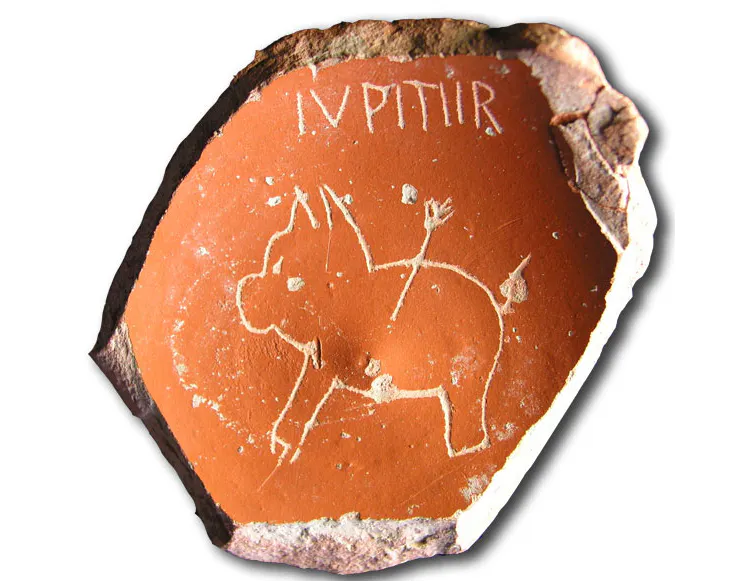
The court ruling determined that the 36 artifacts had been altered “with contemporary incisions that were intended to suggest they contained inscriptions or markings of the same age as the objects themselves, and that they possessed a historical and cultural value of which they were devoid.” It should be noted that these actions irreversibly damaged the authentic Roman artifacts.
Gil and his collaborator, physicist Rubén Cerdán, who drafted false reports proclaiming the artifacts’ authenticity, were found guilty of fraud and keeping false records. Gil received a sentence of two years and three months, and Cerdán a 15-month sentence. The court also ordered the men to pay the local government that funded the archaeological dig €12,500 ($14,100).
Another defendant, Óscar Escribano, a geologist, received a one-year sentence and a fine after pleading guilty earlier this year, but maintained that the whole thing was “nothing more than a joke”.