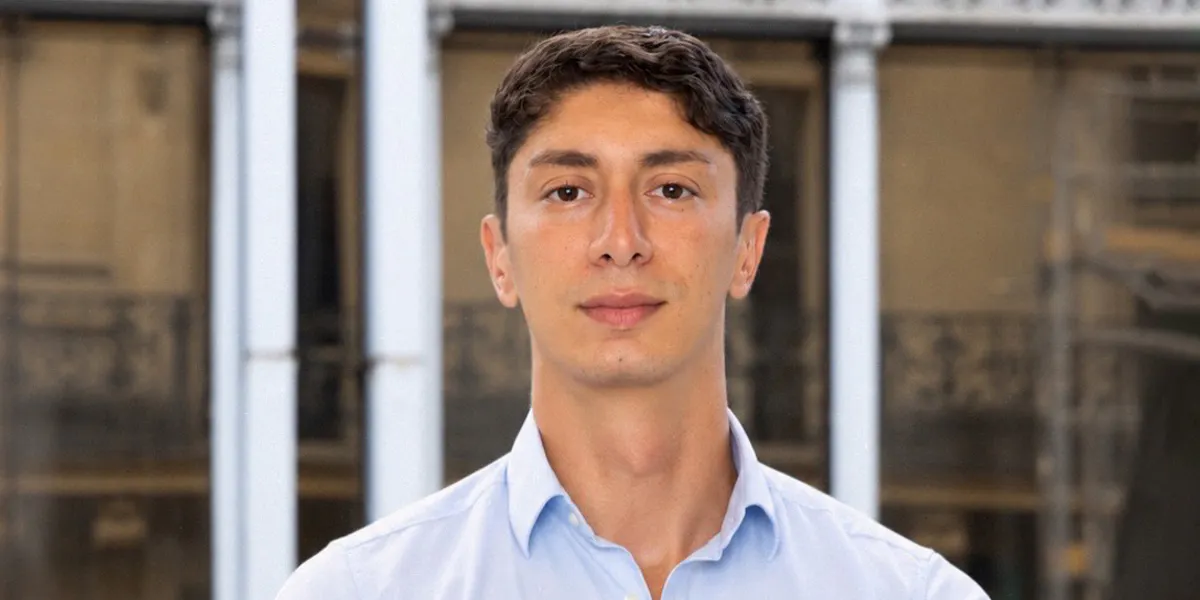
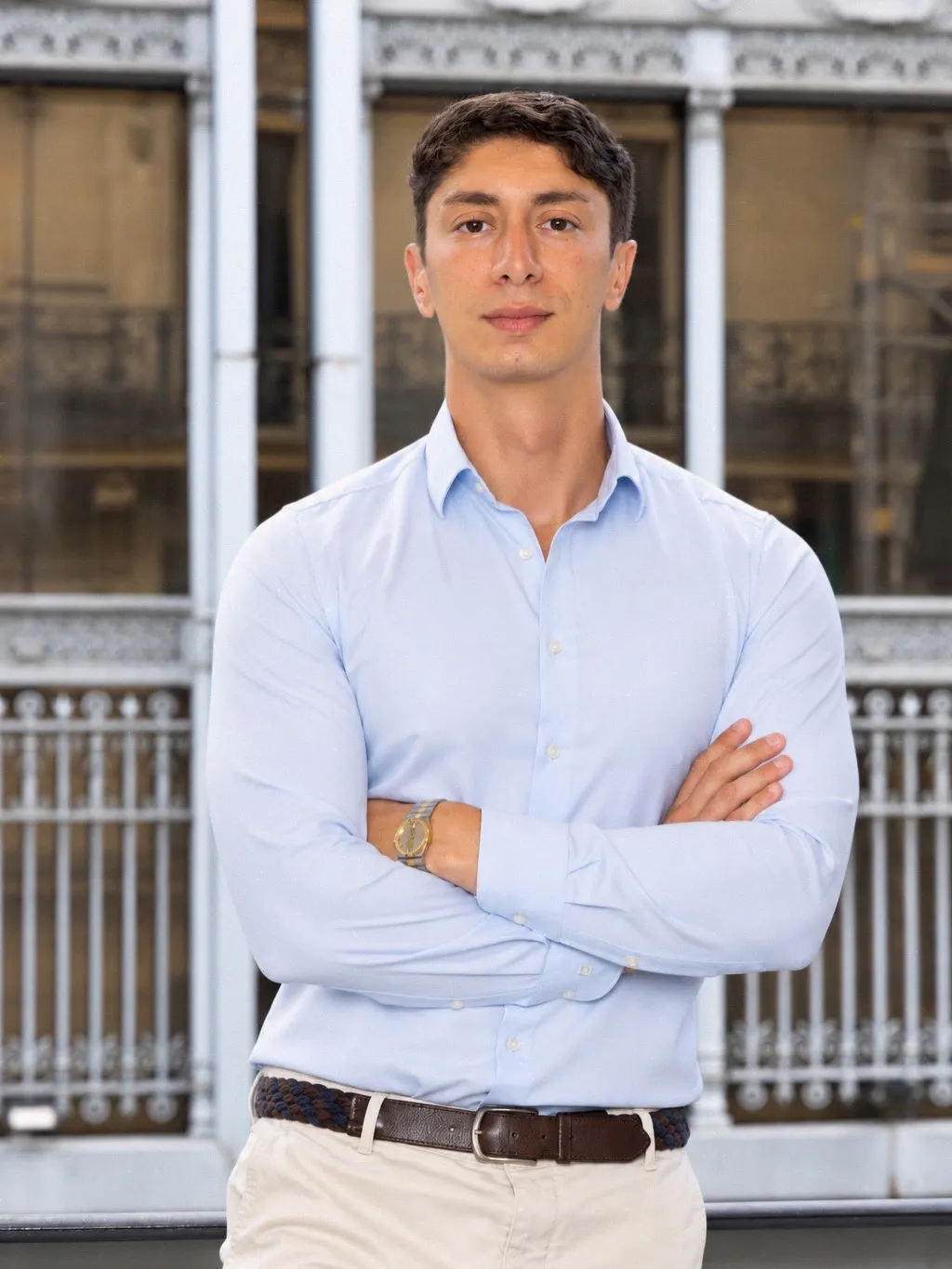
In December 2020, Sam Taïr shared his ambitions with us after acquiring his first auction house. Almost six years later, the resulting entity – the Rossini Group, which he leads alongside Louis Le Carréres –generated over €20 million in revenue in 2025. By bringing together Auctie’s and Rossini, an iconic auction house based at Drouot, the two entrepreneurs have combined online valuation services with a physical, on-the-ground presence and the expertise of a dedicated team of specialists. Sam Taïr explains how this model supports families, brings objects to light, and connects them with collectors from all over the world.
Barnebys: How did you discover the world of auctioneering?
Sam Taïr: I moved to Paris on my own at the age of 17 to study Design. Very quickly, I felt that I was missing something – something that history, art, and creative expression could provide – and, as it happens, Paris is overflowing with these things. Every street, every museum, and every monument is an invitation to be moved; each one tells a story, offering centuries of art history right at your fingertips. I was captivated by all of it. The profession of auctioneer became my calling when I joined the Paris office of a provincial auction house who had been established for over 40 years near the Sologne region. In 2017, at the age of 24, I took over this auction house. I have always been drawn to entrepreneurship, perhaps an expression of my Lebanese roots, whether I intend it or not.
Three years later, my partnership with entrepreneur Louis Le Carréres opened a new chapter, allowing us to join forces. While we came from different backgrounds, we shared a desire to grow the business, bringing highly complementary skills and a truly international vision to the table. We share the same entrepreneurial drive.
I like to say that we are like a pair of antique andirons: each can stand on its own, but it is only together that we can kindle a fire. This is likely what has enabled us to achieve such rapid yet sustainable growth over the past five years.

What is your vision of the auctioneering profession?
For a long time, the auction market relied on established, inherited positions; we do not view this profession as a legacy passed down through dynasties from one generation to the next. We have built the exact opposite: a commercial enterprise rooted in specialized expertise, operating within a globalized and constantly evolving market. Louis and I, in fact, view an auction house much like an industrial enterprise: it requires deep technical expertise, the management of goods and inventory, a commitment to listening to, satisfying, and retaining clients, robust logistics, and the constant refinement and structuring of operational tools. It is like a Rubik’s cube – a challenge that we find truly fascinating.
At Rossini, the role of an auctioneer is that of an international business leader. Yet, on a daily basis, we provide counsel and support to sellers – wherever they may be in the world – maintaining the kind of neutrality mandated by the French regulations governing our profession, much like lawyers who advise and defend their clients' interests.
What does it mean when a family entrusts an object to us?
First and foremost, it is a privilege. It means stepping into a story that began long before our time, and striving to be worthy of that legacy. A person might arrive with a painting, a piece of jewelry, or a collection of historical artifacts – but they also bring with them a wealth of memories and questions. They want to understand what they own, what they might expect from it, and who they should turn to for guidance.
Our first task is to listen. We are often called upon during difficult or sensitive moments – such as the settlement of an estate, a relocation, or a major life transition – where confidentiality, the quality of our interactions, and impartial advice are of the utmost importance.
What we find most exciting is the discovery process that follows – a daily treasure hunt. A single detail, an inscription on the back, or a document preserved by the family can completely transform our understanding of an object or a work of art. We must then reconstruct its provenance, identify the collectors who would value it and – crucially – bring that history to life, ensuring an outcome that makes us proud. We are fortunate to practice a profession that blends art history with deeply personal encounters.
You acquired the Rossini Group in March 2025. Why did you subsequently merge the auction house Auctie’s with Rossini?
With Auctie’s, we pioneered an accessible and engaging way to introduce people to auctions and democratize free valuations. We invested heavily in research, content creation, the underlying technology, and the processing of online inquiries. We paved the way, and many of our peers have since followed suit.
Rossini, for its part, brings a reputable, well-established brand, an extensive field network, and its own auction room at Drouot. Bringing the two together made perfect sense. The acquisition of Rossini in 2025, followed by the merger of the two firms, allowed us to combine these respective strengths.
As a result, an individual can discover us online, meet with a specialist near them – anywhere in France or in several other European countries – and then leverage the full infrastructure of Rossini to carry out an auction sale in Paris.
Our model is also built on integrated resources: our specialists, logistics team, and communications department work in tandem. Our investments support more than 80 auctions every year, to the benefit of both sellers and buyers.
We kept the name "Rossini" because it carries a rich history and the trust that our teams have built over the years. We wanted to build upon that legacy. Maintaining a personal connection with the market remains essential to us.
Your results have grown significantly in a very short time. How do you explain this? What goes into a successful auction?
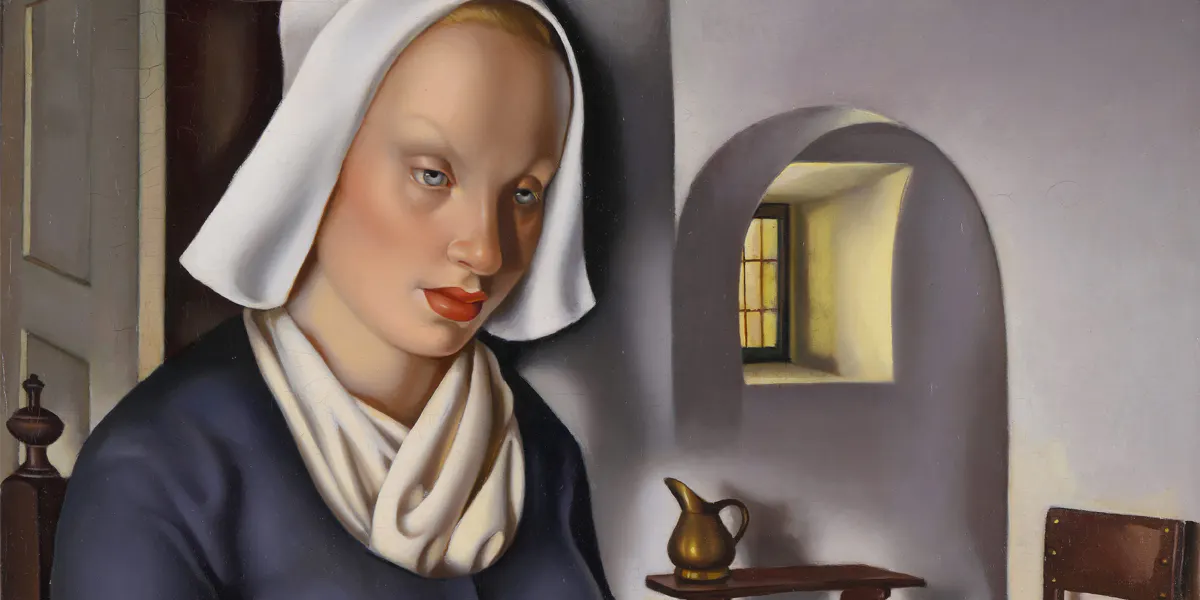
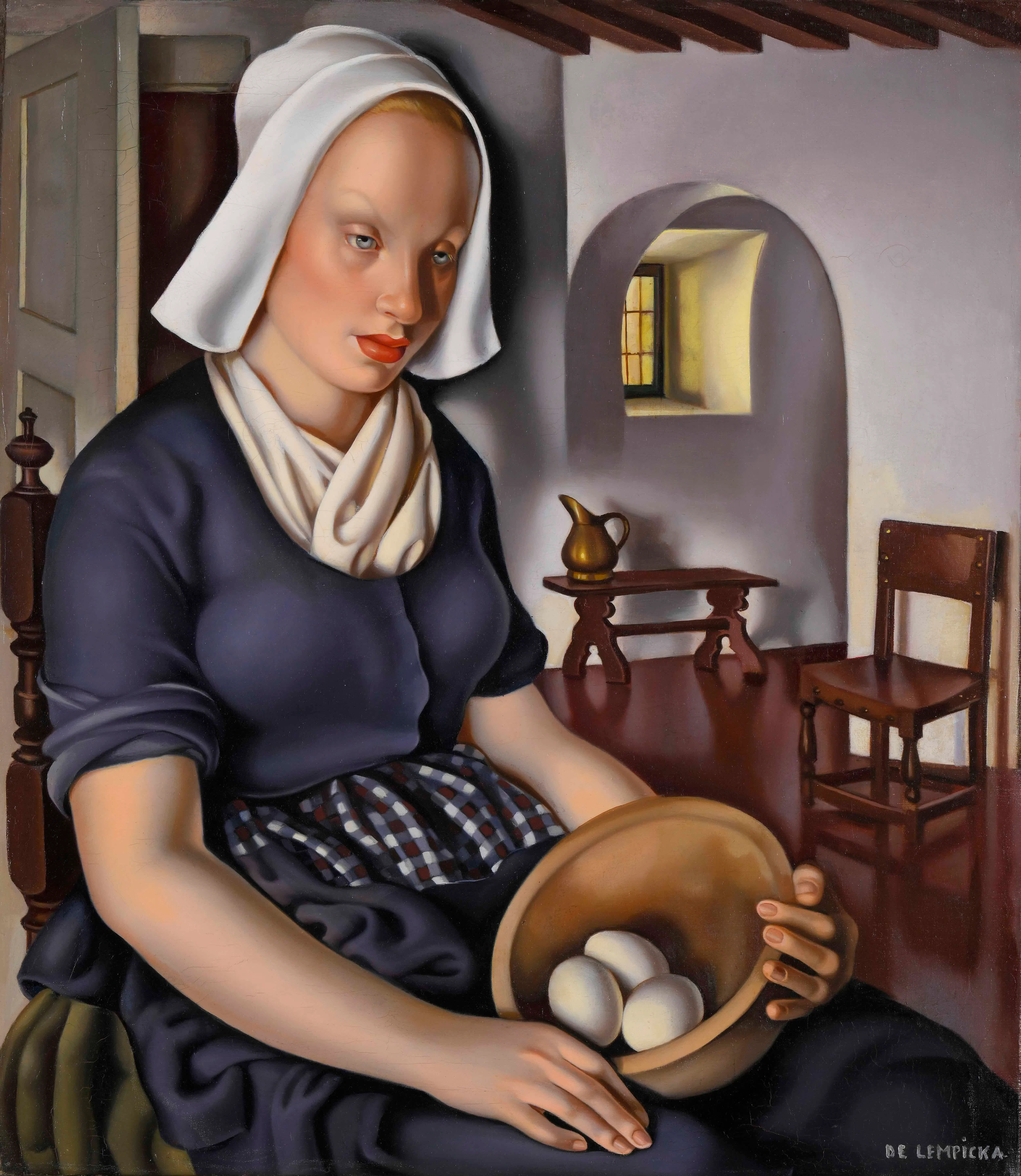
There is a great deal of work that takes place before the auctioneer ever raises their gavel. One must examine an object, establish what is known of its history, look into its provenance, determine how best to present it, and engage the right buyers – wherever they may be. Tamara de Lempicka’s La Jeune Hollandaise is a fine example of this. This 1941 painting, held by the same family since 1947, appeared at auction for the first time at Rossini on July 3, 2025, fetching €1.18 million (including buyer’s premium). Its provenance, exhibition history, and bibliography made it remarkably appealing, persuading collectors around the world to compete for it.
A Vincennes porcelain dish from Louis XV’s "Bleu Céleste" (celestial blue) service illustrates a different kind of legacy. Rediscovered by me during an inventory, it was subsequently acquired via pre-emption by the Palace of Versailles in April 2025 for several hundred thousand euros. Similarly, in March 2026, Philidor’s personal chess set – passed down through his descendants – joined the collections of the Musée Carnavalet after being sold under our hammer for €65,000. One can imagine what it means for a family to see a cherished heirloom find a home in a museum, destined to be shared with the public. For those of us in this profession, that is the Holy Grail!
All these stories give meaning to the figures. They reflect the relevance of our business model and the quality of the guidance we provide; they also validate the efforts we have made over the years and the trust our clients have placed in us. In 2025, we surpassed €20 million in turnover across more than eighty auctions. Rossini currently ranks as the ninth-largest independent French auction house. This commits us, every day, to living up to the trust placed in us and to giving the very best of ourselves.
Must one own an exceptional piece to come and see you? And how does a first sale process unfold?
It’s quite simple. You just need to have a question about an object. Some clients arrive with a complete file; others with a simple photograph taken in their parents’ home. We are here to help them understand what they own. Sometimes, we also have to explain that an object does not have the market value its owner had imagined. Our profession demands such neutrality. An appraisal must always be justifiable. Appraisals for the purpose of a sale are free and confidential. An initial consultation can take place online, at our offices, or during one of our many appraisal days.
An estate often contains various categories of items. Our departments allow us to examine the collection as a whole, then call upon the appropriate expertise as needed. Regardless of its value, any item being appraised deserves professional, reliable advice. While we tailor our approach to the specific situation, we always maintain the same level of care and attention toward the person entrusting us with their property. A seller must be able to make an informed decision; this means clearly explaining the valuation, the proposed timeline, and the costs associated with the sale. The arrangements for transport and storage must also be transparent. We want every client to fully understand what will be done with their item and the proceeds they can expect to receive.
Following the sale, our support continues right up until the final settlement – carried out according to agreed-upon terms and once the buyer’s payment has been collected. The moment the hammer falls is significant, but the true quality of our service is measured across the entire process.
Your strategy places a strong emphasis on the modernization and digitalization of auction houses – and the auction sector as a whole. Is this still the case, and what are your thoughts on the progress made so far?
Digitalization has been at the heart of our strategy from day one – more so now than ever – and it will remain so. This focus owes a great deal to my business partner, Louis Le Carréres, for whom this was a previous professional life. We were guided by a single conviction: an auction house should no longer be confined by the walls of its own saleroom.
Today, we receive hundreds of appraisal requests daily from all over the world, and our buyer base is equally global. In effect, our saleroom has expanded to the scale of the entire world.
This kind of trust cannot simply be declared; it must be earned through the work we do, the rigor of our expertise, the quality of the support we provide, and the results we achieve at auction. Because a screen can never replace what is essential: the expert’s eye, professional advice, human connection, and our ability to tell stories and bring them to life. A screen simply makes these elements accessible anywhere, at any time.
How do you reach your buyers, even those on the other side of the globe?
Paris is our anchor point. For international collectors, it offers a natural legitimacy – grounded in the art market, its venues, its professionals, and the overall sales experience. The projects we were planning abroad in 2020 also helped us realize the true strength of this base. It is not uncommon for us to see buyers from China, the United States, the Middle East, and Europe competing for the same painting or sculpture.
While publishing a catalog naturally provides visibility for our sales, we go further: we identify which buyers might be interested in a specific piece, share its story, answer questions, and provide everything they need to place a bid. We invest heavily in mapping and understanding the market and its collectors – reaching out to them and fostering an ongoing relationship.
We also organize events in other locations when the circumstances are right. On July 11, 2026, for instance, we held the first-ever auction in a French museum – the renowned Villa Kérylos in Beaulieu-sur-Mer – coinciding with the major auction week in Monaco. The sale focused on jewelry, timepieces, and leather goods. The preceding exhibitions and lectures offered a chance to meet enthusiasts and share the expertise of our specialists. It’s a way to introduce these objects and encourage people to see them in a new light.
Your model remains highly digital. What role do the human eye and professional expertise still play?
Digital technology facilitates initial contact and allows a sale to reach a very wide audience. It also helps us better organize information and track individual files. We use automation and artificial intelligence to streamline certain tasks, freeing up time for our teams to focus on what matters most – examining objects, conducting in-depth research, and engaging with clients. Digital tools enable us to share our expertise beyond our own borders, which is a deeply rewarding experience. We take immense pride when works arrive from Australia, New Caledonia, Brazil, or Kenya to be presented at auction in Paris. Behind each of these consignments are clients who have never met us in person, yet have entrusted us with their possessions.
This kind of trust cannot simply be demanded; it must be earned – through the work accomplished, the rigor of our expertise, and the quality of the guidance we provide and the sales results we achieve.
How do you support the transfer of collections and the arrival of new audiences?
The passing on of family possessions often compels a family to re-evaluate their belongings. Younger generations may have an affinity for different eras or lead a different lifestyle. Our role is to assist them in making their decisions, and subsequently to connect these items with the enthusiasts who will appreciate them. This is precisely where Rossini’s versatility proves so valuable.
We aim to introduce public auctions to new buyers – those who are entirely new to the world of bidding. Initiatives such as lectures and valuation days help achieve this. In Biarritz last June, for instance, our specialists dedicated a day to colored gemstones and signed jewelry, with discussions open to the public. Explaining why a particular object captures the interest of collectors is the first step toward fostering a passion for collecting.
What are your predictions for the auction market in the coming years?
I observe underlying trends, some of which are already becoming quite distinct. The world today is marked by significant instability – a situation likely to intensify in the future. With geopolitical tensions, economic uncertainty, and shifting political landscapes, our traditional points of reference are wavering.
Yet, the history of the art market demonstrates that the auction sector – regrettably – tends to thrive during such turbulent periods. When the future becomes uncertain, people naturally reconsider their personal assets. Some choose to sell, while others choose to buy. The number of both sellers and buyers increases, as precious objects serve as a "safe haven" asset. A work of art, an object, or a piece of jewelry possesses a quality that financial investments can never replicate: tangibility. You can touch them, pass them on, and live with them in your daily life. Their value does not vanish overnight simply because they are viewed behind a screen. In fact, it is often during such moments of uncertainty that the market becomes most vibrant: artworks change hands more rapidly, and demand intensifies.
I also believe the market will continue to undergo a profound transformation. Categories are diversifying; beyond paintings and furniture, jewelry, timepieces, design, and collectibles are attracting an ever-broader audience. Buyers are becoming more numerous and more discerning – they demand transparency, documented provenance, and rigorous expert appraisal. This is excellent news for auction houses that operate with such diligence.
Furthermore, Paris has a significant role to play. Its standing within the European market has strengthened considerably in recent years, and it now attracts sellers and collectors from across the globe. It is up to us – French auction houses – to seize this opportunity and demonstrate our mastery of the craft. Our regulations and laws governing the art market, which are more stringent than those in many other countries, serve as a genuine guarantee of excellence.
Auctions have existed since antiquity. They have weathered crises, wars, and revolutions, and they will surely endure the challenges of the future. For the human need for beauty, for the passing on of heritage, and for meaning – these things know no crisis.
What kind of auction house do you envision building for Rossini in the coming years?
We aim to become a firm with a European reach – one capable of supporting sellers and championing their items on the international stage.
To achieve this, we will continue to invest in our teams, our operational tools, and our communications. Our staff of around thirty, supported by a network of independent experts, lies at the heart of this project. We also continue to explore potential partnerships with other established players where such a collaboration makes strategic sense. Our experience with Rossini has taught us just how much these elements matter. We can provide shared resources, digital tools, an international network, and innovative working methods – all while preserving the quality of local, personal relationships.
This is how we envision growth: a family should be able to meet with a specialist close to home – someone who truly understands their items – while also benefiting from the expertise and global reach of the entire group to achieve the best possible outcome. Our European ambition is built upon this very practical need.
Ultimately, I want our sellers to feel that they have been well supported, and I want our teams to continue finding joy in the process of researching, learning, and sharing knowledge. I know that both the objects themselves and our clients still have many surprises in store for us. That is what makes us look forward to opening the doors of Rossini every single morning.
Discover all of Rossini’s current lots here. You can find full details regarding the auction calendar, areas of expertise, and the services offered by Rossini on the auction house’s website.