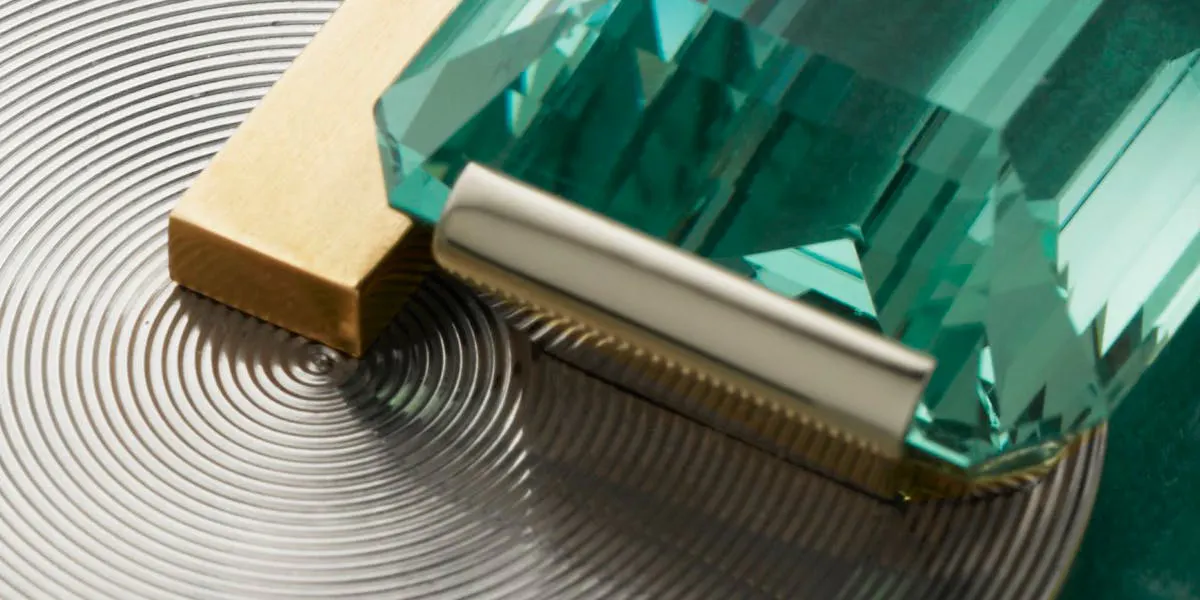
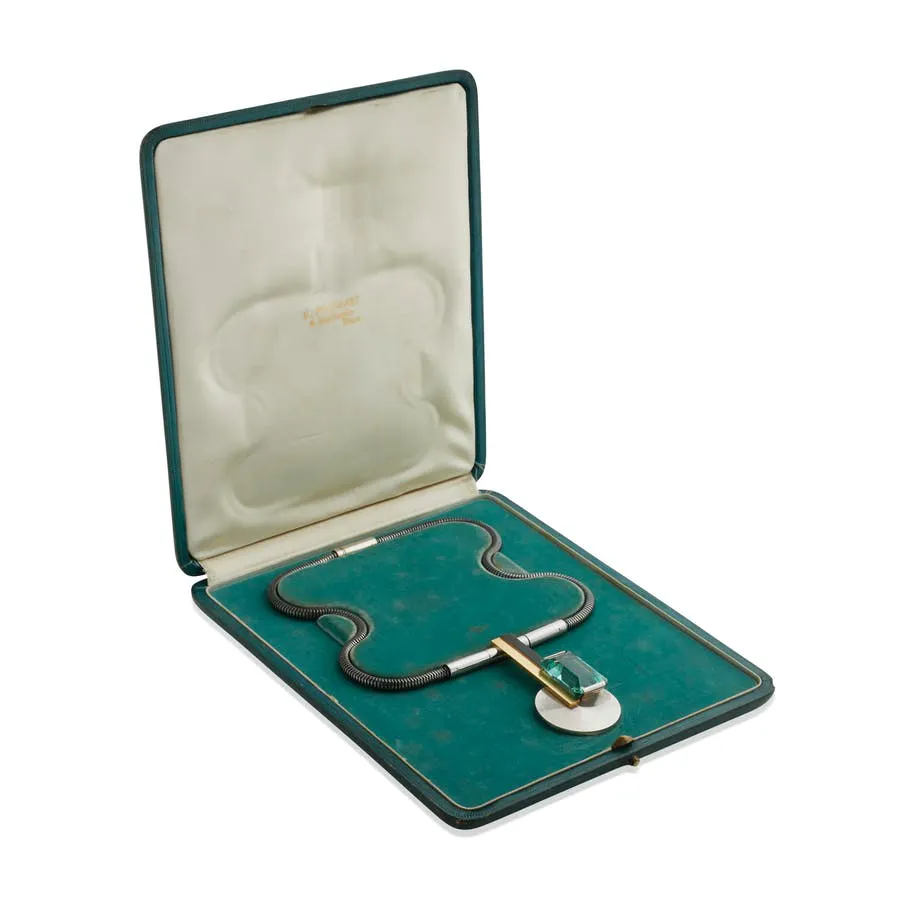
Held online from June 21 to July 7, the jewelry sale organized by the Parisian branch of Christie's totaled 6.9 million euros ($8.1 million) for 89% of lots sold and buyers from 36 countries. The auction was boosted by the extraordinary sale of a jewelry creation by Parisian Jean Fouquet (1899-1984), who was inspired by the geometric shapes of constructivism, cubism and futurism. The Art Deco necklace from 1925-1930 was sold for 980,000 euros ($1.1 million), setting a world record for Fouquet at auction.
Related: 1925: The Height of Art Deco
Violaine d'Astorg, the head of the jewelry department at Christie's France, commented: “Strong results were achieved for our Spring online sale held in Paris. An iconic necklace by Jean Fouquet (1899-1984) was sold for nearly one million euros to a private European collector, more than doubling its presale estimate."
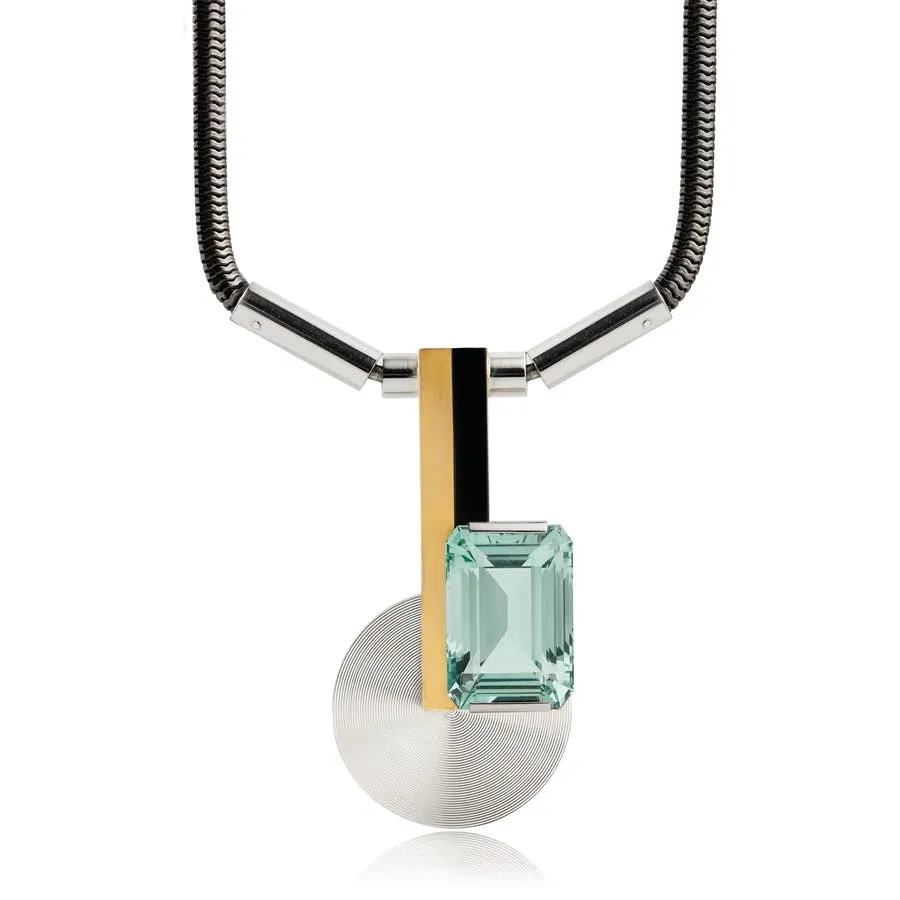
The metal and lacquer necklace features a rectangular cut aquamarine weighing almost 90 carats. Produced around 1925-1930, it dates to the most interesting period of Fouquet's career, when he won a prize at the International Exhibition of Modern Decorative and Industrial Arts, the event which sealed the reputation of the Art Deco style.
Related: The 9 Most Popular Jewelry Brands
Jean Fouquet is the third descendant of an important family of French jewelers. The Fouquet dynasty brought its dynamism and daring to the world of jewelry, always rethinking the links of the discipline with other artistic fields. Jean is the son of Georges Fouquet, a great creator of the Art Nouveau period, and the grandson of Alphonse Fouquet, whose illustrious shop was decorated by Alphonse Mucha at the turn of the 20th century (the shop is still visible at the Carnavalet Museum in Paris).
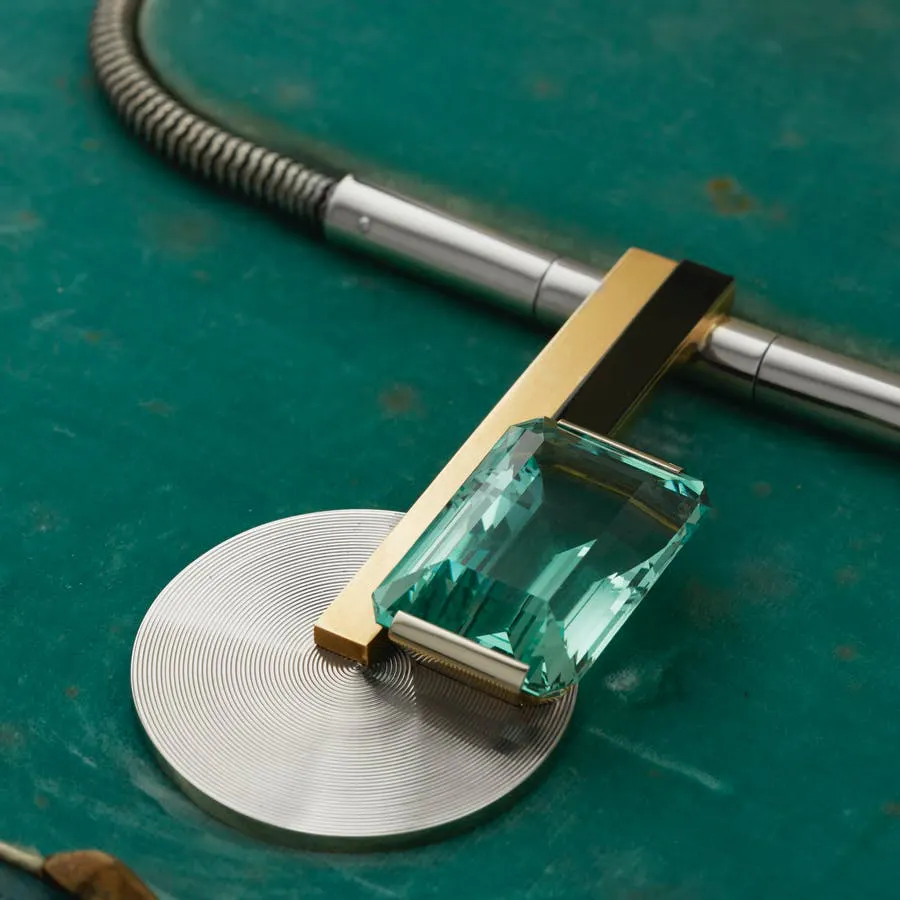
Along with his literary activities (he studied literature and wrote novels) and his ambition to become a lawyer, Fouquet began working with his father in 1919 and created avant-garde jewelry with materials still unseen in the world of jewelry at the time, such as ebony, silver, chrome steel and white gold. Inspired by the artistic movements of his time, he developed a simple style where geometric shapes dominated, including triangles, semicircles and pyramids.
Related: Diamonds: An Iridescent Investment
Wielding white gold and silver, and preferring lacquer to enamel, Fouquet oscillated between shiny and matte surfaces and flat and chiseled textures and introduced semi-precious stones into his creations. With its lined disc and imposing rectangular aquamarine, the necklace presented at Christie's embodies the perfect example of the jeweler's creative peak.
"With 10,480 online visitors, registered bidders came from 36 countries and 17% are first time bidders," said d'Astorg. "A phenomenal display of jewelry market strength was observed around the world as shown in the recent auctions held in Geneva, New York, Hong Kong, London."