The official auction house of the Pebble Beach Concours d’Elegance®, world renowned market leader Gooding & Company, will present a group of cars embodying the best of American automotive excellence for its upcoming Pebble Beach Auctions. This August 18 and 19, these iconic selections will cross the auction block at the collector car world’s most premier venue in Pebble Beach.
“We are especially proud of our lineup of historic American automobiles, which span several decades and motoring genres,” said Gooding & Company President and Founder, David Gooding. "It is a privilege to present such unique, rare, and incredibly well preserved American icons to the forefront of the collector market at Pebble Beach."
Here are three cars not to miss:
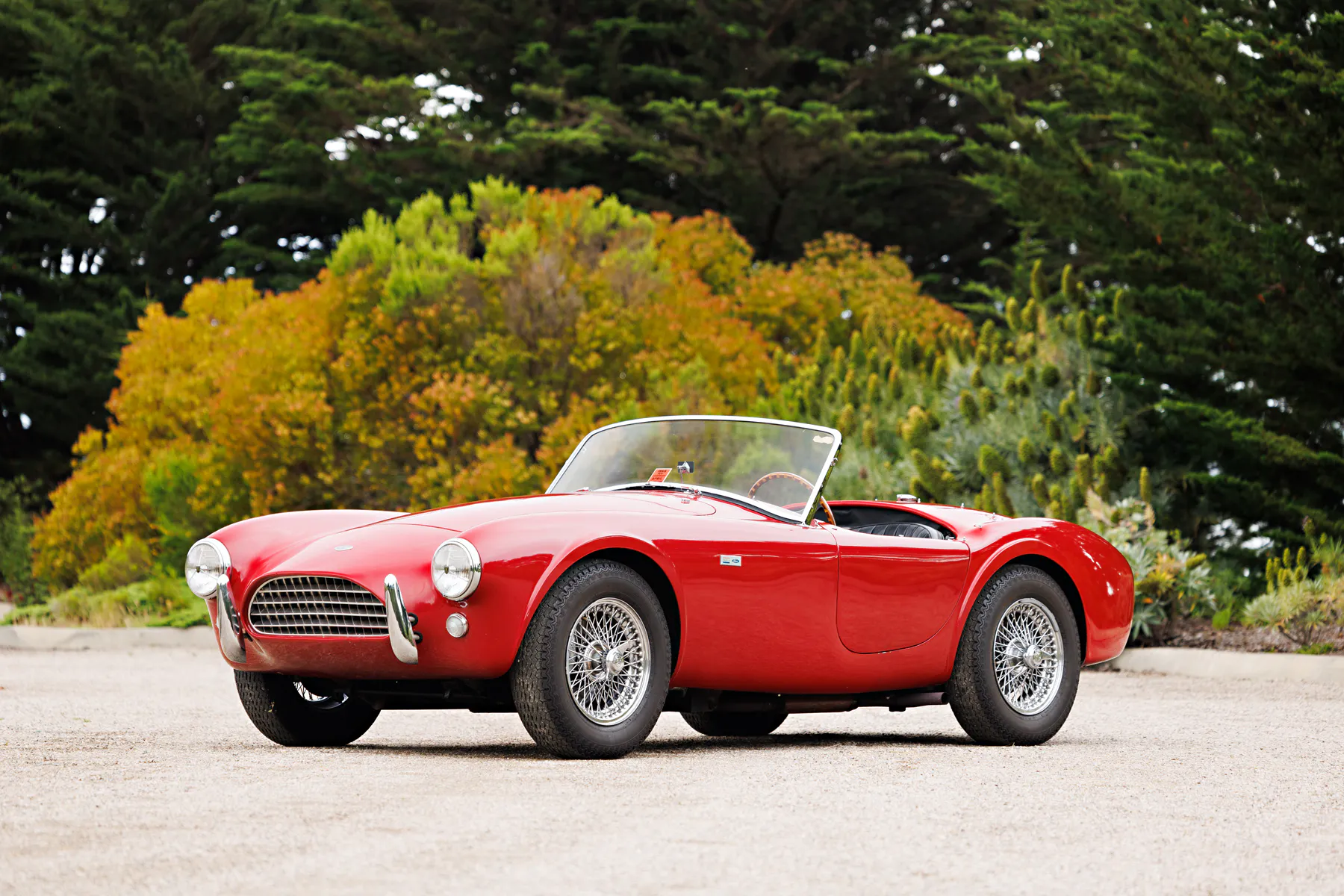
To this day, Carroll Shelby’s Cobra remains one of the most enduring and memorable sports cars produced in the 1960s. The earliest examples, built by hand in 1962 and 1963, represent the purest expression of these legendary sports cars. Just 75 examples of the original 260 were built, including street cars, factory team cars, independently prepared race cars, and one Dragonsnake. Only 62 street cars were made in total, accounting for less than 10% of all leaf-spring Cobra production. These early production 260 models are differentiated by their slab-sided aluminum bodywork, and come mechanically equipped with a Hi-Po 260 cid V-8 engine, cast-iron-cased Ford Galaxie gearbox, and 3.54:1 rear-end ratio. Very few 260 Cobras retain their unique, as-delivered details, and of those that remain, examples in good, original condition are few and far between. This 1963 Shelby 260 Cobra comes to auction alongside unrestored sports cars from a private collection, and presents in exceptional time capsule condition, with just three private owners from new and less than 5,200 miles on the odometer.
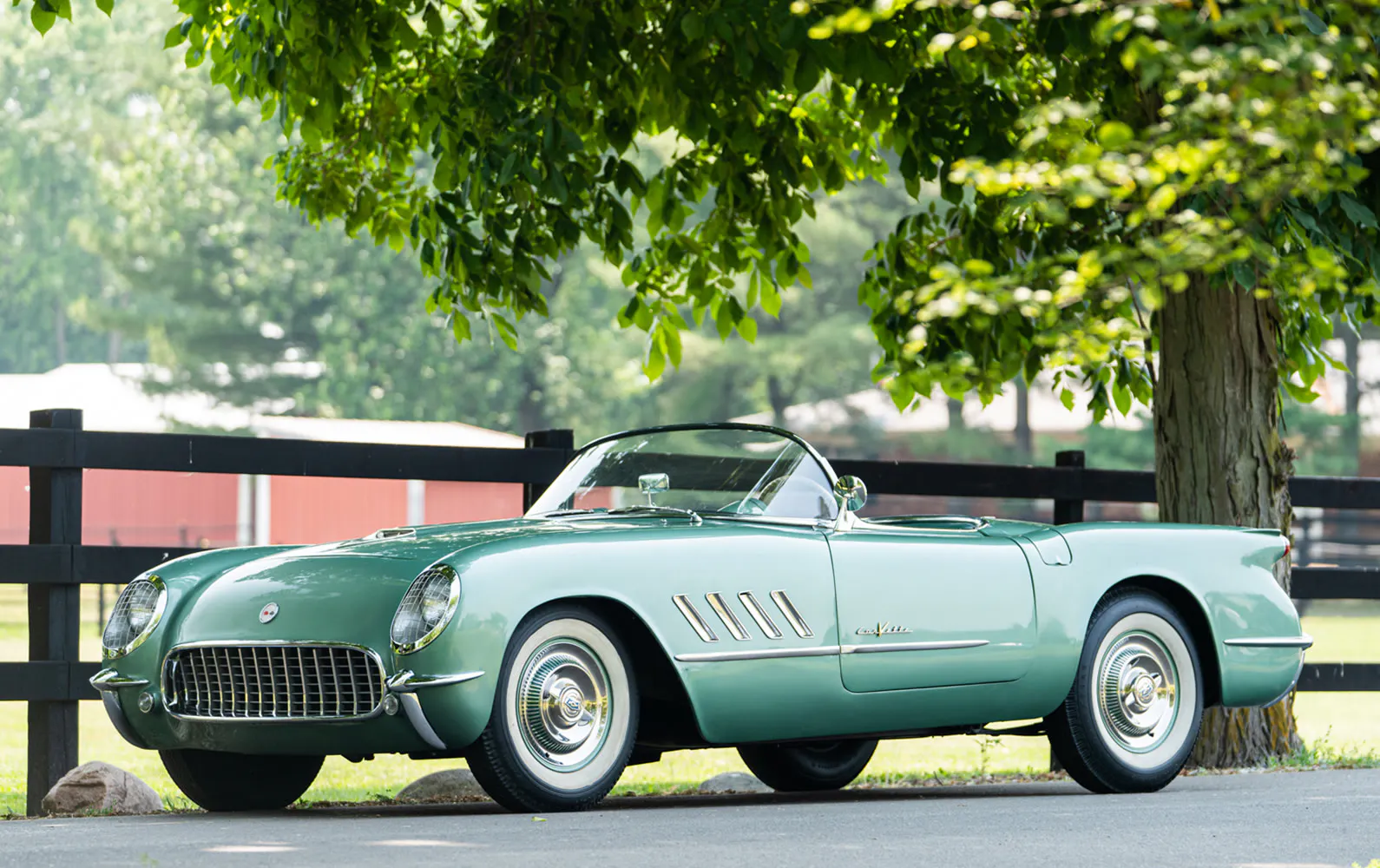
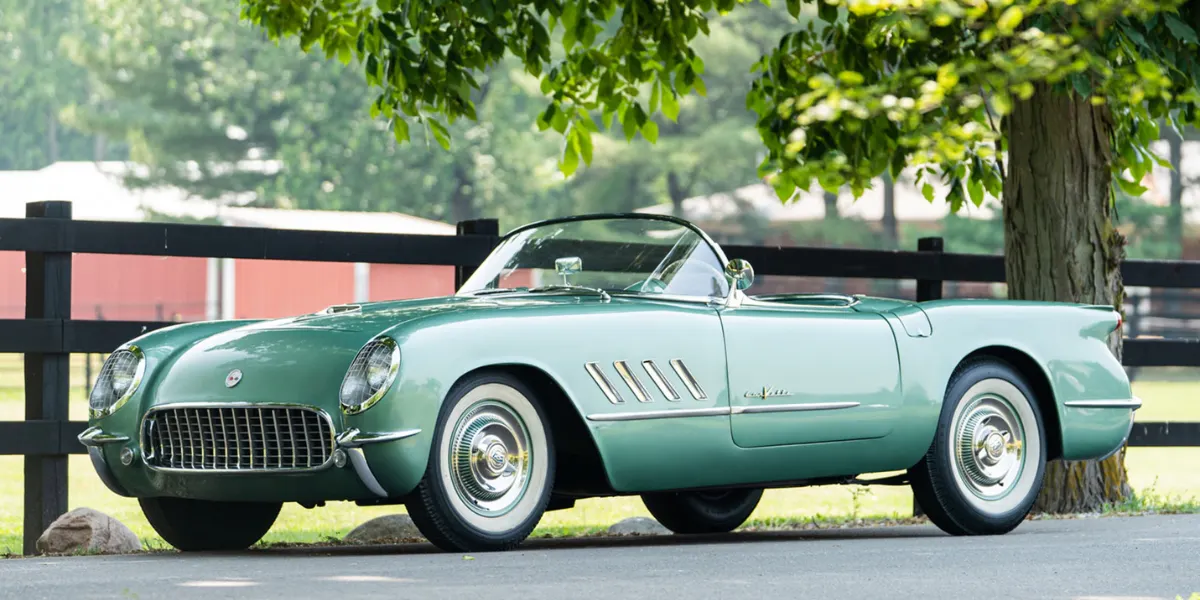
Prior to series Corvette production, Chevrolet built approximately 15 handlaid fiberglass bodies for experimental or Motorama use. A precious few of these Motorama-era prototypes survive today, including this example, which originates with the S.O. 2000, the pale-yellow Hardtop prototype of early 1954. At least two of these S.O. 2000 show cars were built, and it is believed that one was retired early so its body could be reassigned to a new project – S.O. 2151. This body was returned to General Motors’ famous Art and Colour department, overseen by legendary designer Harley Earl, to serve as the proposal car for the 1955 Corvette. This new prototype incorporated several innovative features, including a decorative hood scoop, egg-crate front grille, bumper-exit exhaust tips, and slanted front-fender vents. The body was painted Bermuda Green, a beautiful, metallic jade-like hue. As the story goes, the 1955 Proposal Car never made its way into production, and S.O. 2151 somehow escaped the fate of most GM prototypes. Today, this one-of-a-kind piece of Corvette history is a rare remnant of Motorama-era automotive glory.
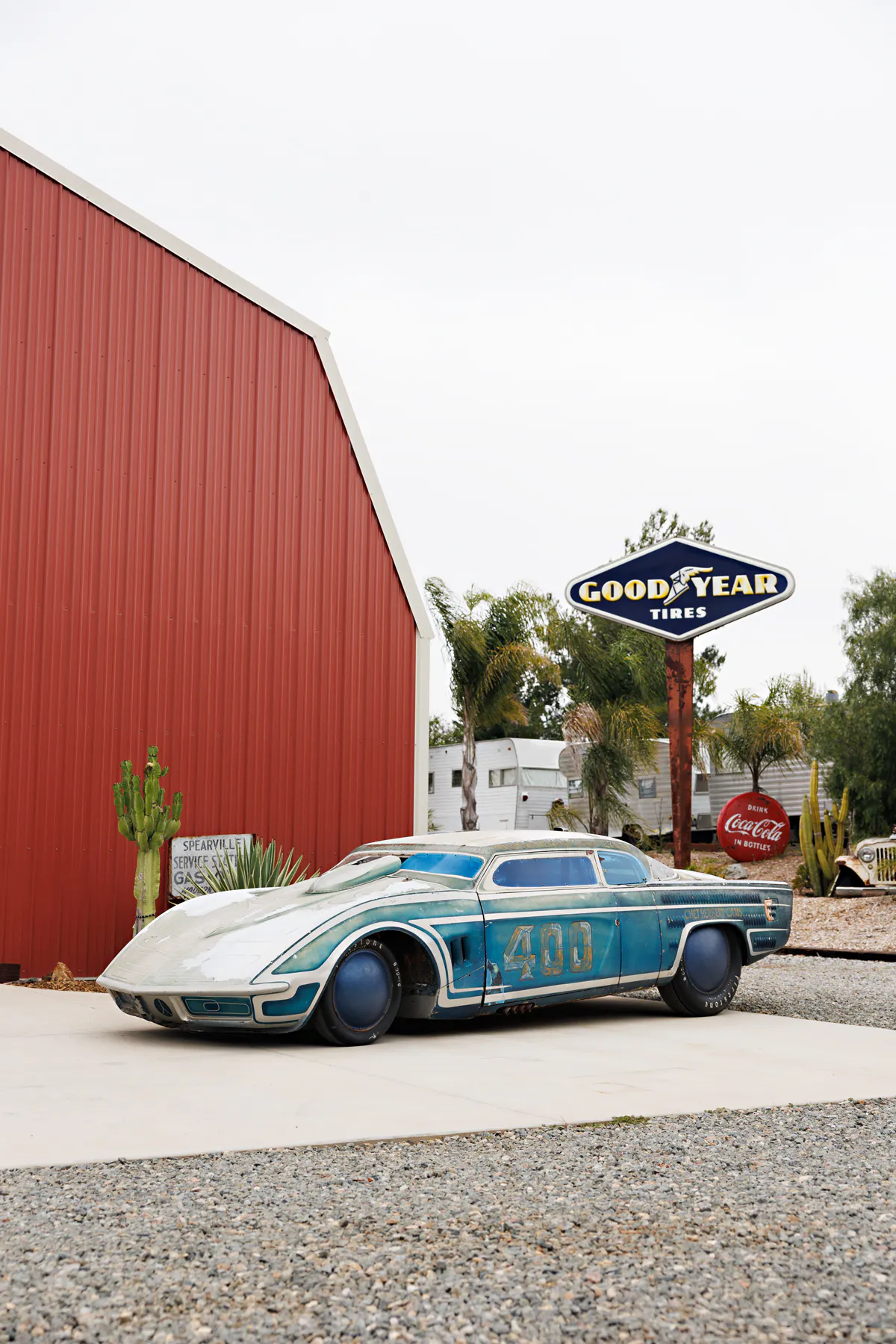
The story of this Bonneville speed legend begins in 1956, when land-speed racer Belmont Sanchez plucked a sleek 1953 Studebaker Coupe from his family’s Californian used car lot and reworked it into one of the – if not the first – 1953 Studebaker Competition Coupes. Sanchez and his radical Studebaker were well known among the California racing fraternity and the car was successfully campaigned at Bonneville with numerous partners and drivers. Neil Thompson joined the Sanchez team in 1957 and became sole owner in 1962. In 1958, the Studebaker was the first car of its type to exceed 200 mph with Gary Cagle driving. Continuously developed, the Studebaker’s winning streak continued until 1963, when Thompson crashed at 242 mph due to a blown tire. Thompson built a new racer with another 1953 Studebaker bodyshell and retained the chassis, scatter shield, LaSalle transmission, Sanchez-devised cooling system, both doors and deck lid (still showing hints of the original yellow paint from the 1960s), belly pan, steering column, steering wheel, and roll bar. A new innovation – the hinged and removable rear quarter panels – enabled quick rear-tire changes. Thompson and his reborn racer returned to Bonneville in 1965 and went on to dominate several SCTA classifications and set new speed records through 1972 on nitro-methane only. With a wealth of period magazines, books, photographs, and Bonneville event programs that chronicle the career of “The World’s Fastest Coupe,” this 1953 Studebaker represents a veritable treasure trove of American motor sports history and endless innovation.