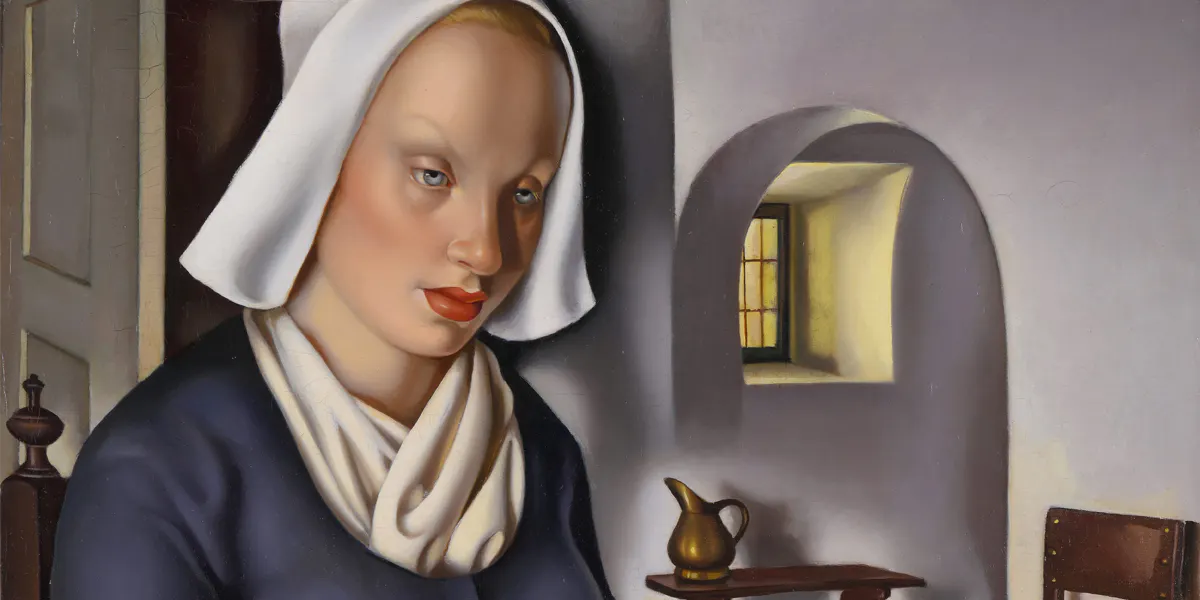
Tamara de Lempicka is one of the few artists whose name consistently stirs excitement at auction. Her signature Art Deco style, both precise and sensuous, continues to captivate collectors and drive her market value higher with every sale. Today, she ranks among the ten most valuable female artists in the world.
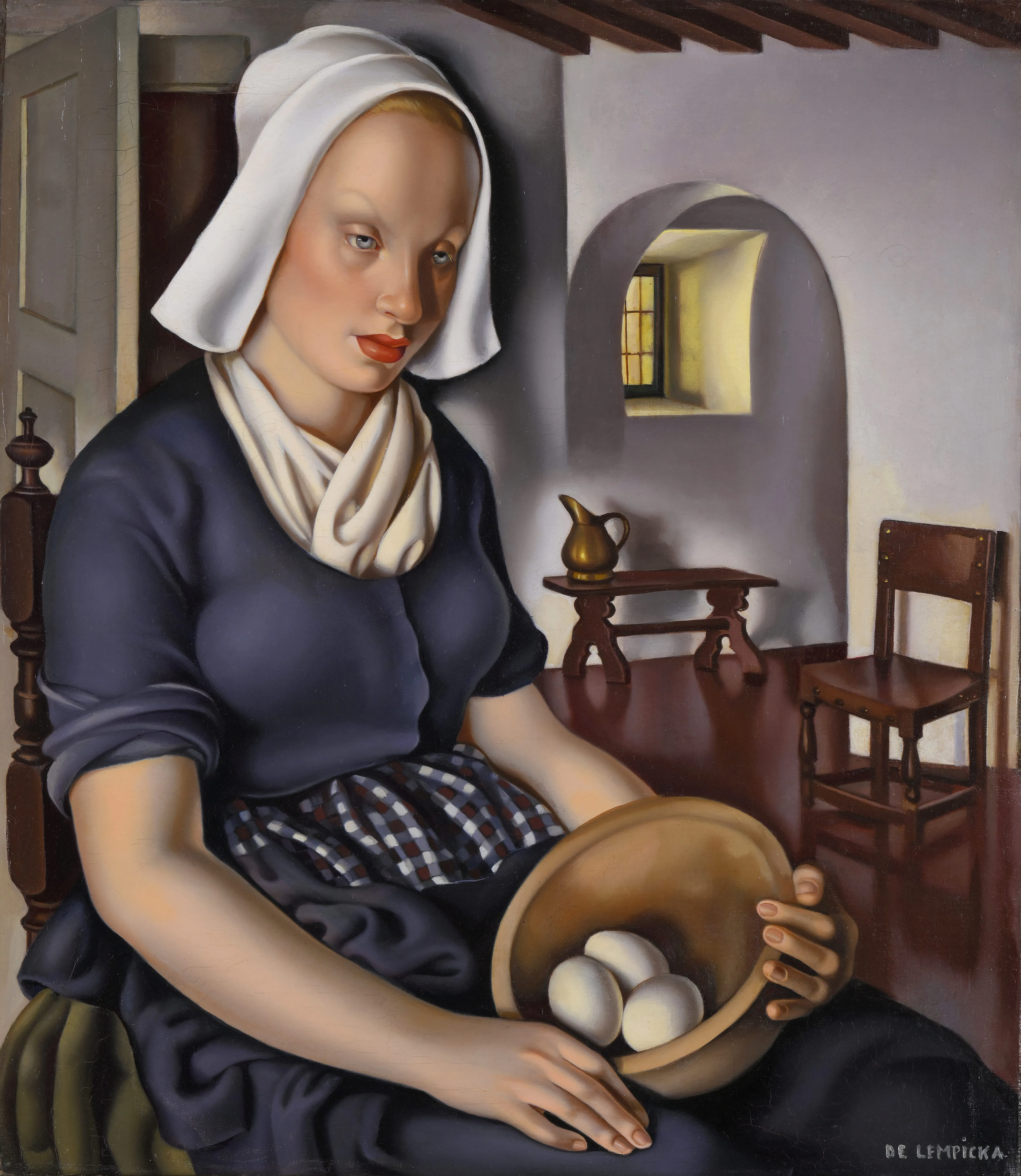
Her 1941 portrait Young Dutch Girl is set to go under the hammer for the first time on July 3, during Rossini’s “Modern Art & Contemporary Interiors” auction. This historically significant work has remained in private hands since its original purchase from Lempicka more than 80 years ago.
The portrait Young Dutch Girl reflects the chic and unmistakable style of the artist, who left her native Poland for France before eventually ending her career in the United States. In the early 1920s, Tamara de Lempicka settled into her home studio in Paris’s 14th arrondissement, where she captured the energy and vitality of the Roaring Twenties like few others. Her work was closely tied to a lifestyle described as both liberated and rebellious, which served as a source of inspiration for her painting.
Her marriage in 1933 to Austro-Hungarian Baron Raoul Kuffner elevated her social status and earned her the nickname “Baroness with a Paintbrush.” When World War II began, the couple moved to the United States, where Lempicka continued to exhibit her work. Over time, she shifted toward abstraction, and her visibility in the art world diminished.
Lempicka’s career reflects a broader story of exile and reinvention. Drawing influence from Renaissance Mannerism and Neo-Cubism, she developed a distinctly modern and stylized aesthetic. She maintained tight control over her output, producing only 300 to 400 paintings in total. Her most acclaimed work was created between the late 1920s and the end of World War II, though only around 100 pieces from that period survive.

Created during this peak, Young Dutch Girl depicts a woman seated on a chair, holding a bowl containing three eggs. The composition is rigorously geometric, with strong forms and carefully balanced colors. Light plays across the figure with sculptural precision, giving the painting a bold yet refined presence. Influenced by Cézanne and filtered through the cool restraint of Art Deco, the work balances crisp architectural lines with the soft curves of the body and fabric. Lempicka’s signature ability to portray women as both sensual and self-possessed is clearly on display.
According to Rossini, only one to three works of this caliber surface each year worldwide, and in France, perhaps once a decade. The appearance of Young Dutch Girl in a French auction is particularly notable, as most of Lempicka’s top sales occur in Anglo-American markets.
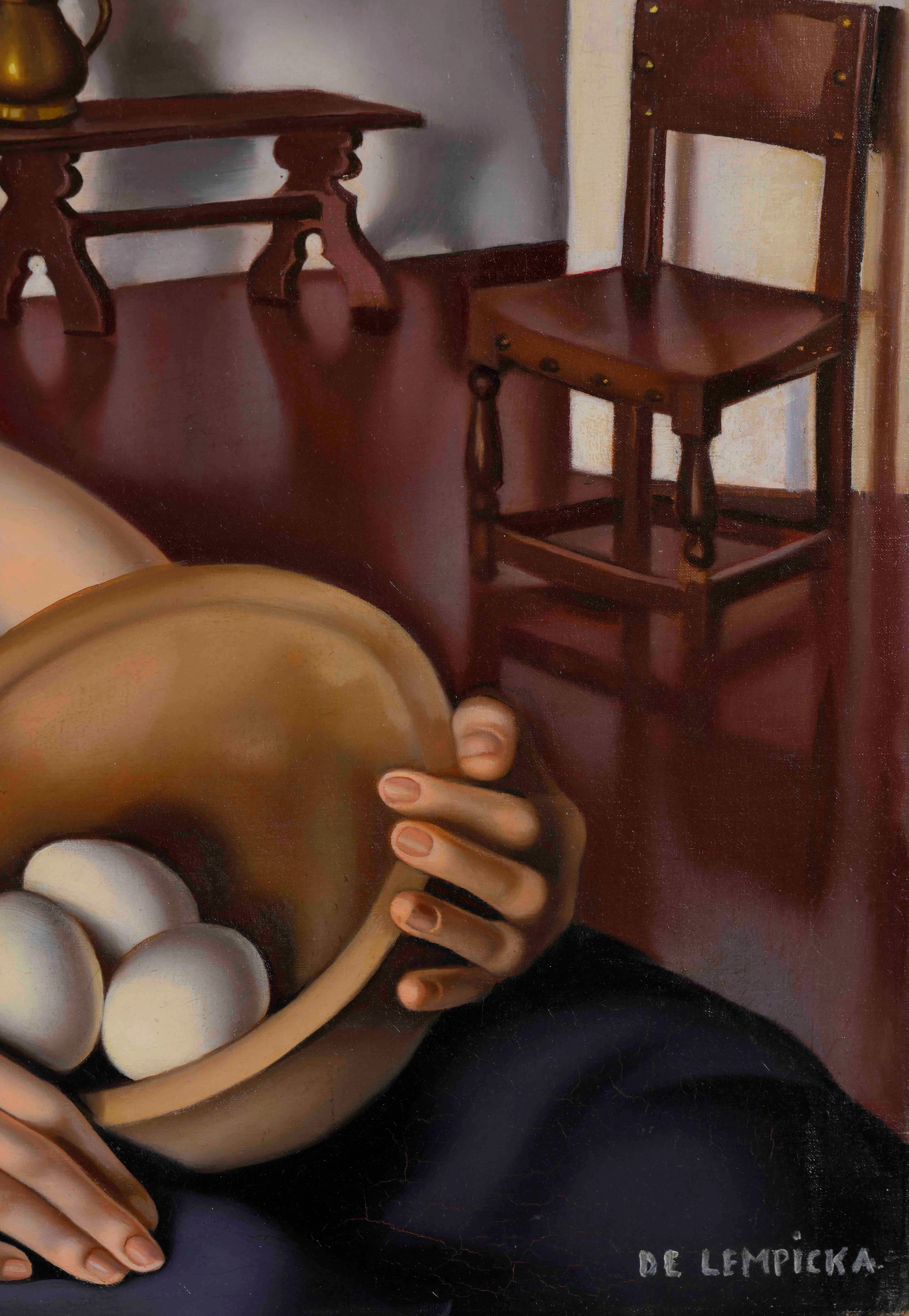
In addition to its artistic significance, the painting carries important historical weight. Lempicka chose it to represent her at the 1944 Salon d’Automne in Paris. Just a few years later, in 1947, it was sold directly by the artist to Louis Riz, and it has remained in his family ever since. The work is also well documented in the literature on Lempicka, with mentions in Tamara de Lempicka by Gioia Mori and Furio Rinaldi (Yale University Press, 2024, p. 232), La pittrice Tamara de Lempicka by Gabrielle Mandel (La Mandragora, 1957, p. 4), and Tamara de Lempicka by Giancarlo Marmori (Idea Editions, 1978, p. 8).
In excellent condition, Young Dutch Girl is expected to fetch between €400,000 and €600,000.
A later version of the composition, titled The Dutch Girl II and painted around 1957, is now part of the Lublin Museum’s collection in Poland.
Rossini will present the painting on July 3, following authentication and appraisal by Michel and Raphaël Maket of the firm Maket Expert. Rossini’s Commercial Director Olivier Nuzzo and expert Raphaël Maket have shared insights into the discovery of the work, available here.
The painting will be offered as part of Rossini’s “Modern Art & Contemporary Interiors” sale, which features nearly 250 lots. This is a rare opportunity for collectors and admirers of Lempicka’s work.